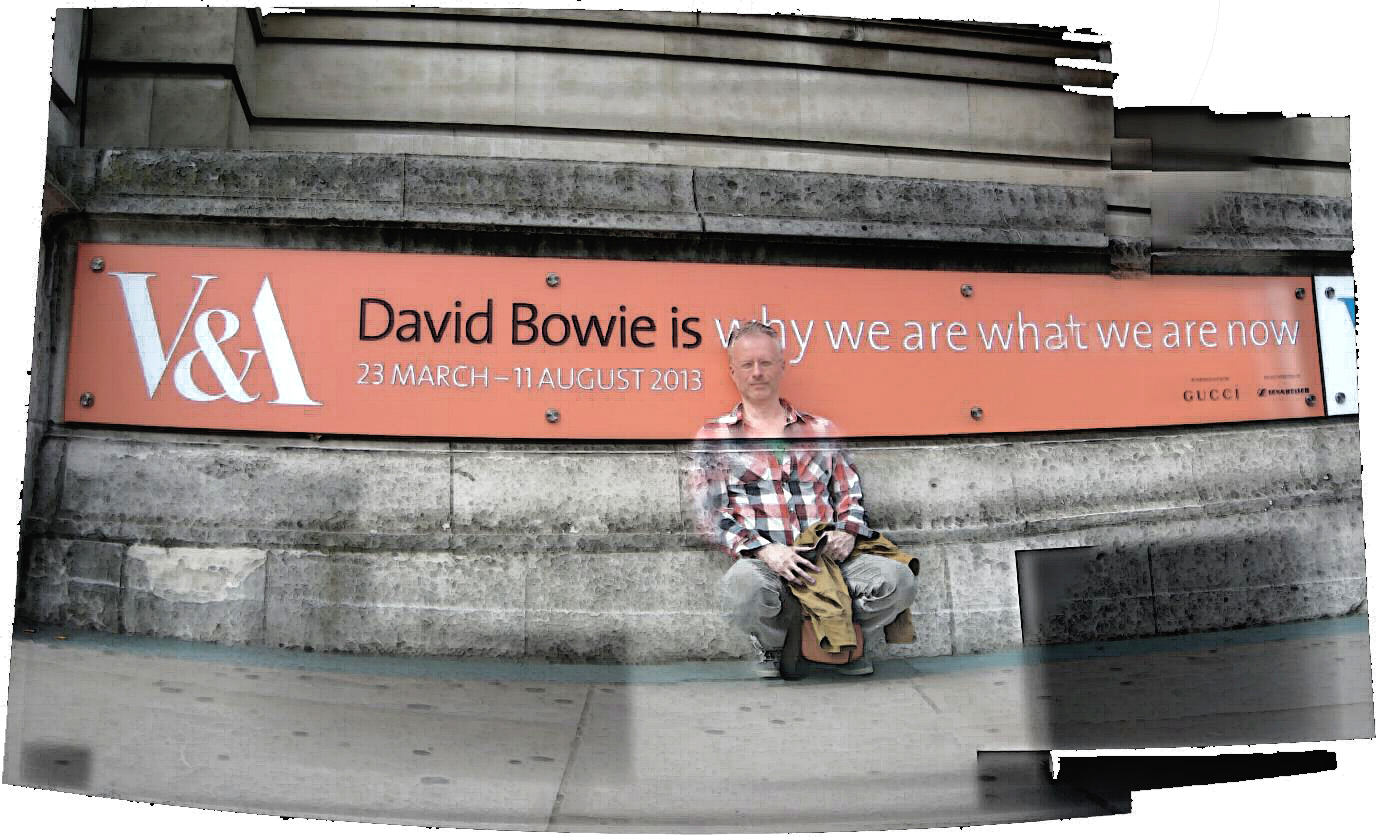
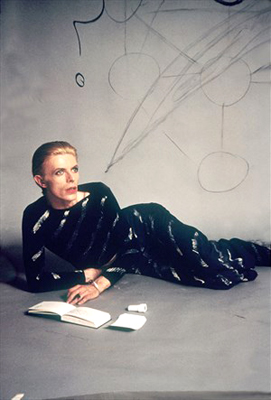
|
What is the nature of art? How do we define rock and pop music? These questions pose complex challenges that defy precise definitions. The essence of these art forms lies in their experiential quality, where codes, gestures, aesthetics, and perceptions intertwine.
Sometimes, art serves as a reflection of culture, embodying the ever–evolving and restless spirit of society. Differentiating between rock and pop music can be elusive. When we attribute functionality to these terms, distinct perspectives emerge: Rock tends to embrace a raw and unpolished quality, while pop gravitates towards immediate accessibility and refinement. In traditional art, the emphasis is on a creation that transcends the artist, acting as a conduit to alternative realms of perception. In pop, on the other hand, the spotlight shines on the star in both repertoire and performance. The mythical allure captivating audiences is distilled from elements such as songs, voice, timbre, pitch, intonation, presence, and appearance of the pop star. However, the task remains to transform the feverish emptiness of ecstatic repetition into something tangible that can be felt, understood, heard, seen, and even acquired. It does not exist in isolation. Music is shaped not only by the consciousness of its creators but also by the responses and states of mind evoked in its listeners. Do lyrics sculpt the style and enhance or project the desired image of pop musicians? Does the notion of performativity, mise–en–scène, invention, and reinvention play a crucial rôle in this dynamic? Is pop a fusion of mainstream and sub/counter cultures, engaging in an intricate interplay? Questions, in short, that lead straight into the more crowded chambers of pop music's influence and significance. Frank Zappa summed up the concept of conceptual continuity in 1974 when Fido (a "modified dog"?) responded to a question about it by saying, "The crux of the biscuit is the apostrophe" ('Stinkfoot') In this essay, my focus is less on the audience and more on the performer or persona known as David Bowie. In Greek, the term persona means mask. Bowie is not a single character, but rather a host of Bowie–personæ, a wealth of possibilities that exist behind costumes, symbols, and concepts, creating a meta–persona.
|


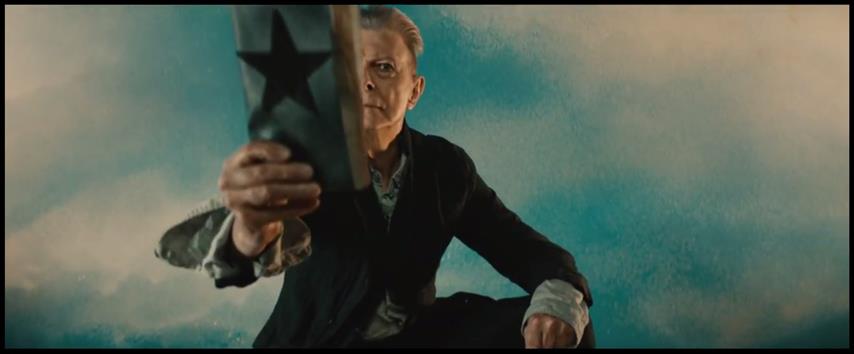
Is this Peter Capaldi portraying Doctor Who?
No, it is actually a screenshot of David Bowie taken from the 2015 music video 'Blackstar', directed by Johan Renck.
Introduction:What has David Bowie got to do with occultism and Gnosticism? |
|
David Bowie is often hailed as a towering force in popular culture, leaving an indelible mark on the world of music. Yet, there are naysayers who dismiss his influence as overhyped or out of proportion, grumbling that other artists were equally deserving but got the short end of the recognition stick. His flamboyant persona and captivating stage presence have both enraptured and ruffled feathers. To some, he's a rebellious muse, defying norms with gusto, while others dismiss his image as mere theatrics and shallow showmanship. In addition to his influence as a musician and being a self–taught artist, Bowie's religious perspective and compositional techniques mirror an eloquent, fragmentary projection of society. The Gesamtkunstwerk 'David Bowie' crystallizes the splintered reality into cultural artifacts, which in turn coagulate into new realities. This creates mirrors of representation where the subject is bound to escape its own representation. This is similar to Diego Velazquez's painting "Las Meninas" from 1656 where the relationships between the viewer and the main characters depicted within the painting remain uncertain. David Bowie, né David Robert Jones in 1947, is seen by some as a sort of 'Renaissance Man'. Renaissance men think in terms of similitudes, as they believe that knowing is guessing and interpreting, not observing and demonstrating. Sometimes it seems that Renaissance men pride themselves on the quantity of their knowledge, rather than its quality or correctness. They may profess a universal knowledge that seeks to reconstruct the fragmented pieces of society and demonstrate the pinnacle of human evolution, much like many occultists. "I'm actually very nineteenth century — a born Romantic", Bowie uttered in 1995. However, unlike most occultists, Bowie has attained considerable wealth and critical acclaim, and appears poised to achieve even greater heights and accomplishments. Squillions of individuals worship the ground he walks on, and as a result, he faces great expectations. He maintained his sense of independence and nonchalance, showing a consistent indifference toward the trappings of fame. He even afforded himself the 'luxury' of turning down some of the most significant honors in an artist's life: a CBE in 2000, a knighthood in 2003, and the opportunity to perform live at the closing ceremonies of the 2012 London Olympics. For some, this may suggest a Mephistophelean influence at play, as it is difficult to explain how his brobdingnagian success could have reached such heights without some otherworldly assistance. I do not share this opinion, as I have little interest in hyperbolising David Bowie into something grander or more labyrinthine than the man himself warrants. And yet, it is worth noting that David Robert Jones crafted his public persona David Bowie by assimilating different aspects of contemporary occultism. These components constituted a somewhat subtle aspect of his public persona. His interest in the occult added another layer of complexity to his artistic vision. What are the foundational elements of his occult laboratory? 
There are many critical theories, but I don't employ any specific one because, in general, they all can work, and I don't approach texts, ideas, or people as if they were patients. Rationality is a highly subjective issue. Or, as expressed by the Austrian philosopher of science, Paul Karl Feyerabend: Anything Goes. This essay is not meant to be taken too solemnly. It is, among other things, an entertainment in the manipulation and play of language. Given enough ingenuity, one can find almost anything in almost anything. As a consequence, some readers may perceive this piece of writing to be incoherent or overly technical nerd–talk, a collection of obscure and intricate concepts resembling a word soup or a bunch of baloney. The essay may appear to lead the reader down a never–ending quantum rabbit hole of minutiae and technical details. In most of the events described herein, I was not an eyewitness. My acquaintance with the individuals involved ranges from minimal to nonexistent. As I compose this text at my desk, I occasionally rise to photograph the covers of cited books or magazines — or to verify a quotation, just to be sure. On rare occasions, a familiar textual module may reappear, borrowed from my other writings on occulture. But that, as they say, is about the extent of it. Were David Bowie to peruse this text (the proto–version of which appeared in 1996, two decades before his death), he might feel a certain unease on encountering factoids from his own life narrative, and wonder to whom — or to what — I am actually referring. One should remember that clever does not amount to truth. Nor does the plural of anecdote ever quite become fact. |
| "they think that we’re holding a secretive ball" |
|
Are you sitting comfortably? Then I shall begin. So what has David Bowie got to do with occultism? He answered this question himself in his 1971 song 'Quicksand': I'm closer to the Golden Dawn In the 1976 song 'Station to Station' he alluded to occult doorways into other planes of reality when he described a journey down the Cabalistic Tree of Life from Kether to Malkuththat is from Godhead to Earth. 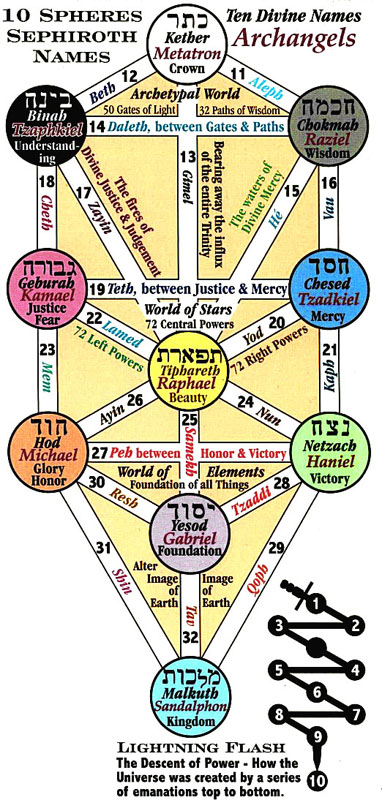
On 25 November, 1995, he finally admitted that in 1976 "My overriding interest was in cabbala and Crowleyism. That whole dark and rather fearsome never–world of the wrong side of the brain. ... And more recently, [in 1995 he stated] I've been interested in the Gnostics". [Steven Wells: "THE ARTFUL CODGER" in 'NEW MUSICAL EXPRESS' on 25 November, 1995.] Aleister Crowley’s life, a paradoxical blend of opulence and chaos, forms an odyssey through the annals of Western esotericism, marked by ambition, scandal, and an insatiable thirst for notoriety. He showed a particular talent for theatrically binding spirituality to its financial exploitation — a skill that underwrote much of both his notoriety and his cultic appeal. Seen from that angle, he emerges as a remarkably serviceable rôle model for occult entrepreneurship. More about him in a moment. For now, this biography. The spellings Kabbalah, Cabala, and Qabalah — with their varying q, k or c, single or double b, and occasional final h — reflect different transliterations and also, rather often, different traditions or rhetorical environments: Jewish, Christian, and modern occult. In some esoteric circles these variants were additionally burdened with gematric or symbolic significance, but that is not the whole story. Some occultists believe that numbers have a peculiar influence on their lives. For instance, they observe that events tend to happen to them on certain days of the week or month. They identify strongly with the number assigned to them at birth, and they vibrate to it; each of the numbers representing a unit in the mathematical, or geometrical, scheme of the universe. The Astral World, for example, is intimately concerned with numbers and depends on arithmetical calculations for its efficacy. We will soon discuss these concepts further. Science fiction is also dotted through a lot of Bowie's lyrics. 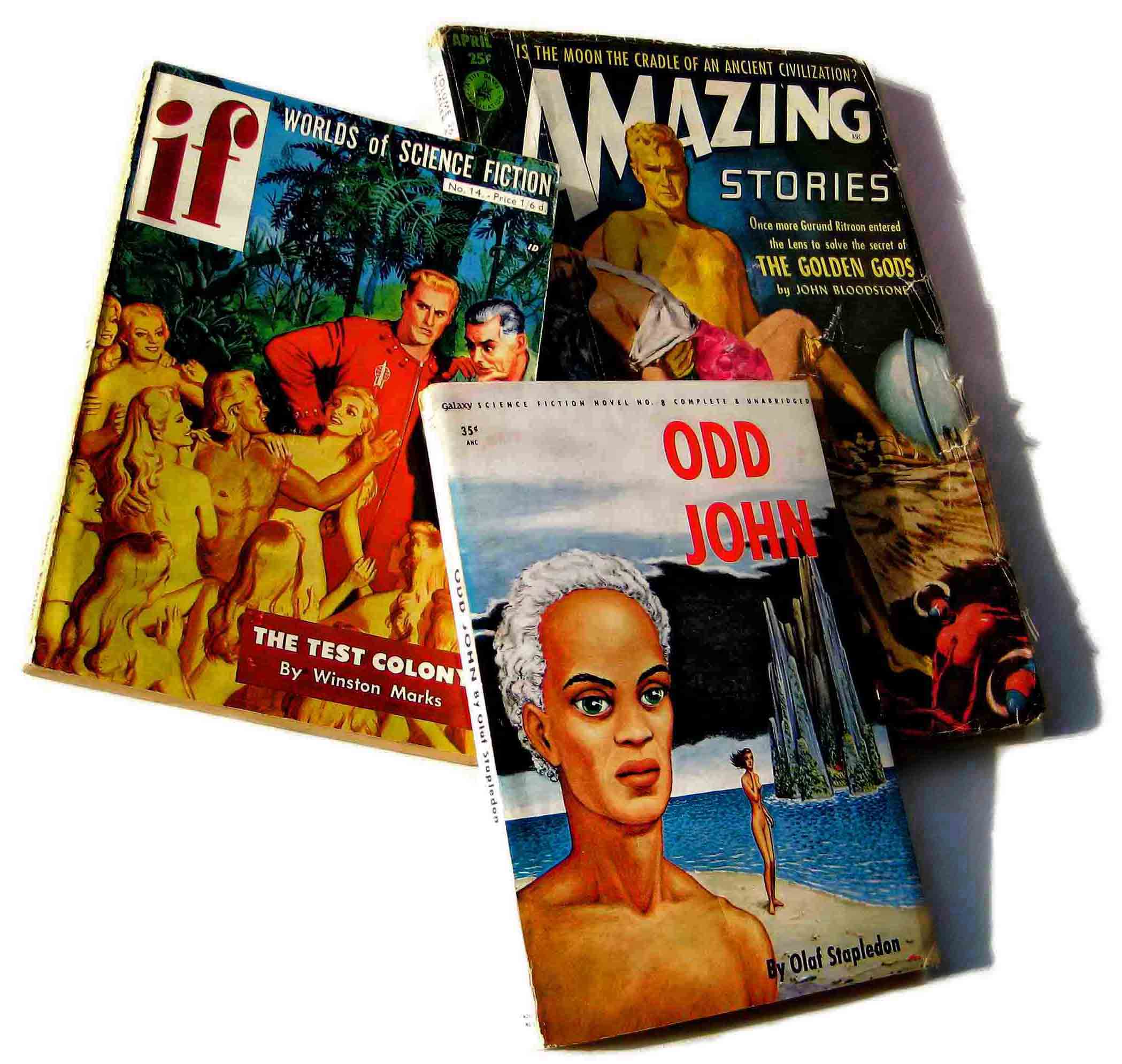
— Cover of 'Galaxy', "Odd John" by Olaf Stapledon: Ed Emshwiller, NY 1952. — Cover of 'Amazing Stories', "The Golden Gods" by John Bloodstone: Barye Philips, NY 1952. — Cover of 'If', "The Test Colony" by Winston Marks: Max Reach, NY 1954. Olaf Stapledon’s "Odd John" (first published in 1935; U.S. edition 1936) is a novel about a new species of superhumans who separate themselves from ordinary humanity, found an island colony, and ultimately destroy it themselves when discovery by the outside world makes their survival impossible. "Odd John" [David Robert Jones?] is widely credited with introducing, and arguably coining in modern science-fiction usage, the term Homo superior. Bowie: 'Oh! You Pretty Things' (1971): I think about a world to come Pulp science-fiction magazines often carried advertisements for the American Rosicrucian organisation A.M.O.R.C., founded in 1915. At one point — a historically specific episode, not a definition of the whole order — A.M.O.R.C. material echoed Crowleyan formulas such as 'Do what thou wilt shall be the whole of the Law' and 'Love is the law, love under will'. 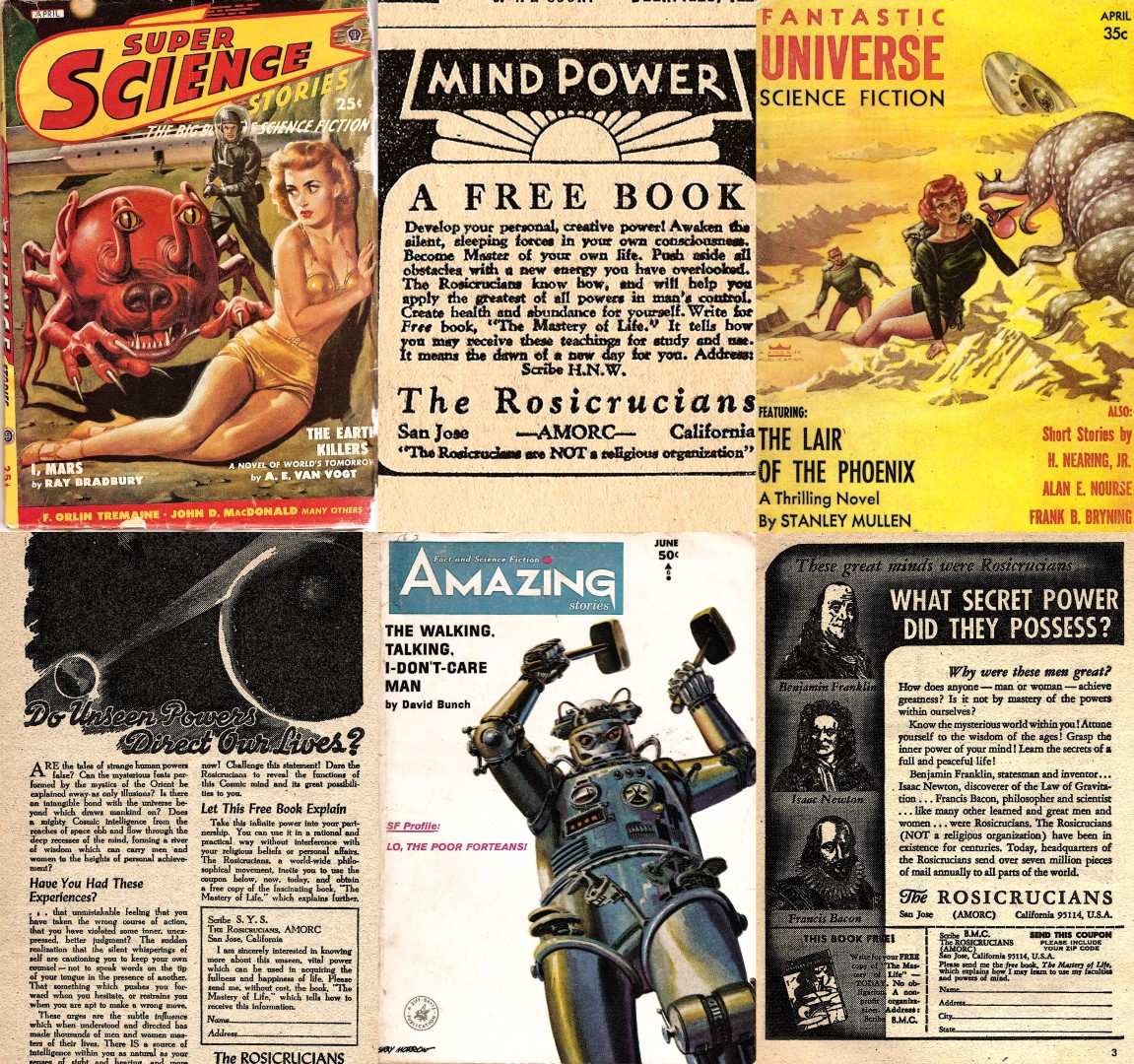
Covers and advertisements inside various American science fiction pulp magazines. Pulp fiction and occultism are really just a stone's throw away from each other. Elements of Rosicrucianism were incorporated into an English club for elitists called the Golden Dawn in 1888. Although Crowley was a prominent member, he was considered unsuitable by some. In 1961 Robert Anson Heinlein published a novel about a young Martian named Valentine Michael Smith: Stranger in a Strange Land. It is one of the earlier science-fiction novels to mention Crowley. One may read certain echoes of Thelema in it, but to declare that Heinlein's true purpose was to dramatise Crowley's anti-democratic worldview would be rather too magisterial. 
Robert A. Heinlein: "Stranger in a Strange Land", New York 1961. Jacket design by Ben Feder, Inc. Bowie: "I find that a lot of it I enjoy very much. I liked the idea behind it all, but I thought the conversation was very bad. Do you think it would translate well into film?" Charles Shaar Murray: Definitely. Was Bowie considering buying it? Bowie: "I've got it. I've written some music for it, anyway." [Charles Shaar Murray: "GAY GUERILLAS & PRIVATE MOVIES", in 'NEW MUSICAL EXPRESS', February 24, 1973] 
As Bowie is one of the most talked-about pop artists of all, his multiplication of personæ also mirrors pop culture, with its paranoid and para–religious myths of Starry-eyed Starmen Waiting in the Sky, Born in a UFO and visiting the earth. These beings either become or influence Leper Messiahs, Black Stars, Cleanest Stars, Falling Stars, Psychedelic Stars, Morning Stars, Shining Stars, Big Big Stars, Rock & Roll Stars, Regular Superstars, his Sort of Stars, and Bright Failing Stars, all with Eyes of Stars. Alternatively, they try to live as unobtrusive Lodgers or Passengers among the Earthlings, Undetected by the Stars. It's often said that stars are born and not made, so Bowie discovered a star, A new killer star with stars in your eyes. He’s a star star, not a gangster, not a filmstar, not a popstar, not a marvel star, not a flam star, not a pornstar, and not a wandering star: I move the stars for no one. What about a trickster, a prankster? The Stars are out tonight. Stars must stick together. Stars are never sleeping. What does 'Pop Star' mean? That millions and millions of people love you the world over? People flock to pop concerts to see rather than to hear the stars — if they can see them, they can be them, buy them, buy for them. Records are sold through the eyes not the ears. Why be a star if you have no style? So, the stars look so special and the stars look very different today. Is style where you locate the meaning of a work? 
On February 12, 1997, Bowie unveiled his star on the Hollywood Walk of Fame. Screenshot of a Google search for this event. One should, however, keep the surrounding context in view. Mary Angela Barnett, whom Bowie met in 1969 and married in 1970 (later known as Angie Bowie and mother to their son), played a significant rôle as a witness to the era in question, which will be explored further in due course, until their divorce in 1980. In a 2003 interview with the author of this essay, she reflected, "We were only 21 and 23 for God's sake!", suggesting that much of what happened, was said, and was thought can be viewed through the lens of youthful exuberance. [My interview with Angie Bowie in 2003] Her perspectives on this period provide a counterpoint to the more romanticized or mythologized accounts of Bowie’s engagement with the occult. Her observations about his behaviors, such as performing exorcisms, underscore the often troubling reality behind his artistic persona. More on that later in this essay with plenty of details. Everyone’s got feelings about Angie, some argue that without her drive, ideas, and ambition for her husband, Bowie might not have achieved the success he did. Bowie referred to his wife as "Star" or the "Prettiest Star". When he passed away on January 10th, 2016, she was residing in the Celebrity Big Brother house. Upon hearing the news, she broke down in tears in front of the camera and, visibly shaken, acknowledged, "The stardust is gone". Angie Bowie appears to be one of the few individuals who takes a stance beyond mere criticism of him. Her statements should always be viewed within the context of the main theme of this essay: 'Bowie and the Occult'. However, one may question how context ensures the accurate interpretation of a message. Can context govern entire meanings? Is there a priority or hierarchy of meanings? A totem pole? |
| "I had to cram so many things to store everything in there" |
|
Which books of occultism excited the Age of Aquarius generation of the 1960s — that milieu which helped to shape Bowie’s occult background? In the early 1970s, occult bookshops were nearly as plentiful as health-food shops. Hermann Hesse's "Steppenwolf" and "Siddhartha" swamped the book market. Countless books on Yoga, Tantra, Zen, Buddhism, and other Eastern spiritual traditions were imported from the Far East. Louis Pauwels’ and Jacques Bergier’s "The Morning of the Magicians" (French original 1960, English translation 1963) influenced everyone who tended to believe in illuminati conspiracies and trashy occultism spiced up with so–called grand names. Colin Wilson wrote a Crowley novel "Man Without a Shadow" (1963) and "The Occult" (1971), Richard Cavendish's big book was "The Black Arts" which featured Crowley and the Golden Dawn (1968). Also Francis X King published his "Ritual Magic in Modern England" (1970) and many other revealing books on Crowley and the Golden Dawn; most influential was Ellic Howe's "Magicians of the Golden Dawn" (1972). Ithel Colquhoun provided an insider's view with "Sword of Wisdom" (1975). William B. Yeats' "Autobiography" (1926, 1955) made reference to the founder of the Golden Dawn, Samuel Liddell MacGregor Mathers, and tended to counterbalance Crowley's scurrilities on its history. Arthur E. Waite's "Shadow of Life and Thought" (1938) was prejudiced by animosity, and second–generation sources, which consisted in published writings by Israel Regardie "My Rosicrucian Adventure (1936, 1971) and "The Golden Dawn" (1937, 1946), Virginia Moore "The Unicorn" (1954). The period also saw a surge in works addressing altered states of consciousness and unconventional spirituality. Carlos Castaneda's "The Teachings of Don Juan" (1968) explored shamanic practices and indigenous mysticism, while Timothy Leary's "The Psychedelic Experience" (1964) bridged Eastern philosophy and psychological transformation, albeit through the lens of psychoactive substances. Both works resonated with the counterculture's hunger for transcendent knowledge, blurring the lines between mysticism, psychology, and the search for meaning. A cascade of luminaries aligns with the themes of mysticism, spirituality, occultism, and the countercultural exploration of altered states of consciousness: Alan Watts, Paramahansa Yogananda, Aldous Huxley, Jiddu Krishnamurti, Dion Fortune, Robert Graves, Mircea Eliade, R. J. Stewart, Stanislav Grof, Ralph Metzner, John C. Lilly, Marshall McLuhan, Terence McKenna, Joseph Campbell, Philip K. Dick, and Arthur Koestler. 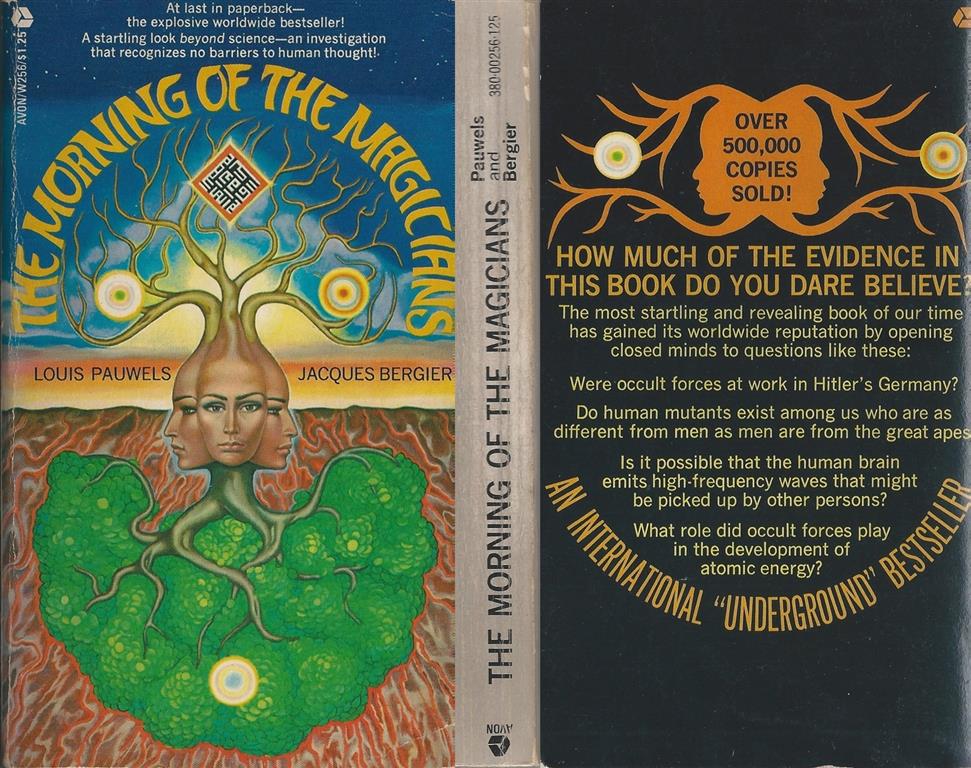
Louis Pauwels + Jacques Bergier: "The Morning of the Magicians", New York 1968. This book was first published in England under the title "The Dawn of Magic" in 1963. Translated from the 1960 French "Le Matin des Magiciens". 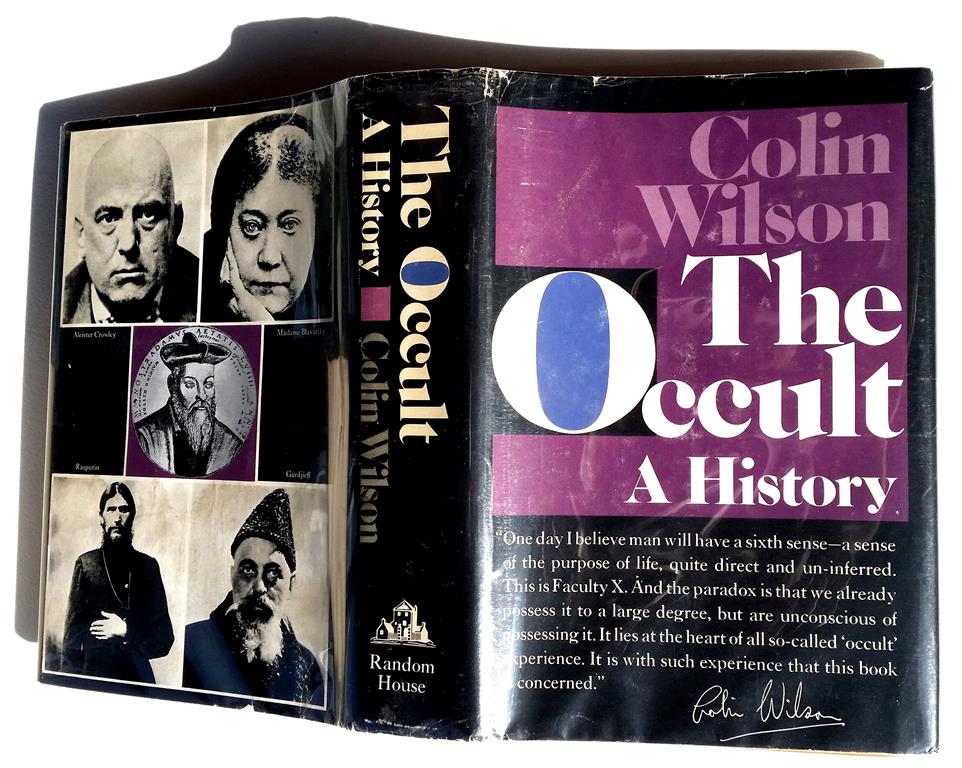
Colin Wilson: "The Occult. A History", New York 1971. Allegedly, Bowie was a Colin Wilson reader. — "The God of the Labyrinth" (US title "The Hedonists"), London 1970. Many reprints. — "Mysteries. An investigation into the occult, the paranormal and the supernatural", London 1978. Many reprints. 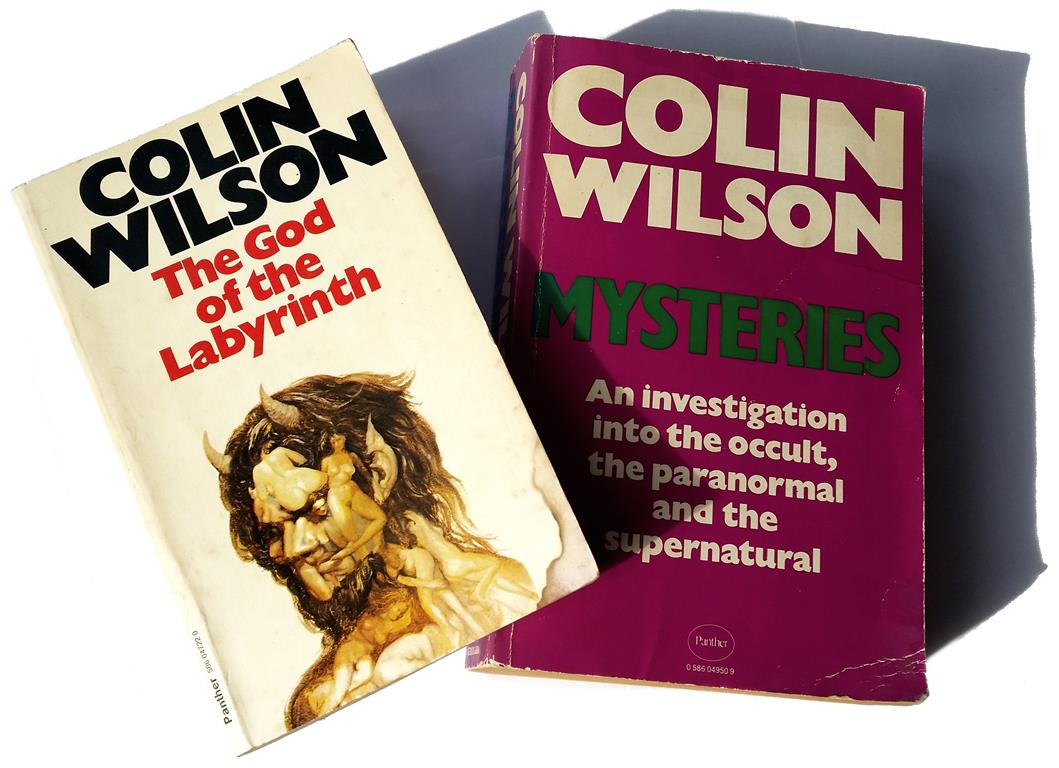
Other books by Wilson: — "The Outsider" (1956). — "Religion and the Rebel" (1957). — "Aleister Crowley: The Nature of the Beast" (1987). ... and, and, and ... 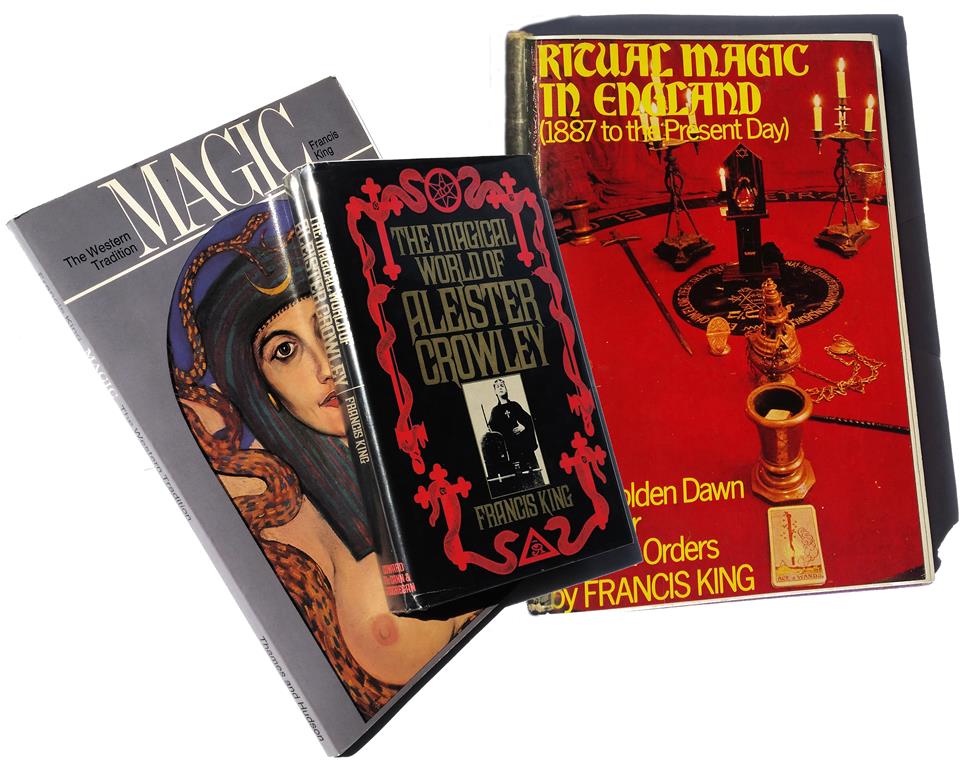
Francis King: — "Magic. The Western Tradition", London 1975. — "The Magical World of Aleister Crowley", New York 1977, 1978. — "Ritual Magic in England (1887 to the Present Day). The Golden Dawn & Other Magical Orders", London 1970. 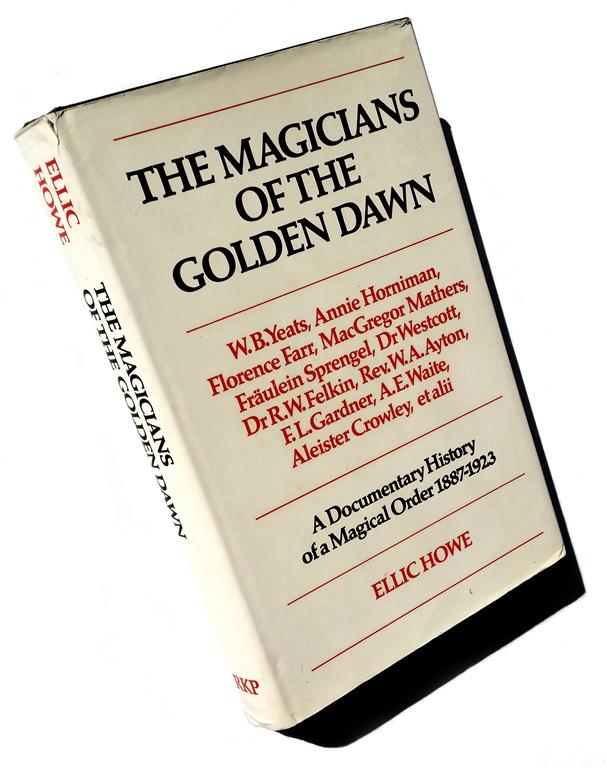
Ellic Howe: "Magicians of the Golden Dawn. A Documentary History of a Magical Order 1887–1923", London 1972. Sci–fi writers like Kurt Vonnegut and Robert A. Heinlein's novels were read alongside G.I. Gurdjieff or Madame Blavatsky, the co–founder of Theosophy, an organization that established Yoga and other Eastern imports in the minds of the hungry and curious. Writings by Rudolf Steiner graced the bedside tables of many; C.G. Jung, Henry Miller, D.T. Suzuki, "The Tibetan Book of the Dead", the "I Ching", Crowley's "Confessions" (edited by Crowley’s colleagues John Symonds and Kenneth Grant in 1969) and Crowley's secretary, Israel Regardie's "Eye in the Triangle" (1970) accompanied the walk into the Age of Aquarius. Robert Charroux and Erich von Däniken wrote about gods coming from the skies. Alvin and Heidi Toffler thought about a "Future Shock" in 1970 and the astronomer J. Allen Hynek undertook "The UFO Experience: A Scientific Inquiry" in his 1972 publication. Books came stuffed with the requisite keywords. Whether they were riddled with factual error (fake news, conspiracy theories, charlatanry) or merely lousily researched hardly mattered: the dawning of the Age of Aquarius served as the kickoff for the dawning of post-modernism, and people drew inspiration from whatever tasted faintly of the occult. |
|
"They take some brain away / Then turn my face around"
What is Gnosticism, and is it to be found in Bowie's fragments of reality? |
|
'Gnosis' comes from the Greek word for knowledge or insight. In the history of religions, however, 'Gnosticism' is not simply a way of knowledge as opposed to faith, but a modern umbrella term for a range of late-antique religious movements centred on redemptive insight, revelation, or awakening. The following definition of Gnosticism shows it as something partly spiritual and partly psychological — a chronic dislocation or unsettledness with the world. Those who are happy with and in the world, who benefit from good health, and who experience love and satisfaction in their preferred fields, seem not to need the universe–healing Gnosticism, which I believe is a religious tool to heal the agony of unbearable life. Gnostics live in two worlds at the same time. They seek a divine reality, a realm within this world here, which is only a sort of shadow world. Bowie's pervasive sense of gloom, exemplified by lyrics such as "hitting an all–time low" in 'Ashes To Ashes' (1980), may make the understanding of his various personæ even more intriguing. 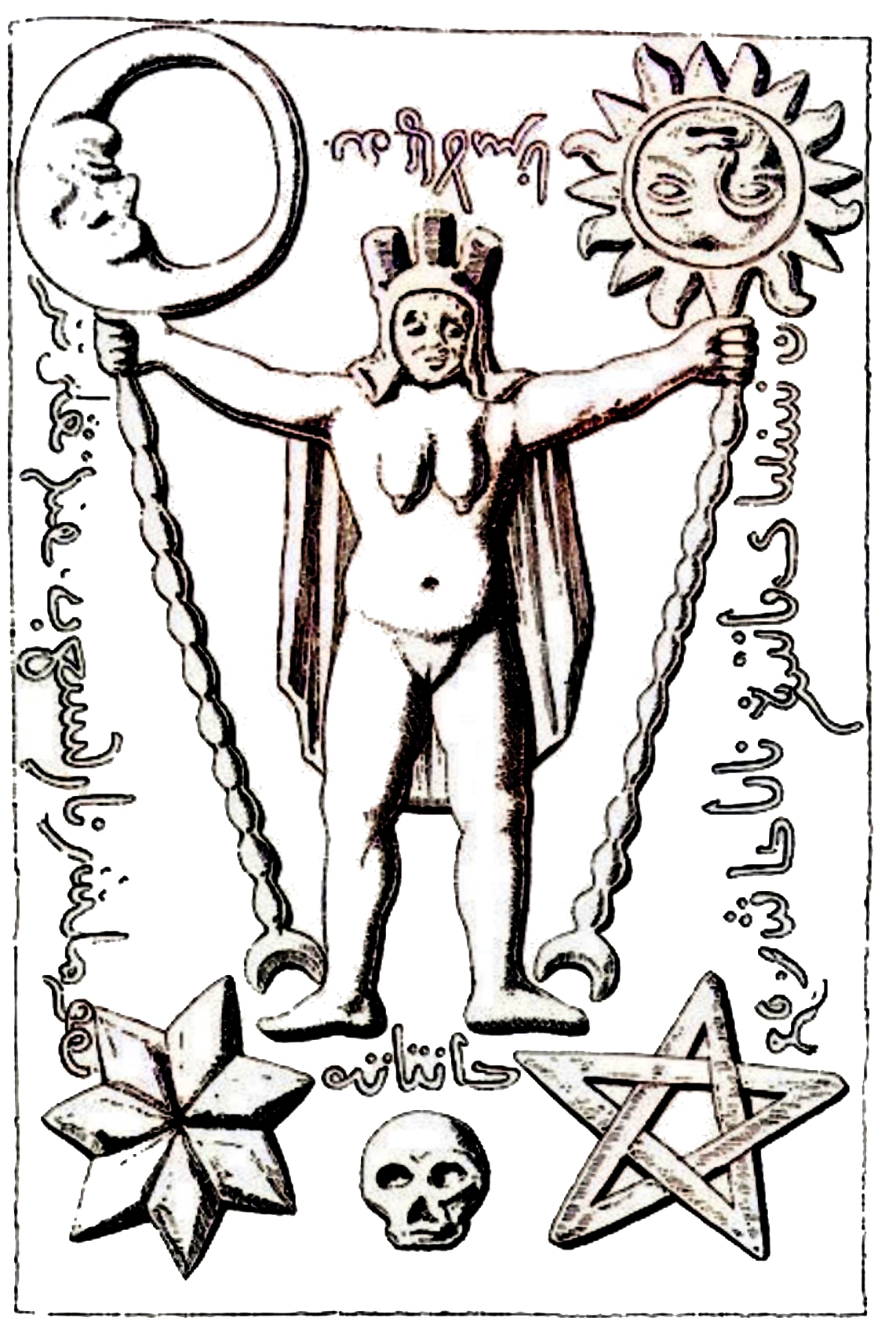
Historically speaking, Gnosticism is a varied set of overlapping religious traditions that often contradict one another. That very instability has encouraged later readers to invent their own private Gnosticisms. A world felt to be flawed, alien, fallen, or simply 'a rotten place' may well provoke fantasies of salvation. Art, music, hedonism, creativity, religiousness, and all manner of alternative lifestyles according to 'Optimum through Maximum' or 'Optimum through Minimum' may hint at a gnostic undercurrent of self-realisation beyond, yet still through, this world. Bowie expresses this with: "For you're dancing where the dogs decay, defecating ecstasy" (1974). He created a world beyond his earthly and wealthy existence through constant manifestations of different stage personæ, which occasionally blended with his real personality but were mainly used to disguise his alleged alienation from himself and from society's mechanisms. This was a recurring motif in his questioning and exploration of an authentic self. "There was a theory that one creates a doppelgänger and then imbues that with all your faults and guilts and fears and then eventually you destroy him, hopefully destroying all your guilt, fear and paranoia. And I often feel that I was doing that unwittingly, creating an alternative ego that would take on everything that I was insecure about." [Tony Parsons: "Welcome Back Bowie", 'Arena', 1993.] For the Shadow Man is really you('Shadow Man', 1970) In some religious traditions — Manichaean, Jewish, and later esoteric — one encounters ideas of a heavenly counterpart, a guardian figure, or a higher form of the self. These motifs can be compared, but they should not be collapsed into a single doctrine. A personal angel, astral body, star, or self-daemon may serve as later symbolic equivalents; historically, however, the traditions remain distinct. Is the real self that which resists symbolisation and imagination absolutely? |
| "how the others must see the faker" |
|
Andy Warhol: "I'd prefer to remain a mystery; I never like to give my background and, anyway I make it all different all the time I'm asked. It's not just that it's part of my image not to tell everything, its just that I forget what I said the day before and I have to make it all up over again. I don't think I have an image, anyway, favourable or unfavourable." [On the cover of the double–album version of "Andy Warhol's Velvet Underground featuring Nico", 1969.]
Interviewer about Bowie: "On reflection it occurs to me that wondering whether or not Bowie is being as straightforward and comforting as he appears to be is pointless, just as to depict him as the archetypal manipulator–chameleon who invariably vanishes behind a verbal smokescreen of his own making is both fatuous and unfair. ..." Bowie: "The idea that one doesn't have to exist purely on one defined set of ethics and values, that you can investigate other areas and other avenues of perception and try and apply them to everyday life. I think I've tried to do that. I think I've done that fairly successfully. At times, even if only on a theoretical level, I've managed that. As far as everyday life goes, I don't think so… I have this great long chain with a ball of middle–classness at the end of it which keeps holding me back and that I keep sort of trying to fight through. I keep trying to find the Duchamp in me, which is harder and harder to find (laughs). ... That idea of being controlled by an aesthetic set of values does recur with me. ..." [Marcel Duchamp was a French–American artist, often associated with Dadaism and Surrealism. He is best known for his innovative and controversial works that challenged traditional notions of art. His legacy provides a rich framework for exploring the complexities of identity formation. It emphasizes that identity is not fixed but is continuously shaped by personal beliefs, societal influences, and the interplay between individual and collective values.] Interviewer's conclusion: "David Bowie is an intelligent, articulate and fascinating man who is still writing messages to himself and sealing them in bottles. It's an obsessively private process that for obvious reasons he offers up for public scrutiny. Whatever he may think or feel, Bowie has done both good things and bad things. He has also done a lot more out of the blue than he may ever surmise. Unsuspectingly I'm sure, Bowie positively leaks loneliness; it wraps itself around him like a clammy shroud. But the man is driven ..." [Angus MacKinnon: "THE FUTURE ISN'T WHAT IT USED TO BE" in NEW MUSICAL EXPRESS, 13 September 1980.]
Somewhere in the tinkered-with mythography of Bowie’s personal history lies the claim that, when he was a child, several relatives on his mother’s side of the family suffered psychiatric difficulties requiring treatment, sometimes reportedly involving religious hallucinations. This kind of pain is perhaps comprehensible in some of his lyrics ('Wild Eyed Boy from Freecloud', 'Unwashed and Slightly Dazed', 'The Width of a Circle', 'All the Madmen', 'Jump They Say'): it made him strip "myself down" and fill the blank spaces left behind "with a completely new personality. When I heard someone say something intelligent, I used it later as if it were my own. ... It's just like a car, replacing parts." In 1972 he felt that his "brain hurt like a warehouse / it had no room to spare". Who is the "I" ? And how many are there ? |
| Famous keywords — "In the shadow I'll clip your wings" |
|
Bowie's keywords Aleister Crowley and the Golden Dawn show us where to dig deeper to understand his symbolism.
The Golden Dawn was a magical secret society, a crowning glory of the occult revival which flourished at the end of the 19th century and taught a unique blend of Jewish mysticism (called Cabbala, also to be found in Bowie's symbolism), astral travel, magic, yoga (also practised by Bowie) and how to communicate with angels and demons. For this latter communion it was first necessary to empty the mind, to make room for the unknown to enter — something that bears a strong resemblance to Bowie's 'cut–up' method of writing lyrics. "I've always felt like a vehicle for something else but then I've never really sorted out what that was" [...] "There's a feeling that we are here for another purpose." [Charles Shaar Murray: "Goodbye Ziggy And a big hello to Aladdin Sane" in 'New Musical Express', 27 January, 1973.]. Lindsay Kemp described Bowie's working method: "You nick a touch of this, you nick a touch of that. Then you do it better simply by using Scotch tape, sawdust and a little imagination." In a similar manner, he created a bundle of vague biographies for himself by piecing together 'objets trouvés' (items found in books, newspaper articles about himself, interview questions, TV programs), as well as intentionally crafting personæ for the stage. 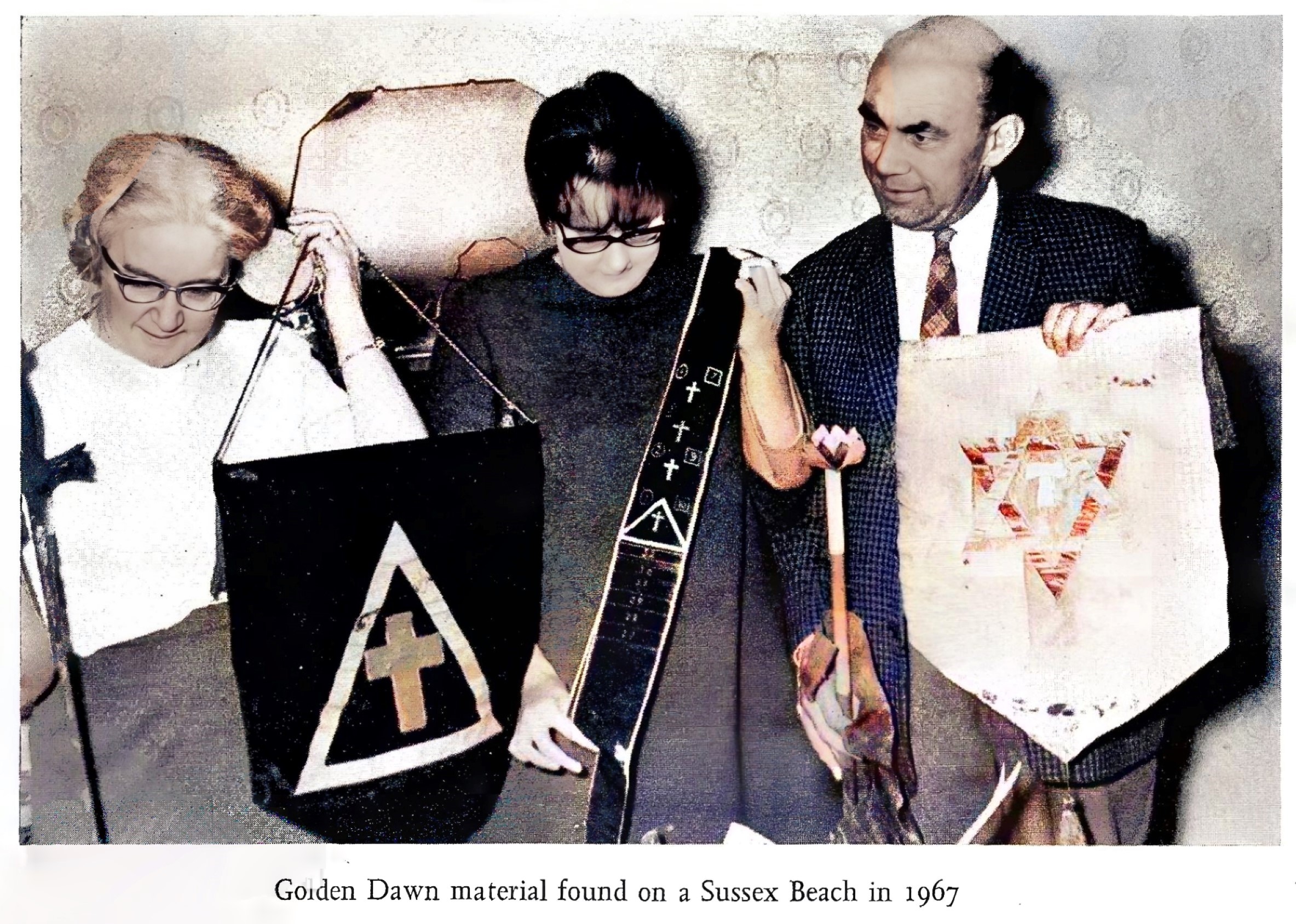
Golden Dawn material found on a Sussex Beach in 1967. Allegedly. Francis King: "Ritual Magic in England (1887 to the Present Day). The Golden Dawn & Other Magical Orders", London 1970. [Colored with AI] The Cabbala combines several factors: the analytical and linguistic aspects of it have certainly proved of interest to the erudite side of Bowie's character, while another part of him has been drawn to the meditative Cabbala, where one immerses oneself in the Divine attributes of words and numbers to ascend spiritually. There is also a physical way of Cabbalistic working, the 'Ecstatic Cabbala', which involves exercises in breathing and movement, as well as chanting and singing. The unleashed creativity resulting from the visions of cabbalists, as well as the act of documenting these visions, imbues the experience with a heightened sense of reality and sanctity. It is as if an alchemical process takes place, transforming both the writer and the text itself, giving rise to a world that extends beyond the confines of our own. This remarkable feat of visibility, brimming with intricate details of the trance–induced imagery, represents an experimental endeavor where multiple perspectives converge and leap from one point to another, weaving together fragmented sensory impressions. It is worth noting, however, that practitioners of occult traditions do not seem to conform to the conventional notion of a coherent or unified identity, as commonly understood in traditional concepts of personality. The elusive moment of experiencing visions gives rise to a transformative function of perception, an expanded seeing that encompasses the entire realm of knowledge. This expanded visual perception becomes increasingly intricate, branching out in countless directions. The absence of precise definition within these profound experiences, such as the lack of a singular emphasis on a symbol–bearer, allows for new comparisons between signs and symbols to emerge. This, in turn, paves the way for the exploration of new codes, rhetorical devices, and the pursuit of novel structural frameworks. The visions serve as extensions of human consciousness, facilitating a state of gnosis. Through interpretation, a heightened level of reflection emerges, not attributable to any specific author, and it transcends the need for constant repetition in a theatrical production. Instead, it serves as a metaphor for the continuous pursuit of enlightenment strategies. In the rôle of an image curator immersed in trance experiences, this particular kind of occultist (cabbalist) harkens back to the ancient notion of creation through idealistic aesthetics. The notion of authorship is suspended in a materialistic sense, reminiscent of the concepts embraced by figures like Marcel Duchamp or Andy Warhol, who boldly fashioned themselves as artist–as–star. According to Warhol, everything and everyone, including religion, fell within the realm of showbusiness. In a similar vein, the cabbalist reorganizes pre–existing creations derived from trance–induced visions, effectively melding old traditions into a new and cohesive whole. Similar to surrealism, occultism seeks to disrupt the dominance of rational philosophy and logic, as exemplified by Descartes. The surrealists expressed their vehement disdain for bourgeois society through acts of provocative protest. Occultism, in turn, is rooted in the belief in a higher reality fostered through various forms of association, such as the cabbala, and a steadfast faith in the potency of dream and trance–induced images. It places great importance on the unrestricted flow of words, liberated from the constraints of intellect. Within the subculture of the occultist, a multitude of voices, colors, and materials must be embraced and experienced. The euphoria derived from these abundant images and voices shapes their identity and reflection. Like any utopian ideology, occultism derives its power from an inherent yearning for a boundless world, encapsulating both the desire to master one's own reality and the longing to break free from its shackles. Gnosis, in its essence, demands the dismantling of structure from life itself. Within Jewish Cabbala one must distinguish between theoretical or theosophical speculation and practical Cabbala. The latter could indeed involve divine names, protective operations, or ritual means of warding off hostile forces; but it would be too neat, and too theatrical, to define the whole tradition as a manual for invoking holy powers and combating demons. Modern occultists, by contrast, often recast the Tree as a chart of inner states and astral correspondences. Some cabbalists regarded the Cabbala as a treatise that would enable them to invoke the holy powers of the Universe and combat demons. Some modern cabbalists regard it as the foundation of all occult science and a chart of the Astral World: a state of inner being with the same objective as the planets in our solar system. The modern Cabbalist is an inner space traveller. A Starman — a traveller between the inner world of the mind and the outer world of reality. |
|
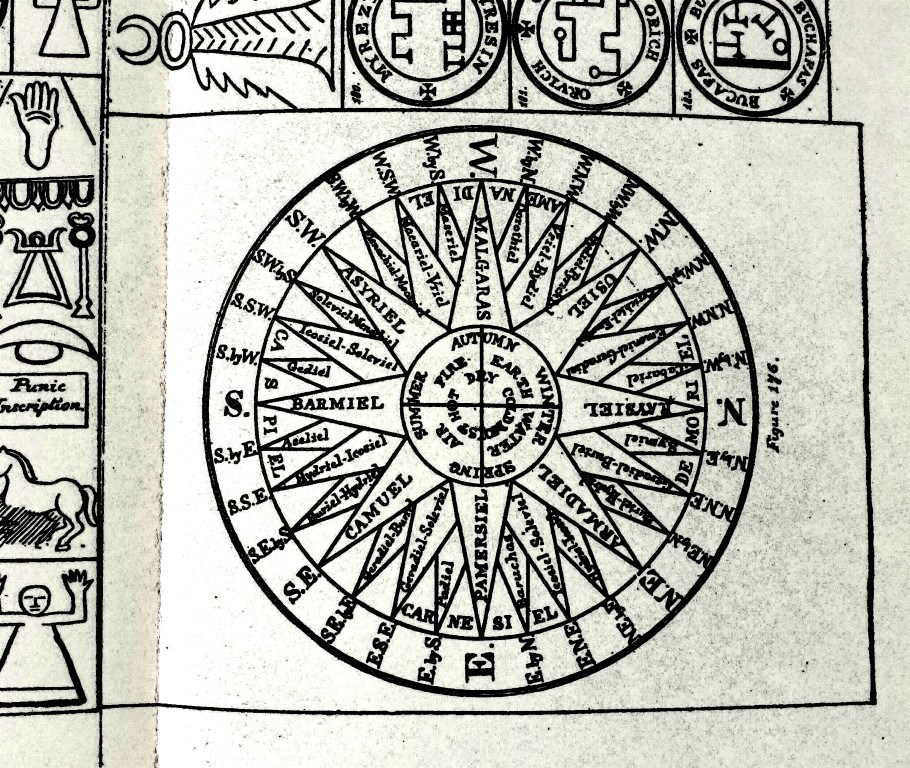
The Wheel of 32 Angels from the Goetia of 1904:
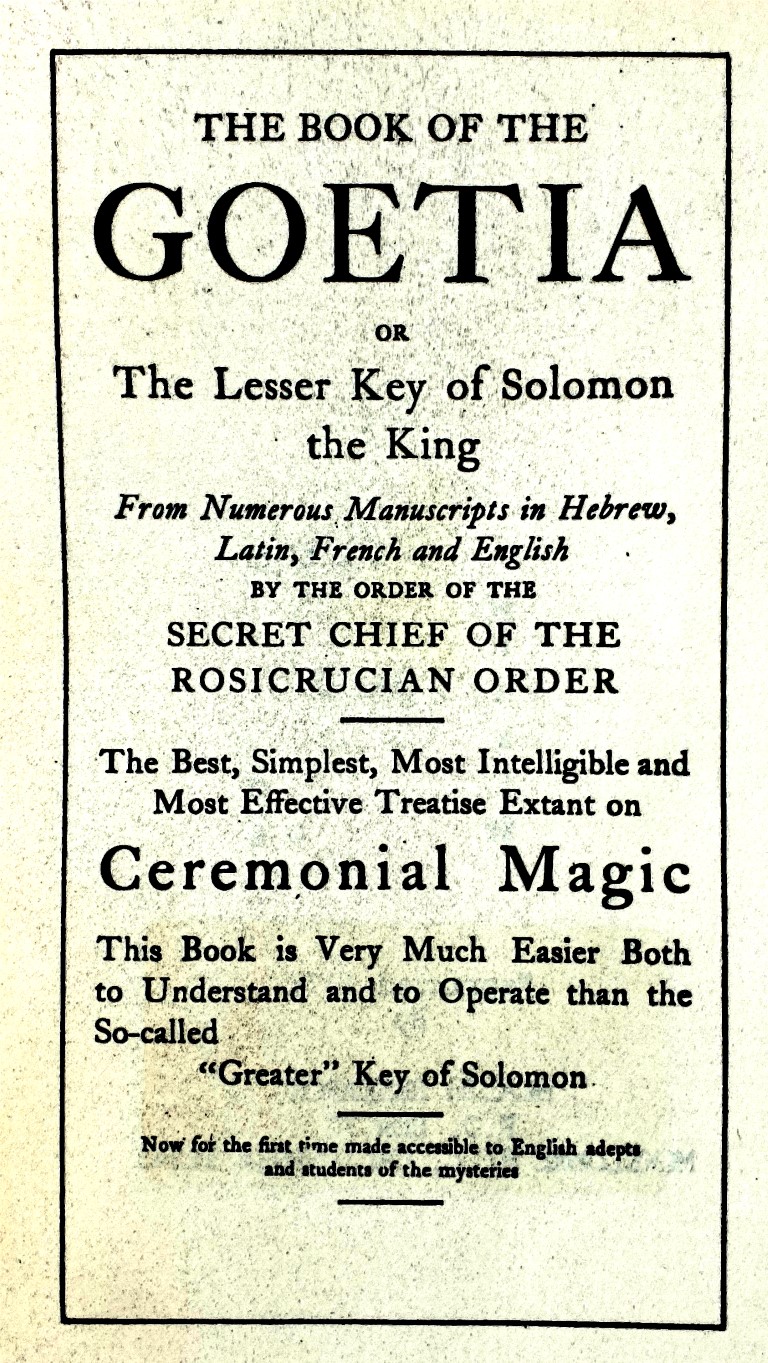
"The Book of the Goetia or the Lesser Key of Solomon the King — Secret Chief of the Rosicrucian Order — Ceremonial Magic". |
|
|
Adam Kadmon: The Archetypal Man who has all the principles and faculties comparable to the Sephiroth (Sefirot) (Stations) of the Tree of Life. From: William Wynn Westcott (Golden Dawn): "An Introduction to the Study of the Kabalah", 1910. |
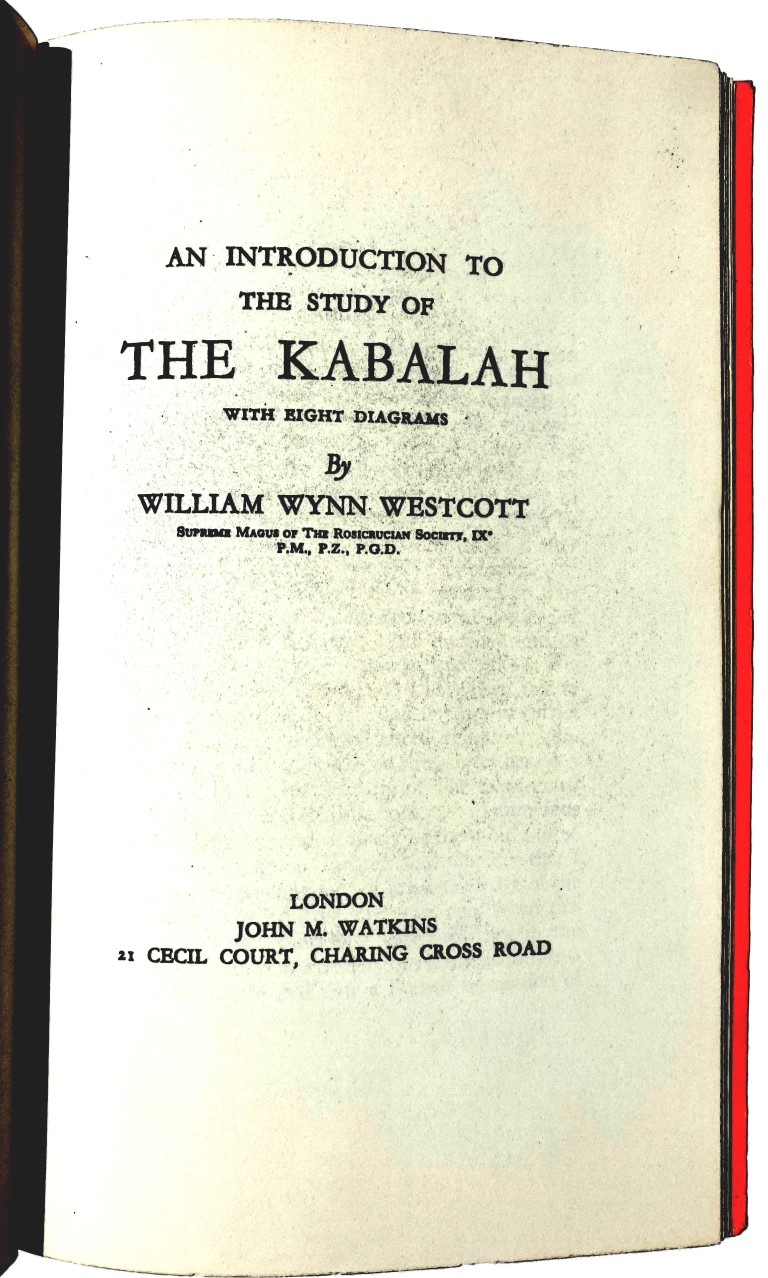
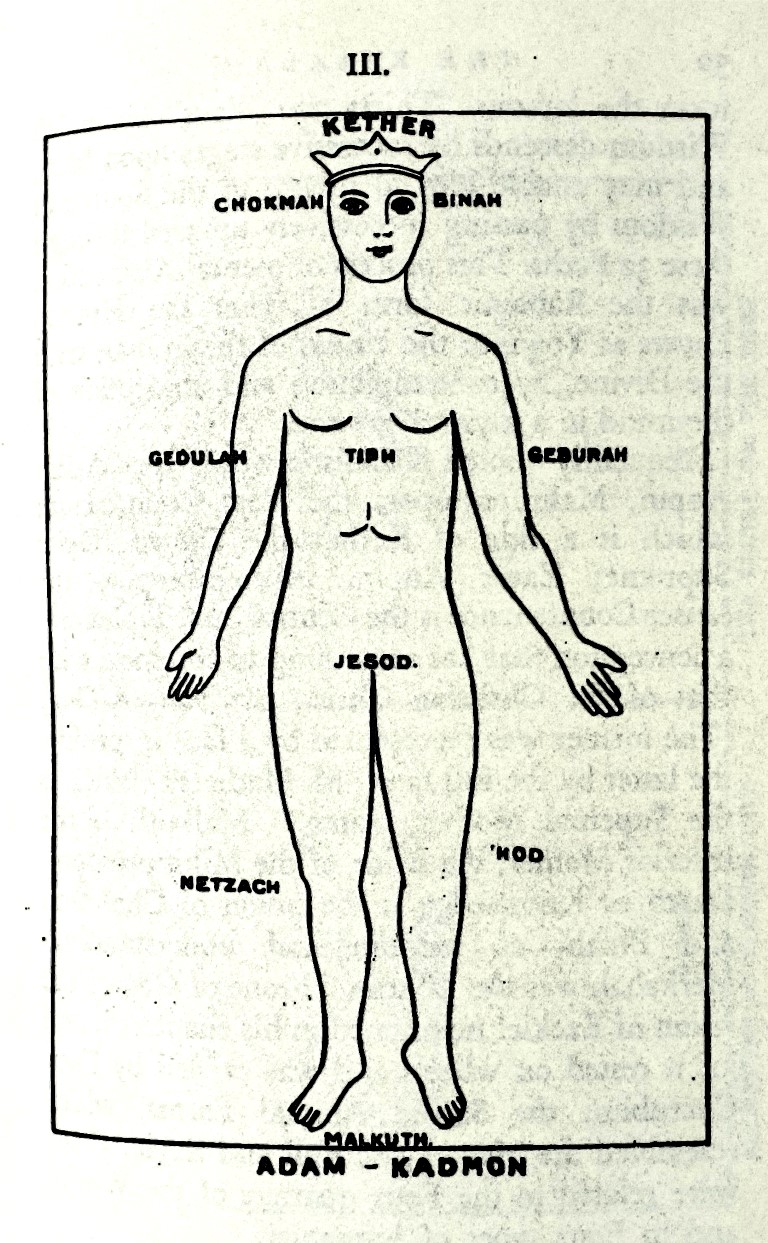
|
|
You will also find that Inner space in the paintings of surrealists like Max Ernst, Salvador Dalí, Giorgio de Chirico, René Magritte, Yves Tanguy to name but a few.
The term inner space was probably coined by the British sci-fi writer James Graham Ballard (1930–2009) in the late fifties, as a counterblast to the phrase outer space, which more or less summed up science-fiction literature at the time. He often wrote in the post-apocalyptic dystopian subgenre, sometimes in an episodic, non-linear style. He offered an open narrative in which the act of reading itself became part of the creative process.
In several of Ballard's novels and short stories, Cape Kennedy is a ruin, and the astronauts are dead, circling above Earth in decaying orbits. Does that sound familiar to Bowie experts?
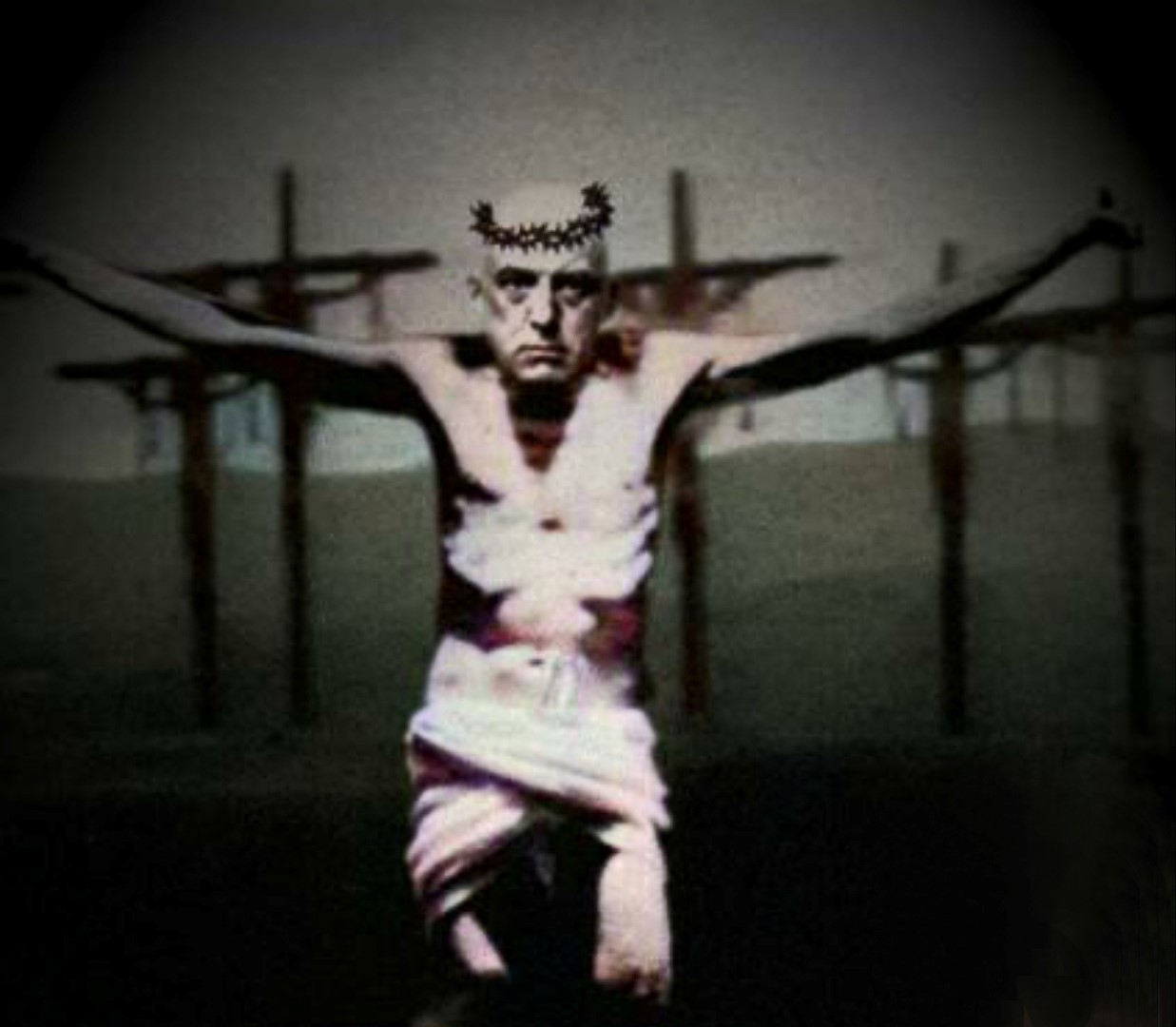
Self–styled prophet Aleister Crowley. Cartoon by Richard T. Cole. Aleister Crowley was born in England in 1875, into a wealthy and religious family at the height of the Victorian era. In 1898 he joined the Hermetic Order of the Golden Dawn. In Egypt in 1904, Crowley penned an occult poem heralding the dawning of a New Aeon, which would be governed by the Law of "Do What Thou Wilt" (as can be found in Bowie’s 'After All', 1970). After the death of one of his students, Crowley’s life took a turn for the worse. His reputation in the British press as "The Wickedest Man in the World" was now, more than ever, working against him. Crowley’s later years were overshadowed by poor health, drug addiction and a desperate hunt for money. In 1935, he was declared bankrupt and mostly lived from the monies from his religious followers. He got through the London Blitz and eked out his existence in rural hostels; he died in Hastings, England in 1947; in the same year that Bowie was born, in a country where bomb craters still scarred major cities. Crowley expanded the limits of the Golden Dawn by advocating the identifying of oneself with various Gods (called Assumption of God Forms), union with those Gods (angels and demons) during orgasm and / or consumption of mingled male and female sexual fluids. Crowley's key maxim was "Do what Thou Wilt", which (among many other interpretations) with the Greek word Thelema which stands for Will. In the Crowleyan world, 'Thelema' refers to sex magick (which Crowley spelled 'Magick' to distinguish it from the purely ceremonial variety). It involves reaching illumination during sexual intercourse through techniques that focus sexual energies on a wish, a magical seal, a lamen — those mystical projections embodying desires, such as the pursuit of silencing the neighbor's cacophonous pet. 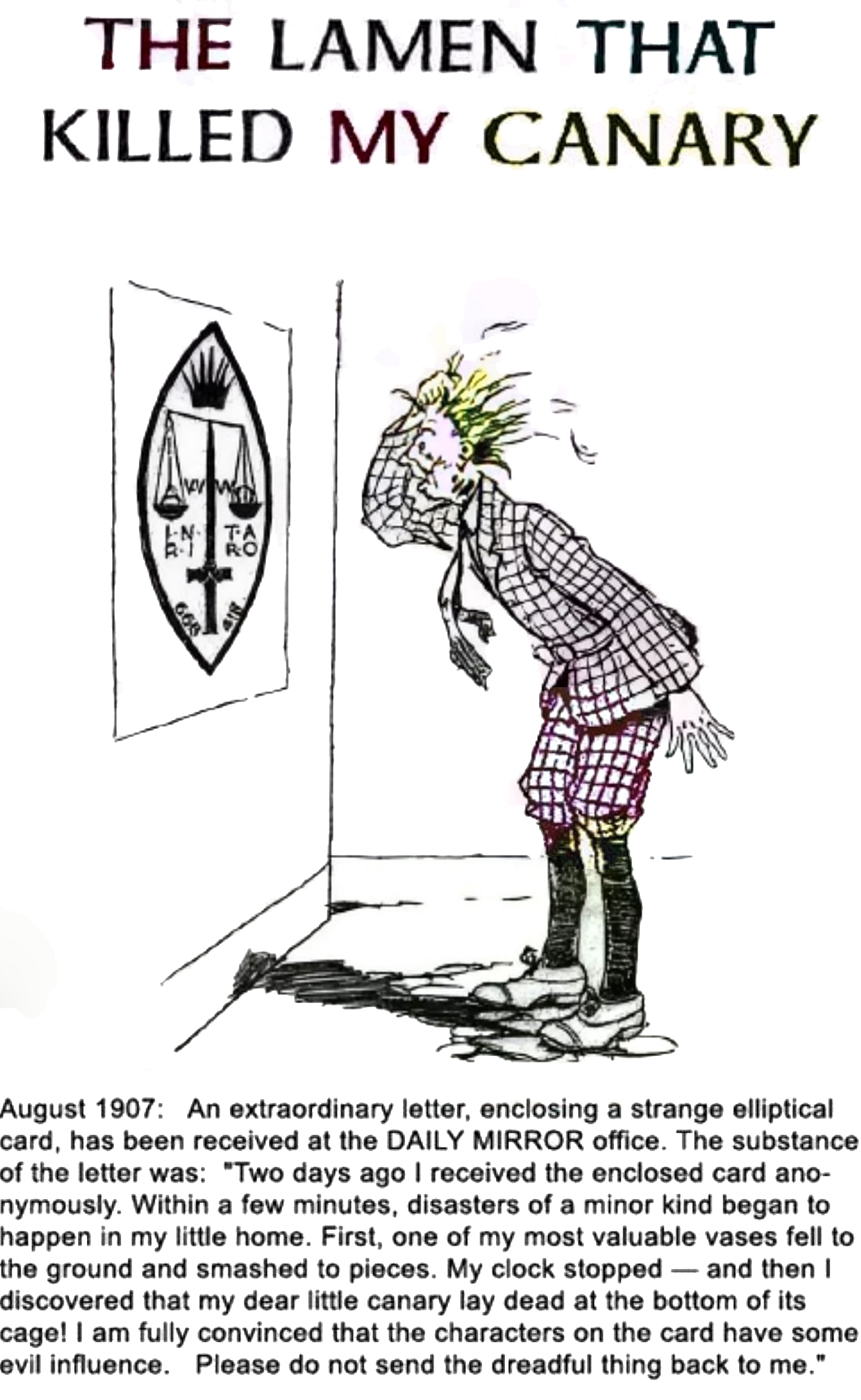
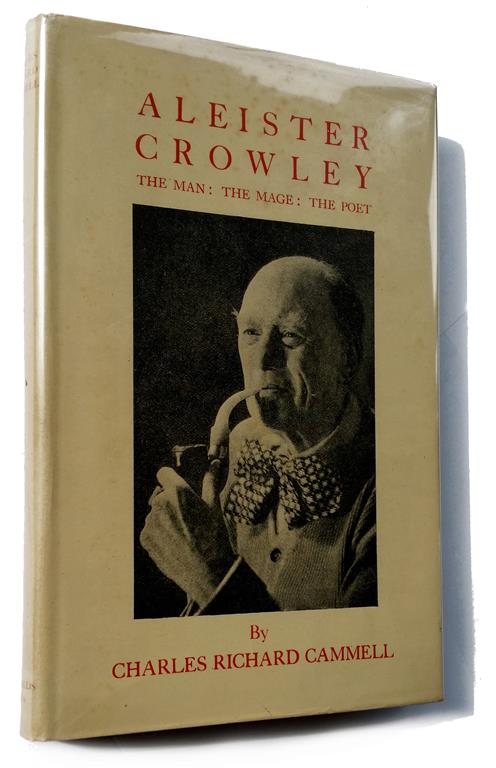
Charles Richard Cammell: "Aleister Crowley. The Man: The Mage: The Poet", London 1951. Crowley adherents are much preoccupied, even obsessed, with his concept of Thelema: a new religious revelation whose key phrases are 'Do what thou wilt shall be the whole of the Law', and 'Love is the Law, Love under Will.' This was Crowley's missionary enterprise that was supposed to sort out History, Religion, Philosophy, Magick and everyday life. That it is largely a straightforward plagiarism and distortion of Augustinus, Rabelais, Schopenhauer and Nietzsche does not appear to worry them; nor that Thelema is based on faith and individual conviction, rather than knowledge and psychology — and is therefore not truly Gnostic in nature. As a doctrine, Thelema (be it called "the new Aeon", "the new religion", the "new magick" or whatever) will generally "pretend" and "claim," but rarely try to prove a thing objectively on the basis of evidence. One could therefore argue that Thelema is as much a prejudice as it is a belief-system. As the inventor of the doctrine, Crowley is seen as the standard and infallible. Discussion of the Crowley–Bible The Book of the Law, is forbidden, maybe because in his diaries, Crowley identified its source of inspiration with "Thee Satan my savior"? Adherence to the Crowleyverse (a strict following of his "teachings," "orders," "ideas" etc.) produces, step–by–step, a state of divorce from reality. Because Crowley's visionary blueprint is overshadowed by his deficient biography, a trend has started among Crowleyites of differentiating between the "man Crowley" and Crowley the "Thelemic prophet." This limits the ability to think objectively or critically, substituting activism, beliefs, cultishness, ritualism, and myth. Outside the occult closet, Crowley is of significance at universities where topics for seminars are running short. Only after long hesitation have academics (with their absurd rules and insipid formulæ) taken an interest in 'Occulture'. While 'Occulture' itself is now bred "in vitro" as a product for the publisher supermarket, or disemboweled asexually at so–called international congresses, where it's given a first–class burial; the cadaver shivers until people are sure that it'll dance again. Crowley's world consisting of theoretical self–dissolution, strategies to disjoint personality, identity and action — all of which resulted in experiments on himself alone, and narcissistic idolising of himself alone, support the need for a McDonald hamburger. Today, Crowley is a moderately good product with a strong flavour, consumed as quickly and easily as possible. He comes ready-prepared and is available everywhere, at any time, via the Internet. Tamed, he does present society with ideas interpreted through human relationships, and views filtered through the minds of marketing–men and advertisers — he serves as a radical pseudo–counter–blueprint to the mainstream–culture. Crowley allows a new myth to be lived out: being a fictional creation becomes an integral part of being real; to be one simulation among other simulations. If he were still alive and had competent public-relations managers, he would reappear through the smeary lens of nostalgia and be exposed as a sort of Ozzy Osbourne on MTV. But since this is not the case, he looks more like a kind of non–playable character in a fictional computer game. Regarding Crowley's antidemocratic, racist and misanthropic writings, followers point out: "The reason [that] aspects of Thelema are omitted [in public discussion] indicates the actual problem with presenting Thelema as a religion and attempting to get Thelema sanctioned by the government or approved by the public: Thelema is ultimately in contrast to and transgressive of normative society. Thelema rejects the morals and values of normative society and acts to transgress and violate these norms. From the inclusion of intoxicants in ritual, to the positive view of sexuality, which frequently is seen as promoting promiscuity, to the pro–authoritarian and Nietzschean aspects of Thelema, normative society has much to reject in Thelema and conversely, Thelema encourages its adherents to reject most aspects of normative society." See also The Templar's Reich. There may be reasons why the Crowleyverse is ill-suited to most artists, save those who merely require a few shocking keywords. Busy rock and pop stars have no time for Crowley’s frumpy marathon magick. The picture of the "Most Wicked Man" suffices for marketing strategies. Especially for people with a low attention span and an over–the–top, drink–and–drugs–fuelled sybaritic lifestyle. But labels are sticky. 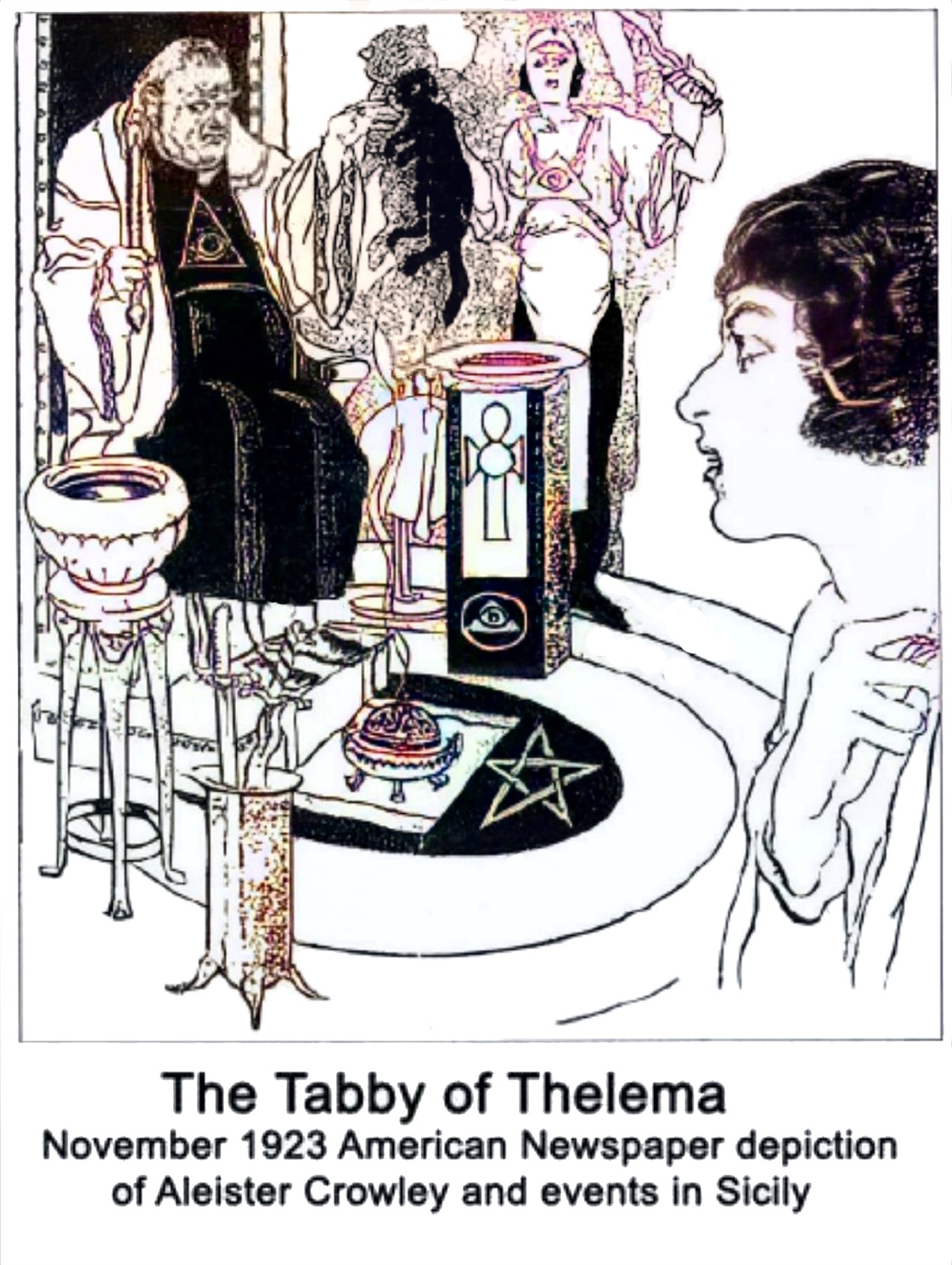
|
| Stairway to Heaven |
|
I asked Angie Bowie why her ex was involved in magick. She recalled that he heard that Led Zeppelin were involved in the occult, and so he wanted to be even cooler and scare Jimmy Page. [My interview with Angie Bowie in 2003]
Angie’s recollection that David Bowie was drawn to magick partly in order to outdo — or at least unsettle — Jimmy Page reflects the competitive and occasionally flamboyant nature of the pop and rock stars of that era. The rivalry also shows how occult practices could serve as a form of artistic and personal one-upmanship within the music industry. It highlights Bowie’s complicated relation to the occult while also revealing his desire to position himself as somehow more profound — or at least more original — than his contemporaries. Jimmy Page (b. 1944) of Led Zeppelin was allegedly already interested in the Qabalah at the age of eleven. Bowie publicly fronted the 'Society for the Prevention of Cruelty to Long-Haired Men' in 1964, though the claim that Page himself was a member is harder to document. In the following year Bowie and Page collaborated on the Bowie track 'I Pity the Fool', and later Bowie lore linked Page with the riff of 'The Supermen'. By 1970 Page had become obsessed with Crowley, acquiring a growing collection of 'Crowleyana'–first editions, manuscripts, paintings and other artifacts. That same year he bought one of the most desirable Crowleyan relics of all: Boleskine House and its grounds, on the shores of Loch Ness in Scotland, Crowley's main residence from 1899 to 1913. After World War I it was the base for an investment swindle involving several local farmers and a fictitious sausage–factory that was supposed to be built in the grounds; of its later owners, one committed suicide in Crowley's former bedroom, while another abandoned his blind wife at the property. Everybody who lived near the Loch thought the place was haunted anyway, so what more suitable spot for 'New Age' occultists? Page, who in the event never managed to spend much time there, sold Boleskine in 1992, after which it was run by its new owners as a hotel. Having become a private residence once more, it was badly damaged by fire in December 2015; after being put up for sale in 2019, it suffered additional harm from a suspected arson attack in July of that year. A charitable foundation which subsequently bought the property with the intention of completely rebuilding the house and restoring the grounds, seems to have been taken over as a front–group by the American 'Caliphate' O.T.O. occult organization, which has tried (and failed) to keep its infiltration from becoming public. There has been much uproar and controversy ever since, after the original trustees of the project resigned in protest. Rubble stones were subsequently sold as magical artifacts by this O.T.O. — with a certificate of authenticity. David Bowie decided to retaliate with Crowley's kind of magick, allegedly telling his wife that he would do so using what he knew of Tibetan magic ("the dark side of Buddhism", as he called it), since anything associated with Crowley was, in his words, "small shit". [My interview with Angie Bowie in 2003] Crowley, for his part, did not exactly reciprocate the enthusiasm for music as a conduit of higher understanding — at least not consistently. On 15th July 1936, he noted in his diary with characteristic contempt: "Music is the opium of the mediocre." Yet by 5th March 1943, he seemed to have reconsidered, conceding: "The only hope of friendly understand[ing] is through Atonement on the higher planes: — the spiritual, the worlds of Literature, Art, Music of humanity stripped of political top–hampers, and of that philosophy which finds perfect concord in and through extremes." One wonders whether, given enough time and the right planetary alignments, even 'Diamond Dogs' might have made it onto his gramophone. |
| The Cut–Up method: "Inspirations have I none" |
|
By the nineteenth century at the latest, artistry of all kinds found itself in turmoil. The old idea of divine inspiration or intuition was rudely interrupted by the impact of music, drugs (alcohol, opium, morphine, heroin, cocaine and ether), magnetism, muscle stimulation by galvanic and static electricity (similar to psychiatric treatments introduced in the second half of the 19th century), hypnosis, meditation, spiritism, or randomised methods of form–generation like écriture automatique / automatic writing and dessin automatique / automatic drawing.
Écriture Automatique was used by the surrealists, also called automatisme psychique:
"SURRÉALISME, n.m. Automatisme psychique pur par lequel on se propose d'exprimer, soit verbalement, soit par écrit, soit de toute autre manière, le fonctionnement réel de la pensée. Dictée de la pensée, en l'absence de tout contrôle exercé par la raison, en dehors de toute préoccupation esthétique ou morale. Encycl. Philos. le surréalisme repose sur la croyance à la réalité supérieure de certaines formes d'association négligées jusqu'à lui, à la toute–puissance du rêve, au jeu désintéressé de la pensée. Il tend à ruiner définitivement tous les autres mécanismes psychiques et à se substituer à eux dans la résolution des principaux problèmes de la vie." André Breton (poet and former psychiatrist), Œuvres complètes, vol. I, p. 238.
Transl.: ["SURREALISM, (noun). Pure psychic automatism, by which is meant to express the actual functions of thought, whether by means of speech, writing, or in any other way. Dictation of thought in the absence of all rational control, beyond any moral or aesthetic considerations (– Encyclopedia of Philosophy). Surrealism rests on a belief in the superior reality of certain hitherto neglected forms of association, on the omnipotence of dreams, in a disinterested play of thought. It tends to permanently ruin all other psychic mechanisms and substitute itself for them in solving the main problems of life."]
A variant on psychic automatism can be found as the exquisite corpse ("cadavre exquis") version of the 'Consequences' word–game in Dadaist and Surrealist art: different people draw part of a picture story or motif on a length of paper in turn, with the previous image being folded back so it isn't visible to the next person. This process results in an unpredictable and possibly surreal Frankenstein composition that resembles a caterpillar. An extension of automatic writing (écriture automatique) was the 'cut–up' technique', later revived by Brion Gysin and most famously used in literature by William S. Burroughs: you take a text, cut it into pieces, reassemble the pieces randomly and thus create something new. In his approach, Burroughs aimed to penetrate beyond the surface–level and explicit content of language. He postulated that language itself could be considered a potential virus from outer space. Through this exploration, he sought to uncover a greater truth and a deeper world of meaning that existed beyond the limits of conventional language. While Bowie never belonged to an occult organisation, William S. Burroughs (1914–1997) had earlier passed through Scientology and, late in life, was initiated into the Order of Thanateros in 1997. Brion Gysin (1916–1986), for his part, also entertained magical ideas. 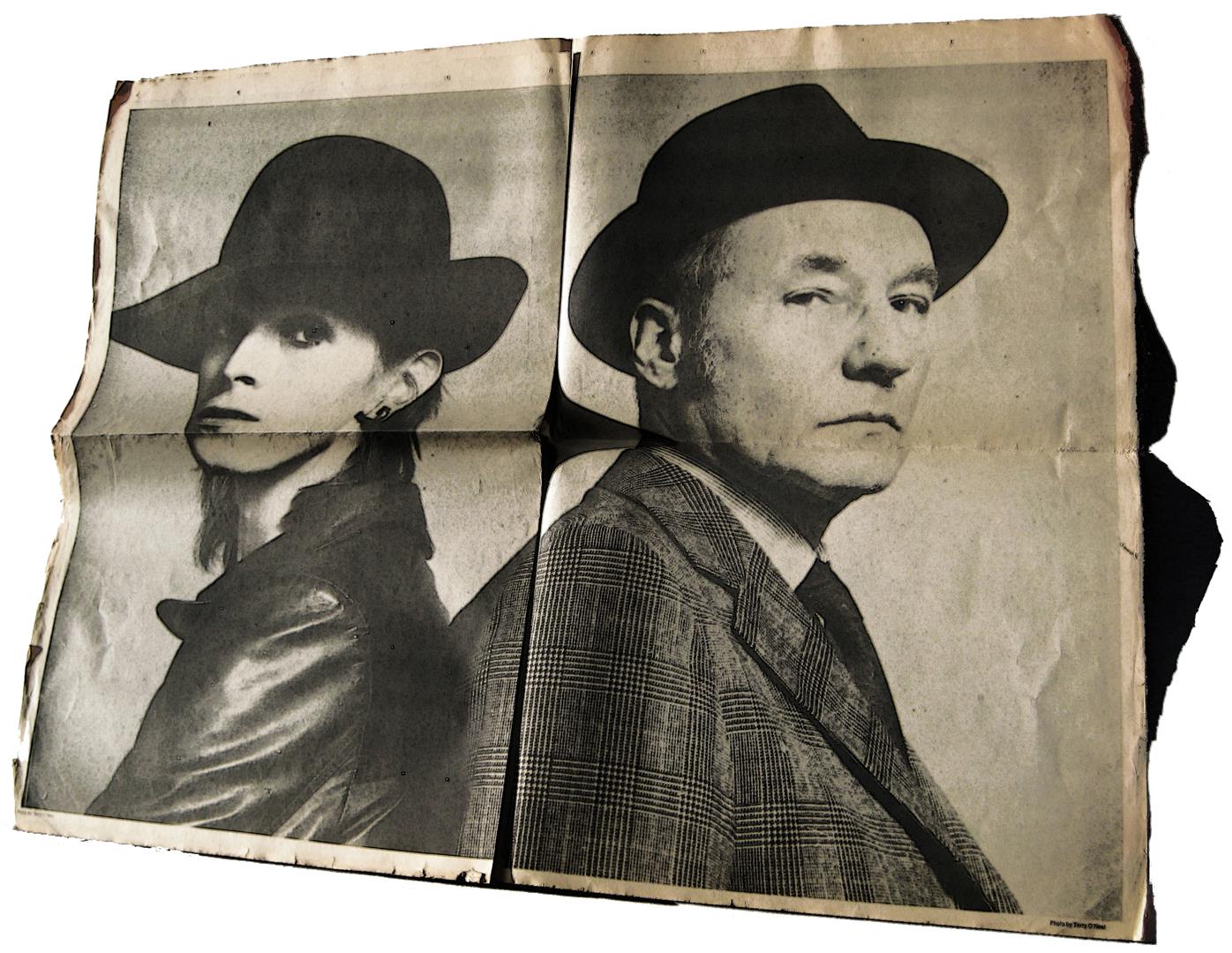
David Bowie and William S. Burroughs; Photo by Terry O'Neal, magazine for the Isolar 'On Stage' tour 1976. Again used for the press photo for the January 2013 release of the 'Where Are We Now?'–song and video. The cut–up is only the starting point of inspiring creativity, the juxtaposition of words or sentence parts is igniting imaginations. 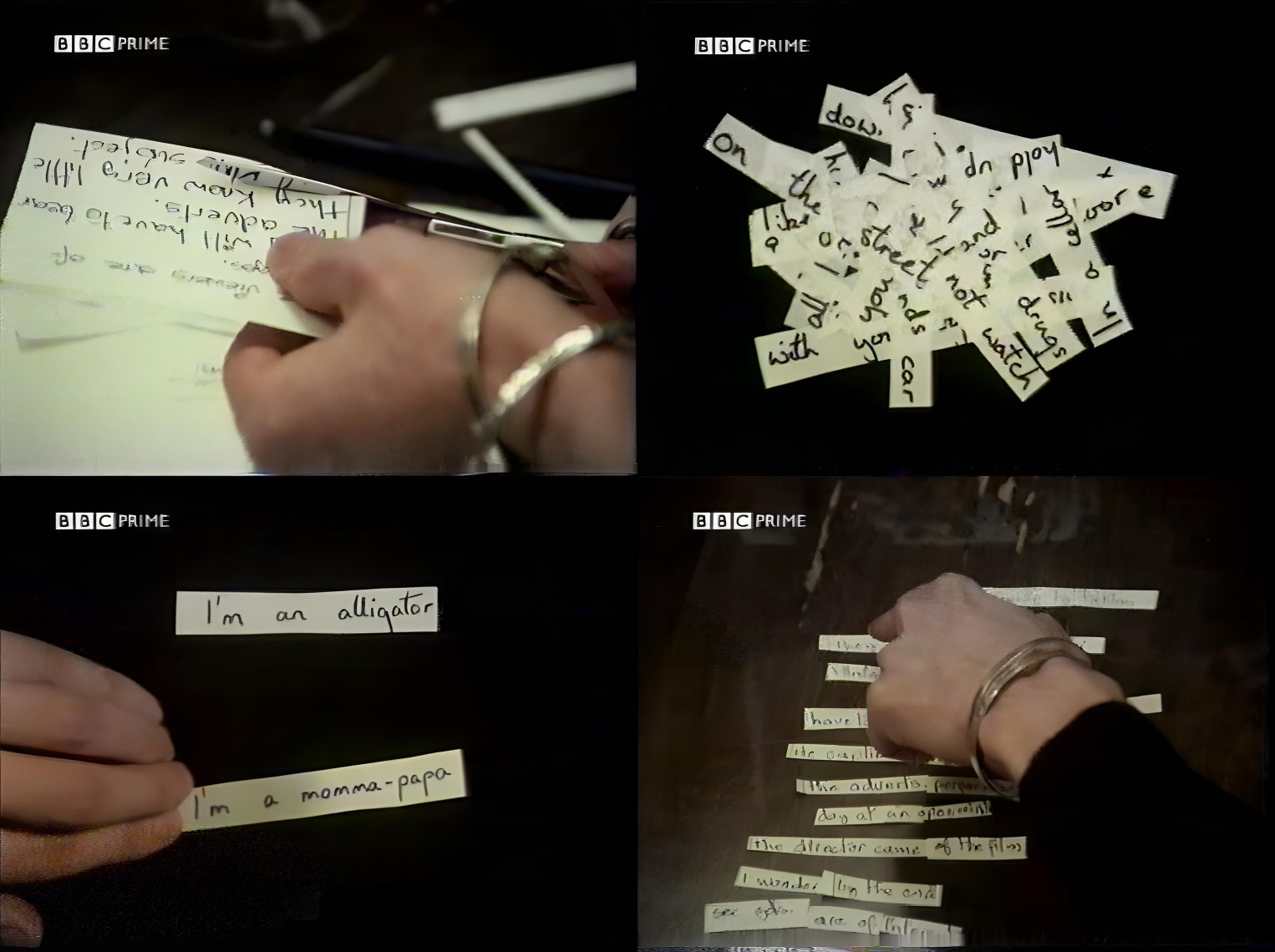
Stills from 'Cracked Actor', Alan Yentob’s BBC documentary: filmed during Bowie’s 1974 Diamond Dogs tour and first broadcast on 26 January 1975. See also the Mask–stills later in this text. Because Bowie employed the cut–up technique to create many of his lyrics, it is futile to attempt to analyze them as cohesive narratives or to scrutinize each word individually — clarity, after all, is dispensable. Instead, the focus should be on recurring images and codes that surface throughout the broader David Bowie opus. These Trojan horses often allude to his unique form of Gnosticism. Bowie himself described the cut–up method as a means of discovering both his past and future. He, too, became a fragmented entity, particularly for those who closely followed his career over the years. These followers were (and still are) confronted with reflections of themselves in the fractured facets of Bowie's sometimes cryptic lyrics, his ever–evolving fashion choices, and his constant referencing of books whenever a journalist's recorder or pen was at the ready. It's also worth noting that Bowie sometimes expressed himself in what could be considered fractals. To some of his listeners, this may seem very profound, but to others it's just pretentious waffle, doodlings of a pop singer. But who wouldn't want to surround themselves with people who find them deep? "I still incorporate a lot of Burroughs ideas, and I still purposely fracture everything. Even if it's making too much sense. I now fracture more than I would've done in past. But it's still a matter of taking my three or four statements and interrelating them. Not as literally as I used I don't use the scissor method very much — but I'll write a sentence and then think of a nice juxtaposition to that sentence and then do it in a methodical, longhand fashion. A lot of me goes into it now, whereas at one point it was getting very random." [Michael Watts: "CONFESSION OF AN ELITIST" in 'Melody Maker', February 1978.] He styled himself as master of de–essentialization and de–authentification: "I don't necessarily know what I'm talking about in my writing. All I try to do in my writing is assemble points that interest me and puzzle through it, and that becomes a song and other people who listen to that song must take what they can get from it and see if information that they've assembled fits in with anything I've assembled and what do we do now?" he told journalists. [Charles Shaar Murray: "Goodbye Ziggy and a big hello to Aladdin Sane", 'New Musical Express', January 27, 1973.] "I deerly want to be recognised as a writer, but I would ask [people] not to go too deeply into my songs. As likely as not, there's nothing there but the words and music you hear at one listening." [Gordon Coxhill: "Don’t Dig Too Deep, Pleads Oddity", 'New Musical Express', November 15, 1969.] Did Bowie mask a lack of substance in his work, as Nico (the German chanteuse from The Velvet Underground) suggested in 1969? "I was not jealous of his intelligence — he is entirely superficial, which is why he never knows what to look like. Or what music to make. Or whether to be a boy or a girl." [Richard Witts: "NICO. The Life and Lies of an Icon", London 1993, page 237.] On 23 September 1972, 'Disc' magazine ran a make–believe interview with Ziggy Stardust: "Slumped in the corner was Ziggy, a shadow of his former self. His orange hair had turned white and he looked even skinnier than David Bowie. "They killed me with love, man", he kept saying. "Nervous disorder", whispered the Starman. "He thinks he's being interviewed by the Old Grey Whistle Test — He can only give banal answers and you have to ask banal questions..." In a rather flirtatious dance with the abandonment of hermeneutic rigor, as soon as Ziggy Stardust settled into conversation, surrounded by a haze of cigarette smoke and fizzing superlatives, the grand persona of the Starman, the Stranger In A Strange Land, unraveled like smudged mascara. What emerged from his words was far from futuristic, profound, or controversial. Instead, he appeared as lighthearted and superficial as the most captivating Prettiest Star of the silver screen. From the Dick Cavett Show, December 4, 1974: Cavett: "Do you want to be understood? You know what I mean... like Ziggy Stardust was... Bowie: "There’s absolutely nothing to understand. I mean..." This echoes Andy Warhol's famous quote: 'If you want to know all about Andy Warhol, just look at the surface of my paintings and films and me, and there I am. There's nothing behind it'. Bowie flaunted a similar philosophy, perfectly positioning himself within a myth of blankness and superficiality — at least for that particular era. With this persona. The reference to Warhol's idea of superficiality versus depth illustrates Bowie’s alignment with a broader critique of modernism’s emphasis on the depth of meaning. By embracing the visible and the performative, Bowie elevates surface aesthetics, further undermining the traditional hierarchy of meaning. Much in pop culture, it seems, traces back to Oscar Wilde, who coined the aphorism, "the true secret of the world is the visible and not the invisible". "All art is at once surface and symbol. Those who go beneath the surface do so at their peril". "A lot of people provide me with quotes. They suggest all kind of things to say and I do, because, really, I'm not very hip at all. Then I go away and spout it all out and that makes it easier for people to classify me. People dissect the songs and say that's influenced by someone or other, but I don't know whether I'm influenced." [Chris Charlesworth: "David Bowie: Ringing The Changes" in 'Melody Maker', March 13th, 1976.] This, too, reflects another concept of Warhol's: he believed that the ideas for his art came from other people and that it didn’t matter where they originated, as long as the final product was good. Like Warhol, Bowie’s art becomes indistinguishable from his public image, complicating attempts to disentangle the artist from the art. Both Bowie and Warhol adopt a stance of indifference toward the origins of creativity, favoring the final product over its process. This highlights a broader cultural shift where the authenticity of artistic creation is less important than the consumption and reception of the work itself. |
| The Cut–Up method and the Occultist's State of Trance |
|
Achieving a richly–detailed and definitive form or 'visibility' from self–induced trance images is an experimental procedure. The possibilities of united visions coalesce, jump all over the place, and blend fragments together. Neither the occult nor the cut–up technique seem to furnish the basis of a secure or well–integrated identity. The instantaneous 'moment' quickly induces a new use for the ears and eyes, with 'Sound and Vision' extending to all that is known, until the perception becomes infinitely complex. This may engender a lack of precise definition of relevant experiences, such as a lack of emphasis on a bearer of a symbol, which enables new comparisons to be made between signs and symbols, and perhaps new laws and new rhetoric, as the aim of new frameworks. 'Sounds and visions' become the projections of a human being in a state of Gnosis. Through this altered interpretation, there is an increase in reflection, which becomes a metaphor for the continuing stratagems of illumination.
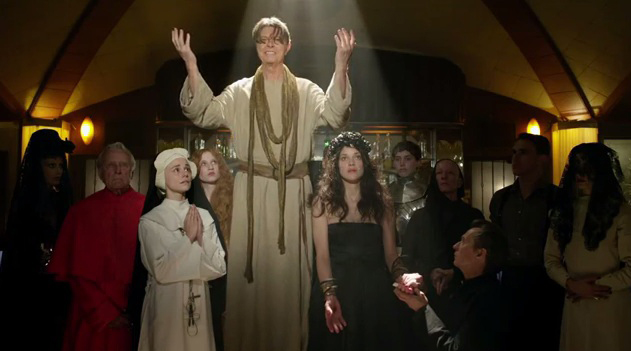
The cut–up method made it largely irrelevant whether or not Bowie was conscious of himself as a Gnostic, that is, whether he knowingly expressed himself in Gnostic terms, or whether he was hiding it "in an all-time low". Could the persona Bowie be seen as a bearer of knowledge, unknowingly carrying a significance beyond his own awareness, detached from everyone else, including himself? The more and faster Bowie revealed his thoughts (in interviews, song lyrics, conversations), the more alien he appeared, and yet, paradoxically, he seemed to become more creative. This seemingly led some journalists and interpreters of his lyrics to believe that he exuded a sense of loneliness. "Unsuspectingly I'm sure, Bowie positively leaks loneliness; it wraps itself around him like a clammy shroud. But the man is driven ..." [Angus MacKinnon: "THE FUTURE ISN'T WHAT IT USED TO BE" in NEW MUSICAL EXPRESS, 13 September 1980.] Bowie described himself as a "post–modern Buddhist", and certainly, his working methods looked post–modern, with their fluid and flexible nature, rather than concrete. Ordinary materials in the form of music and text were taken, arranged, and rearranged. Bowie studied the results and tried something else as he navigated his way through revisions, corrections, and different material. This method went some way towards explaining his apparently inconsistent changes in musical styles. Sometimes, his working method was to let his musicians get on with the flow while he was out of the studio room, then add his contribution at the last minute. He listened, gave direction, and lived with the results. Bowie's views on his own work also constantly evolved. Something he claimed as a masterpiece one day became defective the next, sometimes only when the media started criticizing it, followed by disillusioned fans. "I'm not an intellectual by any stretch of the imagination, […] I was very worried when I saw some of the pre–tour publicity about me in America, which cited me as being some kind of part of a new–wave intelligentsia. I'm not a primitive either. I would describe me as a tactile thinker. I pick up on things . . . I'm a pretty cold person. A very cold person, I find. I have a strong lyrical, emotional drive and I'm not sure where it comes from. I'm not sure if that's really me coming through in the songs. They come out and I hear them afterward and I think, well, whoever wrote that really felt strongly about it. I can't feel strongly. I get so numb. I find that I'm walking around numb. I'm a bit of an iceman." [Timothy Ferris: "I Refuse to Be Thought of as Mediocre", in 'Rolling Stone Magazine' 79, April 1st, 1971.] "I'm not an innovator. Everything has been done before. I'm just a photostat machine that puts out what has already been fed in." [Deborah Thomas: "King of Rock and Rouge" in 'Daily Mirror', Monday, January 22, 1973.] Bowie's influence as an artist was rooted in his own early influences. He adopted a mainstream Gnostic approach and conveyed his understanding of Gnosis through recurring themes in his live performances, lyrics, and music. For instance, he embodied the messianic alien Ziggy Stardust for 18 months in 1971–1973, which included his work on / as 'Aladdin Sane'. He also portrayed "The Hanged Man" from Tarot during his 1987 shows. In addition, there are photographs of Bowie featuring stigmata and a halo, such as on the bootleg CD cover of 'Jungle Fever' in 1998. Furthermore, in the 2013 music video for 'The Next Day', he wore a robe and posed in a manner resembling Jesus Christ. 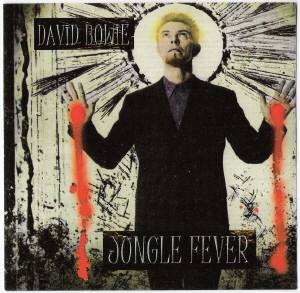
In the 2015 music video for Bowie's 'Blackstar', which has a Doctor Who–like feel to it, three scarecrows parody the crucifixion of Christ in a scene reminiscent of Golgotha. The video includes visual allusions to the horror video game and movie series 'Silent Hill'. The director of the 'Blackstar' music video, Johan Renck, has expressed himself as "a huge Crowley fan" and revealed in 2015 that he had attempted to create a film about Crowley's life a few years prior. 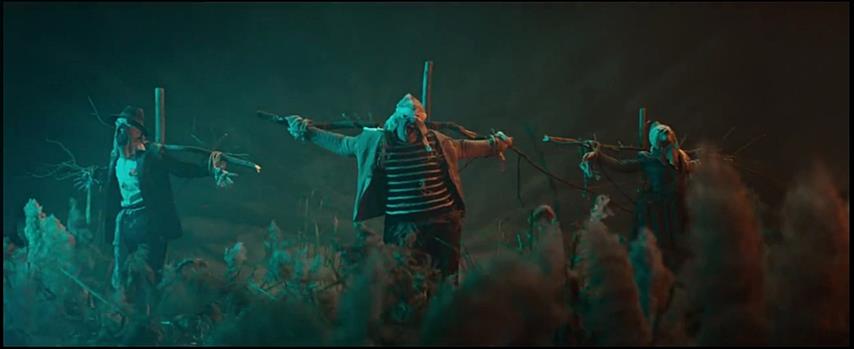
|
larvatus prodeo:
|
As early as 1970, Bowie hinted at his future career trajectory in his song 'I'm Tired of My Life', in which he mused on which path to take: "I'm trying to decide which game is best for me, which can I bear ... You don't perceive so I'm leading you away". The theme of identity shifting or inventing one's own identity emerged as a recurring pattern in Bowie's work, and his various personæ can be seen as a collection of fragile rumors, composed of nothing more than smoke and flicker. Are they just lifeless masks in a state of diaspora, sterile identities lacking any true essence?
Sua cuique persona
Who is the "I" ? And how many are there ?
|
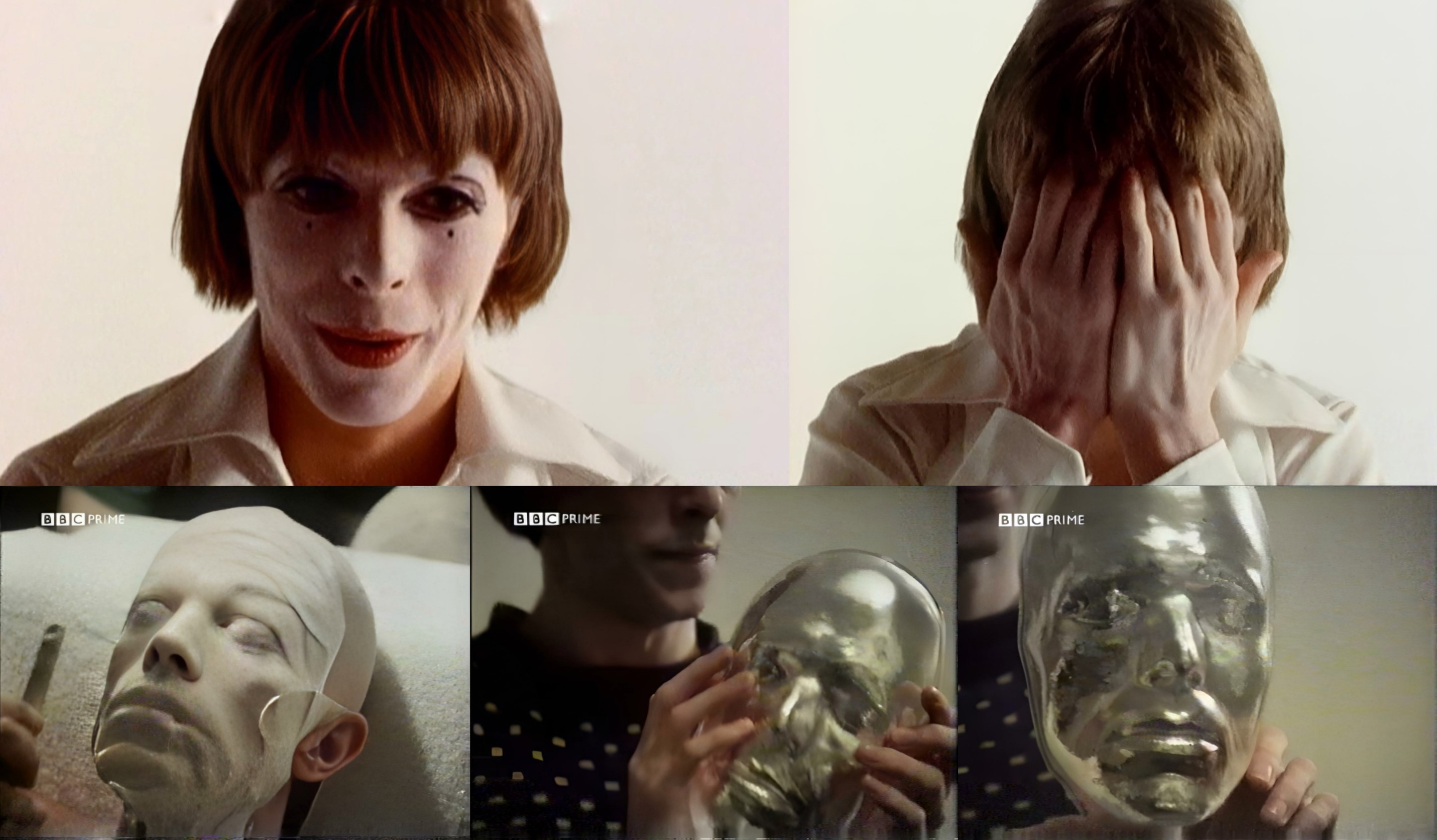
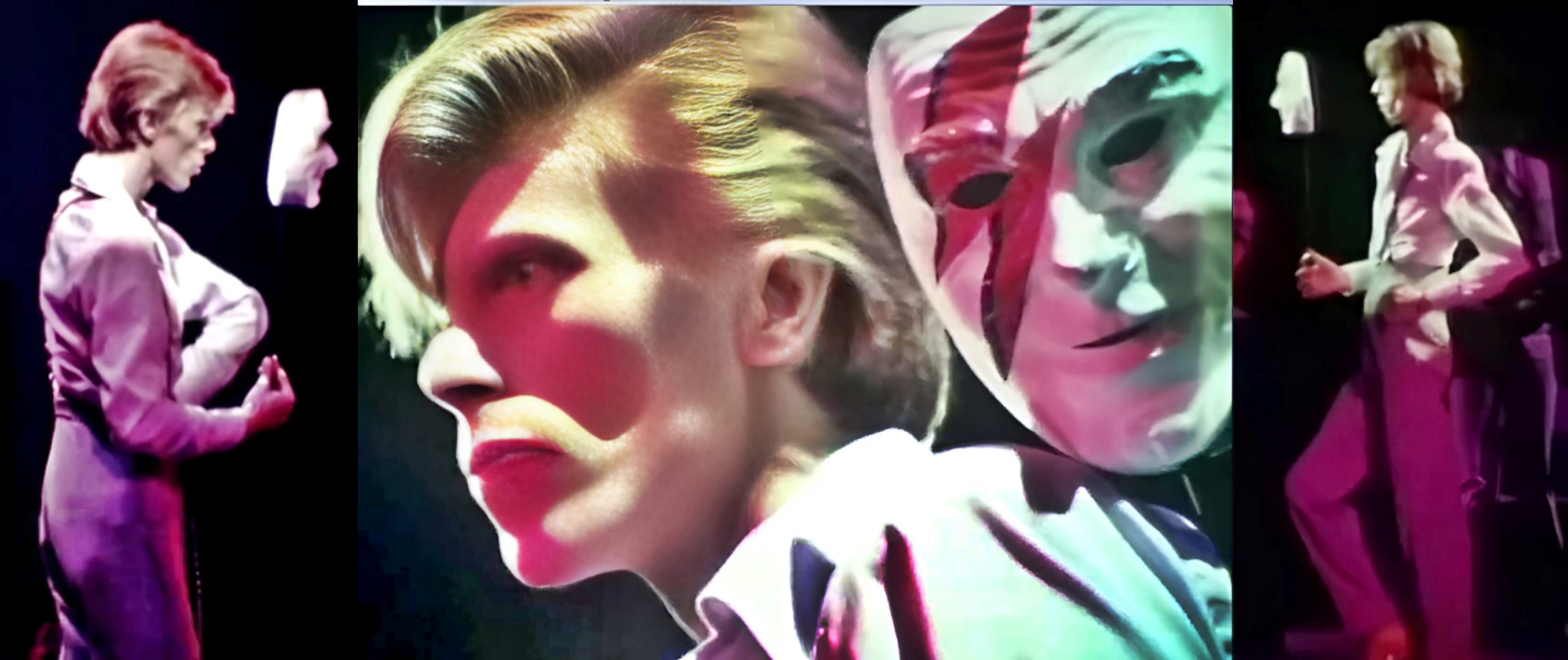
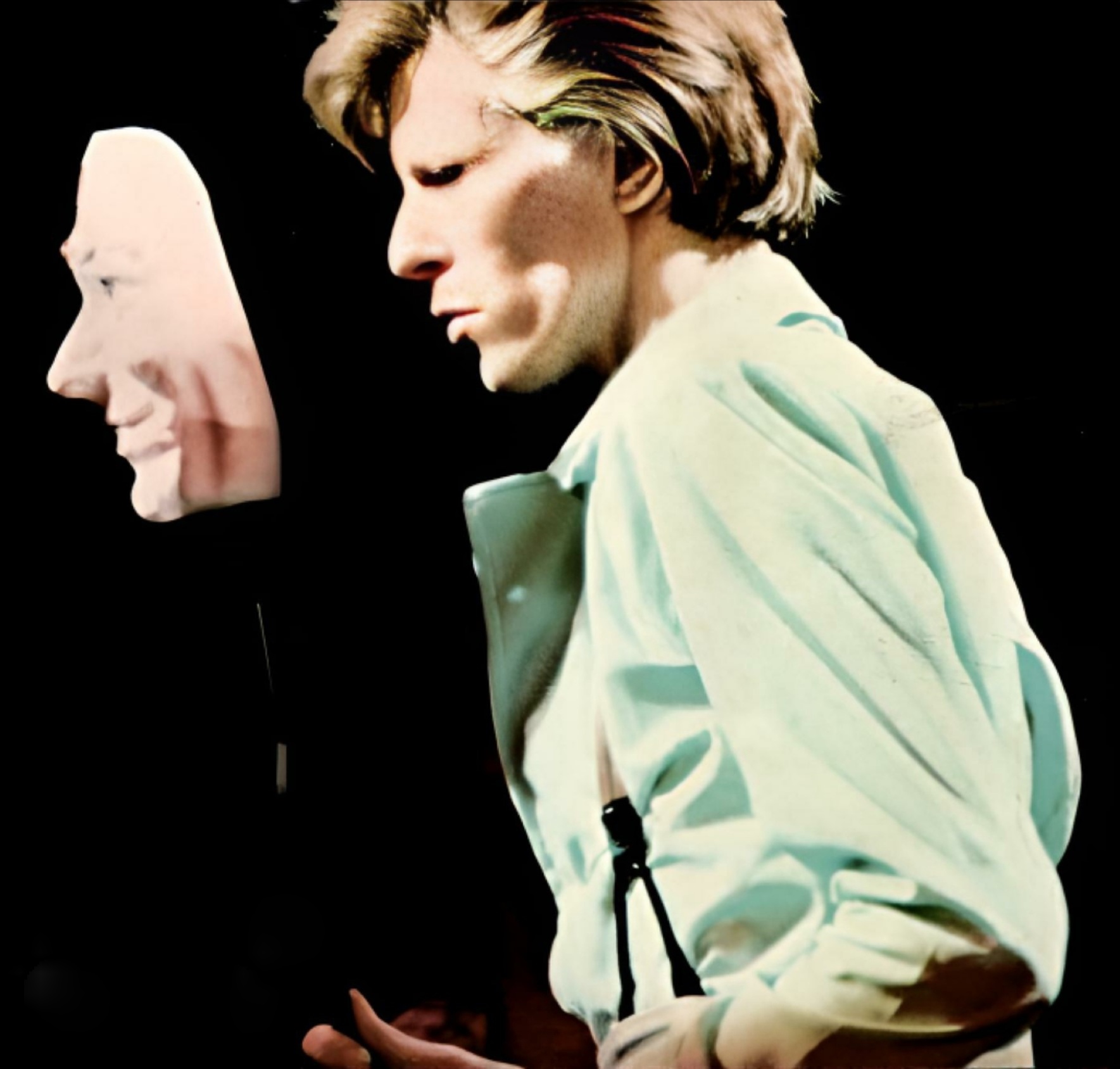
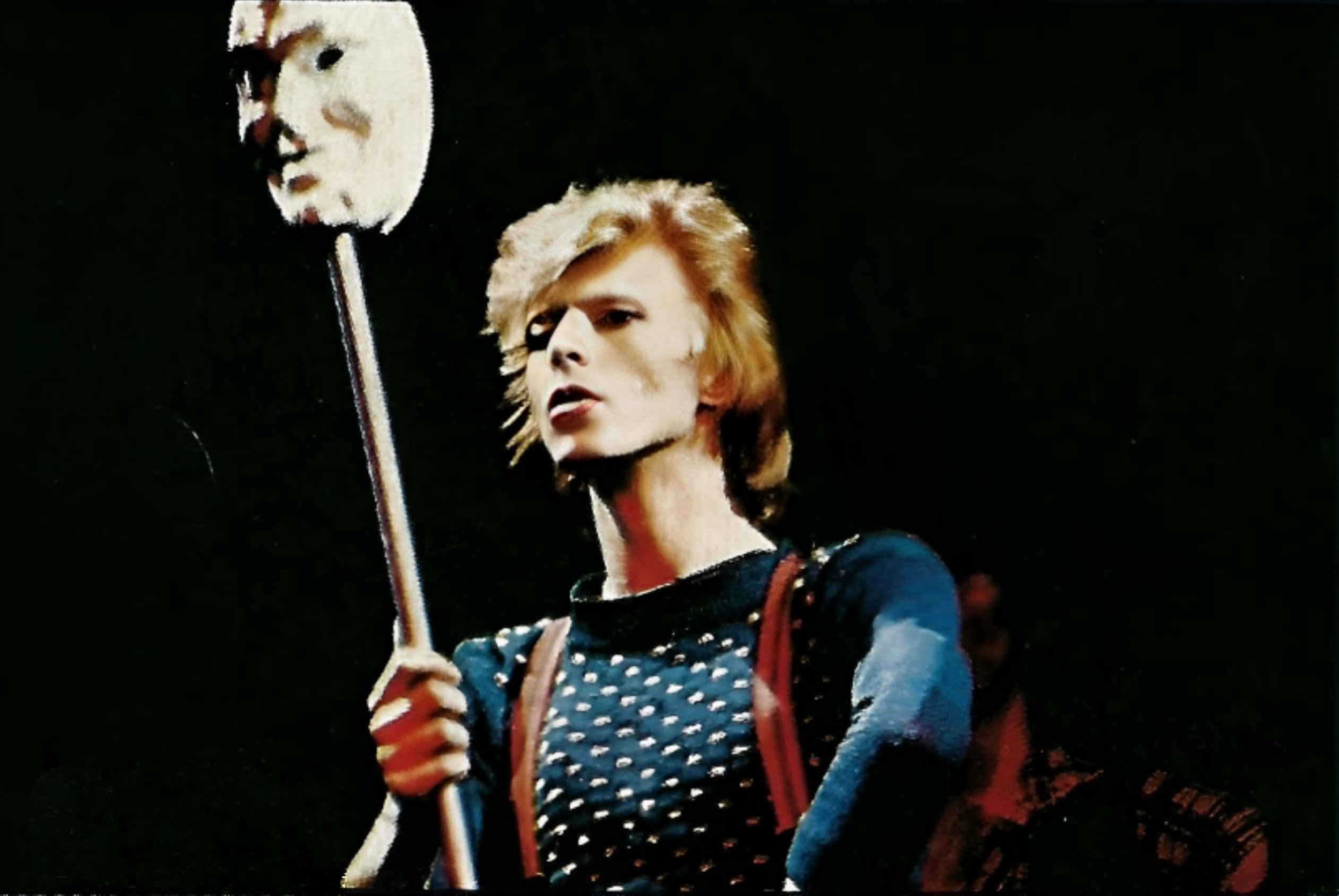
I advance, point to my mask.
The use of masks is a pop–cultural phenomenon that has been around for some time. One example of this is in the 1941 American movie 'The Face Behind the Mask' directed by Robert Florey and starring Peter Lorre.
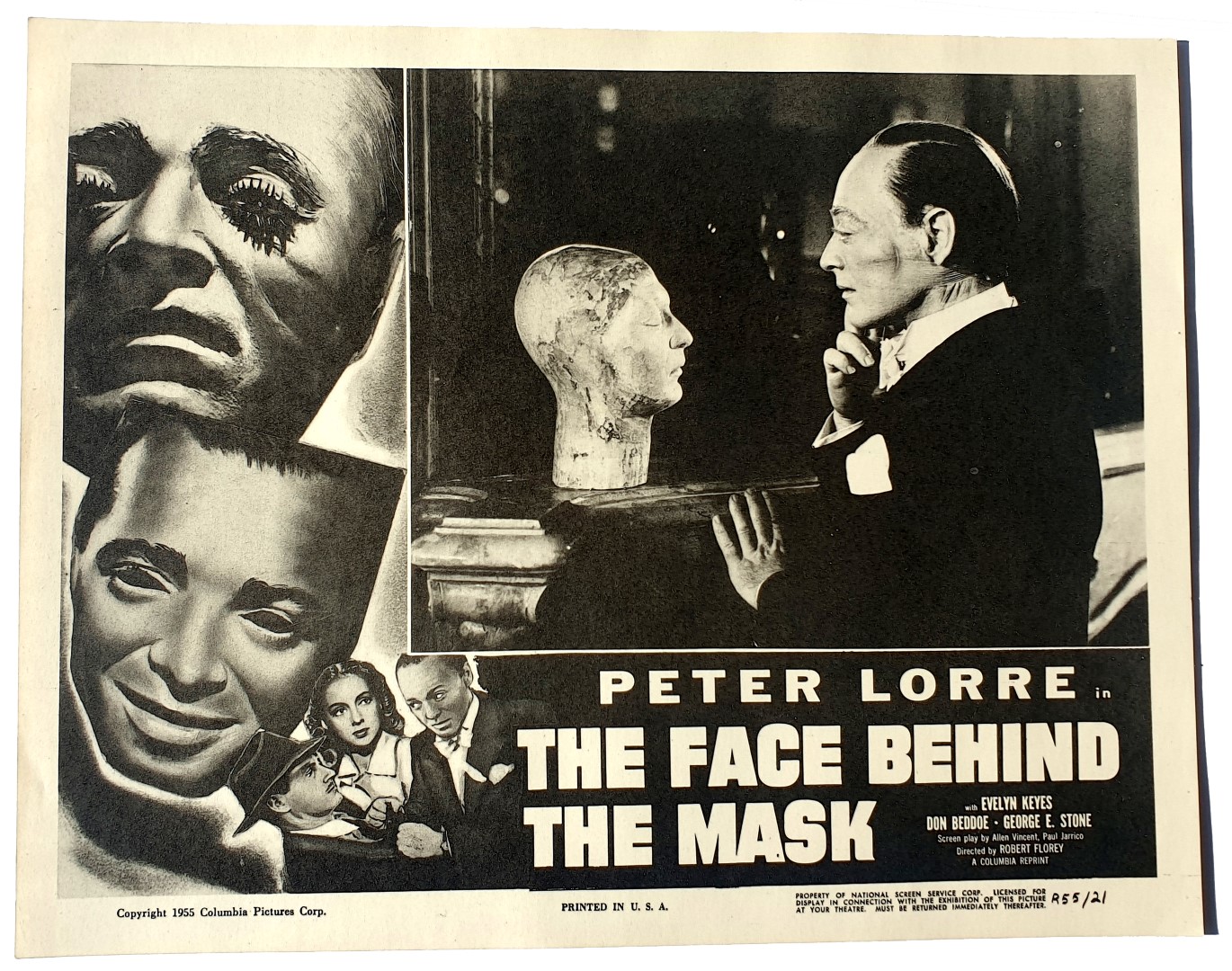
Bob Dylan's exploration of the concept of 'The Mask' provides another example. In 1964, during a live performance, Dylan uttered the phrase "I got my Bob Dylan mask on", and in 1966, he elaborated on this theme, stating "I'm glad I'm not me". This highlights the difference between the act of searching for an identity and actually creating one. By referencing the mask, Dylan demonstrated his understanding of its artificial nature as a myth and its satirical exaggeration. The use of masks allows individuals to explore different identities and personæ that may not be possible in their everyday lives. This concept is still relevant today and continues to be explored in various forms of pop culture. Bowie’s 1967 song "The Laughing Gnome" plays with the idea of identity and the rôle of masks in pop culture. The playful and whimsical nature of the song, in which the gnomes sing about living on "caviar and honey" because they’re "earning me lots of money", contrasts sharply with the more serious themes of his later work. This contrast highlights Bowie’s versatility as an artist. The gnome represents a form of playful identity and commercial success, setting the stage for the complex and serious personæ he would later develop, merging both artistic and business–minded elements in his career. 'I'm a laughing Gnome and you can't catch me' The German versions of Bowie's songs from 1967 were rearranged, including the track 'Mit mir in Deinen Traum' which translates to 'With me in your dream'. This version contradicts the original English version 'When I Live My Dream', in which Bowie praises the dreamland where a certain "you" will meet him in that person's dream. The shifted meanings in the German versions of Bowie's songs underscore the complexities of translating artistic expression across languages. It is possible Bowie was unaware of these subtle changes, as he did not handle the translations himself. |
| "He is a symbol of a new age / He glides above the realms of you and me" |
|
Feeling "that the human complex is such an inadequate form of existence", Bowie said that he experienced "an incredible loneliness". He has always dolled himself up as a creature inhabiting the "human zoo", tattooed with Tarot cards akin to Ray Bradbury's 1951 novel 'The Illustrated Man'; a 'Karma–Man' (recorded in September 1967 and later performed for the BBC, and on the live set list into 1970; its imagery sits beside Bowie's contemporaneous interest in Buddhism) sitting "on my karma, dame meditation" ('Little Wonder', 1997) and being a 'Silly Boy Blue' (1966, "Child of Tibet", "Mountains of Lhasa") who never leaves his body now and so has "got to wait to die" (On the live set list in 2001).
'Dame meditation' most probably refers to the Kundalini, the yogic fire–snake that resides in the genital region, coiled waiting to arise to the head of the yogi and enable illumination symbolised by a lotus flower. Angie Bowie: "He said that Chime Rimpoche was his guide/teacher. I saw Chime Rimpoche the first time I went down to Beckenham there he was at Victoria station or Charing X and he was there in his saffron robes and I walked up to him and said Hi are you Chime Rimpoche? He said yes. I said I am going to visit David and he said I know. I thought he and David were 'Light People.'" [My interview with Angie Bowie in 2003] Lama Chime Rinpoche, a Tibetan Buddhist teacher with whom Bowie studied for several months as a teenager, later founded Marpa House — then Kham Tibetan House — in Ashdon, Essex, in 1973. Kagyu Samye Ling, at Eskdalemuir in southern Scotland, had earlier been co-founded in 1967 by Chögyam Trungpa Rinpoche and Akong Tulku Rinpoche; its temple later became known for its large Buddha image and richly ornamented interior. Angie Bowie: "Due to his [Bowie's] interest in Tibetan Buddhism he skirted around the issue of Tibetan Black Magic but I never saw any evidence that he performed rituals or was exerting any influence whatsoever through the practice of any ceremonial religion: Black magic Tibetan guarding of the unconscious etc. blah di blah di blah. David called it 'the dark side of Buddhism'." [My interview with Angie Bowie in 2003] Buddhism is not one neatly packaged toolbox integrating diet, drug abstinence, yoga, and sexual techniques as though all four belonged everywhere and equally. Some Buddhist, especially tantric, traditions employ complex bodily, meditative, and visual practices; but any blanket formula about Buddhism and 'sexual techniques' needs tightening. The Buddha's main objection to alcohol and recreational drugs is that they befuddle the consciousness, thus making mental development difficult. Buddha also often warned against alcohol's negative social effects. Consequently abstaining from all recreational drugs including alcohol is one of the precepts that all Buddhists are expected to practise. But one wonders whether psychedelics would be useful in the practice of Buddhism? Yoga is one of the preliminary conditions to master the body before using it as a temple. But to westerners, Yoga is mistakenly thought to be simply a system of physical exercises to keep the body supple and the mind calm. But the meaning of the word yoga is union and the system was developed by eastern adepts to assist them in attaining union with the source of all being. Between 1967 and 1969, it was reported that Bowie slept upright in an antique wooden box, ate only two modest meals a day, and underwent periods of intense silence. Regarding Yoga: I watched a barefoot Bowie sitting in a very difficult Yoga position during his live performance of 'The Man Who Sold The World' (1970) at Zürich on 14th February 1996. Zen and Mahayana Buddhism aren't the only tools used to expand consciousness and perception. Hatha–Yoga plays a key rôle in Crowley's sex-magick. A major rôle is played by the nerve fibres (Nadis) and the 10 different kinds of breathing (Vayus). The ancient indian bodily expressions for the 10 Vayus are: Prana (in the heart), Apana (near the anus), Samana (near the genitals), Udana (in the throat), Vyana (the whole body), Naga (in the genitals), Kurma (open the eye lids), Krikara (causes sneezing), Devadatta (causes yawning) and Dhananjaya (floats through the physical body). The "Sexual Magic" is focussed on the 6th Vayus or Naga. There are additional teachings of using drugs in order to reach illumination while having sexual intercourse, and techniques to focus the sexual energies upon a wish, a sort of an mental photography that represents the desire to be fulfilled. Also elements of Manichaeism are introduced. The whole body is considered Divine (the Temple of the Holy Ghost) and the sexual organs are meant to fulfill a peculiar function: a Holy Mass is the symbolic act of re–creating the universe. The root belief is that only by co–operation between man and woman can either advance spiritually. Sexually joining is a shadow of the cosmic act of creation. Performed by adepts, the union of male and female approaches more closely the primal act and partakes of its divine nature, which is seen as continuous and continuing and never ending. This point of view is different from the Christian one, which holds that the creation of the universe by God occurred at some definite point in time past. The sensations that form slowly within Man and Woman sexually joined come not from the conjunction of the physical parts, but from the male and female sexual polarities in contact. Correct breathing patterns affect the chemistry of the blood stream and so bring about a change in the internal environment of the brain. Consciousness or ego makes way to make room for the divine power. The sexual energies then should be stored, together with correct breathing both lead to the transmutation of the energy in order that the Magician becomes a Clairvoyant. The Lingam (phallus) is as a symbol of the creator of the universe. One of Crowley's sexmagical instructions is a treatise about the creative organ's divinity: the vital fluid is a vehicle of immortality. The Matter is the original primitive material substance semi–spiritual, immortal and containing in itself the archetypes of all form and possessing the double potency of attracting to itself individual spirits and also particles of gross Matter to form their temporary envelope on this plane (the gnostic Rotten Place). Another technique unveiled to the "pupil" is that masturbating on a sigil of a demon or meditating upon the image of a phallus would bring power or communication with a (or one's own) divine being / Super Ego. There are heterosexual intercourse sex techniques where the sexual secrets are sucked out of the vagina and when not consumed (when considered holy) put on a sigil to attract this or that demon to fulfill the pertinent wish / order. Crowley played around with different sex-magical methods. One of his secrets is the adoration of the idol Baphomet of the old Templars. Crowley advised selection of a female partner. The magician and his mate "copulate continuously" until impregnation results: a homunculus. In the most secret teachings, one identifies oneself with an ejaculating penis. The blood (or excrements) from anal intercourse attracts the spirits / demons while the sperm keeps them alive. Crowley saw no use in the vaginal fluids nor did he think women divine, hetherefore he could not imagine lesbian sex-magick. He believed that "man is the guardian of the Life of God; woman but a temporary expedient; a shrine indeed for the God, but not the God." ==> Women exist for the use of men. His ideal female: "robust, vigorous, eager, sensible, hot and healthy." That is to say, his interest was in the woman's body and he wanted no spiritual or intellectual participation from her. Crowley's main tools to achieve illumination remained: spermophagy, coprophagy, urolagnia and algolagnia. [More about that in a moment.] |
| "Oh no, not me / I never lost control" |
|
Though the hippie era was already over, Bowie somehow managed to parody (or not?) it on his album 'David Bowie' (more commonly known as 'Space Oddity'). By 1969 he was smiling "sadly for a love I could not obey", for he was never to become the sort of star with a mundane message who can devote their life "to save a slogan".
It was also in 1969 that Bowie's father — closely involved in his son's career — had died. At a time when he was working his fingers to the bone and suffering from a series of flop singles, with various low–fiber demos still languishing on acetate, and his most recent album hardly having set the charts on fire, Bowie had already cycled through several different record labels and was looking, slightly desperately, for a "new love" and "new words". In his song 'The Cygnet Committee', Ziggy Stardust was again prefigured: "I gave Them life / I gave Them all ... / I opened doors that would have blocked Their way." Impotence when confronting reality gave birth to fantasies of omnipotence. Having already described himself ironically as "the Cream / Of the Great Utopia Dream" and as "a phallus in pigtails" in 1969, by 1971 Bowie was saying "I want to be a Superman"; he expressed these feelings more precisely in his song 'Quicksand': "I'm closer to the Golden Dawn / immersed in Crowley's uniform ... / I'm not a prophet or a stone–age man / Just a mortal with potential of a superman."
|
| "Just to touch the Flaming Dove" |
|
Techniques like these have been popularized through the writings of Crowley, who was once a member of the Golden Dawn, and later of the Ordo Templi Orientis (O.T.O.), an organization involved with sex magic that still exists today. The Golden Dawn and the O.T.O. are pseudo–Masonic organizations, in which aspirants or members undergo stages of ceremonial initiation while wearing semi–Egyptian costumes, similar to the one Bowie wore for a photo session with Brian Ward in 1971.
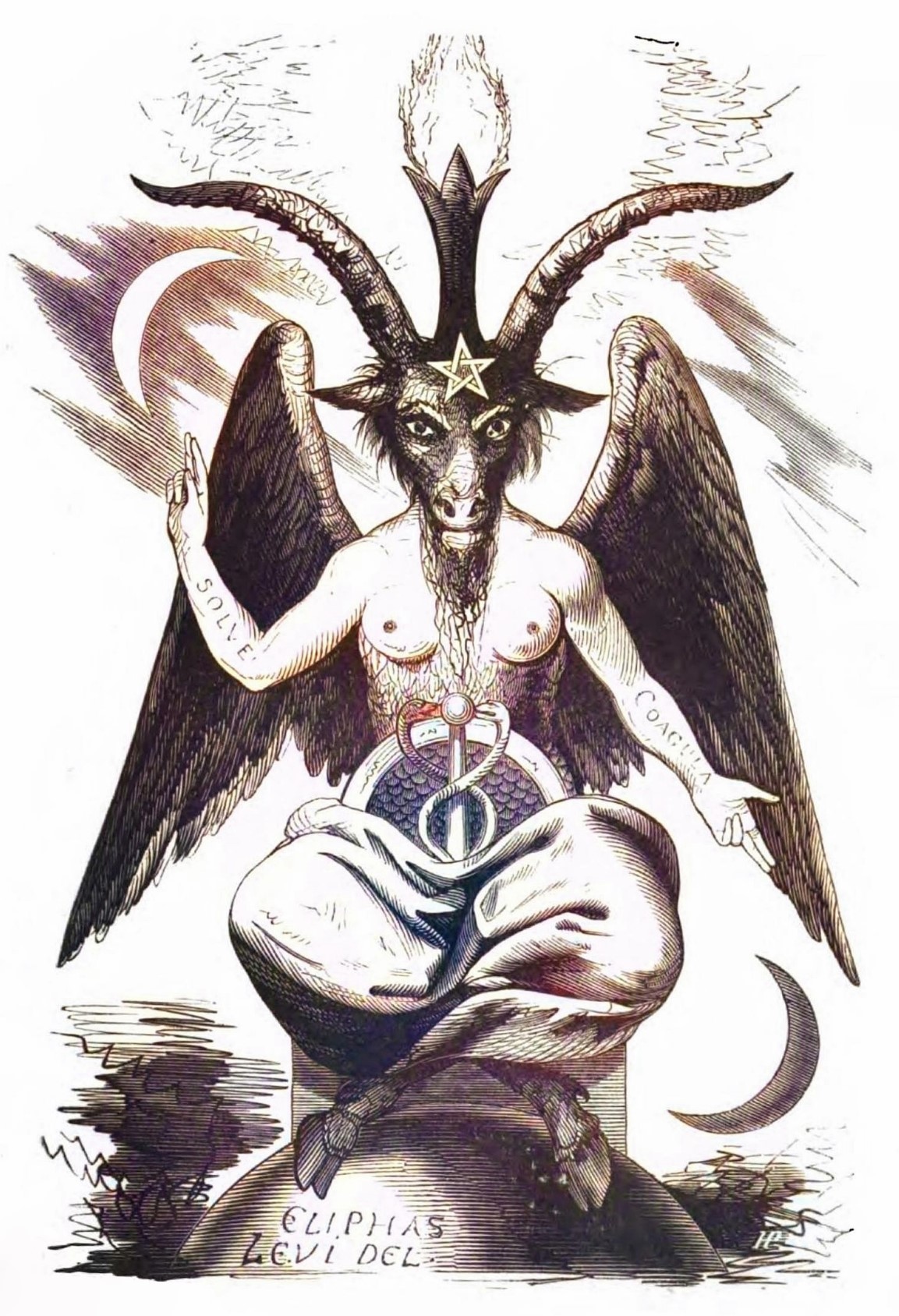
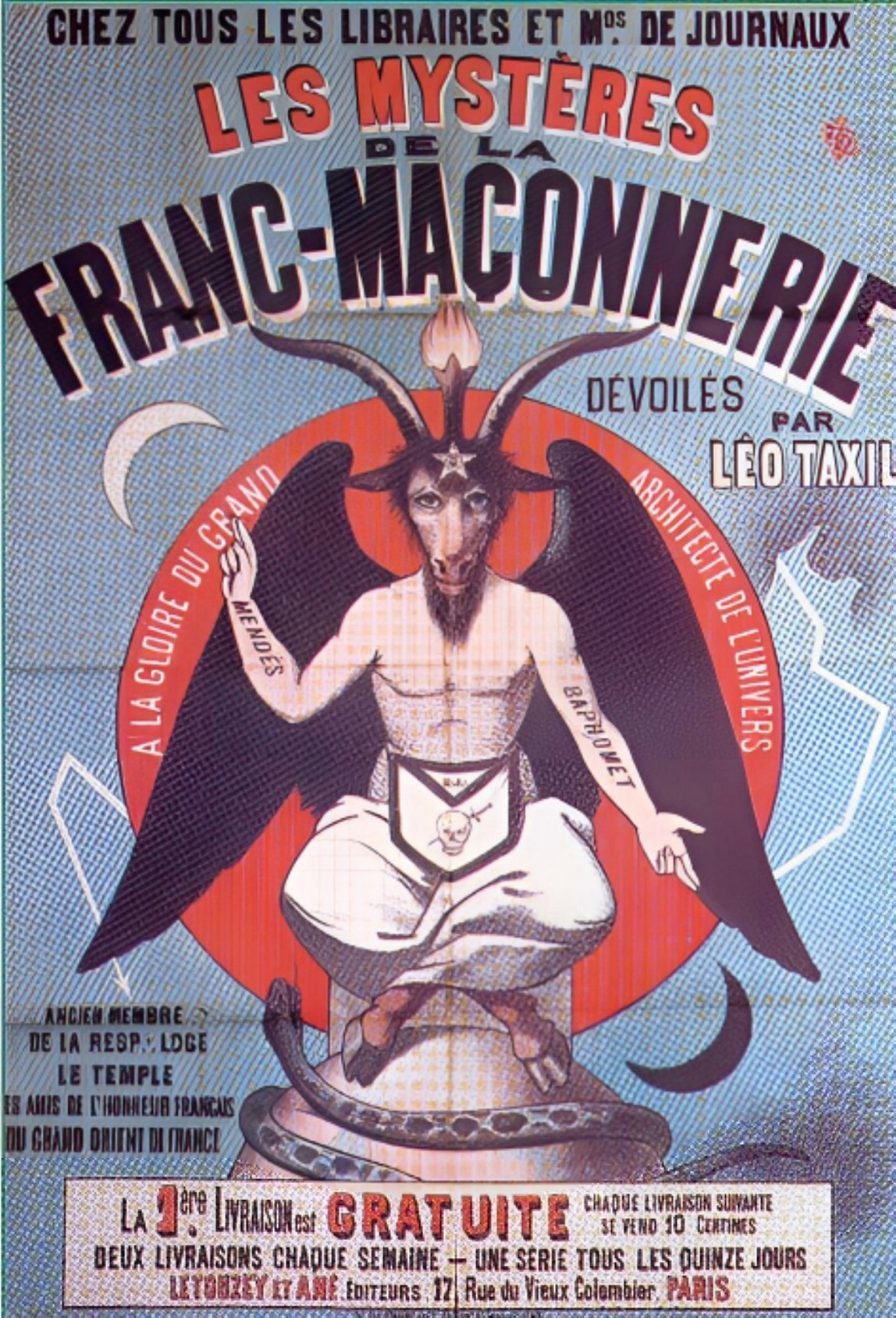
For example, in Miles' "David Bowie Black Book" (London, 1980, p. 40), Bowie is shown giving the occult sign of "as above so below," which is also known as a symbol of Baphomet, the idol of the old Knight Templars. Additionally, Bowie portrays the Sphinx, an important occult symbol, on the inner sleeve of the CD version of 'Space Oddity', as well as on the cover of the bootleg EP and CD 'The Shadow Man'. 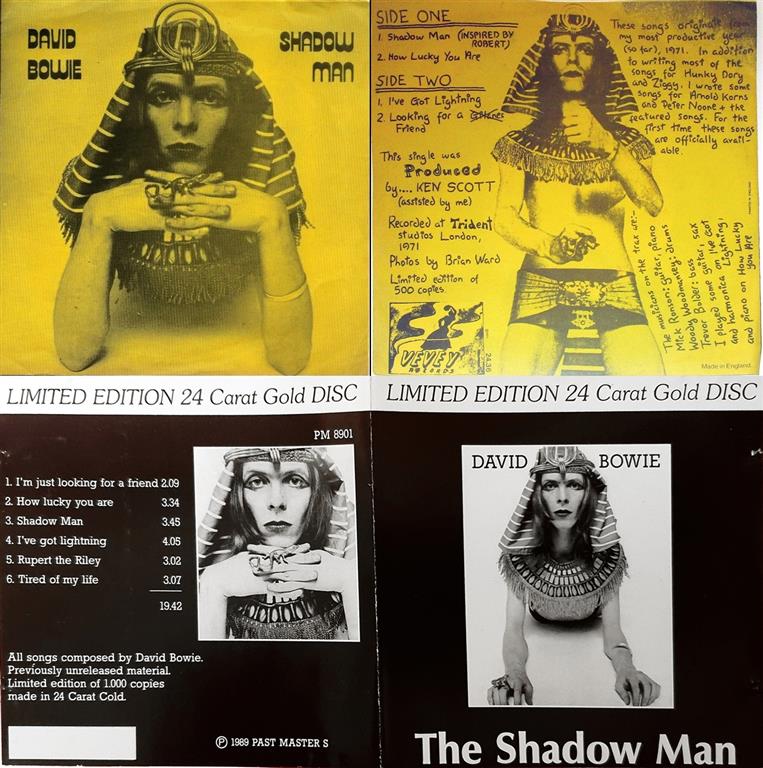
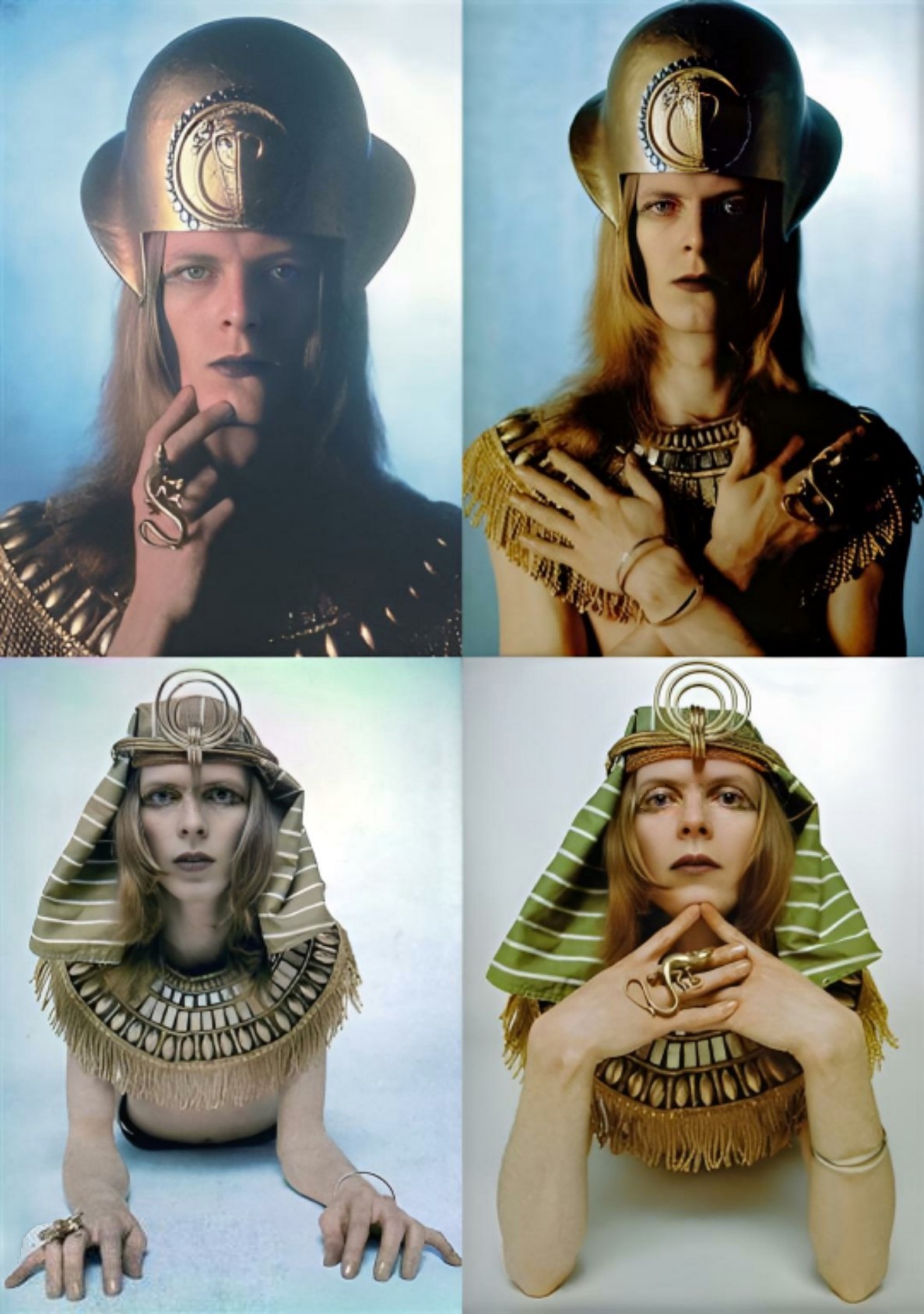
Bowie photos by Brian Ward. 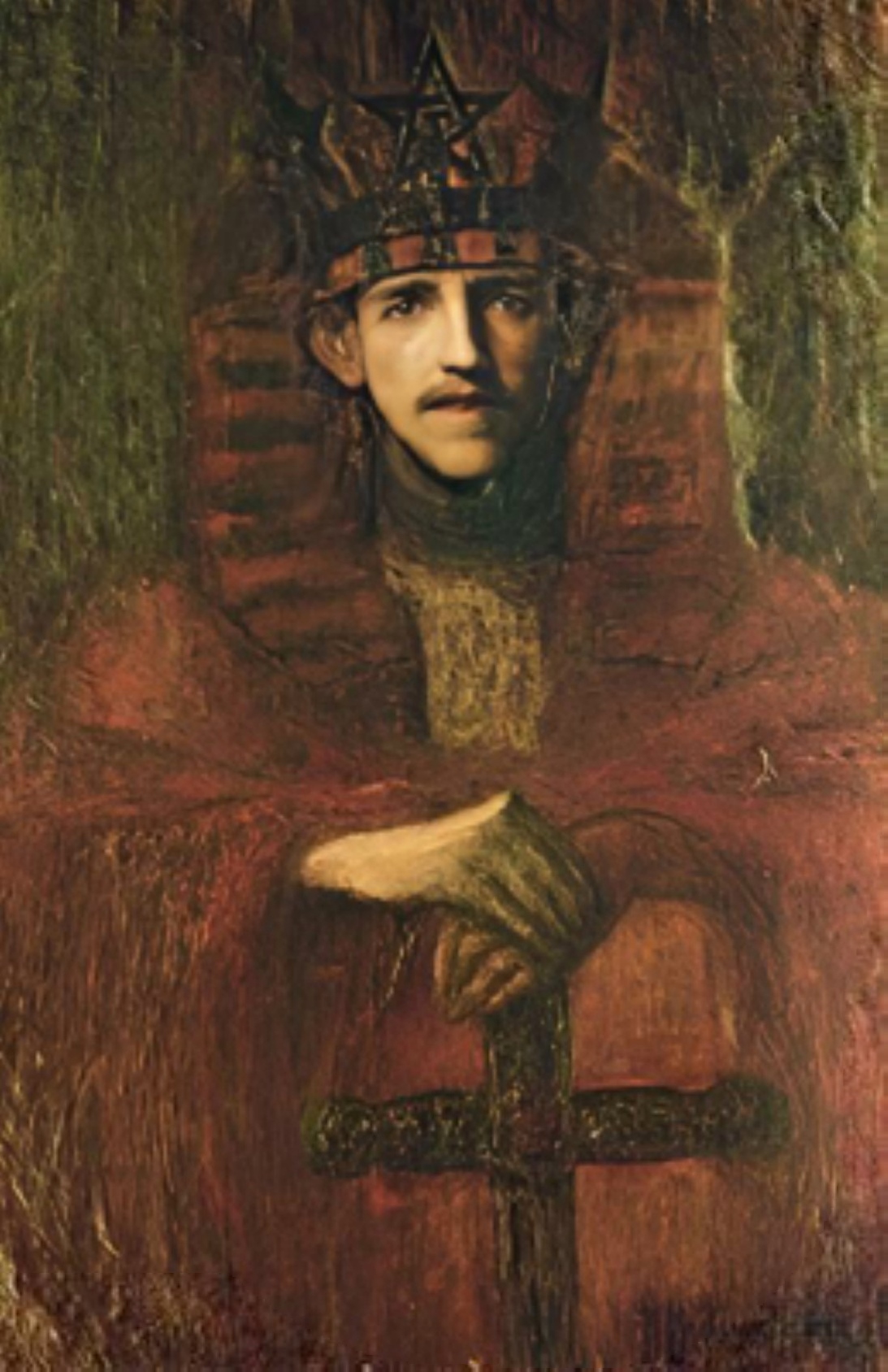
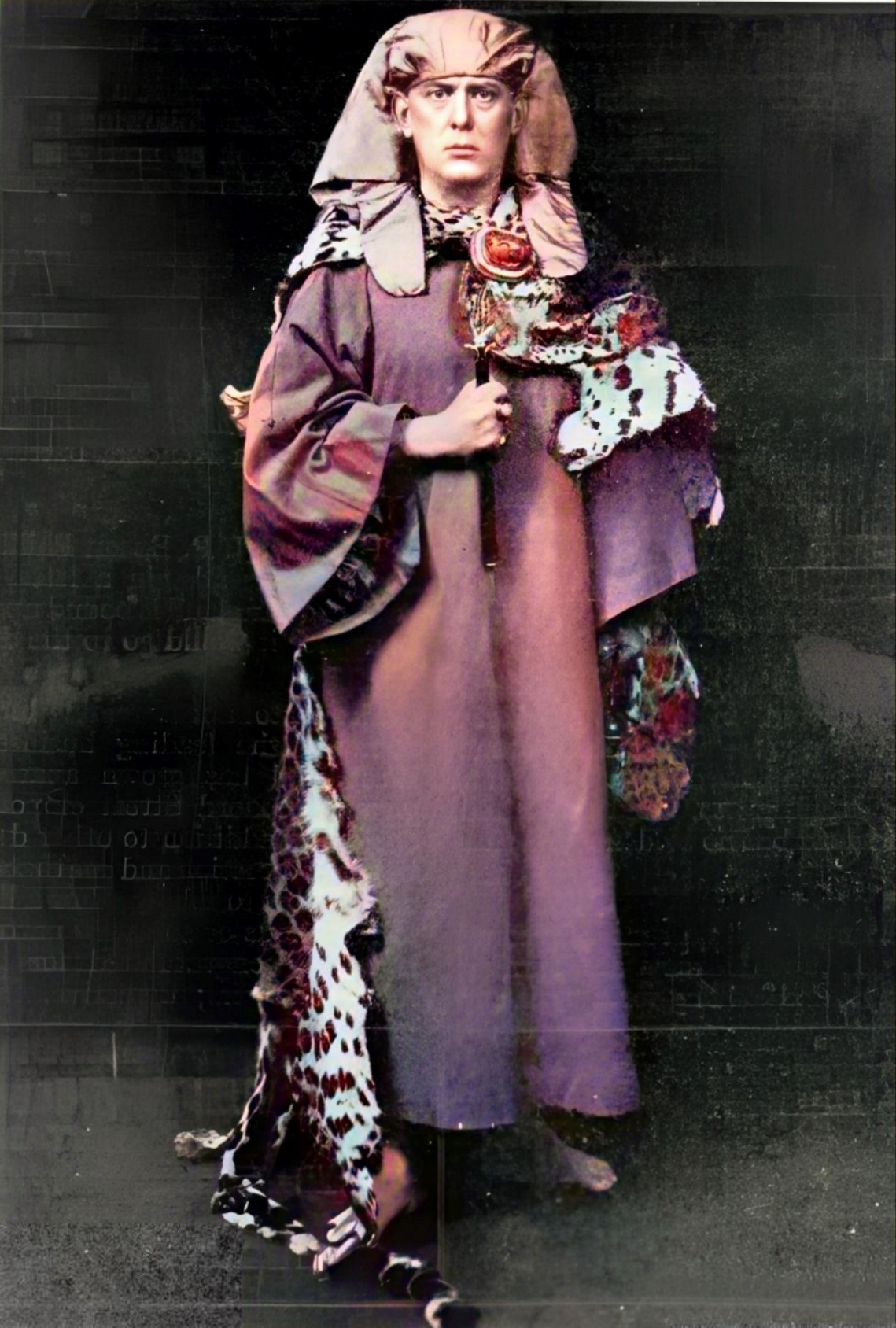
Samuel Liddel MacGregor Mathers and Crowley in Golden Dawn robes. [Colored with AI] 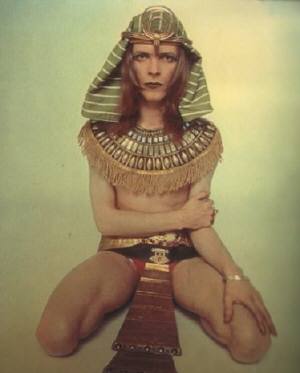
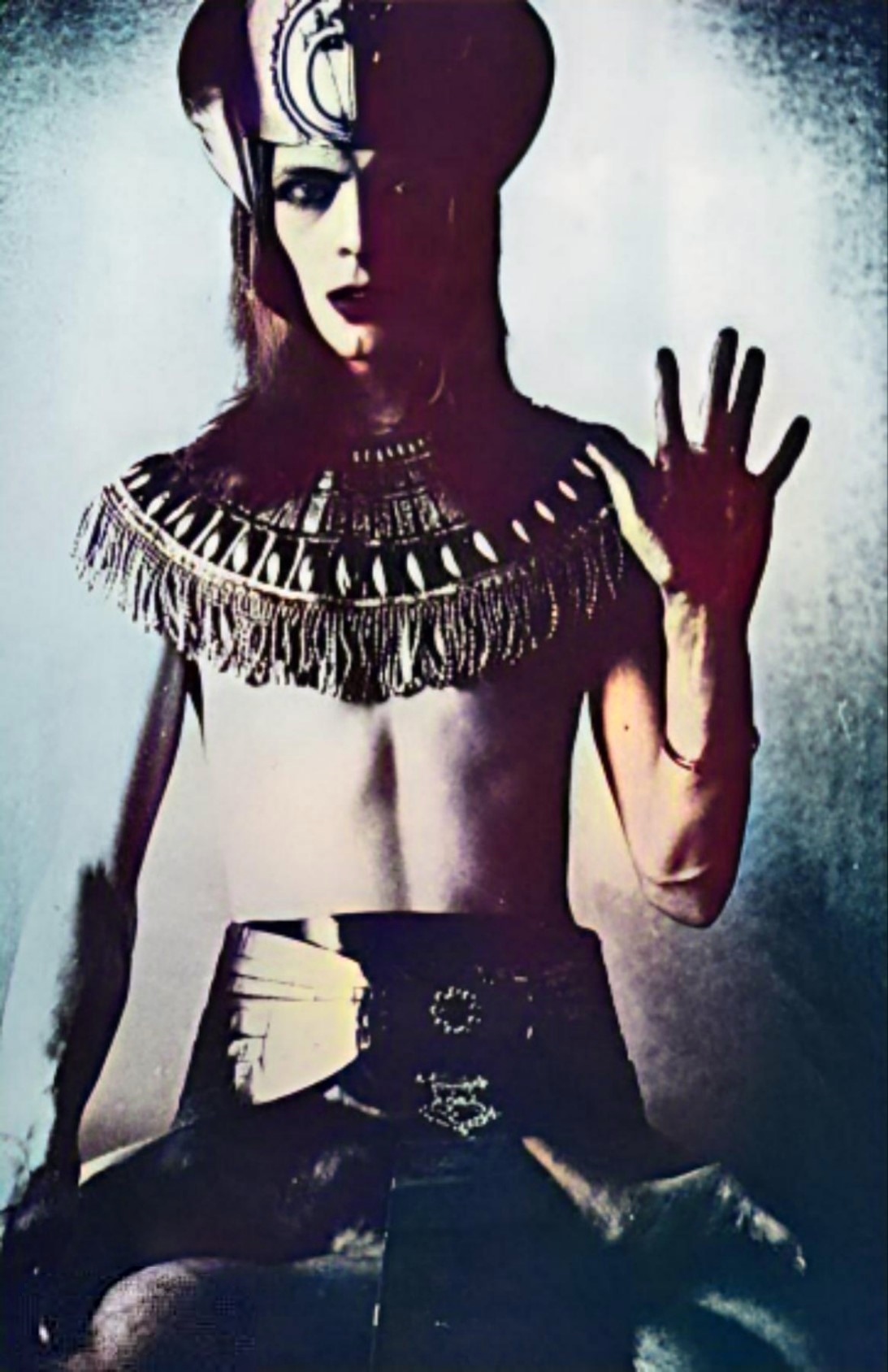
Angie Bowie doesn’t see any occult intentions behind this: "He ran out of photo shoot ideas. We did that one in London in the early 1970s. Natasha Korniloff and Lindsay Kemp’s brains were plundered for every image and every possible costume." [My interview with Angie Bowie in 2003] There are rumors that Bowie began planning a Tutankhamun stage project in the early 1970s, but it never progressed beyond the planning stage. Anyway, would 'walking like an Egyptian' have been a wise career move? |
| Bowie’s "Keep Swinging" |
|
The sexual emergency in the record collection was over, as was the vogue to be vague. No need to hide behind eyelashes anymore and the implicit became the explicit.
In what way did this also apply to Bowie's occultism in the early 1970s? Could 'Holy Holy' from 1970 have dropped a subtle hint about Sexmagick? The suggestion carries a touch of uncertainty — and a nod to the enigmatic nature of musical interpretation. Listen Lady, let me lie low, lie low with youetc. etc. The song's lyrics do not explicitly mention magic, mysticism, or sex magick, yet their ambiguity and symbolic resonance certainly invite speculation. Bowie's writing often revels in abstract, open-ended themes that allow for varied interpretations. 'Righteous brother' may carry an esoteric tinge, but the specific claim that it is a standard Masonic or Golden Dawn term should be handled with caution unless directly documented.
In essence, 'Holy Holy' can be read as a meditation on duality, transformation, the search for divinity, and personal revelation — concepts integral to magical traditions. Of course, whether these interpretations hold weight depends on the listener. Bowie’s lyrics, by their very nature, invite a multitude of meanings. But: with enough ingenuity, every word and symbol can be bent to serve any narrative or provide an explanation for nearly any interpretation. |
| "Then I ran across a monster who was sleeping by a tree / And I looked and frowned and the monster was me" |
|
In 1971, Bowie stated that he wanted music to be "tarted up, made into a prostitute, a parody of itself. ... It should be the clown, the Pierrot medium". [John Mendelssohn: "David Bowie: Pantomime Rock?", in 'Rolling Stone', 1 April 1971].
Did he mean that he wanted to achieve that by using different make–up, more outfits, and more outrageously flamboyant costumes, or was there something else, something more profound, something perhaps hidden beneath a surface? Or at least make a show of it, as if? To enhance his rather shy and over–polite image and make him appear more daring and provocative than he actually was, Bowie surrounded himself with some of Andy Warhol's entourage. And certainly, socializing with this unconventional group of outsiders and eccentrics was quite enjoyable and fun. For a while. While spending his time gazing into crystal balls and communicating with the spirit–world through a Ouija board, Bowie developed a shadow–persona / alter ego of an androgynous messiah–figure who would shape the music scene of the 1970s. He questioned the accepted romantic notions of sincerity, truth and authenticity, including the assumed identity and sympathy between musician and audience, particularly where sexuality and pop / rock music running counter to everything deemed natural was concerned. This undoubtedly fed Bowie's desires for folie de grandeur and an aesthetic of excess, both of which could be used to re–create the self as a manufactured object and would mean the replacement of God as the creator. Me: "Did he believe that he could become God through occult practices?" Angie Bowie: "David wants to be a dictator, not God. His fixation is with himself and he strives to ignore his own self–loathing." [My interview with Angie Bowie in 2003] She suggests that his fixation was on control and influence over his own image and the music industry. The idea of replacing God as the creator with self–made personas reflects a desire for artistic autonomy and a rejection of traditional religious and cultural structures. Bowie’s ultimate goal was to master and manipulate his own image and artistic output rather than transcend into a divine or supernatural realm. And the songs transformed into mere backing tracks for the persona of Bowie, created by David Robert Jones. Style and fashion served as the guise of a fleeting new character, something donned for a record, a photoshoot, or a stage show. Talking about Bowie and his music sometimes became much more interesting than the actual music itself. In this framework, music, like any other form of art, becomes a means to explore and deconstruct the concept of identity rather than a straightforward medium of expression. Pop music went postmodern, with fragments ruling. 
The nature of Glam or Glitter Rock was its obsession with surfaces and mutability: the ever–changeable me and you, the transitory nature of identity and gender — these were glam's truest, most basic subjects. A concept that offered less of a ready–made identity and more a 'critique of identity' itself. Bowie: "I do not feel that there is anything remotely glorious about being either male or female. I was merely playing on the idea of the colonisation of a gender." Iman: "Is it better to be one or the other?" Bowie: "That is, in my opinion, an absurd question." [David Bowie interviewed by his own wife Iman Abdulmajid for the Fall 2000 edition of 'Bust', "a magazine and website that provides news, entertainment, celebrity, lifestyle, and fashion from a feminist perspective."] Not that Bowie was the only one using such anti–hippie, anti–psychedelic, anti–mainstream (yet sub– and counter–cultural) ideas by the start of the 1970s: there had already been the late–60s 'Theatre of the Ridiculous' (in the form of New York's Ridiculous Theatrical Company) a movement summed up by its 'low camp' absurdism, taking aim at the preposterous with literary references and an inexhaustible supply of puns; followed by so–called 'Queer Theatre' (as Stefan Brecht named it) in the form of the air of fantasy that permeated the Cockettes in California (Bowie had one of their well–known performers as his opening act: In late October 1972, Sylvester supported him in San Francisco); Andy Warhol's Factory (with 'Pork' and Wayne / Jayne County, who had been present at the Stonewall riots and seems to have inspired some of Ziggy Stardust's more exalted traits); John Waters and his Baltimore film entourage; Antony Price and Juliet Mann's self–consciously retro 'Che Guevara' boutique (founded in 1969) in London... and so on and so forth ... anything and eveything that promised pandemonium, anarchy and outrage. The boundaries of the morally acceptable were trampled by well-worn platform shoes (the '70s male equivalent of Dorothy's ruby slippers), and eventually Bowie climbed out of the Quicksand of his thoughts, became like LSD in the water supply of his audience, and a pop-art wet dream was brought to life. |
| "You are my Creator, but I am your Master — Obey!" [Mary Shelley, Frankenstein or The Modern Prometheus, 1818] |
|
Ziggy Stardust — our fine, feathered friend, caked in glitter and lipstick — Who he? 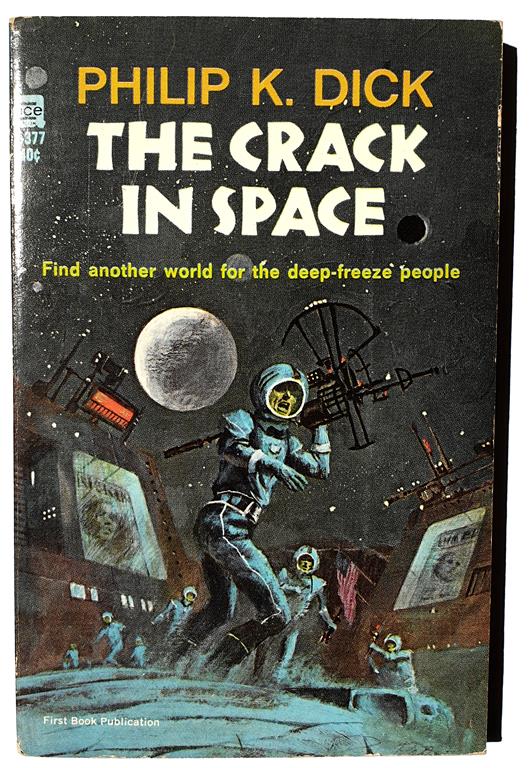
Philip K. Dick: "The Crack In Space", New York 1966 Bowie’s Ziggy Stardust persona, along with the mythology woven around it, presents a blend of myth–making, self–exploration, and an ever–shifting artistry. Here are some of the key facets and interpretations of Ziggy Stardust, as well as Bowie’s artistic evolution during this transformative era. Perhaps the Ziggy Stardust character was being planned and visualized as far back as 1968 or 1969 when he saw the Who's rock opera "Tommy" and had been marinating in its creator’s mind for quite some time. Bowie’s early conceptions of Ziggy might have been more about the character’s aesthetic and thematic elements, with the full narrative coming together later. Perhaps the Ziggy myth was invented by journalists after Bowie interviews, during which they had heard a collection of Ziggy songs without any linking narrative, with scenes presented out of order? Or perhaps Bowie himself retrofitted the songs into a loose tale, as he often allegedly created characters and concepts quite consciously and deliberately? Early conceptualizations of Ziggy Stardust in Bowie's 1971 notes, with phrases like "fans view", "Parents Ziggy Thing", "Now he knew he had to out–hip those queens and get into the role oh so well", "The New Sensation comes", "Death in Mad", indicate Bowie's early explorations of a rock/pop opera or character concept that was determined to "out-glam and out-shock" acts like Marc Bolan and Alice Cooper who had captured the UK public's attention during that period. These notes suggest that Bowie was shaping a narrative or thematic idea, though it’s unclear whether these were directly tied to Ziggy Stardust or part of a broader creative process. The Ziggy Stardust songs lacked a cohesive story. Why? Ideas were needed. But "Inspirations have I none" ('Soul Love', 1972). In retrospect, where everything can appear easily explainable yet somehow profound at the same time, in 1974, Bowie invented for William S. Burroughs a civilization going to collapse and where the 'Infinites' would arrive. Ziggy Stardust (not an alien but a sort of Golem, "your face, your race, the way that you talk / I kiss you, you're beautiful, I want you to walk") was to announce the coming of these 'Starmen' bringing hope. Ziggy, the earthly messenger, starts to believe in all this himself, soon considers himself the messiah of the future Starmen and takes himself to incredible spiritual heights, and is kept alive by the devotion of his disciples. When the Starmen finally arrive, they intend to take bits and pieces of Ziggy so they can manifest themselves as real physical beings. Eventually they tear him to pieces on stage during the performance of the song 'Rock 'n' Roll Suicide'. At the moment of Ziggy's death, the Starmen take on his essence, and become visible. [Craig Copetas: "Beat Godfather Meets Glitter Mainman. William Burroughs, say hello to David Bowie", in 'Rolling Stone Magazine', February 28th, 1974.] This drama is Gnosticism at its purest. In Manichaeism, every man and woman were once STARS, that is divine. Through a Philip K. Dick–like "crack in the sky", most of the divine quality re–ascended to heaven, leaving behind only some tiny little sparks of the Divine Light in humanity on the physical level. These sparkling 'leftovers' of the Divine (when the so–called Logos spermatikos left mankind), imprisoned in matter, have to be concentrated upon building up a brilliant "body of Light" fitted for a return to the "Blessed Realm" in heaven. Thus in this form of Gnosticism, the whole body of man was considered as divine (the Temple of the Holy Ghost) and the sexual organs were meant to fulfill a peculiar function: namely, the re–creation of the universe. In Manichaeism, all other matter is "evil", a place of decay; and although many manicheist scriptures speak of the ascetic aspect (enjoining no meat, no coitus, no marriage) there are more controversial reports that take a diametrical opposed view. But whether ascetic or sensual, it was a core belief of Manichaeism that "angels" copulate with "archonts" as a way of freeing human beings from their the "evil bonds" to matter. — Archonts are the guardians of the universe and are often viewed as maleficent forces. One of the archonts is the demiurge or the creator of the world. The recurring image of archonts is that of jailers imprisoning the divine spark in human souls, held captive in material creation. — But through the union of Good and Evil — angels and archonts — souls were purified and what is removed in this purgation might be 'given to all the species of the Earth'. The shamanic theme of dismemberment as spiritual rebirth is echoed in Ziggy’s dramatic on–stage destruction. This reflects the transformative and sacrificial elements of shamanic initiation.
The myth of renewal through dismemberment or fire continues to haunt humanity. In 1994 and 1995, posing with Damien Hirst, Bowie toyed with the idea of torn bodies as art. Manichaeism also played a rôle in Crowley's philosophy. Did his slogan "Every Man and Woman is a Star" lead to Bowie's Starman, Ziggy Stardust, the Rock'n Roll Star of the 1971–73 Ziggy–Incarnation? "I was very aware of the idea of androgyny or an unknown gender being attached to most priesthoods in the East... Those original shamans have mutated into the entertainer ... that's where I was at in the early '70s," Bowie recalled in 'Interview', September 1995. Bowie's messianic Ziggy Stardust myth invaded the minds of the nation's youth, combining extraterrestrial rock 'n' roll with flamboyant albeit somehow non–threatening sexuality, all delivered in high–heeled boots, multicoloured dresses and extravagant make–up. Bowie himself became deeply immersed in the Ziggy persona, to the point where it overshadowed his own identity. This immersion led to an intense and sometimes troubling experience, as he felt the boundaries between himself and Ziggy began to blur. Bowie’s remarks about the character suggest that he saw Ziggy as both a powerful artistic creation and a dangerous obsession: "I fell for Ziggy too. It was quite easy to become obsessed night and day with the character. I became Ziggy Stardust. David Bowie went totally out the window. Everybody was convincing me that I was a Messiah, especially on that first American tour. I got hopelessly lost in the fantasy. I could have been Hitler in England. Wouldn't have been hard. Concerts alone got so enormously frightening that even the papers were saying, 'This ain't rock music, this is bloody Hitler! Something must be done!' And they were right. It was awesome. Actually, I wonder … I think I might have been a bloody good Hitler. I'd be an excellent dictator. Very eccentric and quite mad." [Cameron Crowe: "Ground Control to Davy Jones", in 'Rolling Stone Magazine' 206, February 12th, 1976.] Bowie: "It did snowball itself. When I wrote the thing, I was so unlike Ziggy Stardust. I was still doing Arts Laboratory type things and street theatre at the time. I was not Ziggy Stardust. He started off strictly as a fictional character. When I started dressing for the part and acting it out onstage, the edges of definition between myself and the character became blurry. Then the articles started coming out "This Isn't Rock & Roll. This Is Fascism" and "Bowie's A Nazi" and all of a sudden I was too far in." [Ben Edmonds: "Bowie meets the press. Plastic Man or Godhead of the Seventies?" in 'Circus Magazine', April 1976.] "I was young and I was full of life, and that seemed like a very positive artistic statement. I thought that was a beautiful piece of art, I really did. I thought that was a grand kitsch painting. The whole guy. Then that fucker would not leave me alone for years. That was when it all started to sour. And it soured so quickly you wouldn't believe it. And it took me and awful time to level out. My whole personality was affected. Again I brought that upon myself. I can't say I'm sorry when I look back, because it provoked such an extraordinary set if circumstances in my life. I thought I might as well take Ziggy to interviews as well. Why leave him on stage? Looking back it was completely absurd. It became very dangerous. I really did have doubts about my sanity. I can't deny that the experience affected me in a very exaggerated and marked manner. I think I put myself very dangerously near the line. Not in physical sense but definitively in mental sense. I played mental games with myself to such an extend that I'm very relieved and happy to be back in Europe and feeling very well … But, then, you see I was always the lucky one." [Allan Jones: "GOODBYE TO ZIGGY AND ALL THAT" in 'Melody Maker' October 29th, 1977.] And now, with Bowie receiving the full screaming mob treatment, what of his fans? In popular culture, there exists a curious fusion of elitism and democracy where artists and their audience appear to transcend the need for extensive formal education. Bowie was spitting feathers: "They run around like ants, chewing gum and flitting onto a certain style of dressing for a day; that's as deep as they wish to go." [David Cameron: "Candid Conversation: An outrageous conversation with the actor, rock singer and sexual switch–hitter", 'Playboy Magazine', September 1976.]
Later, as the music market came to be dominated by the thinking fan and buyer, Bowie was easily approachable in real–time chatrooms online. His shifting relationship with his audience — from critical detachment to direct interaction — mirrored broader changes in how artists connect with their listeners:
1994 1st July America Online Chat; 1996 11th September CompuServe Conference; 1997 8th January America Online Chat; 1998 30th September BowieNet; 1998 13th November BowieNet; 1998 17th December BowieNet; 1999 8th January BowieNet; 1999 30th January BowieNet; 1999 27th February BowieNet; 1999 29th March SonicNet and Yahoo! Chat; 1999 27th April BowieNet; 1999 24th May BowieNet; 1999 23rd December BowieNet; 2000 26th January BowieNet; 2000 2nd February @ Eden.vmg.co.uk. "I write for myself," […] "I've been exceptionally lucky and picked up an audience that likes my music." "But I never have written for them. I never will ..." "I write music for my own satisfaction." [Kenelm Jenour: "THE LONER" in 'Daily Mirror', Saturday, February 11, 1978.] Bowie’s statements about writing for himself and his reluctance to overanalyze his lyrics reflect his view of art as a personal, evolving process. He sought to entertain but maintained distance from his audience’s interpretations — a consistent theme in his career. Interviewer: "It must be a bit funny being David Bowie with all these books about you being a chameleon and all that, mustn'it?" Bowie: "Well, I distance myself from all that. Very much so. I read those books when they started coming out in about 1973 but after a couple of years I stopped reading them. There were already five after 1976 and now [1987] it's up to 37 or 38. I think. There comes a point when you don't take any notice of them. They have no effect on my life whatsoever. I have absolutely no interest. None at all. Not even the merest hint of interest." ['Smash Hits' 9;12, London 17–30 June 1987. "The Most Preposterous David Bowie Interview Ever!"] Interviewer: "What do you want your audience to think when they see you?" Bowie: "I don't want them to think anything. They're probably just as confused about my writing as I am. I mean, I'm the last one to understand most of the material I write." [Timothy Ferris: "Are You Man Enough for David Bowie", in 'Rolling Stone Magazine' 121, November 9th, 1972.] Nevertheless: "I dearly want to be recognised as a writer, but I would ask them not to go too deeply into my songs. As likely as not, there's nothing there but the words and music you hear at one listening." ... "I throw myself on the mercy of an audience, and I really need them to respond to me. If they don't, I'm lost. But all the same, I'm determined to be an entertainer, clubs, cabaret concerts, the lot." [Gordon Coxhill: "Don’t Dig Too Deep, Pleads Oddity" in NEW MUSICAL EXPRESS, November, 15th 1969.] |
| "I've had my share so I'll help you with the pain" |
|
While Bowie had sexual intercourse with his alter ego Ziggy Stardust, his contemporary Marc Bolan (an inspiration for Ziggy’s 'Lady Stardust' persona in 1970 where Bowie sang "songs of darkness and dismay") reflected a libertine approach to gnosis: "I got a Rolls–Royce 'cause it's good for my voice".
This suggests that Bowie and his peers largely overlooked the ascetic aspects of Manichean practice, which aimed to preserve the Light / Divine Sparks and avoid activities that dissipated it. Instead, they seemed to pursue their own forms of transcendence and self–exploration. As Bowie later sang in Bertolt Brecht's 'Baal' in 1981, "He will have his sky down there below", reflecting a more earthly or pragmatic approach to spirituality. When the stage shows in 1972 and 1973 opened with Beethoven's 'Freude Schöner Götterfunken' [Ode to Joy], it seemed that the musicians in his band, The Spiders from Mars, had found 'God' as well but through the medium of Scientology. [Beethoven also was used in 1990 as the opener]. Scientology and Crowleyanity share more similarities than one might expect, as explored in Michael Staley’s article The Babalon Working and Nikolas and Zeena Schreck's "Demons of the Flesh". 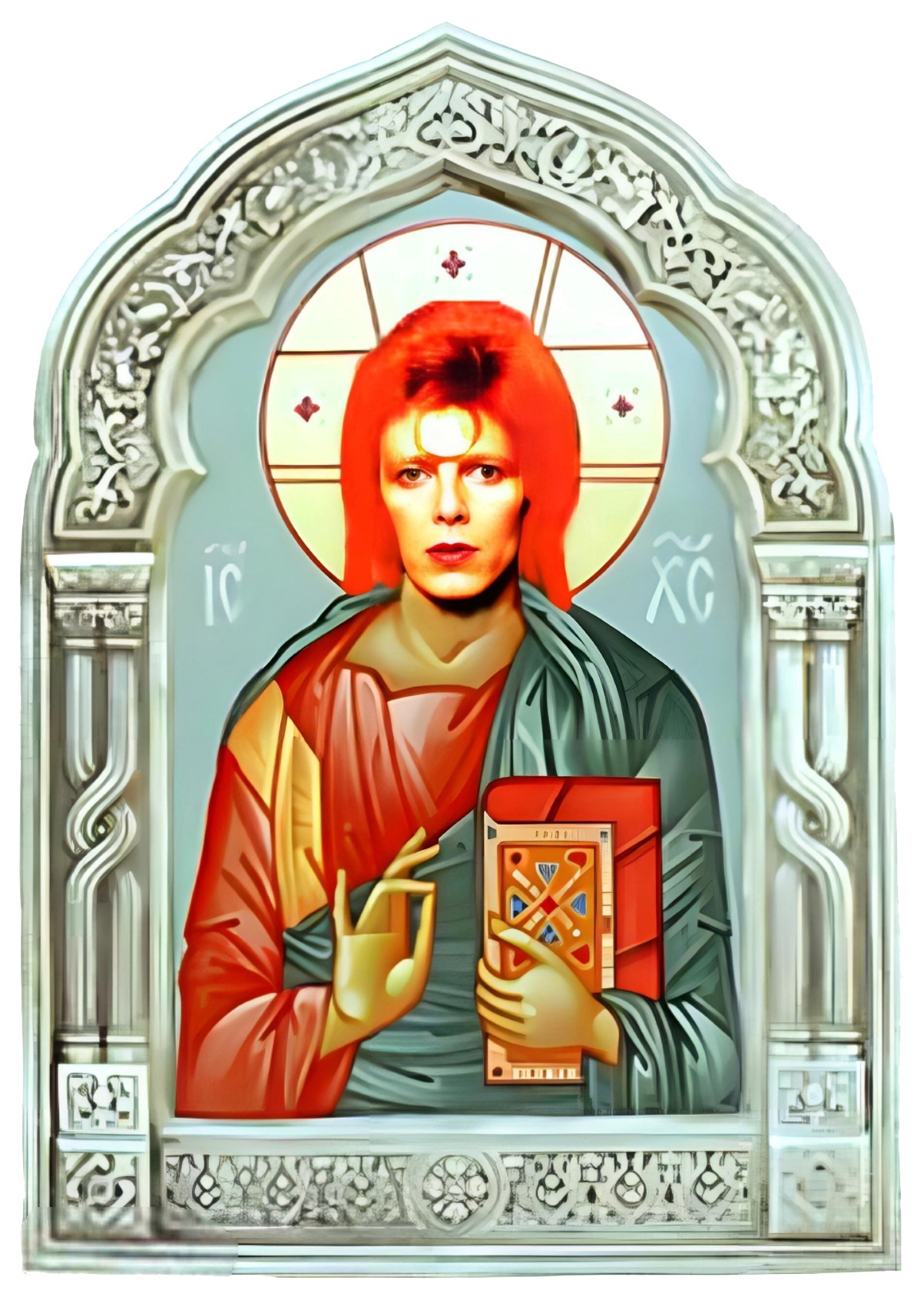
Ziggy Christ Source: www.5years.com/gospel.htm: The Gospel According to Ziggy Stardust? [defunct] Robin Mayhew, sound–engineer of all the live Ziggy Stardust shows from 1972 until Bowie broke–up the Spiders from Mars in 1973: "I never got the impression that anything occult or supernatural motivated David. It just seemed that he was living a dream during the Ziggy project and everything new had to be experimented with and tried. Whether it be a piece of equipment or a person's particular skill he would want to know everything about it or them. It may sound a bit 'me me' but he couldn't believe how I could get such an acurate mix of the shows and wanted to understand the workings of my PA system and how I engineered things. It fascinated him. It was a little weird when [keyboard player] Mike Garson joined The Spiders as he is/was a great believer in Scientology [Garson was hired as a back–up musician in September 1972 and remained a frequent band member until Bowie's death in 2016] and two of our security guys got heavily influenced and began to act a little strangely!!" [E–mail September 2016] The narrative of Ziggy Stardust, filled with endless variations and unfulfilled conclusions, highlights the character’s inevitable decline, symbolizing Bowie's transition from Ziggy to new personas. Just imagine fat, old Ziggy with a face suggesting a weathered boot, though undeniably hand–made! Ziggy Stardust had to die for real — coincidentally, just as RCA pulled the financial plug — when Bowie decided to drop Ziggy and adopt a new persona. Contrary to the dramatic farewell, Bowie had no intention of retiring or even taking a breather. Behind the scenes, his manager was busy renegotiating the publishing deal for Bowie’s music, so he didn’t want him recording any new material during the talks, which is why Bowie's covers album 'Pin Ups' was done and dusted some months later. 
'I Got You, Babe'. David Bowie as Angel of Death and Marianne Faithfull as Decadent Nun, October 19, 1973. 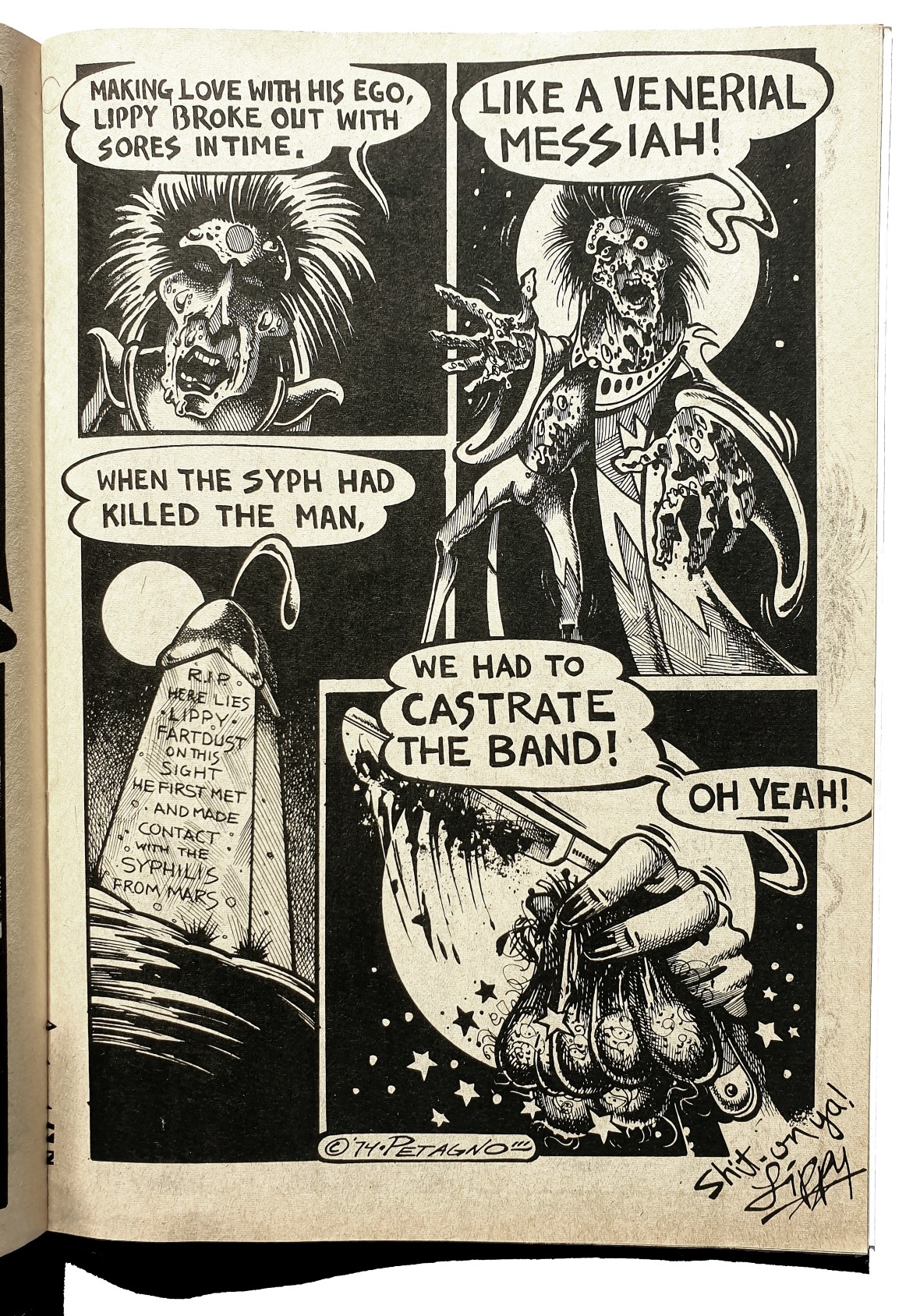
The American underground artist Joe Petagno was pondering what might have really happened to the "leper messiah". [From: Joe Petagno: "It's only Rock & Roll Comix", 'The Rise And Fall Of Lippy Fartdust And The Syphilis From Mars', no place, 1975.] |
| The Smear of Destiny |
|
In 1973, Bowie was reportedly influenced by Trevor Ravenscroft’s 1972 bestseller, "The Spear of Destiny". This book, an amalgamation of dubious historical claims, builds on the already questionable ideas presented in Louis Pauwels and Jacques Bergier's "The Morning of the Magicians". I shall diplomatically describe this rubbish in terms of content. 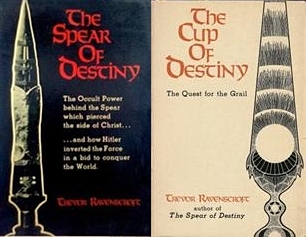
Ravenscroft’s book, heavily reliant on unverifiable claims rather than historical facts, is an unsettling blend of Nietzschean and Wagnerian material with a fascination for Hitlerian occultism. Wagner’s anti–Semitism is explicit; Nietzsche’s relation to Jews and Judaism is more contested, although he openly opposed the organised political anti–Semitism of his day. The text attempts to link Hitler's supposed magical practices with Crowley’s sex magick, featuring bizarre claims such as women in trances releasing ectoplasmic entities through their vaginas, which allegedly influenced Hitler’s circle. Ravenscroft's work also delves into myths about the 1938–39 SS/Ahnenerbe expedition to Tibet, led by zoologist Ernst Schäfer under Heinrich Himmler’s patronage, in search of supposed Aryan origins, the fictional Vril society from Edward Bulwer–Lytton’s 1871 novel "Vril", which posits a coming race destined to supplant humanity, and the so–called Thule Society. While the Thule Society was a political organization with no significant occult influence, Ravenscroft and others have woven an elaborate tapestry of occult significance around it. This fictional narrative of occult mysticism is echoed in Bowie’s song "The Supermen": "Where all were minds in uni–thought / Power weird by mystics taught / No pain, no joy, no power too great / Colossal strength to grasp a fate", reflecting themes of esoteric power and control. Where the book is not pseudo–anti–Hitler it seems to be vaguely pro–Rudolf Steiner. Bowie might have been intrigued by these portrayals of Steiner’s work, although Steiner’s ideas are quite distinct from those of Eastern traditions. Soon more on this. PATRICK SALVO: "As for yourself, you obviously don't believe in organised religion but you were once a Buddhist. You practised it and that would be organised to an extent." BOWIE: "Well that's why I'm not a Buddhist anymore. I wrote a song called 'The Supermen' which was about the Homo Superior race and through that I got interested in Nazism. I'm overwhelmed at their methods–diabolical. I have no room in my head to entertain their theory, the gross effects, the terrible disregard for human life, especially for particular races and religions. You knew Roman Catholics were next. The Pope bought Hitler off. It was the whole thing about the Magic Wine. Hitler wanted to develop an Aryan race. For what reason? To fight Homo Superior. He was dreadfully afraid of Homo Superior and his aims to develop a race of Aryan people was a misrepresentation of that good feeling of Homo Superior. Because if it was such a depressed era, spiritually and morally that it came out all wrong. I'm sure Hitler could have gone the other way. But mind you this is a mad planet, it's doomed to madness. We might have freaked the world so much, twisted it off its axis, its practical and mental axis so much that the way these new children could be influenced by their grandparents might have ticked something off in their head that you may well find that we have given birth to Homo Superior prematurely." [Interview' Magazine, March 1973] 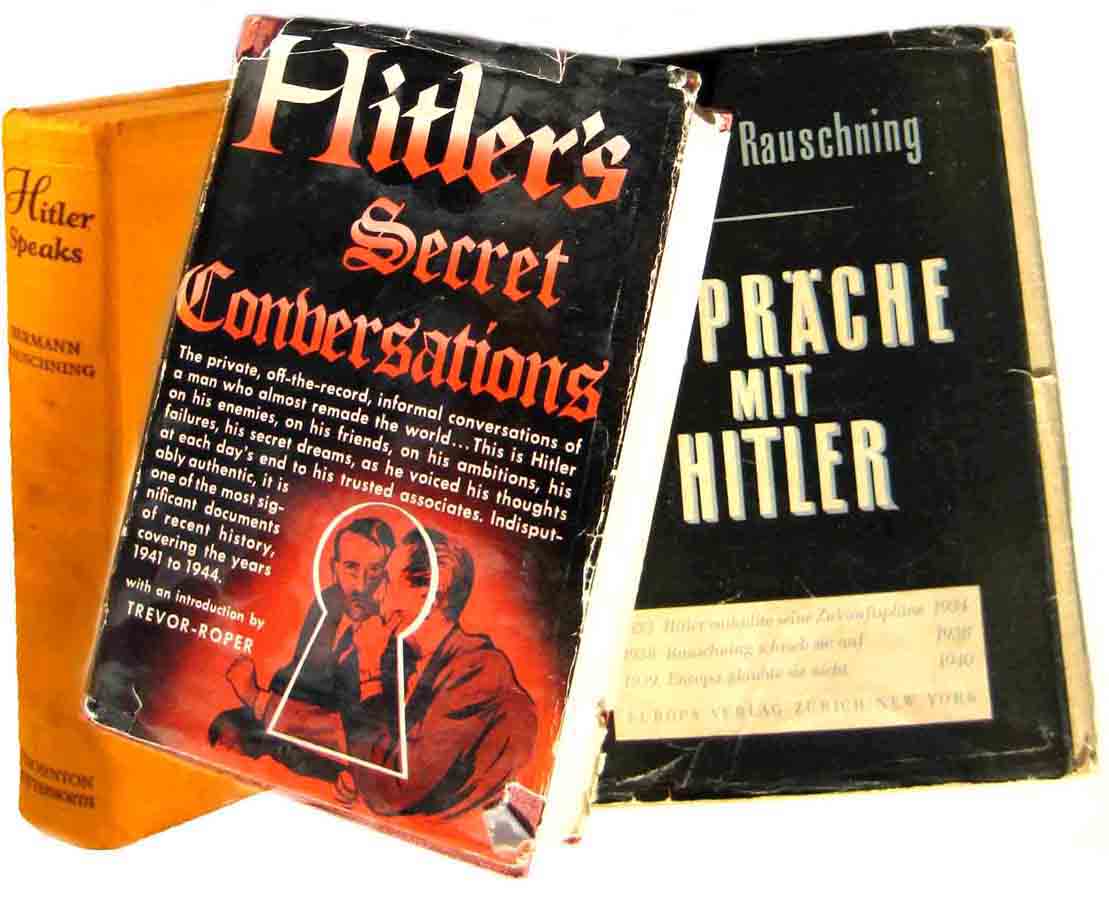
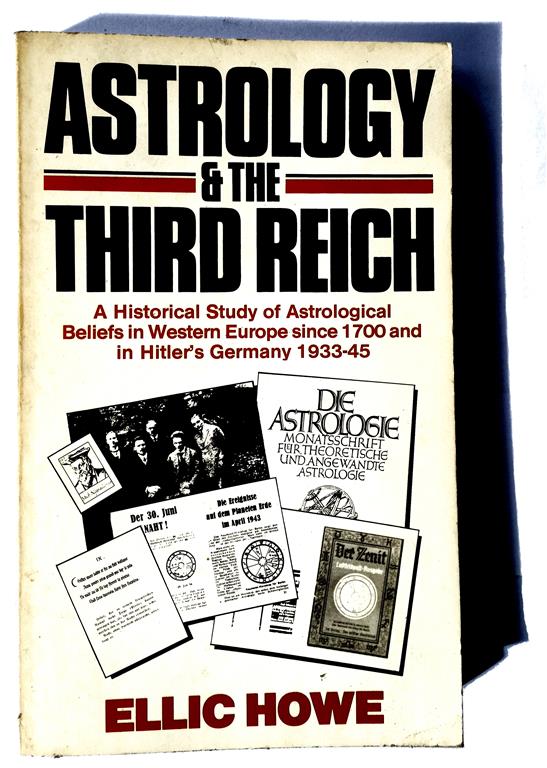
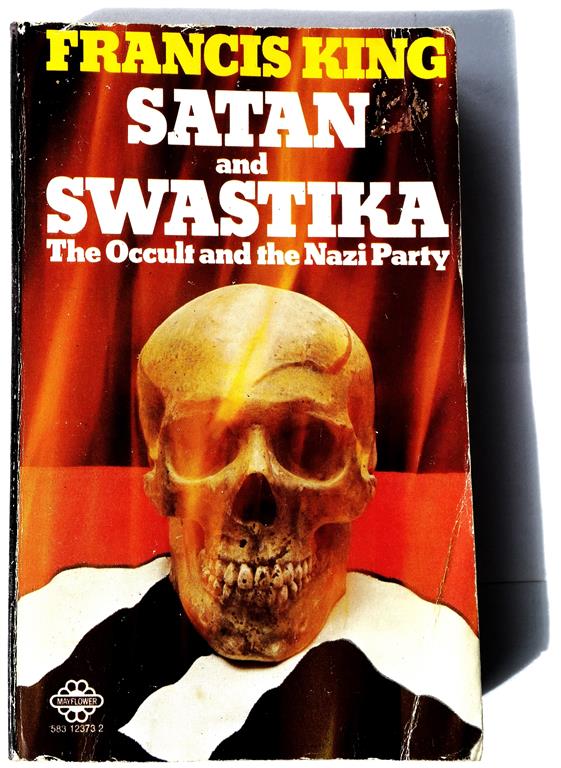
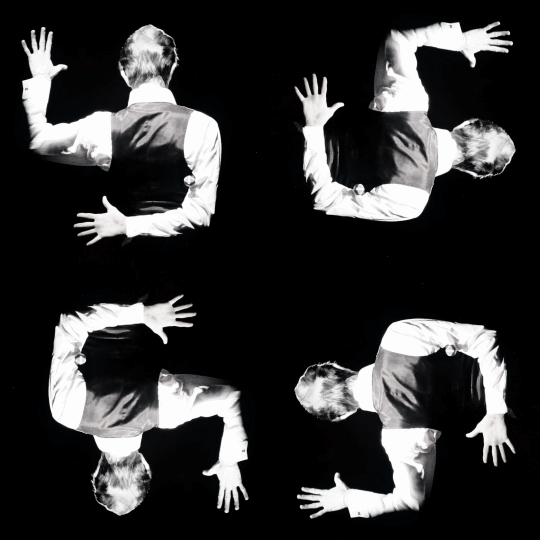
Bowie photo by Andrew Kent. — Hermann Rauschning: "Hitler Speaks" (1940), "Hitler Spricht" (1940); Trevor–Roper: "Hitler's Secret Conversations" (1953). — Ellic Howe: "Astrology and the Third Reich", also as "Urania's Children" (1967). — Francis King: "Satan and Swastika, The Occult and the Nazi Party" (1976). Ellic Howe once told me, the present author, over a fine dinner: "Never trust an Occultist." Occultists in general consider themselves as 'subjects' — while non–occultists are 'objects' — à la Crowley's "the slaves shall serve". A lot of occultists view themselves as a superior being or a 'chosen one', while everyone else is as nothing. This sort of occultist lives in a world ruled by good and evil. Of course, many occultists might reach a level that is beyond that — but nevertheless the world below their abyss is only black and white, for them. Most occultists are trapped in such relationships; all are victims and transgressors, masters and slaves, Gods and sub–humans, and this is very much reflected in their choice of language and imagery they choose to use. 
|
| "Do I have to give your money back when I'm the Fuhrerling?" |
|
When Bowie tried to engage with the world, the non–gnostic world, he quickly put his foot in his mouth. His flirtation with fascism and controversial political statements in the 1970s are complex and multifaceted.
Already in 1969, he had said about England: "This country is crying out for a leader. God knows what it is looking for, but if it's not careful it's going to end up with a Hitler. This place is so ready to be picked up by anybody who has a strong enough personality to lead." [Bowie interviewed by Kate Simpson, in 'Music Now!', December 1969.] "I was interested in the symbols of the Nazis. I think they are the most powerful set of symbols that have been invoked in terms of political history. The swastika. They took a Buddhist symbol, the Eastern symbol of the sun, and turned it around so it became a symbol of the dark. That intrigued me about the Nazis. Who was the magnus [sic]? Who was the black magician?" [David Bowie, 'Arena' magazine, 1993.] 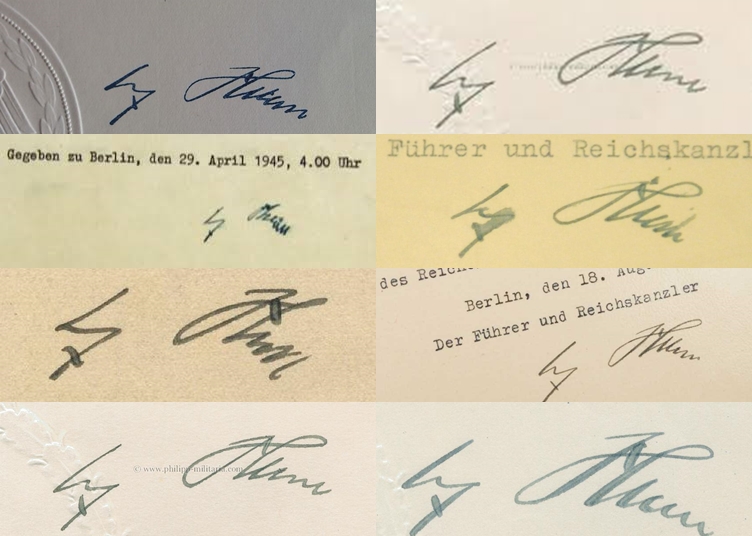
Adolf Hitler's signature. So there were fascist subtones in the Ziggy Stardust area. The obvious "Z" lightning in the stage show resembled a S–rune (SS was the nazi Schutzstaffel / Protection Squadron or Defense Corps), and subtly reminded one of Nazi military troops and how the populace subjected themselves to a master leader. "He was the naz[z]('Ziggy Stardust', 1972]. Later, everything would become a mirror. In 1993, Ziggy Stardust's / Aladdin Sane's red–blue zig–zag lightning–flash appeared on the cover of the music magazine "Q" (May 1993)* — Also on the cover of the bootleg double CD "Birthday Bash" in 1997.
*The Editor had this to say regarding that Bowie cover: "One of the problems with 'Q' is that although we get fantastic access to huge stars, it's sometimes difficult to remind readers of what it was they loved about these people in the first place. This Bowie picture for the cover of 'Q' #80 was, when it arrived with us, just a rather nice contemporary portrait. We needed somehow to link it into the glories of David's past. We had the idea of the cover of Aladdin Sane, and after much telephoning, discovered that a computer enhancement company called Jones Bloom, just down the road from us in fact, had the very frontier technology we needed to convincingly paint David's skin. They did a fantastic job. We didn't receive a single letter saying, that isn't the real Aladdin Sane flash. Indeed, dozens of people asked 'How they hell did you get him to agree to do that?' I got a message back from Bowie himself saying that it was 'cheeky'." Danny Kelly, Editor (1995).
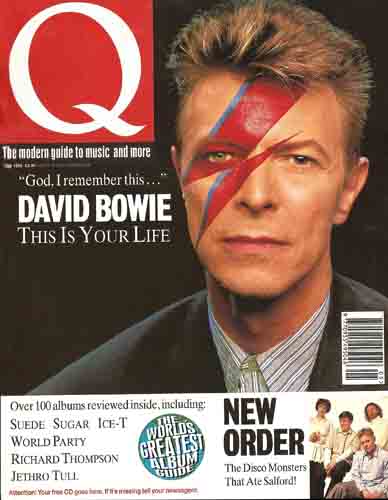
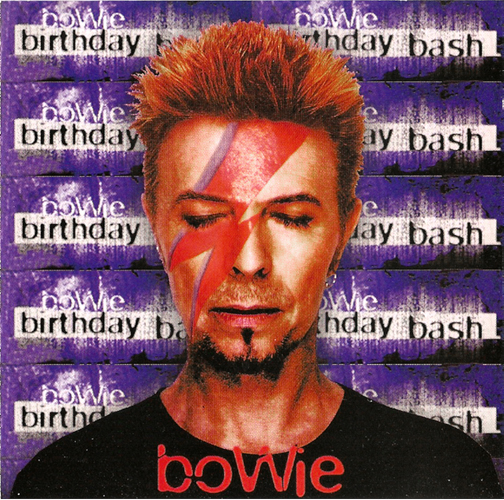 There were possible references to totalitarian ideology already in pre–Ziggy Stardust songs. 'The Supermen' (1970) infers the idea of a master race with regimented militant behaviour: "The supermen would walk in file / Guardians of a loveless isle". "Where all were minds in uni–thought" while 'The Saviour Machine' (1970) described a futuristic fascist being in a theocracy where the word of God is "law". The comparison to Crowley's phrase "Love is the Law, Love under Will" suggests a possible influence or thematic parallel, though it’s important to note that Crowley’s idea revolves around individual will and freedom rather than oppressive control. Supposedly, Bowie was inspired to write the lyrics for 'The Superman' after reading Nietzsche. Given the intricacy of Nietzsche's oeuvre and his philosophical musings, juxtaposed with Bowie's active social and artistic life (which left him with limited time for in–depth contemplation of such complex material), as well as Bowie's tendency towards a shorter attention span, this sort of 'digest' appears to rest upon rather precarious 'Quicksand'. Bowie may have taken a creative but naive interpretation of Nietzsche's concept of the 'Übermensch', rather than seeking a direct philosophical alignment. But in the ears of journalists and fans, the keyword 'Nietzsche' naturally sounds exceptionally convincing. Of course, what adds a special touch to this is Bowie's rhetoric of shortening Friedrich Nietzsche's first name to 'Fred'. ["Happy Birthday David Bowie", BBC Radio, 8 January 1997. Interviewer: Mary Anne Hobbs] He was, let's not forget, an autodidact, and the habit of parading one’s 'erudition' by name–dropping intellectual favourites is very much in keeping with the temperament of a man keen to curate his own mystique — especially when the cleverness is worn like a designer scarf rather than stitched into the lining.
There are individuals today who identify as occultists or gnostics and who believe that the pursuit of sexual and spiritual enlightenment and transformation is akin to a quest for a mysterious object, commonly referred to as a grail. It had been reported that Bowie had a strong interest in the saga of King Arthur ("I had this morbid obsession with the so–called 'mysticism' of the Third Reich" in the 1970's. "The side of it that fascinated me was the apocryphal tales of the SS coming to England and searching through Glastonbury for the Holy Grail"). According to legend, those Knights were on a quest for the Holy Grail. In magical and sex–magical interpretations, the Grail is a metaphor for the vagina, which contains semen and vaginal fluids. The consumption of this elixir, also known as the Elixir of Life or "psychosexual fluid", is believed to lead to the emergence of the Homo Superior, the God in Man, and the Man in God. Perhaps Bowie referred to these beings as "the Golden Ones" in his song 'Oh! You Pretty Things' (1971). Glastonbury has a long history of mystical associations. Legend has it that Christ visited the area, or that the cup from the Last Supper, known as the Holy Grail and containing Christ's blood, was kept there. St. Patrick is believed to be buried in Glastonbury, and King Arthur was said to have lived nearby. In the 1950s and 60s, many books were written about extraterrestrials or Atlanteans who sought cosmic power at the site of the ruined Benedictine Abbey, which is located in Glastonbury. In 1971, the first in a series of Glastonbury festivals was held, attracting dreamers and mystics, some of whom painted moons and stars on their faces. Bowie performed at the festival, singing about minds in uni–thought and power taught by mystics in his song 'The Supermen': "Where all were minds in uni–thought / Power weird by mystics taught". The song suggests a master race and regimented behavior, using phrases like "The supermen would walk in file" and "Guardians of a loveless isle". This can be interpreted as a critique or exploration of totalitarian ideology, reflecting dystopian visions of control and conformity. Angie Bowie commented: "Arthur? He wasn’t fixated on Arthur, he never even mentioned him. Grail? Well, he hung out with Ken Pitt who loved dressing up as a Nazi. Maybe he liked the rakish slant of the officer’s hat or the feel of a lash on the thigh, who knows? I wasn’t there. Before my time. Ken Pitt was interested in Nazi dress–up and things occult! There are only twenty or thirty international legends; to what or which was he supposed to attach his new belief system if not Arthur? [It’s] the only distinct legend which features the English doing something apart from running around covered in Wode or empire building." [My interview with Angie Bowie in 2003] Angie Bowie’s remarks throw a bit of shade on the supposed depth of David Bowie’s engagement with Arthurian legend and occult symbolism. She implies that his flirtation with such themes — along with the Nazi dress–up games he played with manager Ken Pitt — was more about style than substance. In Pitt’s case, it was probably more a matter of dependency between manager and artist rather than any genuine ideological commitment. Her comments also serve as a reminder of the broader cultural atmosphere at the time. Pitt, along with others who dabbled in occult interests, likely influenced Bowie’s artistic direction. But this influence, Angie suggests, was driven more by aesthetic and cultural curiosity than by any earnest belief in the esoteric doctrines they toyed with. It was art for art's sake, not dogma. |
| "And in the death ..." |
Amanda Lear: "The thing about David was, he was not very cultivated. He didn't go to school long enough. But he was willing to learn. That is something I admired very much. You would mention Fritz Lang. "Fritz who?" "You know the filmmaker from Germany" "Never heard of him." "All right." So I took him to the cinema to see Metropolis. The next day he was buying all the movies and wanted to know all about Fritz Lang. The same with William Burroughs. "Never heard of him." The next day he was buying Naked Lunch and all the books. The relationship was not just sex and holding hands. It was intellectual. We were sharing ideas and experiences." [Amanda Lear in Terry O'Neal: "When Ziggy Played The Marquee" [in 1973], Suffolk 2017, page 46.]
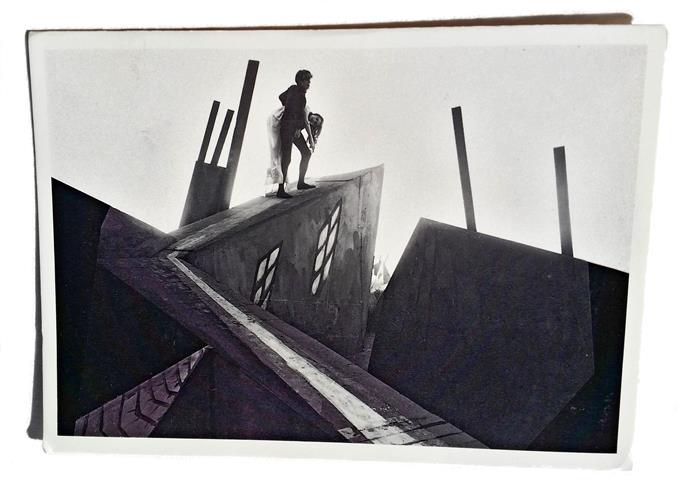
Robert Wiene: 'Das Kabinett des Dr Caligari', 1920.
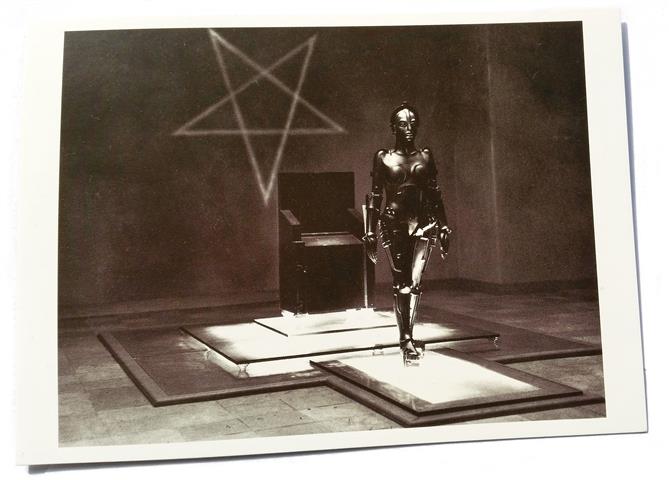
Fritz Lang: 'Metropolis', 1927.
Bowie traversed several decades of literature, film, and art in a whirlwind, and en route, he became fascinated by German expressionist cinema. The expressionist aesthetic, with its emphasis on distorted realities and psychological horror, resonated with Bowie’s own exploration of identity and self–destruction. The use of angular, surrealist visuals in his 1974 tour, notably through his 'Halloween Jack' persona, reflected this influence. In the biggest stage show ever mounted in rock and pop history, in 1974 he presented himself as 'Halloween Jack' with his own face as a Japanese Kabuki–Mask, on which yet another persona was painted: Aladdin Sane (A Lad Insane). An unreleased track from this time is called 'A Lad In Vain'. The hollywoodesque show stage was based on the expressionist designs of 'The Cabinet of Doctor Caligari' which was developed by a famous 1920s–occultist, Albin Grau, also responsible for 'Nosferatu'. 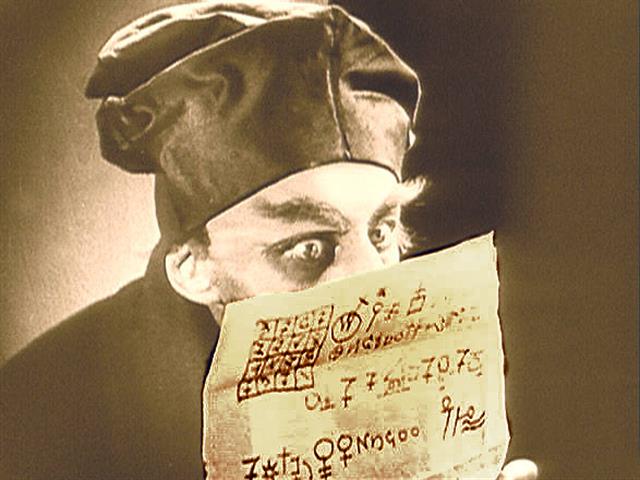
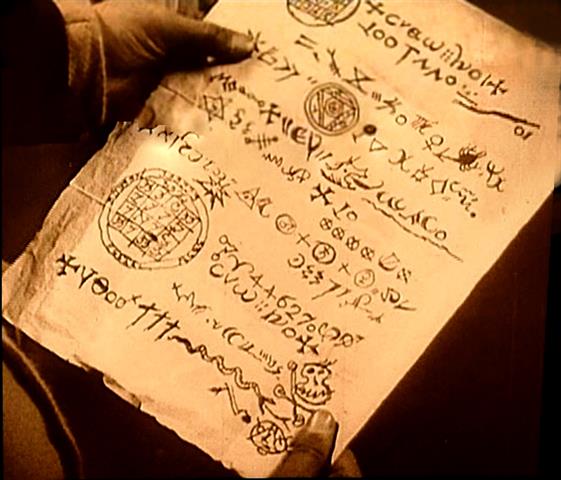
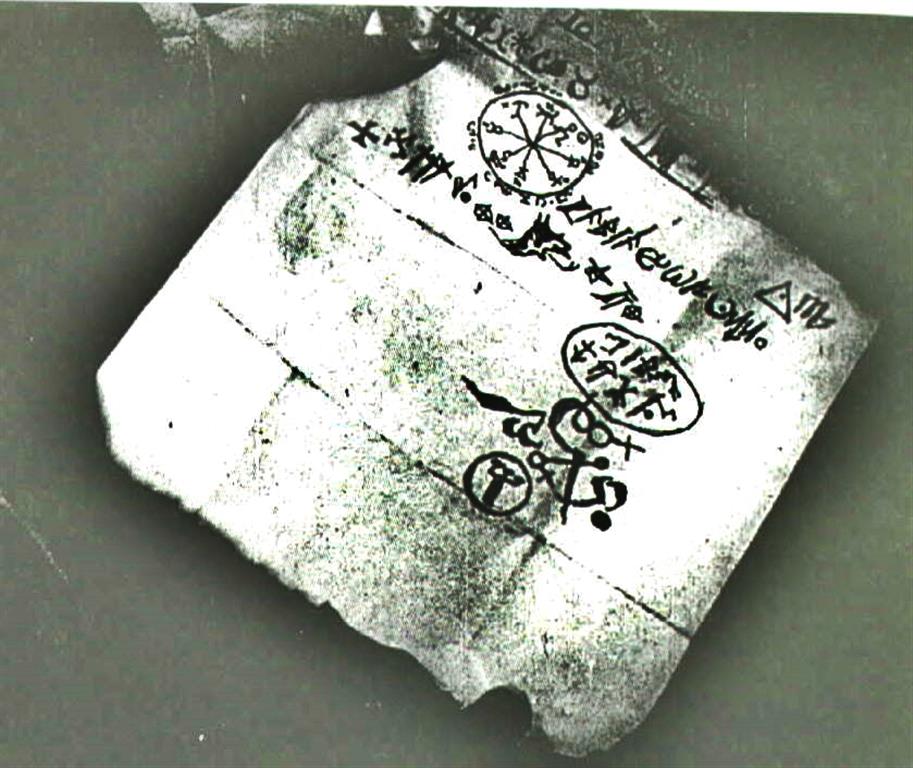
In the early 1974 live shows Bowie played the rôle of the 'Cracked Actor', parodying (or not?) a Hollywood Pierrot Hamlet who addressed a skull with the lyrics: "you sold me illusions for a sack full of cheques / you've made a bad connection 'cause I just want your sex." He mocked the superficiality and exploitation inherent in the entertainment industry. This self–parody highlighted Bowie’s awareness of the artificiality of celebrity culture. The song 'Cracked Actor' appeared on the live set again in 1999 and 2000. 
By the end of 1974, Bowie had his band introduce him with a 1969 song's lyrics: "The Sun machine is coming down"* and underlaying now new songs like 'Who Can I be Now' ("can I be real?") and 'It's Gonna Be Me' ("be holy again") with dancemusic ("For you're dancing where the dogs decay, defecating ecstasy") in the most surging 'party / disco' style — which worked surprisingly well — unlike Bowie's attempts at dancing, which were stiff and jerky like a kind of a marionette who has burst free of its strings. Some thought they were attending an amateur dance school performance.
*Mike Garson has said that this intro was his and that he surprised Bowie. According to him, Bowie had forgotten about 'Memory of a Free Festival' and Garson thought that would make a funky sort of coda.
Realism / authenticity is made up of a series of conventions. The American journalist Lester Bangs, in his quest for authenticity which Bowie never quite managed to convey, reviewed this performance as a "parody of a parody." [Lester Bangs: "Psychotic Reactions and Carburetor Dung", 'Johnny Ray's Better Whirlpool', New York 1988, no page number.] Obviously, Bangs was unaware that Oscar Wilde once remarked: "Being natural is only a pose, and the most irritating I know." Journalist Chris Charlesworth made it clear how theatricality was perceived at that time within rock and pop culture when he described Bowie's show as "a piece of theatre" that "has much to do with rock and roll as Bob Dylan has with Las Vegas [...] the show is a completely rehearsed and choreographed routine where every step and nuance has been perfected down to the last detail. There isn't one iota of spontaneity about the whole show." [Chris Charlesworth: "Bowie: Birth of the New Rock Theatre", 'Melody Maker' June 22, 1974]. "Extraterrestrials had been in the audience during his concerts at the Los Angeles Amphitheatre [in September 1974]. People had mistaken them for the Bowie clones he attracted. The silver pentagrams marked on their foreheads had been interpreted as attempts to imitate his own facial decoration. But he had distinguished his own. They were there and their eyes never left him. He had counted twenty. He was terrified they would come backstage. The time wasn't right. His act had still to be perfected, enhanced, taken to ultimate extremes. He had become an automatized mutant, a rock android. People paid to see him with the expectation he would die on–stage. And he had got out of that." [Jeremy Reed: "Diamond Nebula", London 1994, p. 68] On 19 October 1974, on stage that night in Detroit, Bowie "told the audience about the flying saucer [a news story he had heard on the radio], and extraterrestrial creatures in general, indicating that he was on intimate terms with these beings from another time and place. He was disappointed that no one around him seemed interested." [Henry Edwards and Tony Zanetta: "Stardust: The David Bowie Story", NY 1986, page 285]. Bowie appeared to have OD'd on trash sci–fi and "plunged again into the making of his movie Diamond Dogs. This was the story of three drag–queen divinities who ate the flesh of babies and of the encounter with the martyrlike Bowie, an 'intergalactic communicator' who saved humanity by allowing himself to be literally absorbed into their flesh." [Edwards and Zanetta, Stardust, page 297] When Brian De Palma’s gleefully preposterous Phantom of the Paradise opened at the end of October 1974 under the slogan "He sold his soul for rock’n’roll", audiences could scarcely miss the resonance of those media–efficient personæ then circulating through the pop firmament: Marc Bolan, David Bowie, Elton John, Gary Glitter (who, before fame took him into its care, had reportedly considered calling himself Vicky Vomit), Alice Cooper (still a band rather than merely another synthetic demon, fronted by Vincent Damon Furnier, who supposedly discovered his nom de disque during a Ouija–board séance in which he was informed that he was the reincarnation of a seventeenth–century witch), Lou Reed, Iggy Pop, Jobriath, Roxy Music, Slade, The Sweet, and various others flourishing in that lucrative mist of glitter, mascara, calculated outrage, and theatrical decay. The film itself is a cunningly assembled junkshop of pop–cultural relics: Gaston Leroux’s Phantom of the Opera (not without a certain kinship to Bowie’s mask motif), a stage design clearly indebted to The Cabinet of Dr Caligari (and uncannily close, in mood and contour, to Bowie’s post–nuclear Hunger City of the early 1974 tour), a Faustian pact with Mephistopheles, and Oscar Wilde’s The Picture of Dorian Gray. What emerges is a knowing collage of spectacle, damnation, and self–fabrication: that peculiarly modern fantasy in which show–business, occult rumour, and the industrial production of identity are unceremoniously lumped together, as though they quite naturally belonged to the same order of things. 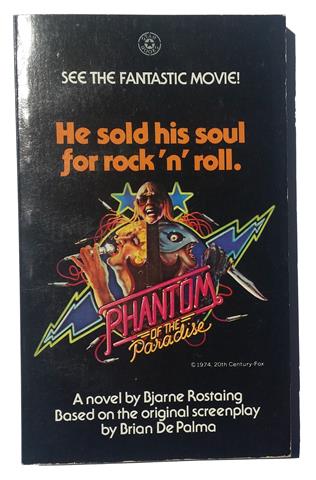
Bjarne Rostaing: "Phantom of the Paradise", London 1975. In the movie a camp pop star is electrocuted on stage by an Aladdin–Sane–shaped neon lightning bolt. 
Time for Bowie, pop's greatest sponge, to move on. But where to? By now, there was very little reaction from the adult world, the serious newspapers, and the cultural establishment. He let filmmakers twist his head off. The wheel was turning again. He changed from the peculiar Ziggy costumes to a more American outfit and moved to Los Angeles, the centre of the film industry. And the swimming pools. 
Walter Tevis: "The Man who fell to Earth", Connecticut 1963. Cover illustrators: Leo & Diane Dillon. The novel depicts a liquid–craving alien, unable to cope with human emotions, alienated to human behaviour and finally put on the outskirts of society. The plot also explores the relationship between technology and ecology. Filming began in July 1975. Bowie starred in the rôle of this alien in the movie by Nicolas Roeg, released in 1976. Back then, when the movie hit theaters, critiques likened his acting skills to that of a high school student and himself to a narcissist without self–enjoyment. As time passed, the film's standing evolved, eventually elevating the portrayal of the alien to be synonymous with Bowie himself. And the content–wise rather modest book is continuously reissued to this day. Ideas from the plot are carried on in a New York Theatre Workshop jukebox–musical under the title "Lazarus" in December 2015 with songs composed by Bowie but performed by others. |
| "This is the book part of the show" |
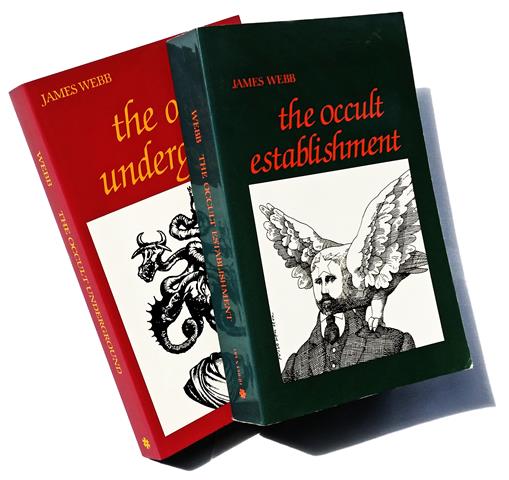
James Webb: — "Flight from Reason", London 1971, 2nd ed.: "The Occult Underground", Illinois 1974. Many reprints. — "The Occult Establishment: The Dawn of the New Age and The Occult Establishment", Illinois 1976. Many reprints. 
George Mills Harper: "Yeats's Golden Dawn. The Influence of the Hermetic Order of the Golden Dawn on the life and art of W.B. Yeats", London 1974. Many reprints. 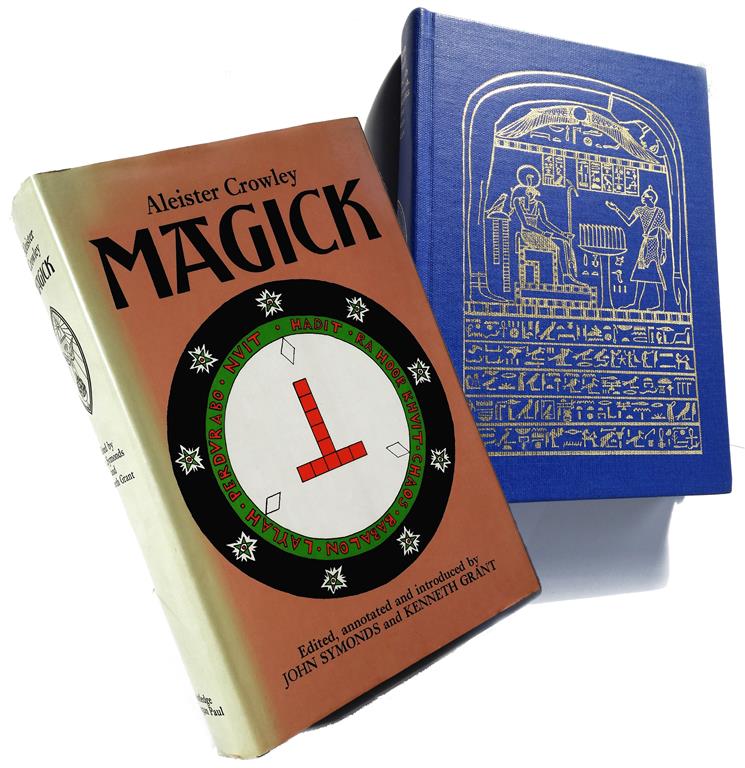
John Symonds and Kenneth Grant: — "Aleister Crowley. Magick", London 1973. Many reprints. — "Magical and Philosophical Commentaries on The Book of the Law", Montréal, Québec, Canada 1974. The journalist John Symonds was one of Crowley’s friends and literary executors. Kenneth Grant was also a friend of Crowley and later Head of the English Typhonian O.T.O. He published: — 1972 "The Magical Revival" (London). — 1973 "Aleister Crowley and the Hidden God" (London). — 1975 "Images and Oracles of Austin Osman Spare" (London). — 1975 "Cults of the Shadow" (London). — 1977 "Nightside of Eden" (London). 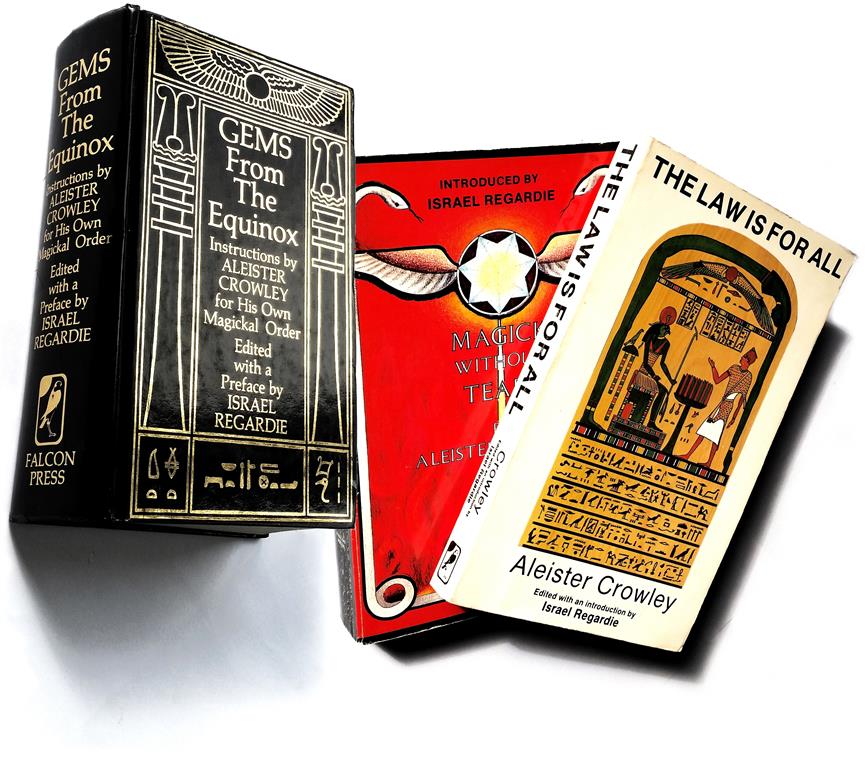
Israel Regardie: — "GEMS From The Equinox. Instructions by Aleister Crowley for His Own Magical Order", Phoenix Arizona 1974. Many reprints. — "Magick Without Tears by Aleister Crowley", First edition 1954. Many reprints since 1973 (Phoenix, AZ). — "The Law is for All. An Extended Commentary on The Book of the Law by Aleister Crowley", First Edition St. Paul, Minn. 1975. Many reprints. 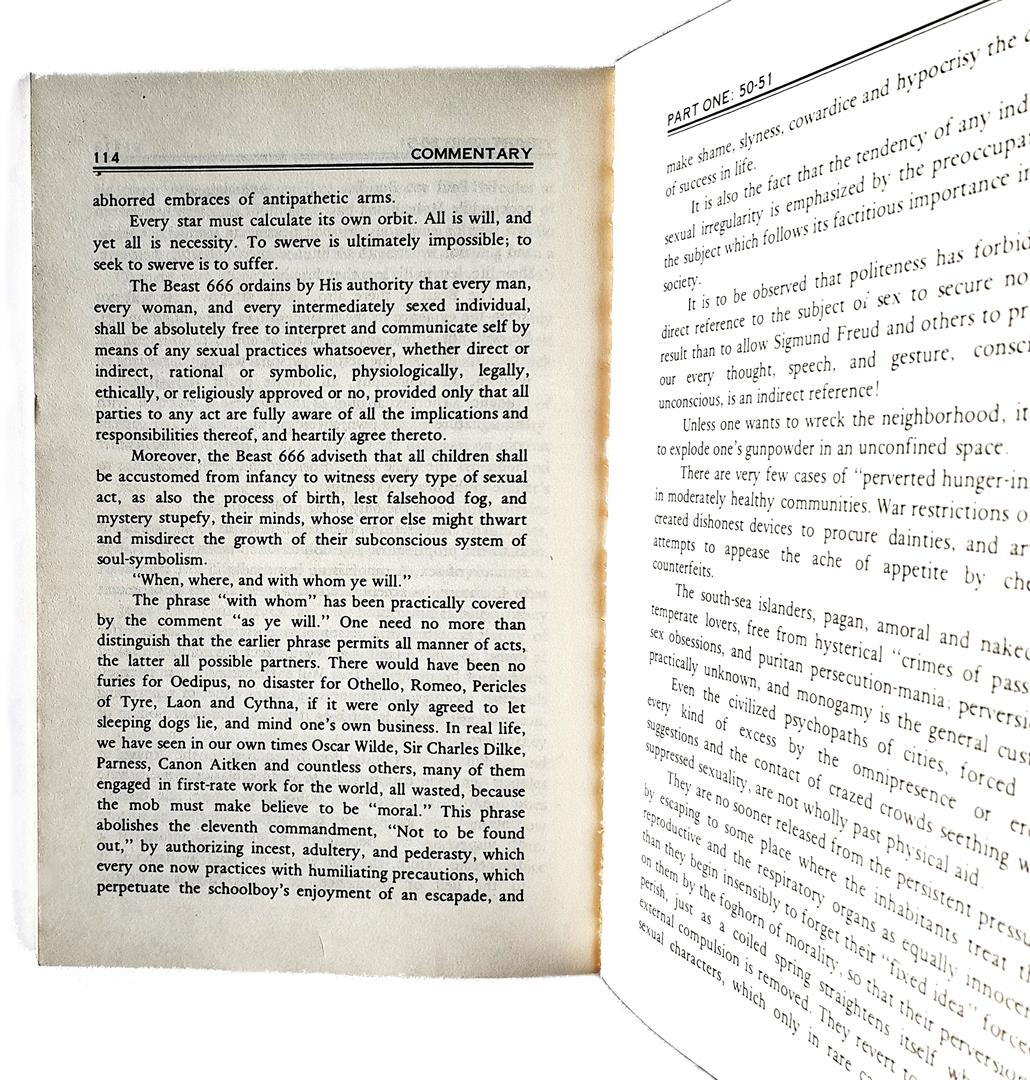
From "The Law Is For All": "Moreover, the Beast 666 [Crowley] adviseth that all children shall be accustomed from infancy to witness every type of sexual act." [page 114] Francis Israel Regardie was Crowley's personal secretary and later principal source about the Hermetic Order of the Golden Dawn. His successor was the leader of the Thelemic Order of the Golden Dawn Christopher Hyatt (Alan Ronald Miller) who wrote in 2003 about the present author: "Peter–R. Koenig is a collector of data, sometimes called a gatherer of data, g.o.d. for short." 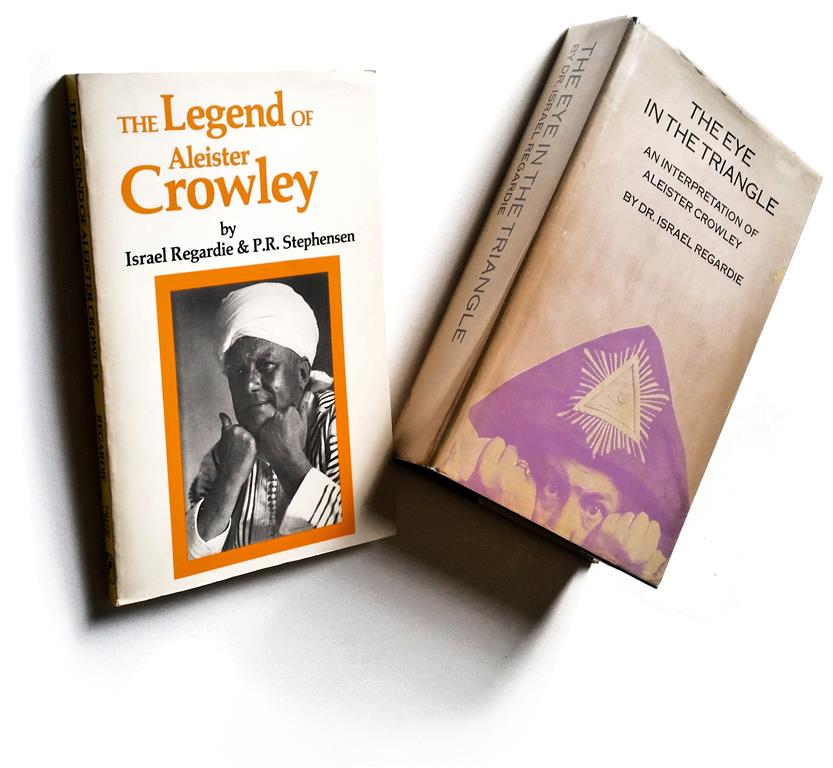
— Israel Regardie and P.R. Stephensen: "The Legend of Aleister Crowley", London 1930. Second Printing Saint Paul, Minnesota 1970. Many reprints. — Israel Regardie: "The Eye in the Triangle. An Interpretation of Aleister Crowley", St. Paul, Minnesota 1970. Many reprints. 
Israel Regardie: — "What You Should Know About The Golden Dawn", Chicago 1936, Second Edition St. Paul, 1971. Many reprints. — "A Garden of Pomegrates. An Outline of the Qabalah", 1932. Reprint St. Paul 1970. Many reprints. — "The Middle Pillar", 1938. 1970. Many reprints. — "The Tree of Life. A Study in Magic", New York 1969. Many reprints. ... and many more. |
| "So much has gone — and little is new" |
Angie Bowie recalled a good deal of occult activity during the LA period of 1974–76; it was also clear that Bowie was vulnerable to the influence of sycophants and hangers–on while he was heavily into cocaine. It has been alleged that at this time he scribbled frantic cabbalistic calculations on his own correspondence, stored his own urine in a fridge of Michael Lippman’s home where he was living then, and was obsessed about preventing anyone else getting hold of his nail–clippings and hair–trimmings, so they could not fall into the hands of those he thought wished to put spells on him. This sort of voodoo superstition — a fear that bodily waste could be used for evil purposes by occult enemies — can also be found in Crowley's more secret teachings.
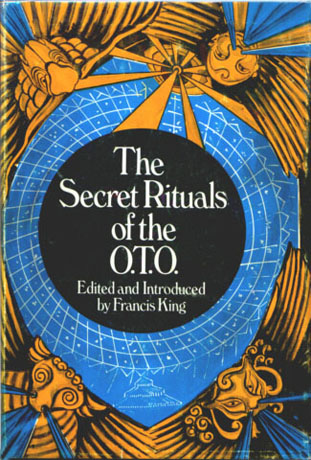
Here is one of those 'secret teachings': "All bodily excrements, such as cut nails, and hair, should be burnt; spittle should be destroyed or exposed to the Sun; the urine and faeces should be so disposed of that it is unlikely that any other person should obtain possession of them.All bodily excrements, such as cut nails, and hair, should be burnt; spittle should be destroyed or exposed to the Sun; the urine and faeces should be so disposed of that it is unlikely that any other person should obtain possession of them. It is even desirable in theory that linen should not be washed by strangers, and that old clothes should not be given to the poor until some time after the occasion of wearing them." (Aleister Crowley: "Of the Secret Marriages of Gods with Men." Published for example by Francis King: "The Secret Rituals of the O.T.O.", London 1973). 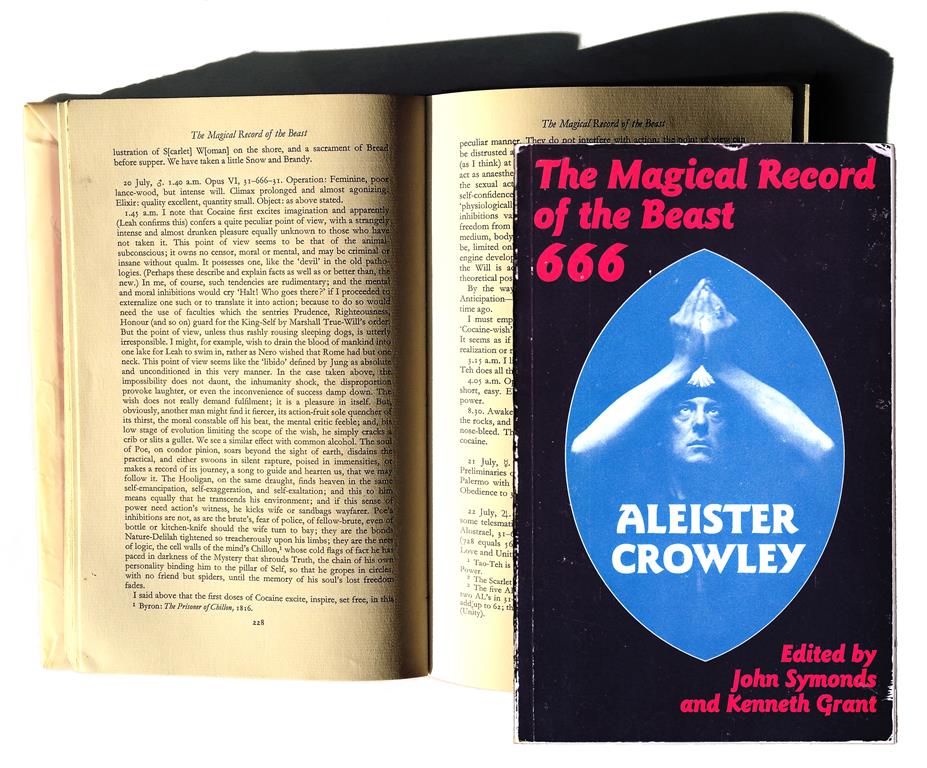
Bowie’s use of cocaine during this period had a profound impact on his mental state. Crowley’s observation that cocaine excites imagination and can lead to a kind of "animal–subconscious" state resonates with accounts of Bowie’s behavior, such as his erratic rituals and delusional thoughts. The drug likely exacerbated his paranoia and obsessive tendencies, contributing to his extreme behaviors and beliefs. Bowie constructed an altar in the living room and he graced the walls with various magick symbols which he hand–painted. Candles burned around the clock, he regularly performed banishing rituals, and he protected his friends by drawing sigils on their hands. The seventeen–year–old Cameron Crowe allegedly walked in on a highly agitated Bowie in Los Angeles, burning black candles over the ruins of some aborted magical ritual. Crowe, who had spent 18 months on the road with the singer, later spun this into several lush dispatches for 'Rolling Stone' and 'Playboy', featuring Bowie scrawling magick sigils, seeing disembodied entities, declaring himself the Messiah, refrigerating bottles of his own urine, etc., etc. |
|
Yet still in March 1987 Bowie was insisting:
"I don't think I ever was particularly in the Occult." Listen:
And for all these years he sang about 'The Jean Genie' who "keeps all your dead hair for making up [witchy] underwear." | 
|
| Bowie’s public denial of his involvement in the occult in 1987, despite the extensive engagement with esoteric practices during the 1970s, underscores the tension between his public persona and private experiences. His attempt to distance himself from his past occult interests might reflect a desire to move past a tumultuous period and reshape his image. |
|
In 1974, Angie Bowie witnessed her husband exorcising the swimming pool: "When he did the exorcism he cited from one of the books I got for him from the magick store in Hollywood [for example, the so–called 'Rituale Romanum'] . Some exorcism spell, who knows? I offered to bring in the Greek Orthodox Bishop from Santa Sophia’s Cathedral in Los Angeles. I though I might humilate him into behaving himself, stop doing so much cocaine and have to receive a house visitor; but that didn’t work. David performed the ‘Swimming Pool Exorcism’ himself... in fact, when I found a house in California in Los Angeles, an old Hollywood house with a second–foor solarium with a pentagram painted on the foor, he nearly had a heart attack and said we couldn’t live there! David loves to play weird. He just can’t stand not to be the head Ho Ho." [My interview with Angie Bowie in 2003]
Bowie asked someone for a mezuzah, a talisman against demons used by Qabalists. In April 1974, while in London, Angie Bowie received a phone call from her husband in LA, who claimed that he was kidnapped by a magician and two witches who wanted to steal his sperm. Allegedly, they intended him to father a Baby for Rosemary. Angie Bowie reacted reluctantly: "Believing he was held captive by a warlock and [*** C*** ***] and he was to inseminate the whatever by All Hallows’ Eve. I told him, I said, why did they bother to hold you captive, they just needed to ask. I’m sure you’d have been delighted to [***] AGAIN... I never bought his stories. NEVER. Flying all the way to Los Angeles for him to invent some hallucination, drug–induced, about witches and warlocks... Please!" [My interview with Angie Bowie in 2003] Youtube: Angela Bowie on David Bowie’s mid ‘70s cocaine psychosis Demons, witches, and ritual magick. |
| "And prayer can't travel so far these days" ('A Small Plot Of Land', 1995) |
|
During 1975, did Bowie even have the time for a deep dive into the occult (and the Nazi newsreels), or is this narrative just part of the standard script for an overachieving superstar giving himself over to evil drugs and sinister forces?
Much of his activities that year revolved around music, acting, and social engagements, marking a period of both high creativity and personal turmoil. Aside from legal battles with Tony Defries and Ken Pitt and attending numerous parties, here’s a list of where Bowie wanderlustingly lived that year:
[Extracts from Wim Hendrickse: "Never Get Old", part 1, Groningen 2004, 219–226] And precisely when did Bowie meet Jean Genet, inviting him to craft a screenplay based on his novel 'Notre Dame des Fleurs'? Genet dedicated several months to this endeavor in London in 1975. However, Bowie’s connection with Genet during this time remains unclear, with little documentation of direct collaboration. |
| "Such is the stuff from / Where dreams are woven" |
|
In February 1975, Bowie asserted, "that Hitler was a terrible military strategist but his overall objective was very good." This statement revealed his departure from conventional thinking and his immersion in other realms of thought. He seemed to be exploring ideas beyond traditional views, possibly influenced by his engagement with occult and esoteric thought which might have contributed to his controversial and provocative statements.
During his appearance on the CBS The Cher Show on November 23, 1975, Bowie's duet with Cher in 'Can You Hear Me?' seemed to be a dialogue with himself. Was he 'Calling Sister Midnight'? Around this time, Bowie possibly engaged with the works of Helena Petrovna Blavatsky and Georges I. Gurdjieff. According to Peter & Leni Gillman's "Alias David Bowie" (London 1986), he reportedly met the Crowleyite Kenneth Anger in 1975 (although "Anger vigorously denies this; he says he's never met David Bowie," Henry Edwards and Tony Zanetta: "Stardust: The David Bowie Story", NY 1986). Bowie's reading list and a possible encounter with this leading underground filmmaker and occultist might have influenced his creation of a new alter ego: the emotionless Aryan superhuman known as The Thin White Duke. In late 1975, Bowie began recording songs for his upcoming album, 'Station to Station', which was eventually released in January 1976. |
|
Kenneth Anger had resided in Crowley's Boleskine House in Scotland for a summer before it was acquired by Jimmy Page in 1970 from its Canadian owner.
Anger's later affiliation with the Crowleyan Ordo Templi Orientis is apparent through his practice of signing private letters, including those addressed to me, the present author, with the abbreviation "O.T.O.". Furthermore, he is recognized as an associate of the leader of a contemporary American iteration of the O.T.O., known as the 'Caliphate'. 
Indeed, Anger's affiliation with the 'Caliphate' O.T.O. is substantiated by his inclusion as a member of the IXth degree in the group's membership list (refer to the aforementioned information on Crowley's sex–magical system for more details). 
Robert Beausoleil, a member of Charles Manson's notorious 'Family', resided with Anger for a period of time. Prior to his involvement in the 1969 murders of Hollywood celebrities, Beausoleil portrayed the character of Lucifer in Anger's films 'Lucifer Rising' (1966) and 'Invocation of My Demon Brother' (1969). During his imprisonment, Beausoleil composed the music for 'Lucifer Rising'. Additionally, Kenneth Anger played a significant rôle in the establishment of Anton LaVey's 'Church of Satan'. It should be noted, however, that the claim that LaVey portrayed Satan in Roman Polanski's film 'Rosemary's Baby' is factually incorrect. Sharon Tate, one of the victims of the Manson Family murders, was married to Polanski. 
Ed Sanders: "The Family. The Story of Charles Manson's Dune Buggy Attack Battalion", New York / Dutton, 1971. First edition, pages 162–163. Keywords: Aleister Crowley, Ordo Templi Orientis, LSD ... In 1993, Bowie acknowledged that it was the aura surrounding the Manson murders that had sparked his fascination with what he referred to as 'Black Magick'. Manson himself was deeply consumed by occult delusions. However, everybody and their dog exhibited a greater preoccupation with Bowie's ever–changing hairstyle rather than delving into the depths of his lyrical compositions. He still maintained, "I'm Pierrot, I'm Everyman. What I'm doing is Theatre, and only Theatre... what you see on stage isn't sinister. It's pure clown... putting over the great sadness of 1976." [Jean Rook: "WAITING FOR BOWIE", in 'Daily Express', 5th May, 1976.] Recall what he said earlier: "I refuse to be thought of as mediocre," Bowie asserts blithely. "If I am mediocre, I’ll get out of the business. There’s enough fog around. That’s why the idea of performance–as–spectacle is so important to me. [...] What the music says may be serious, but as a medium it should not be questioned, analysed, or taken so seriously. I think it should be tarted up, made into a prostitute, a parody of itself. It should be the clown, the Pierrot medium. The music is the mask the message wears – music is the Pierrot and I, the performer, am the message." [John Mendelssohn: "David Bowie: Pantomime Rock?", in 'Rolling Stone', 1 April 1971] Apparently, anything was good enough for him as long as it grabbed attention and provoked. So why not throw in a bit of Third Reich rhetoric and some meaningless blah blah?
But he didn’t want to push things too far, or he wouldn’t have been able to keep playing the game.
For example, it is highly preposterous to suggest that Bowie ever underwent initiation into the O.T.O. During the 1970s, it was primarily a Swiss group that could be considered as the sole active O.T.O. presence on a global scale. 
The Swiss faction of Crowleyites, as detailed in the provided source, had established a "Movie Club Thelema" complete with its own cinema. In 1966, Kenneth Anger presented his films at this venue, personally attending the screenings. In 1978, Bowie described his persona of 1976 as "a very Aryan, Fascist type; a would–be romantic with absolutely no emotion at all but who spouted a lot of neo–romance." [Bowie interviewed by Timothy White: "Turn and Face the Strange", in 'Crawdaddy', February 1978.] Christopher Sandford (via Angie Bowie) ("Bowie — Loving the Alien", Revised and Updated, London 1997): In March 1976 "Bowie gave an interview in which he said, 'I want to be prime minister of England.'" — "I just want to have a revolution in England [...] The one thing I want to do when I get back to England is see what is happening there politically [...] When I'm a lot older and know what I'm talking about politically, I would like to get into our politics back home. I still have my Grand King complex. I'll never lose that. I'm ultra Capricorn." [BOWIE: NOW I'M A BUSINESSMAN, 'Melody Maker', February 18, 1976, Interview by Robert Hilburn.] Maybe Bowie used these controversial statements to provoke and challenge societal norms, reflecting his broader artistic philosophy that often blurred the lines between art and reality. Sandford: "Then he began, with the aid of his book of magic numbers, to calculate the ideal moment for him to assume power." [Christopher Sandford in "Bowie — Loving the Alien", Revised and Updated, London 1997, page 143.] 
— Aleister Crowley (then still in the Golden Dawn): "777 VEL PROLEGOMENA SYMBOLICA AD SYSTEMAM SCEPTICO–MYSTICAE VIAE EXPLICANDAE FUNDAMENTUM HIEROGLYPHICUM SANCTISSIMORUM SCIENTIAE SUMMAE (Liber DCCLXXVII — 777)", 1909, many reprints. — William Wynn Westcott (Golden Dawn): "An Introduction to the Study of the Kabalah", 1910. — S.L. MacGregor Mathers (founder of the Golden Dawn): "The Cabbala Unveiled", 1912, many reprints, e.g. 1970. John Frederick Charles Fuller had coined the term Crowleyanity in his admiration for Crowley’s poetry in his 1907 book ‘The Star in the West’, which was a verbose eulogy of Crowley’s artistic talents. 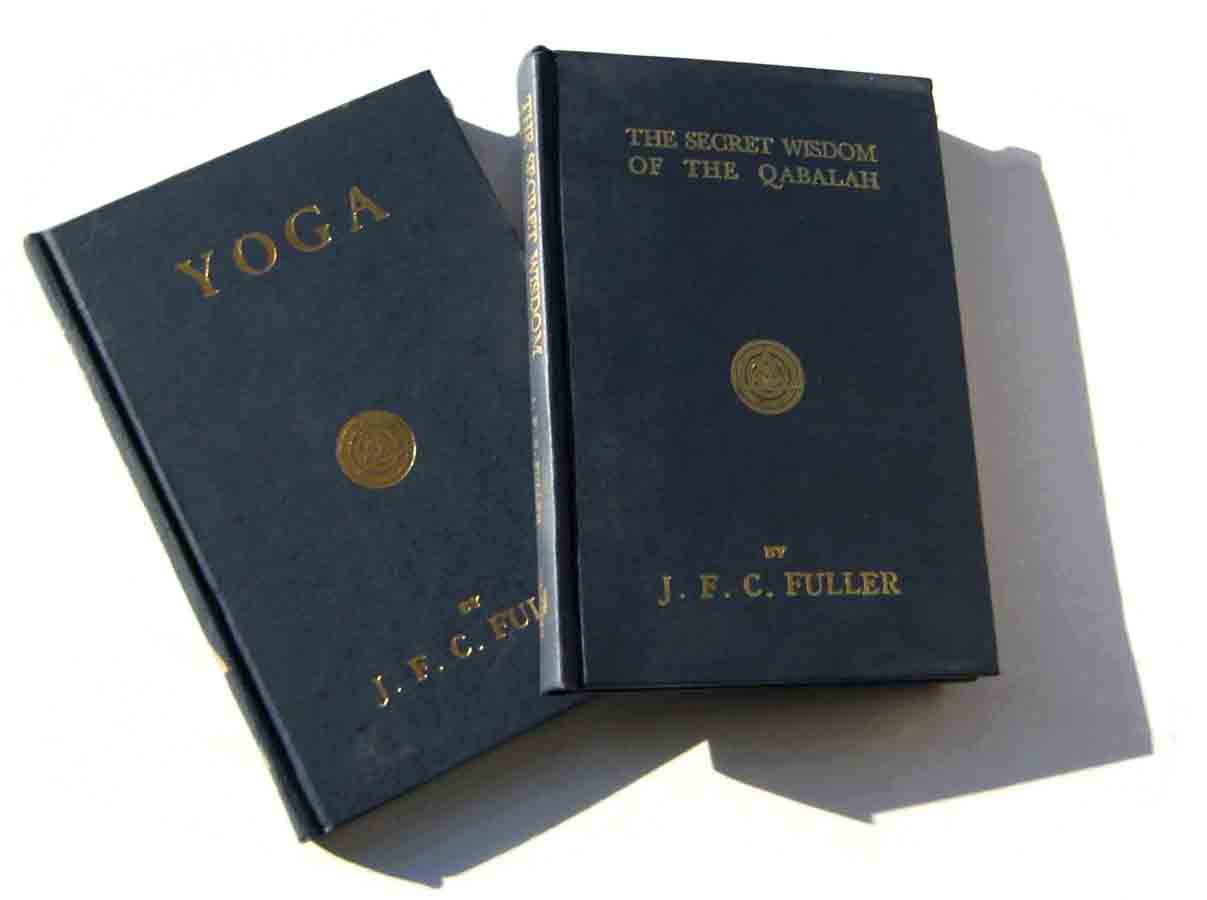
J.F.C. Fuller: "Yoga", 1925. "The Secret Wisdom of the Qabalah", 1937. Fuller had come into contact with Crowley in 1905; having left the army for health reasons in April 1906, he joined Crowley’s occult order Argenteum Astrum, then helping to edit the A.·. A.·.’s journal ‘The Equinox’, which also became the O.T.O.’s organ in 1912. But in 1911 Fuller accused Crowley of cowardice and disloyalty over a legal case, and broke away from him. He resumed his military career, which led to his becoming a Major–General, and even on one occasion to a meeting with Hitler. He was also a member of Sir Oswald Mosley's fascist group, the British Union / Blackshirts that existed 1932–40. 
Flag of the British Union According to Bowie's manager Kenneth Pitt from about 1967 to 1970, Bowie's mother, Peggy [Margaret Jones 1913–2001], naively joined Mosley's Blackshirts in the 1930s for no other reason than she liked the uniform. [Kenneth Pitt: "Bowie: The Pitt Report", London 1983, page 8]. On platform 8 in Victoria Station / London on 2nd May 1976 Bowie had been photographed (by the 'New Musical Express': see small scan of the item in question below) giving something that looked vaguely like a Nazi salute (which did not come across in both the footage ! ), and had been overheard muttering "I am the only alternative for Premier in England. I believe Britain could benefit from a Fascist leader. After all, Fascism is really nationalism" a week before in Stockholm. 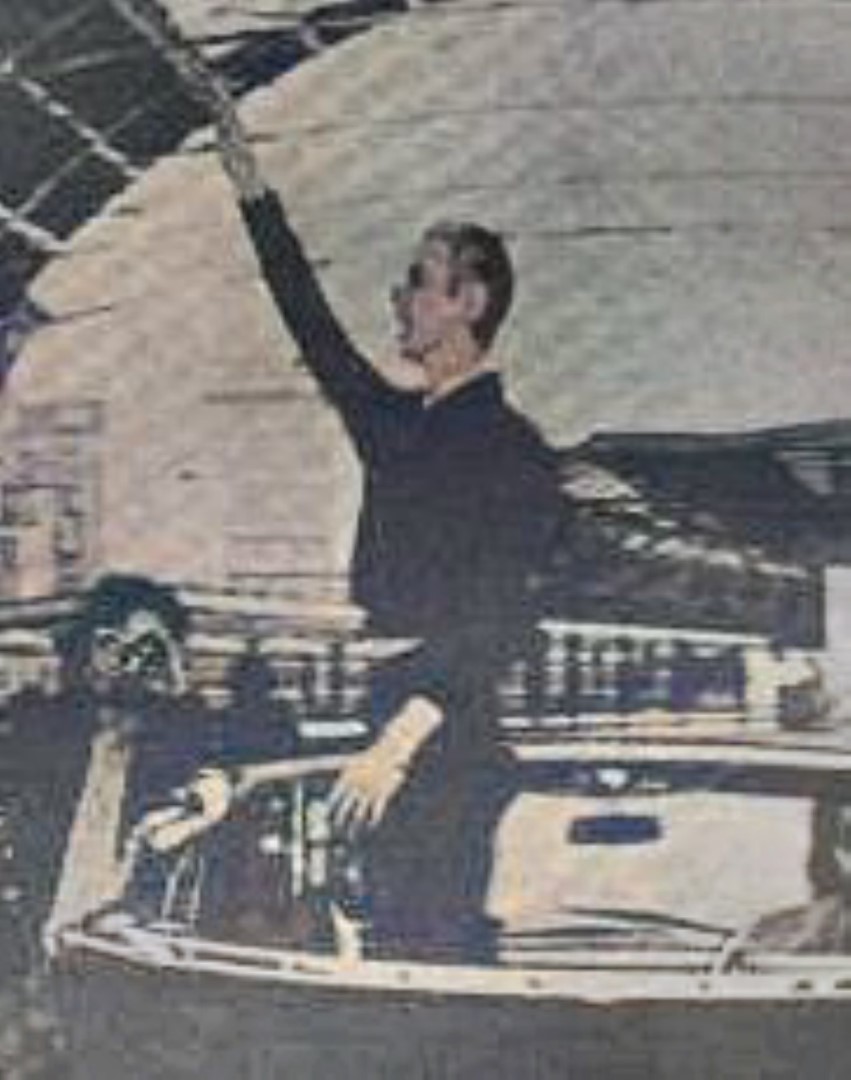
[Colored with AI] Bowie served a bitter icing on an ugly cake: "People aren't very bright, you know. They say they want freedom, but when they get the chance, they pass up Nietzsche and choose Hitler." "Adolf Hitler was one of the first rock stars... think about it... I think he was quite as good as Jagger. It's astounding. And, boy, when he hit that stage, he worked an audience. Good God! He was no politician. He was a media artist himself. He used politics and theatrics and created this thing that governed and controlled the show for those 12 years. He staged a country." "I think I might have been a bloody good Hitler. I'd be an excellent dictator. Very eccentric and quite mad." "I'd love to enter politics. I will one day. I'd adore to be Prime Minister. And yes, I believe very strongly in Fascism. The only way we can speed up the sort of liberalism that's hanging foul in the air at the moment is to speed up the progress of a rightwing, totally dictatorial tyranny and get it over as fast as possible." [Bowie interviewed by Cameron Crowe: "A candid conversation with the actor, rock singer and sexual switch–hitter", printed in 'Playboy', September 1976.] 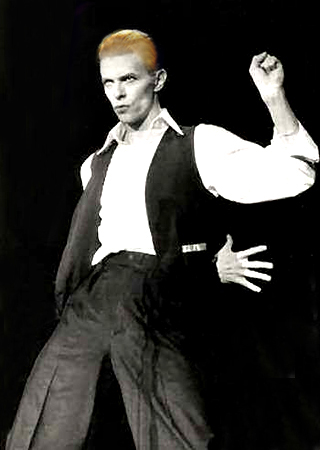
The tabloids went into meltdown. And Bowie's flirtation with nazism fuelled the 'Rock Against Racism' (RAR) movement in 1976. Bowie’s subsequent statements and actions reflect a retreat from the extreme political rhetoric of the 1970s. He framed his earlier provocations as mistakes or misinterpretations of his artistic persona rather than as serious political beliefs. From the late 1970s onward, Bowie seemed increasingly concerned about the repercussions of his past political provocations and retreated into a gnostic no–man's–land of vagueness and frequent cascades of rhetorical clichés, as he posed as a social commentator. He distanced himself from any association with fascism, dismissing his earlier statements as mere theatrical observation [Allan Jones: "GOODBYE TO ZIGGY AND ALL THAT" in 'Melody Maker' October 29th, 1977]. He clarified: "Let me clear this up once and for all [...] I have no political stance whatsoever. I've seen three or four variations of what I am supposed to have said." ['Daily Mirror', February 10, 1978] Bowie tried to extricate himself from the controversy by portraying himself as an artist translating political opinions into art — often to the point of being tedious or unconvincing, as he over–explained or lost himself in excessive rhetoric. In a later interview on April 16, 1983, he commented: "It really sorted that out in my mind about not being quite so flippant or fragmented or stupid or stoned out of my gourd to let myself get involved with those kinds of just hideous reflections. [...] I got all these pamphlets and things [loud laugh] from Mosleyites, asking me if I was joining up! Oh fuck, ha ha." [Chris Bohn: "Merry Christmas Mr Bowie", in 'NEW MUSICAL EXPRESS', April 16, 1983] He criticized the fascist movements, calling them degrading. In a song from 1980, he noted: "To be insulted by these fascists — it's so degrading." ('It's No Game (Part 1)', 1980) Still talking his hind legs off, arguing that artists are not required to be morally, politically, or spiritually right, Bowie stated: " ... an artist isn't there to be morally right, politically right or spiritually right. If he does put himself up in that position, he's either aligning himself with a government party or he's paid to do that — he's an artist for the State or he's working for a dictator." ["Our Tune, BBC Radio", 29 January 1990. Interviewer: Simon Bates] |
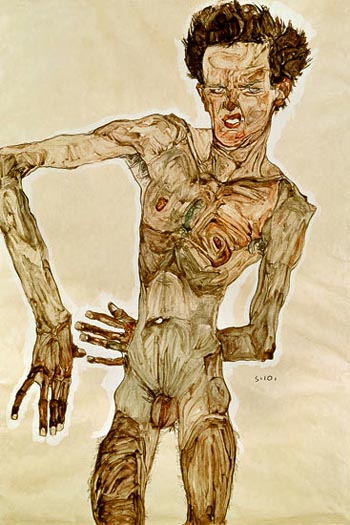
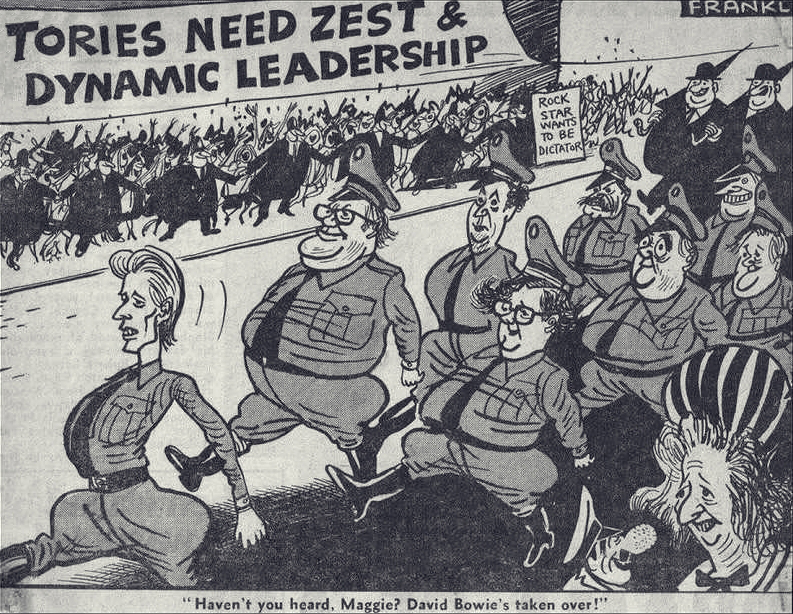
| "I'll be your king volcano right for you again and again" |
In 1976, the Thin White Duke, alias Bowie, deprived of all but the most rudimentary aesthetics, opened his live performances with a cloth / mask covering his face.

After showing Salvador Dalí and Luis Buñuel's film 'Un Chien Andalou' as a prologue, he came on stage as a "Frank Sinatra of the Nightmares" "throwing Darts in Lover's eyes", ripping that golden cloth / mask off his face when singing the revelatory lines from his song about the Sefiroth "From Kether to Malkuth". Bowie’s choice to unveil his face during performances could symbolize revealing deeper truths or confronting the audience with a raw, unfiltered version of himself. 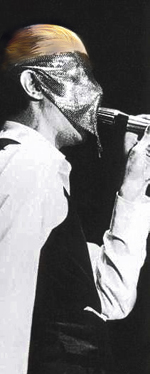
After a show on February 6th, 1976: "The numbers were a bit tough for us tonight. We were a four and the audience was a four. That can sometimes mean resistance. In L.A. we'll be a five — in the realm of the magician — and the audience will be a six — meaning comfortable, agreeable. That should really be something." ["BOWIE: NOW I'M A BUSINESSMAN", 'Melody Maker' February 18, 1976, by Robert Hilburn.] 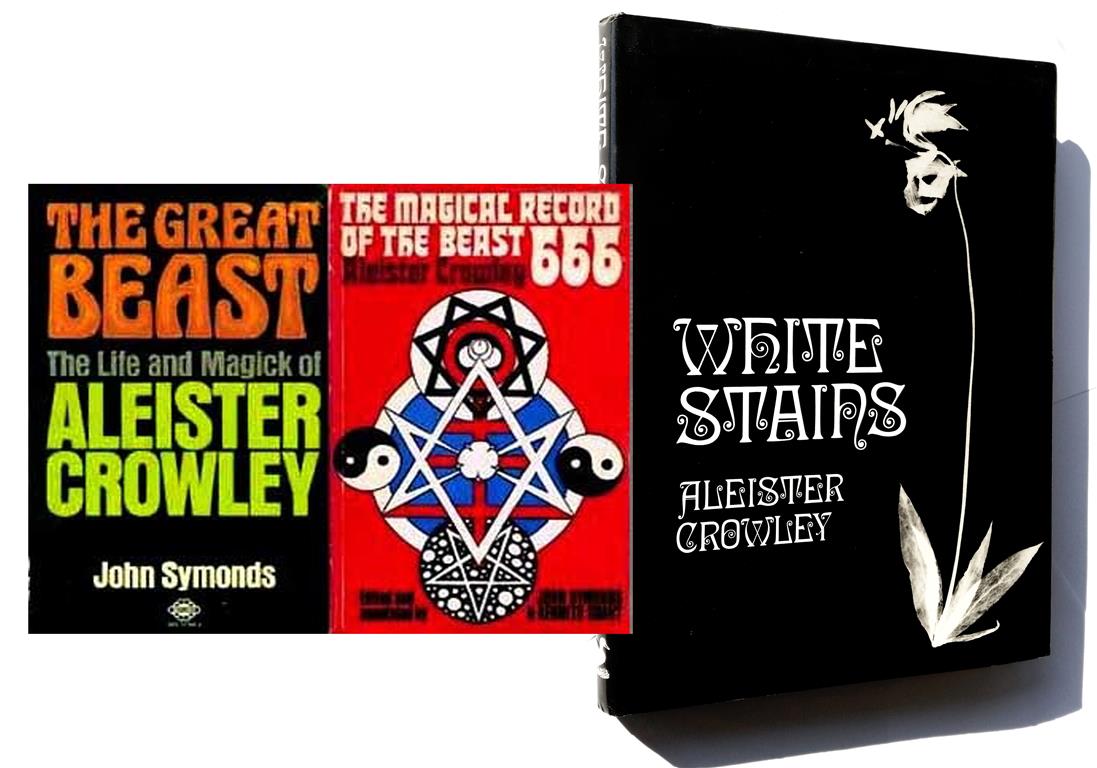
— John Symonds: "The Great Beast. The Life and Magick of Aleister Crowley" (1971). — "The Magical Record of the Beast 666. The Diaries of Aleister Crowley 1914–1920" (1972). — Aleister Crowley: "White Stains" (1924/1973). The 1976 track 'Station to Station' is a neat specimen of Bowie’s occult montage. The line "making sure white stains" is commonly taken as a nod to Aleister Crowley’s White Stains: The Literary Remains of George Archibald Bishop, a Neuropath of the Second Empire — not, as is sometimes lazily claimed, because 'book of pornographic poems' is the actual title, but because the volume itself wallows in sexually transgressive material, including pieces on paederasty and necrophilia. The title Station to Station should not, however, be flattened into a simple reference to the ten sefirot of the kabbalistic Tree of Life. Bowie later said that the track was "very much concerned with the stations of the cross" and that "all the references within the piece are to do with the Kabbala" [David Cavanagh, "ChangesFiftyBowie," Q, February 1997, pp. 52–59]. The qabalistic movement "from Kether to Malkuth" is, of course, already there in the lyric itself. In Jewish kabbalistic tradition, the Tree is structured around ten sefirot; only in later Western occult and Hermetic Qabalah are the twenty–two connecting paths routinely overlaid with the Hebrew alphabet, the tarot trumps, planets, zodiacal signs, and elements. Those correspondences exist, certainly, but they are not the primary grammar of Cabbala proper; they belong rather to its later esoteric refashioning. Those who have the Ryko CD version of 'Station to Station' find a Steve Schapiro photograph from the Los Angeles session — conventionally dated 1974, although Schapiro himself also dated that first session to 1975 — on the back cover, where Bowie is sitting on the floor drawing this so–called Tree of Life with the 10 Sefirots [see below]. "Don't look at the carpet / I drew something awful on it", he sang in 'Breaking Glass' in 1977. Some years later, in March 2001 he admitted that this lyric "refers to both the cabbalistic drawings of the tree of life and the conjuring of spirits." ["Uncut Interviews David Bowie on Berlin" in 'UNCUT', March 2001.] 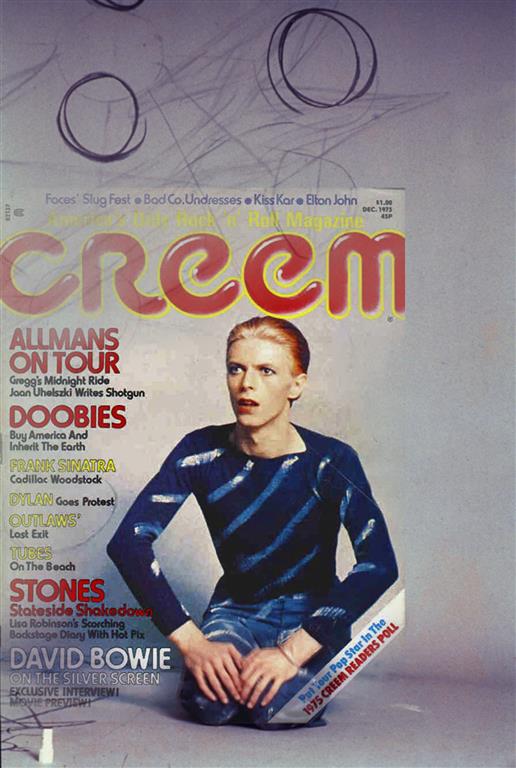
As Schapiro tells it: "From the moment Bowie arrived, we seemed to hit it off. Incredibly intelligent, calm, and filled with ideas, he talked a lot about Alistair [sic] Crowley whose esoteric writings he was heavily into at the time. [Steve Schapiro: "David Bowie", Amazon 2015]
But which God was Bowie trying to reach? "Does my prayer fit in with your scheme of things?" he asked 'God' in the track 'Word on a Wing' on the same album, in 1976. "I wrote the whole thing as a hymn. What better way can a man give thanks for achieving something that he had dreamed of achieving, than doing it with a hymn?" [BOWIE: NOW I'M A BUSINESSMAN, 'Melody Maker', February 18, 1976, Interview by Robert Hilburn.] 
There is another, less solemn possibility in Bowie's songs that stage a dialogue with an "angel": not necessarily a Sunday–school messenger, but something closer to a tempter, intermediary, double, or inward familiar. One may detect a faint Faustian odour here, though not the full medieval apparatus of blood, parchment, and infernal bureaucracy. Bowie later turned up quite literally as Mephistopheles in 1999, dressed as the character from Gounod's Faust for MTV's opera–house theatrics. That does not prove a straight Goethean line running backwards through every earlier lyric, but it does show that the rôle was not foreign to his imagination. While temptation, seduction, or bargaining may flicker through some of these songs, they do not simply reenact the stock narrative of a soul signed away to the devil. That would be too tidy, and Bowie was rarely so obliging. In 'Golden Years', Bowie addresses an "angel" and offers reassurance, protection, and a future stretched to absurd length. One may, if suitably inclined, hear in this the faint echo of a pact; but that remains interpretation, not evidence. The documented backstory is murkier and decidedly more terrestrial: Angie Bowie later recalled that Bowie phoned her from Los Angeles, told her he had written a new song for her — 'Golden Years' — and sang it to her over the telephone, in what sounds rather less like proof of an occult compact than an attempted emotional retrieval operation. Bowie himself, meanwhile, said that the song had been intended for Elvis Presley, though never actually submitted. Better, then, not to staple a supernatural contract onto a song whose earthly paperwork is already contradictory. 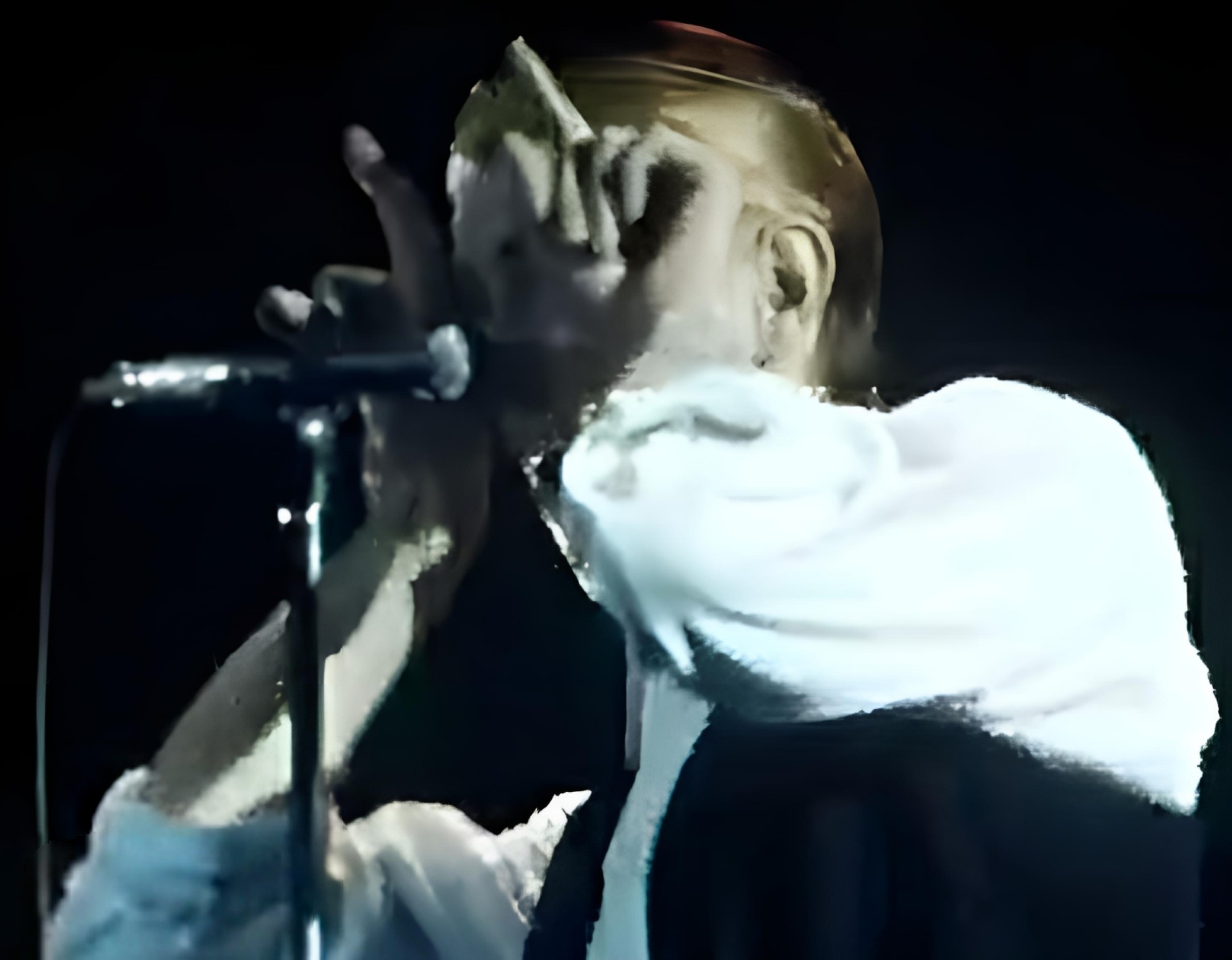
Maybe Bowie was indeed playing with the broader Golden Dawn / Crowley / Abramelin complex around the Holy Guardian Angel (HGA). In Crowley's system — itself drawing heavily on the Abramelin operation — this is not some medieval parchment bargain with a horned clerk from hell, but the arduous attainment of what he called "the Knowledge and Conversation of the Holy Guardian Angel": an attempt, by prayer, discipline, devotion, and magical exercise, to establish contact with a higher genius, higher self, or inward divine counterpart. One should, however, avoid occult kitsch. The oft–repeated six–month regimen belongs specifically to the Abramelin operation; it is not a universal recipe for every esoteric enthusiast with a candle and a superiority complex. Nor is this simply a Faustian pact in the vulgar sense. It is better understood as a rite of interior alignment: a conversation with the deepest or highest principle of the self, though one may, if one is so inclined, still describe it as a negotiation with the powers of the universe. For the occultist, such an attainment tends to unsettle the border between inner and outer. At its soberest, it names a form of spiritual integration; at its more theatrical, it shades into the language of mastery over temptations, obsessions, hostile forces, and the various demons with which occult rhetoric likes to furnish the world. Human and Angel are imagined as moving toward union, intimacy, or identity — which is precisely the point at which mystical vocabulary becomes either profound or insufferable, depending on the company. Within the later Golden Dawn / Thelemic map, the sephira Tiphareth (Tifereth) is the crucial station here: the solar sphere, the redemptive centre, and the point at which the Angel becomes the central task of the adept. It is therefore also the sphere that attracts the usual symbolic passengers: the Sun, the Son, sacrificial kings, mediating selves, and those divine figures who obligingly die and return, thereby keeping priests, poets, and occultists in permanent employment. Osiris belongs squarely to this repertory: the slain and restored god, husband of Isis, father of Horus, brother of Set. In that broad symbolic sense, one might indeed place Ziggy Stardust among the modern afterlives of the old death–and–rebirth mechanism — not as an Egyptian deity in platform boots, but as a post–modern recycling of a much older mythic pattern. Whether the Angel in 'Golden Years' is Bowie’s HGA is another matter. It is possible, but it remains an elegant conjecture rather than a documented fact. The same caution applies to more baroque readings of the Thin White Duke. To ask whether he was meant to be Set, slaying his brother Osiris / Ziggy Stardust, is interpretively tempting — and perhaps a little too tempting. It makes excellent symbolic theatre and rather mediocre documentation. Safer, then, to say this: in the Station to Station period Bowie was playing with a dense symbolic repertory — Kabbalah, Crowley, Christian residue, occult paranoia, and the debris of his earlier personae — without leaving behind a neat little instruction manual for latter–day exegetes. As so often, the pundits may rearrange the furniture; Bowie left them a rather haunted house. As Bowie later put it, he had a "more–than–passing interest in Egyptology, mysticism and the Kabbalah"; in retrospect he saw that period as sliding into a bizarre nihilistic fantasy of doom, mythological inflation, and impending totalitarianism. [Timothy White, Musician, May 1983.] |
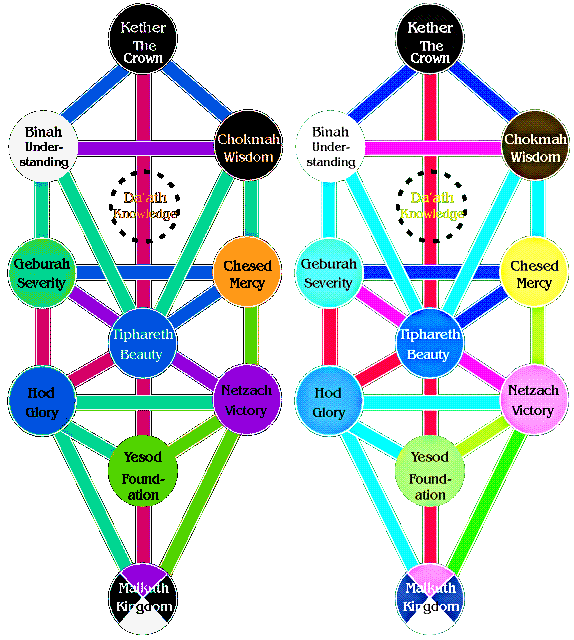
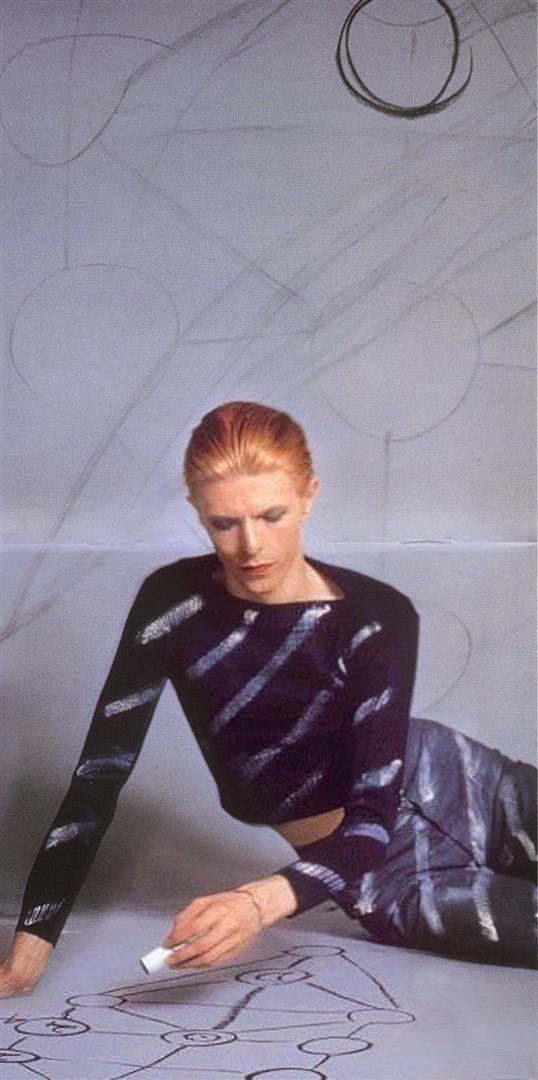
| Hammer Horror |
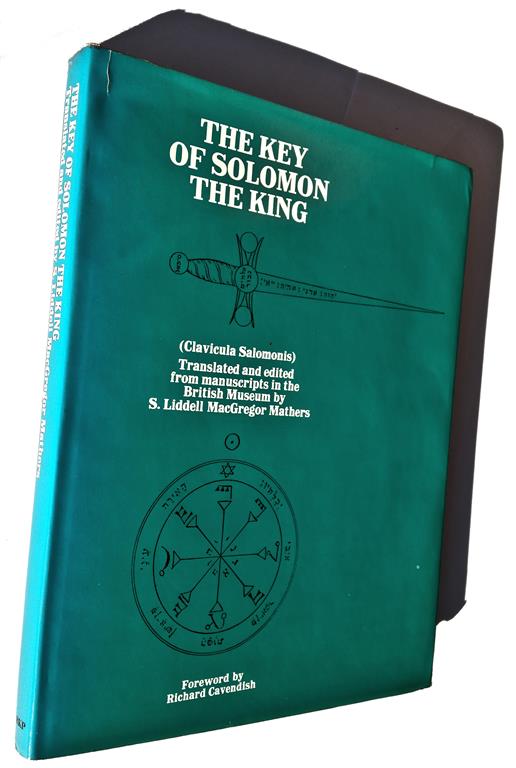
"The Key of Solomon the King (Clavicula Salomonis)". Translated and edited from manuscripts in the British Museum by S. Liddell MacGregor Mathers (founder of the Golden Dawn). Foreword by Richard Cavendish. London 1972. Dennis Wheatley's novel The Devil Rides Out was published in 1934. Wheatley knew Aleister Crowley and consulted him, among other occultists, while researching black magic; Crowley was therefore one of Wheatley's occult informants, not a "technical advisor" to the book. The novel's villain Mocata drew in part on Crowley's public image. Christopher Lee (1922–2015), a friend of Wheatley, repeatedly encouraged Hammer to adapt Wheatley's occult fiction. The Devil Rides Out was filmed in 1967 and released in Britain in 1968. Richard Matheson (I Am Legend, The Incredible Shrinking Man, several Twilight Zone episodes ...) (1926–2013) wrote the screenplay; Terence Fisher directed. While magical circles are often used in rituals to summon spirits or entities, they are not necessarily required to manifest angels or demons. The use of circles is just one of many possible methods for creating a sacred space and providing protection for the practitioner during the ritual. The appearance of angels or demons may also depend on a variety of other factors, such as the practitioner's intent, the strength of their connection to the spirit world, and the willingness of the spirits to appear. 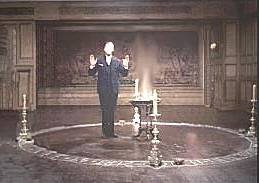
Stills: The Devil Rides Out — Hammer Film Productions. Filmed in 1967; UK release, 1968. 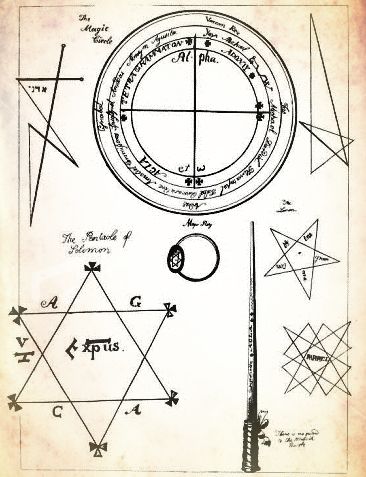
|
Christopher Lee, in 2007: "You know, many many years ago, David Bowie asked me if I'd do a record with him. It must be 30 years ago. But we couldn't find a song that we could both sing, we couldn't find it. I'm not just name dropping, there's this man, one of the most famous singers in the world and he asked me if we could do a record. He must have heard something, or knew I could sing or something." [getreadytorock]
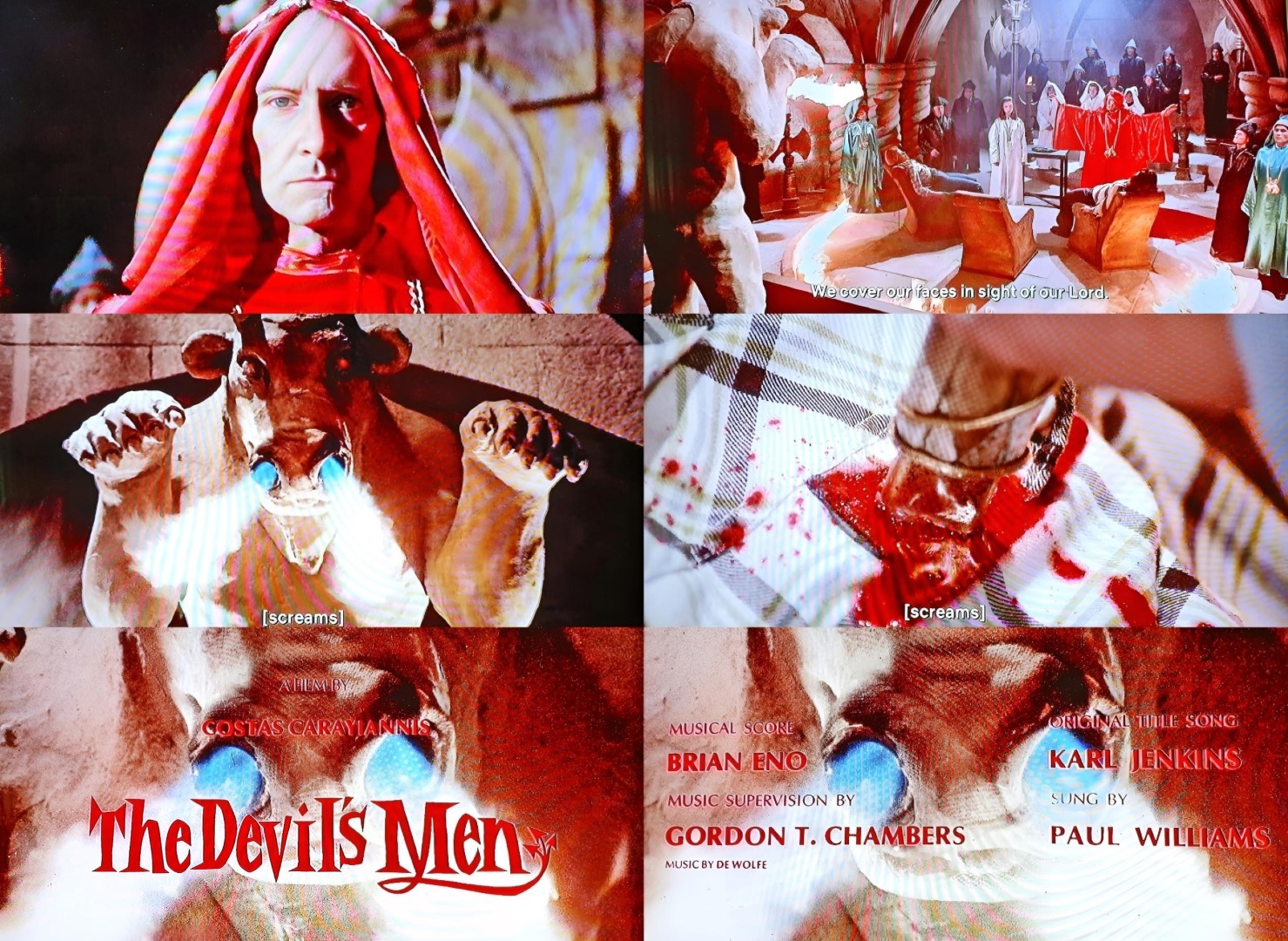
'Land Of The Minotaur' aka 'The Devil's Men', directed by Kostas Karagiannis, with Donald Pleasance and Peter Cushing, 1976. Music: Brian Eno. |
| "flashing no colour" |
|
The founders of the Golden Dawn in 1888 placed great importance on colour, seeing it as a means of enhancing states of consciousness. They conducted experiments with the Tattwa system, a set of twenty–five colored symbols that each initiate had to create for themselves. The five primary Tattwas — earth, water, fire, air, and spirit — are associated with distinct colours and symbols (as well as their combinations), which practitioners use to facilitate astral travel and other mystical experiences.
Tattwa Colors: Earth: Yellow. Water: Blue. Fire: Red. Air: White. Spirit (Akasha): No colour or a superimposed quintessence of all colours
In 'Station to Station' Bowie sings about "flashing no colour" which suggests his experimentation with the Hindu Tattva system, which advocates 'colour–flashing' in order to enter the various astral planes associated with the five elements. But what does it mean to "flash no color"? It refers to the Akasha–Tattva, which is the superimposed quintessence of all the other Tattvas. It is typically translated as "spirit", but it seems to have more in common with the Astral Light than with spirit as the term is used in the West. It signifies a state beyond individual elements, an overarching realm that encompasses all colours but is itself colorless. This aligns with Bowie's lyrics, suggesting a state of being or consciousness that transcends the elemental and enters a more ethereal or spiritual plane. As for what one might do with "flashing no colors" in a magical circle, it is unclear. It is possible that Bowie was alluding to the idea of 'Breaking Glass' in the context of entering an altered state of consciousness? 
Bowie’s Lyrics: "Here am I / Flashing no colour, tall in this room overlooking the ocean" can be interpreted as Bowie describing a state of elevated awareness or transcendence, where conventional colours and forms dissolve into a more universal, elemental essence. The ocean, representing the Water–Tattwa, could symbolize a depth of emotional or subconscious exploration. I asked Angie Bowie about astral travel. Did he use the Hindu symbols called Tattwas? You focus on one of the images and eventually ‘astrally’ enter it, stepping through as if through a door, to experience a lucid, coherent astral vision, such as a "city" that "is in the sun that pins the branches to the sky". Many cities are used in ceremonial magic rituals, such as Heliopolis, the Sun City, the City of Sleep, or Athens. Angie Bowie: "Yes, but he did not say it was Hindu; I thought it was Tibetan. When I focused on a spot it became very bright, and when he moved toward me the spot turned to black and I told him his presence would close my astral eye." [My interview with Angie Bowie in 2003] |
It is worth adding that most of those who have experimented with this technique have claimed (a) that the nature of the day dream bears an authentic relationship to the symbol employed — if one uses the water Tattwa one usually experiences a 'watery' vision — and (b) that as one goes on using the technique the visions become less dreamlike and more real. At first it seems as though everything perceived were just the product of one's own imagination, i.e. that one simply took scraps of memory, scraps of other men's ideas gleaned from books, pictures, etc., and built them up at will into a composite picture. But a little further experience generally convinces one that the new plain one has become conscious of has its natural laws — just as the physical world has: that one cannot make or unmake the vision at will, that the same causes produce the same results, that one is, in fact, merely a spectator and in no sense a creator.

Photo by Steve Schapiro from the Los Angeles session — conventionally dated 1974, but also dated by Schapiro himself to 1975 — reproduced in the magazine for the Isolar 'On Stage' tour 1976: Bowie in the Wand Posture used for astral travelling — there are three postures: flat on the back, sitting while resting the palms upon the knees and standing upright. It's a very special knowledge that you've got, my friendFrom 'Did You Ever Have A Dream?' These themes of "very special knowledge", "Mr. Superman", "magic wings of astral flight", "travel anywhere with anyone" revolved around their own axis 45 times per minute on a single in the year 1967. The song ends with the sound of 'Breaking Glass'. 
Photo by Jimmy King. In the context of the 2016–video 'Lazarus'.
|
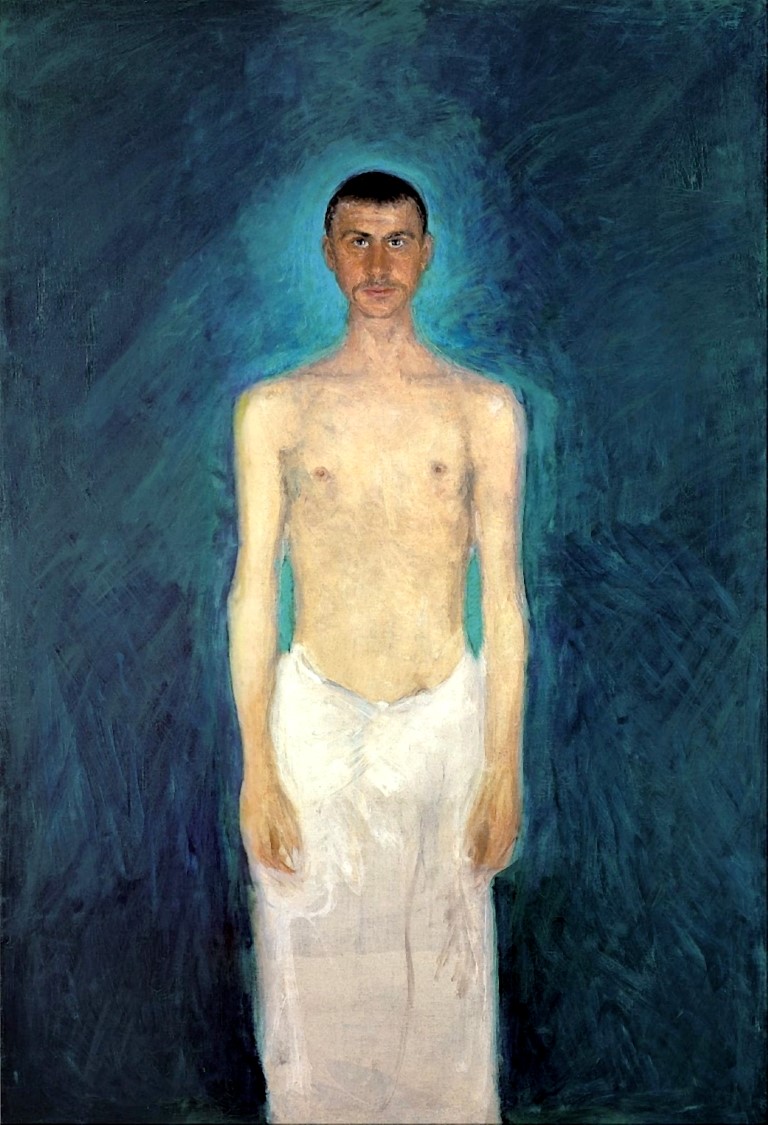
|
The utilization of Tattwa symbols marked the initial phase of the Adept's astral expeditions. Once mastered, the Adept progressed to more intricate symbols, such as the twenty–two trumps of the Golden Dawn version of the Tarot deck, sigils (geometrical figures) linked to various spirits in the grimoires (non–Biblical magical texts), and ultimately, the 'Enochian pyramids' derived from the Enochian magic of John Dee (1527–1608). Dee, who was the royal magician to Queen Elizabeth I and Britain's most prominent occult philosopher, attuned his psychic satellite dish to communicate with celestial beings through the use of Calls, which he believed were transmitted to him by angels. [The chapter on Bowie's 'Breaking Glass' features a reappearance of John Dee.]
Interesting as such visions were to those who experienced them, it is doubtful whether they were of any great spiritual value; there is reason to think that for at least some Golden Dawn initiates they were an obstruction on the magical path, a search for wonders which distracted them from what should be the ultimate goal of all magical activity — the raising of consciousness to a new level, not a descent into the murky delights of one's own unconscious mind. After the magician had mastered Tattwa vision and manufactured his seven magical weapons, his next task was the consecration of these latter. By consecration they meant, not some superstitious rite involving the muttering of half–understood prayers and the sprinkling of holy water, but a conscious imbuing of dead matter with the living spirit. The consecration ceremonies of the Golden Dawn were not believed to have any virtue of themselves; it was the imagination–inflamed will of the consecrating adept that reached out through the Astral Light and brought down, for example, the cosmic force of fire into the wand (the fire symbol) that lay upon the altar awaiting vivification. [Compiled from Francis King: "Magic. The Western Tradition", London 1975] 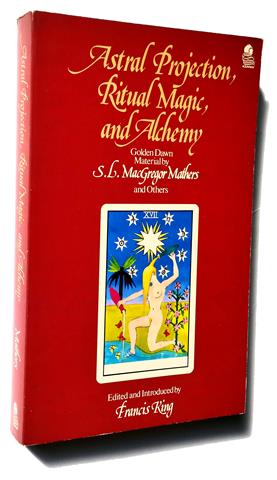
Francis King: "Astral Projection, Ritual Magic, and Alchemy. Golden Dawn Material by S.L. MacGregor Mathers and Others", New York 1971. Many reprints. |
| "Have you sought Fortune, evasive and shy?" |
|
When Bowie had asked the journalist George Tremlett whether he had ever tried to communicate with the dead using a ouija board, Tremlett said no. "Don’t," replied Bowie, "It can mess you up, especially if you’re taking drugs." ["David Bowie: Living on the Brink", London, 1997. p. 149.]
So were you involved in actual devil worship? "Not devil worship, no, it was pure straighforward, old–fashioned magic." The Aleister Crowley variety? "No, I always thought Crowley was a charlatan. But there was a guy called [Arthur] Edward Waite who was terribly important to me at the time. And another called Dion Fortune who wrote a book called 'Psychic Self–Defence' [1930, republished 1971]. You had to run around the room getting bits of string and old crayons and draw funny things on the wall, and I took it all most seriously, ha ha ha ! I drew gateways into different dimensions, and I'm quite sure that, for myself, I really walked into other worlds. I drew things on walls and just walked trough them, and saw what was on the other side!" [Jay Mathews: "DRUM'N'BASS ODDITY" in 'New Musical Express', February 1997.] 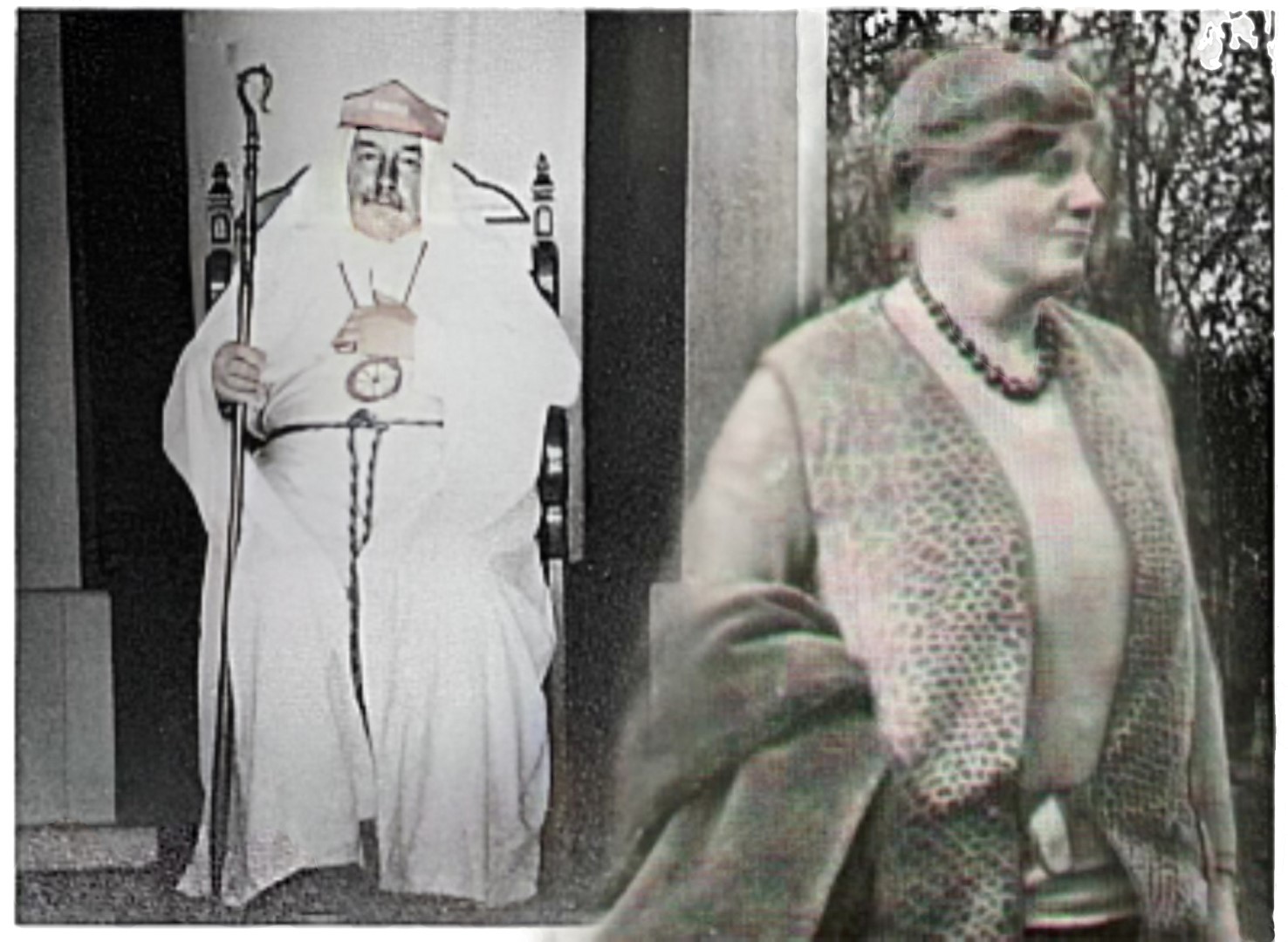
Arthur Edward Waite (1857–1942) Dion Fortune (1890–1946) |
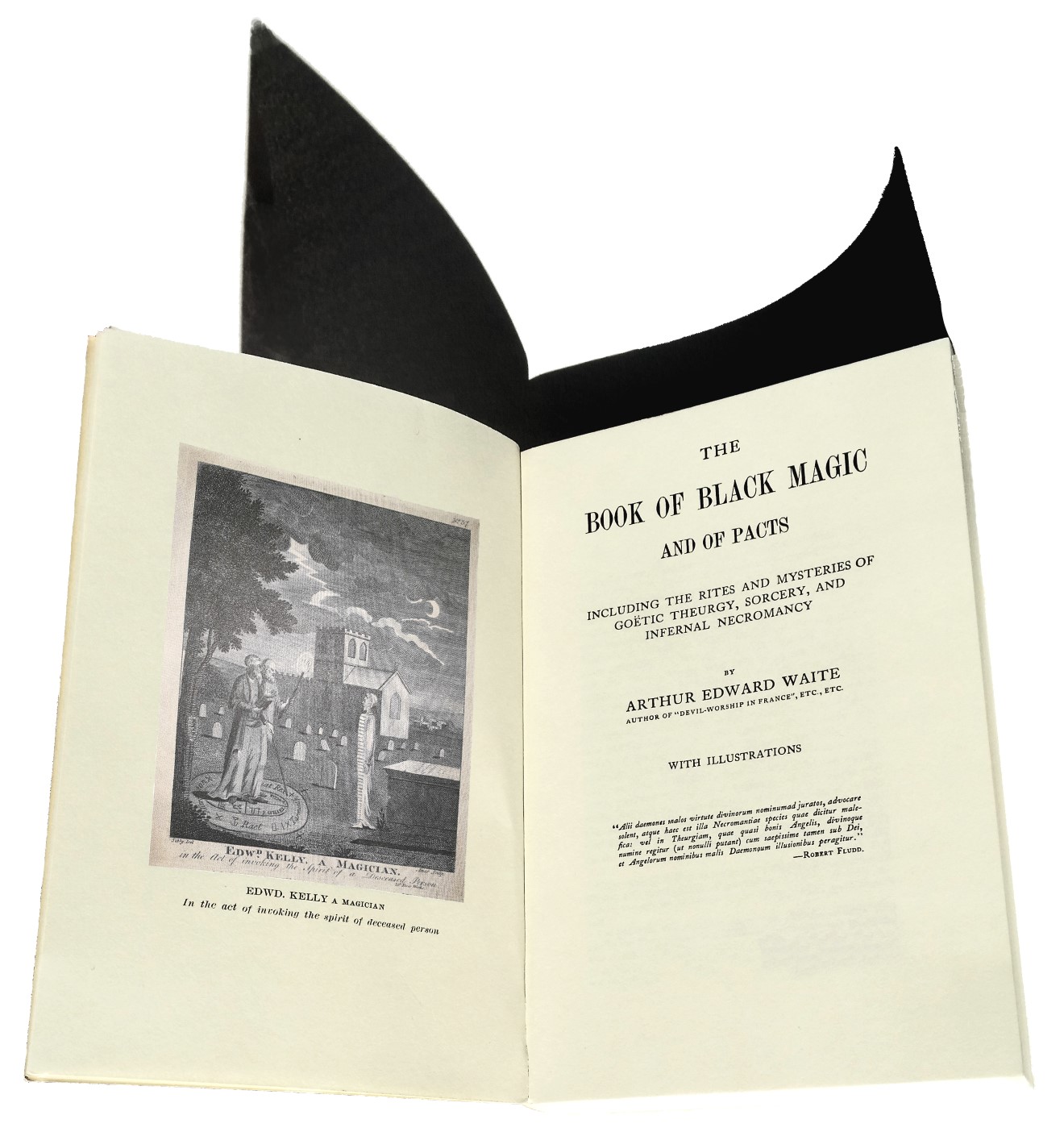
|
Arthur Edward Waite (1857–1943?) was an English Christian mystic and writer on masonic and occult subjects and editor of the works of others. He was received into the Golden Dawn in 1891 although his involvement was sporadic and caused a schism the following year. He never felt at home in the original G.D. and so he purged magic from the rituals, replacing it with mysticism. He re–organised his own G.D. by banishing the Gods of the Egyptians and rewriting the rituals in a more Christian form. Still, he kept some of the cabbalistic teachings. Some of his members were of Rudolf Steinerite persuasion. When Waite branched off in 1903, Algernon Blackwood followed him.
"The Book of Black Magic and of Pacts" (London 1898) was an attempt to synthesize the procedures of all of the famous Grimoires. It was revised in 1911 as "The Book of Ceremonial Magic". His Christian Golden Dawn lost much of its appeal and he closed it down in 1914. Today, Waite is best remembered as the designer of the Rider Tarot with its period charm of art–nouveau. It was produced under Waites direction by a certain Pamela Coleman Smith. Bowie’s interest in Waite suggests he was drawn to a form of mystical exploration that combined traditional esotericism with a more personal and less dogmatic approach. Dion Fortune's (1891–1946) original training was in the Golden Dawn. She felt that the Order needed new blood, that it was manned "mainly by widows and grey–bearded ancients". Indeed, of the men, a considerable number were, or became freemasons, while many of the others — and most of the women, seem to have come from the Theosophical Society of Helena Petrovna Blavatsky. Fortune was temporarily expelled from the order because it was said she revealed too much of the inner teachings. She defended herself by pointing out she had been told none of it, that she had worked it out herself. The then head of the Order did accept this but it does suggest that members at the heart of the Golden Dawn taught ideas concerning sexual polarity, which are not recorded elsewhere. She was rather more into what is now called Channeling and left the Golden Dawn to form the Society Of Inner Light which was based on her own inner plane contacts and which was a little empire of her own. Her "Psychic Self Defence" (London 1930) is the best book on the subject. Bowie’s reference to Fortune indicates an interest in practical magical techniques, especially those concerned with personal protection and mental well–being, rather than purely theoretical or ritualistic magic. Bowie read Austin Osman Spare who was born in London in 1886, became a member of Crowley’s Argenteum Astrum and contributed some of his drawings to Crowley’s periodical 'The Equinox' in 1910. In 1913 he published 'The Book of Pleasure (Self–Love): The Psychology of Ecstasy', in which he explained how he tried to conjure thought–forms to manifest visibly and to communicate with the unconscious and the world beyond. For this he used a method somewhat similar to the automatic writing and drawing techniques used by the Surrealists, where the hand lets a line go for a walk, drawing or writing without using the conscious mind. The sigils and emblems thus produced formed the letters of Spare's so–called Alphabet of Desire claiming that "each letter in its pictorial aspect relates to a Sex principle". The basis of this alphabet, together with many early examples of the letters composing it, is given in Spare’s 'The Book of Pleasure' where he described his use of art and sex to explore the subconscious mind. 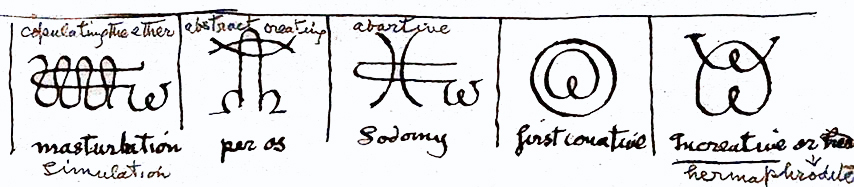
Kenneth Grant, being Spare's literary executor, and Steffi Grant: "ZOS SPEAKS! ENCOUNTERS WITH AUSTIN OSMAN SPARE", London 1998, page 119. Spare’s sigils were created quite straightforwardly: for example if you wanted power, you wrote out the word “POWER” and then eliminated all the vowels, then combined the remaining consonants P, W and R into a monogram–like sigil as symmetrically as possible. 
Spare’s magic was analogous to that taught by Crowley in his Ordo Templi Orientis. When visualized while one is sexually aroused, the sigil supposedly stirs the subconscious and a corresponding image arises in the mind; eventually communication with the supernatural world starts — or one’s wish is fulfilled — though consciousness of that wish is said to interfere in this process. Spare called this forgetting of one’s original desire during magical evocation "union through absent–mindedness" and he advocated the yogic method of emptying the mind of all but the sigil. The sperm produced during orgasm was used to anoint the sigil, which was then was buried in a box or urn. Spare admitted he "copulated merely with the atmosphere, or rode [imaginary] whores, witches and bitches of all kinds, there being few virgins" — in other words, Spare practised magical masturbation. 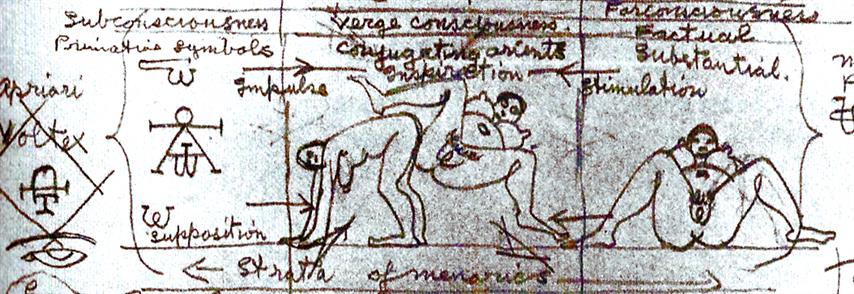
Kenneth Grant: "IMAGES & ORACLES OF AUSTIN OSMAN SPARE", London 2003, page 17. Similar drawings by Fraternitas Saturni members Guido Wolther and Johannes Goeggelmann. Nevertheless, Spare remained cautious about those who "praise ceremonial magic and are supposed to suffer much ecstasy! Our asylums are crowded and the stage is over–run. Is it by symbolizing that we become the symbolized? Were I to crown myself King, should I be King? Rather should I be an object of disgust or pity." Mario Praz in his "The Romantic Agony" (Oxford, 1933) referred to Spare as an English "satanic occultist", and he placed him in the same category as Crowley. Spare died in poverty–stricken obscurity in 1956, but today is very influential among a number of mainly UK–based occult groups like the so–called Chaos Magic movement and the Typhonian Order (the English O.T.O.) founded by Kenneth Grant. 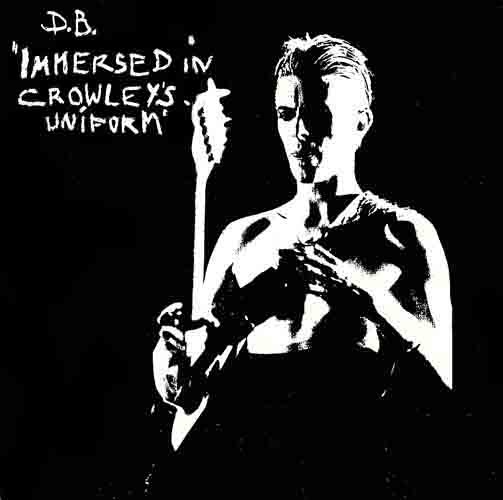
In 'Station to Station' there is the line "throwing darts in lovers' eyes". In Crowley's system, the dart or arrow is a symbol of direction, and shows the dynamic of True Will — which is not being but going, not individual but universal. The arrow pierces all points simultaneously in a perpetual orgasm; it is tipped with poison, an alkahest capable of dissolving the illusion of separation. 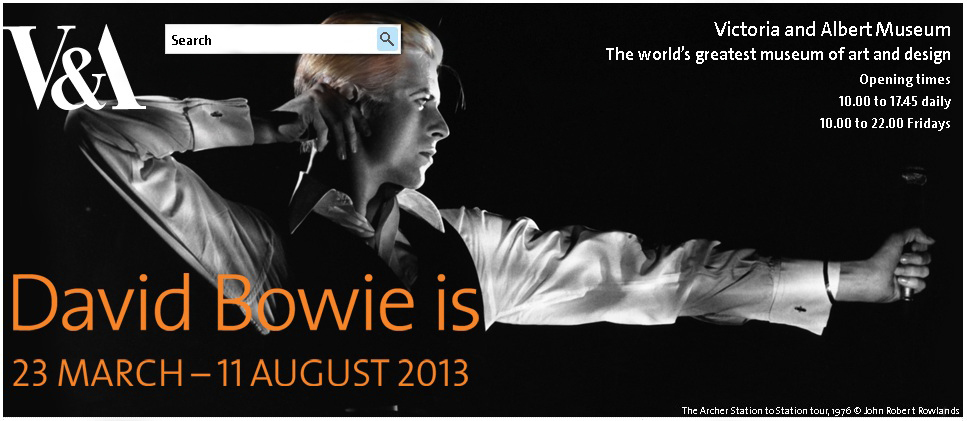
John Robert Rowlands, "The Archer", February 26th, 1976, at Maple Leaf Gardens in Toronto, Canada. The photo "The Archer" was accompanied by "The Bow". In Crowley's Thoth Tarot, the complementary card to The Lovers is called Art. Crowley describes it as the complement and fulfilment of Atu VI: the royal marriage of The Lovers is consummated, the black and white figures are synthesized into a single androgyne figure, and the arrow rises upward, piercing the rainbow. In that sense, one may read Art as the continuation and transmutation of the dividing impulse at work in The Lovers. The next image, however, belongs not strictly to the card Art itself, but to Crowley's wider Thelemic symbolism. The Tarot card The Tower (whose older title Crowley retains as The House of God) is attributed to the Hebrew letter Peh, not Ayin. In Crowley's commentary to Liber LXV, however, this Tower is smitten by the Lightning Flash of Illumination, by the impact of the Holy Guardian Angel, and by the Flaming Sword of the Energy proceeding from Kether to Malkuth; from it are cast forth two figures which form the letter Ayin by their attitude. These are identified with Horus and Harpocrates, born at the breaking open of the Womb of the Mother. The image of "a spring shut up, a fountain sealed" is borrowed from the Song of Solomon, rather than from the Tarot itself.
|
| Rudolf Steiner’s Stations |
|
I shall refrain from entertaining the fanciful notion that Rudolf Steiner (1861–1925) was affiliated with the O.T.O. or, more improbably, a devotee of Crowley. The pertinent facts have been thoroughly addressed in my essay, Rudolf Steiner: Never a Member of Any Ordo Templi Orientis.
In the context of Bowie's lyrics in 'Station to Station' it is noteworthy that the 'typical' occultist does not travel from Kether to Malkuth, but rather from Malkuth to Kether, that is via sex to divinity. It is in Steiner's worldview that one travels from Kether to Malkuth. 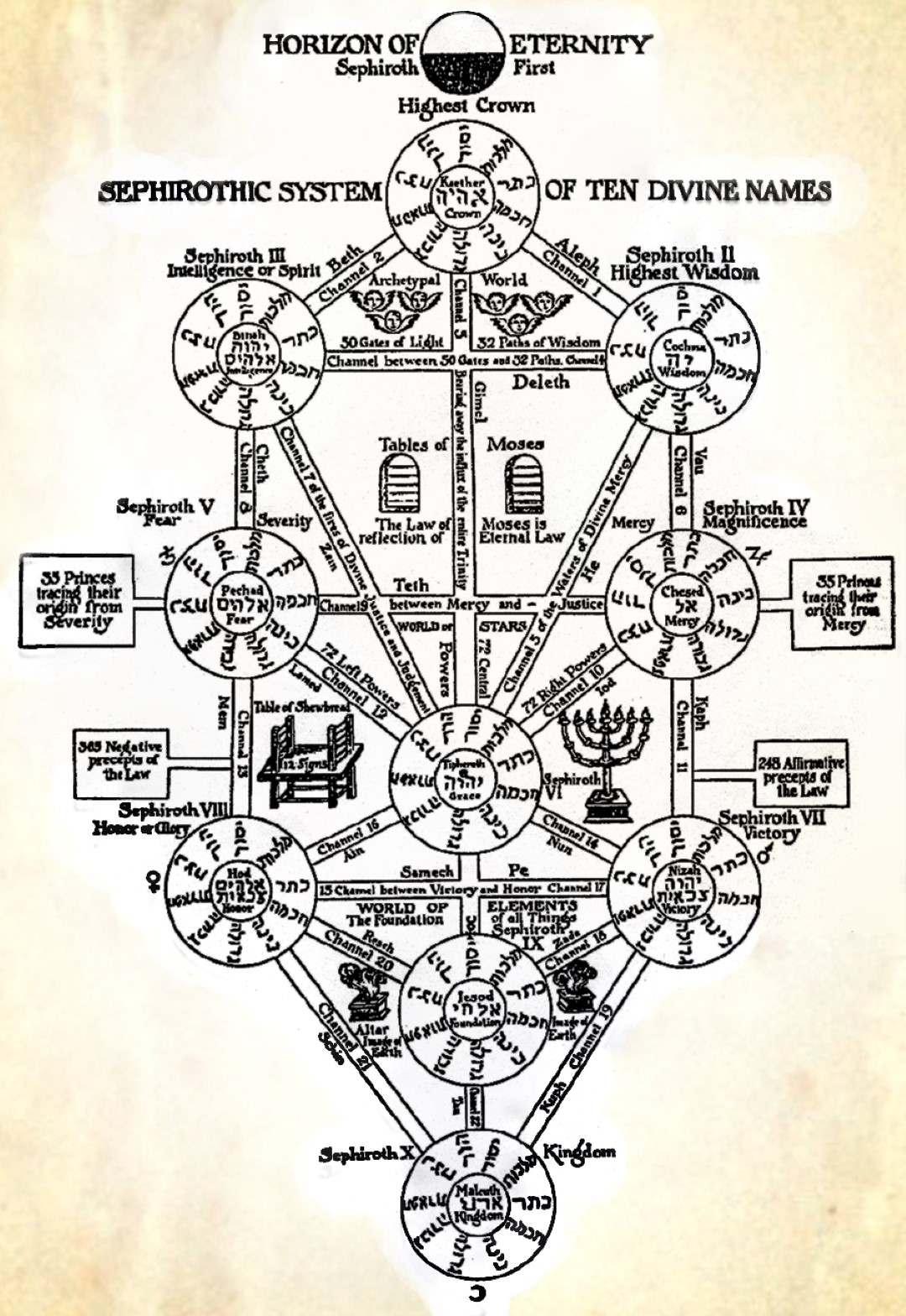
It is quite obvious that Steiner's worldview was and is ascetic, i.e. "is sensual–free" ("only what is communicated with pain has a value") and he has deeply rejected the eastern version taught by most yoga practitioners. Steiner was against the attenuation of consciousness, against oaths of secrecy and a personality cult (although he appeared as messenger of the Masters, e.g. Zarathustra). He repeatedly stated that esoteric training should be based on thinking, and not bodily forces (as by sexmagicians). In this, Steiner was most obviously referring to hypnotism, mediumship, and Yogic breathing, but also, presumably, to sexual energies. Nevertheless, Steiner's student should "do as much as possible, whatever his position, to further the health of body and soul" — with the exception that sometimes duty may stand higher than health, or life itself. The crucial point is whether consciousness is controlled by bodily forces or whether the body is controlled by the spirit–consciousness of the individual Ego. Eurythmy and Speech–Formation are later artistic applications of the initiation–knowledge gained by Steiner, as ways of bringing the spirit into the physical, not the physical into the spiritual. Advocating the Christian way of the Rosycross, Steiner opposed any ceremonial magic, although he used Eliphas Levi's apocalyptic seals and the Tarot symbolism. Even text passages from Levi's "Dogma and Ritual of High Magic" are found in Steiner's rituals. Steiner considered his rituals building the bridge between the Invisible and the Visible: "downwards" and not "upwards" as with the libertine Gnostics. Steiner's Chakra exercises work from above downward. It is the heart which is considered by the vedantics as the main chakra and not, yogically, the solar plexus. |
| "You drive like a demon from station to station" |
|
Let's take a final look at the line "one magical movement" from 'Station to Station'.
To travel from "Kether to Malkuth" in "one magical movement", if one reads Bowie's line along the middle pillar of the Tree of Life, would mean passing through the central sefirot that intervene between Kether (the Crown) and Malkuth (the Kingdom): Tiferet (or Tiphareth), associated less with love in the strict sense than with beauty, harmony, compassion and balance; Yesod, the Foundation, often linked with generative or sexual symbolism; and, in systems that include it, Da'at, "Knowledge", a concealed or quasi–sefirah rather than a standard independent eleventh sefira. In some later body–correspondence traditions Da'at is placed at the throat, but the equation with the Vishuddha Chakra belongs to later syncretic esotericism rather than to classical Jewish Cabbala. Likewise, the notion that Da'at opens onto a dark reverse side of the Tree belongs more to later occult Qabalah and qliphotic speculation than to the basic sefirotic doctrine. The answer to Bowie's question "Who will connect me with love?" is therefore not, in strict kabbalistic terms, simply Da'at and Yesod. If one wants the sefira most closely associated with love, one arrives first at Chesed; if one wants mediation, balance and reconciled beauty, Tiferet is the stronger candidate; and if one wants erotic or generative transmission, Yesod is the relevant symbol.
|
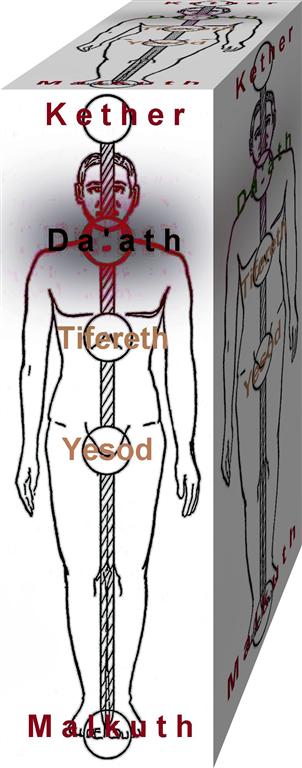
I shall abstain from pressing Bowie’s omission of Tifereth and Yesod into a biographical allegory about Angie Bowie. More cautiously, one might say that Da’ath — understood not simply as "words through the throat"”, but as a mediating principle of knowledge and articulation, sometimes associated in later kabbalistic body–symbolism with the throat — seems, in Bowie’s work after 'Station to Station', to recede intermittently into instrumental passages, fractured utterance, or songs in which words function less as meaning than as ornamental residue.
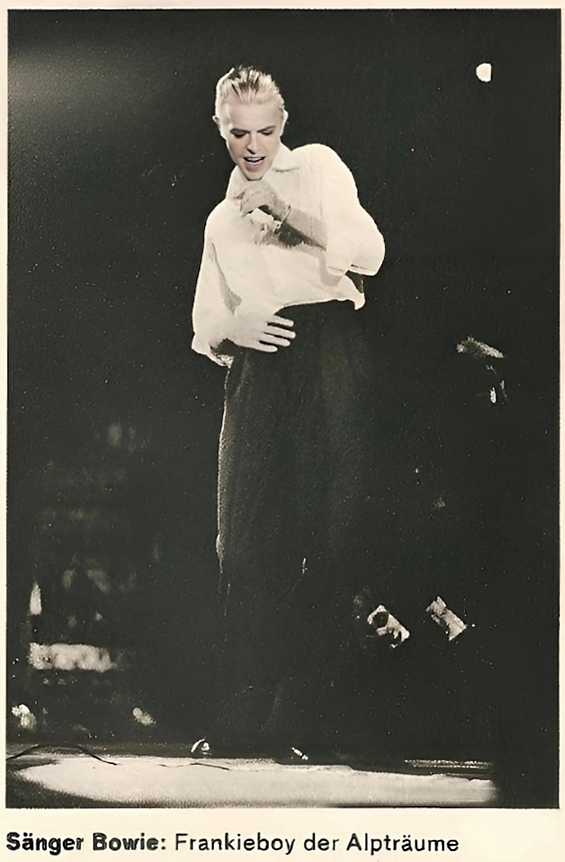
'DER SPIEGEL' 16, Hamburg 1976.
Article by Siegfried Schober: "Idol des letzten Rock".
Caption: "Singer Bowie: Frankieboy of the Nightmares".
Unused alternative lyrics to 'Station to Station'
You smell like a ghost
You eat like the terminal girl
But the men hurt your back
You sit and you piss dark water
You're silent but aware
You're seething but warm
You sword–play to
The Return of the Thin white duke
Throwing darts in lovers eyes
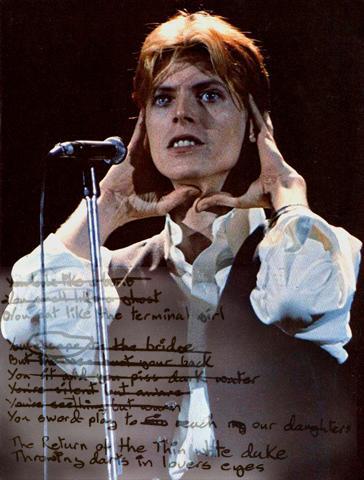
Another Trojan horse? 'Station to Station' was the title of a gay porn movie in 1974, Times Productions, directed by L. Brooks.

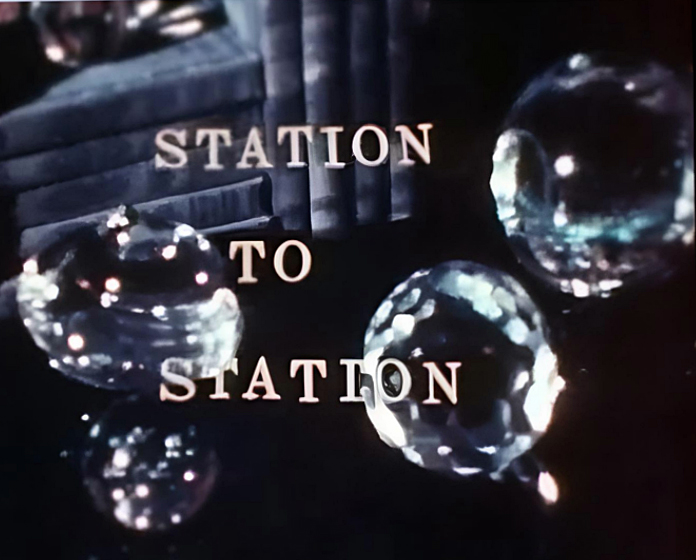
I wonder if Bowie's audience had any inkling that he might have been using the term "station" in more than one sense in his lyrics. Something similar happened with the Village People songs 'YMCA' and 'Go West' in the 1970s.
Cruising ... "from station to station [...] I got to keep searching and searching [...] making sure white stains" .... (Bowie, 'Station To Station', 1976).
In the 1970s, the term "station" could indeed have carried subtextual meanings within certain subcultures. Train stations — particularly major hubs — along with public bathhouses and restrooms, often served as discreet meeting points for sexual encounters among men. The notion of "stations" as sites for such interactions, especially in urban settings, resonates with the concept of cruising. This context becomes particularly intriguing if Bowie was subtly referencing or reflecting on the sexual mores and underground scenes of the time.
Bowie’s more perceptive listeners, particularly those attuned to the subcultures of that era, might have speculated about these dual meanings. Loitering in lavatories might not seem like the sort of pastime befitting someone of Bowie’s stature — or then again, perhaps it was precisely so? Some other celebrities have found themselves in legal trouble for public indecency. Just think of John Gielgud, Alec Guiness, Peter Wyngarde, Pee-wee Herman, Joe Meek, George Michael...
Every shadow hinted at a lurking policeman; every sound, a danger signal. Therein lay the spice, the exhilaration. As Oscar Wilde captured this tension, likening it to a similar situation: "It is like feasting with panthers . . . the danger is half the excitement."
Bowie later said that the track was "very much concerned with the stations of the cross" — that is, the traditional fourteen stations marking Christ's Passion on the way to the crucifixion [David Cavanagh, "ChangesFiftyBowie," Q magazine, February 1997]. And now, why not throw in a sexual undertone for good measure?
Or am I merely scraping the bottom of the interpretive barrel here, given Bowie's penchant for the cut–up method?
| "You'll never know the real story / Just a couple of dreams" |
|
David Bowie navigated occult themes with striking boldness, openly employing esoteric terminology without much worry about public outrage. It wasn’t until later that he referred to Crowley’s domain as "the whole dark and rather fearsome never–world of the wrong side of the brain" (Steven Wells, "The Artful Codger", 'New Musical Express', November 25, 1995). By this time, Bowie had been living as a tax exile in Switzerland since 1976, dodging the UK's punishing 83% income tax on high earners. His concert productions were stripped down to minimalist, chiaroscuro displays — stark black backgrounds punctuated by harsh white lights from the side of the stage rather than from above. Gone were the days of extravagant spectacle, replaced with an austere aesthetic. Meanwhile, Iggy Pop, Bowie's companion, would often appear performing in the shadows of these minimalistic shows. After separating from Tony Defries and MainMan, Bowie remained under contract to RCA; there was no new record label at the beginning of the so-called Berlin period. From 1976 he maintained a home in Switzerland, while Berlin became an important working and living base, with Bowie at Hauptstraße 155 and Iggy Pop nearby. The move was in part an attempt to escape the cocaine-saturated Los Angeles period rather than to prolong it. The three albums conventionally called the 'Berlin Trilogy' were not, in fact, mostly recorded in Switzerland and the U.S.: 'Low' was recorded principally at the Château d'Hérouville in France and Hansa in Berlin; '“Heroes”' was recorded at Hansa by the Wall in Berlin between 11 July and 8 August 1977 and mixed at Mountain Studios in Montreux; 'Lodger' was recorded at Mountain Studios, Montreux, in September 1978 and March 1979 and mixed at the Record Plant in New York. During these years Bowie also painted, producing expressionist portraits and other visual work. |
| "Tape Your Mouth", Brian Eno, Oblique Strategies, 1974, collaboration with Peter Schmidt |
|
Listening to 'Ziggy Stardust', 'Aladdin Sane', and 'Young Americans', one might envision Bowie’s stage personas and costumes. Yet, it’s difficult to imagine the mustache he wore during the recording of 'Low' with Brian Eno (an artist completely enveloped in new and unorthodox ways of thinking about the world, ideas, and music) in late 1976. On 11 September 1977 Bowie recorded the television duet 'Peace on Earth/Little Drummer Boy' with Bing Crosby, shortly before Crosby's death on 14 October. The performance was broadcast in the United States on 30 November 1977 as part of 'Bing Crosby's Merrie Olde Christmas'; it did not become a commercial single until 1982. It was difficult to distinguish between their voices. In this unexpected turn of events, the Laughing Gnostic, once an icon of counterculture, had transitioned into the mainstream, now a part of the middle of the road. Nothing to scare the horses. Bowie was not one to sit still for long. Refusing to remain static, he had already co-written, played on and produced Iggy Pop's 'The Idiot' during 1976; after its March 1977 release Bowie toured as keyboard player in Pop's band. 'Lust for Life' was then recorded in Berlin in May–June 1977, again with major Bowie involvement. That summer Bowie returned to Hansa for '“Heroes”', with Robert Fripp adding lead guitar. Bowie, Eno, and Fripp playfully referred to each other as charlatans, while Pop embraced the 'Lust for Life', and both artists ventured as 'Passengers', with Bowie taking on the rôle of 'Lodger'. Bowie's Isolar II world tour opened in San Diego on 29 March 1978; 'Lodger' was recorded later, in September 1978 and March 1979, and unlike the preceding records received no dedicated tour. His live appearance on 'Saturday Night Live' with Klaus Nomi and Joey Arias was broadcast on 15 December 1979. 'Scary Monsters (and Super Creeps)' was recorded in February and April 1980 and released on 12 September 1980. Bowie's stage run as John Merrick in 'The Elephant Man' began in Denver on 29 July 1980, moved to Chicago, and opened at Broadway's Booth Theatre on 23 September; his Broadway run ended on 3 January 1981. He recorded the five-song 'Baal' EP at Hansa in Berlin in November 1981; it was released in 1982. In October 1977, Bowie travelled in Kenya and spent time with Maasai in the Maasai Mara. Later accounts describe the visit and the cattle-based pastoral culture, but the stronger claim that Bowie himself took part in a ritual involving milk and cow's blood is not securely documented and is best avoided. Meanwhile, in Berlin, he was occasionally spotted alone in trendy cafés, appearing despondent with his head resting on his plate. At times, he would cry out, uttering the words, "Please help me". Perhaps he was re–enacting the protagonist of Walter Tevis' 'The Man who fell to Earth', whose story ends with:
|
| Breaking Magical Glass 1977 |

Charles S. Jones, Achad: Crystal Vision through Crystal Gazing, 1923. The Chalice of Ecstasy, Parzival, 1923.
Gazing upon shiny surfaces as a type of autohypnosis is called scrying. Scryers stare into the reflective surface or past the surface into the center of it until they are in a self–induced trance. They see visions or perceive images of known symbols. This was a popular technique in nineteenth–century England. John Dee, the royal magician to Queen Elizabeth I, used a crystal egg and a black obsidian mirror. His mirror is exhibited today at the British Museum in London. Such scrying often was done ritually in a magic circle. Sometimes the scryer used a wand to invoke the entities in the magic mirror. John Dee, the Elizabethan scholar and magician, believed that through the mediumship of Edward Kelly he was in touch with angels and other spiritual creatures. Because Dee's manuscripts provided little more than the skeleton of a system, rudimentary when compared to the consistent and elaborate magical corpus taught in the Golden Dawn, his writings were thoroughly studied by members, who then combined Dee's "Enochian magic" with other aspects of the Western tradition in order to become more than human.
In 2003, David Bowie appeared in a Vittel / Nestlé Waters commercial, recycling elements of his past personas. The method is simple: in a dimly lit room, sit in a yoga posture in front of a mirror and observe yourself. Focus on your face, and gaze into your own eyes reflected in the mirror. 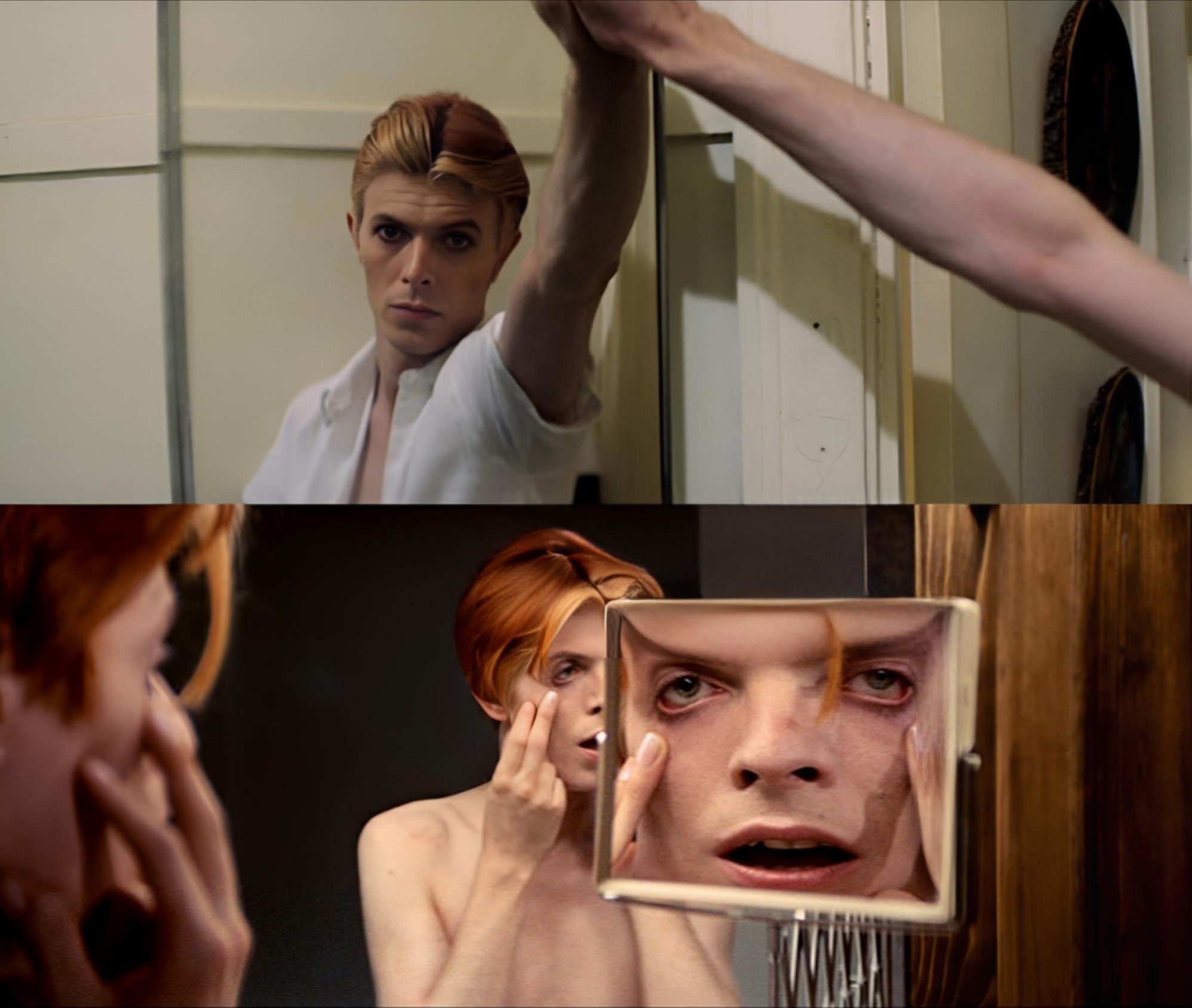
David Bowie in Nicolas Roeg's The Man Who Fell To Earth: filmed in 1975, released in 1976. During the period when Bowie was portraying the lead character in the movie, he conducted experiments with what he termed 'The Isolaric Alphabet'. This system bears resemblances to John Dee's 'Enochian Alphabet', which Dee utilized for the practice of Enochian Magic with the Enochian Calls or Keys. Remember that Austin Osman Spare also created the 'Alphabet of Desire'. It seems like creating one's own alphabet is practically mandatory in this field. And how does it sound when these languages are intoned? Do they echo the thunderous roar of the famous lion emblem seen in MGM films? Quite simply: just like it is heard in numerous horror movies and cult classics, where restless spirits and mischievous demons are summoned. It's almost as if they've taken lessons from the finest vocal performers of the underworld! Or was it from the Heavens?
|
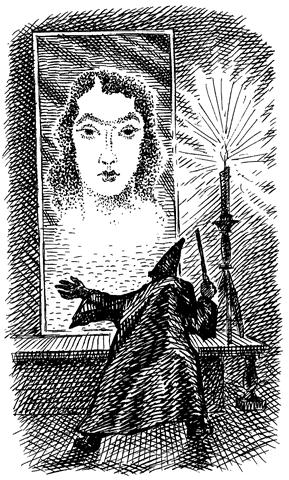
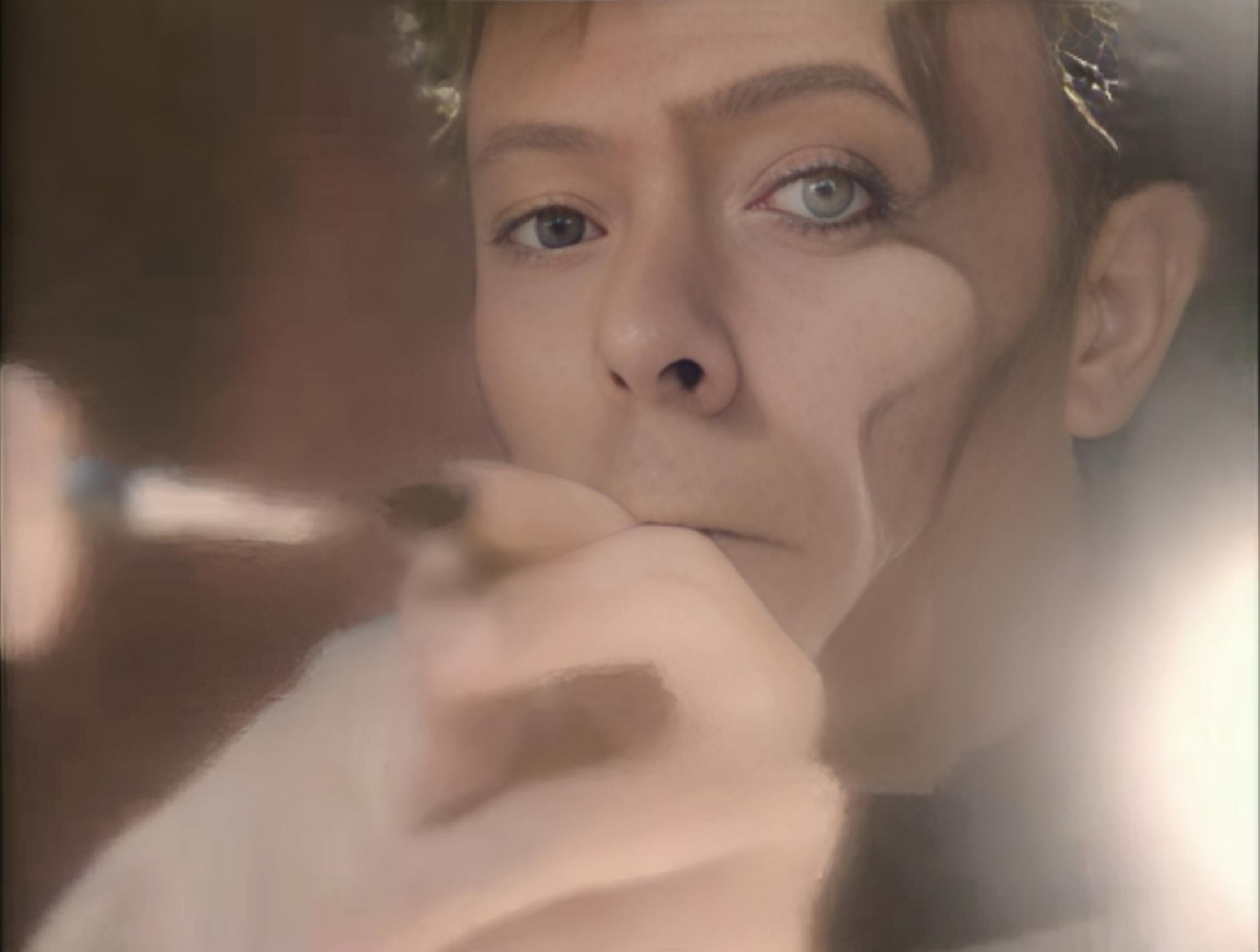
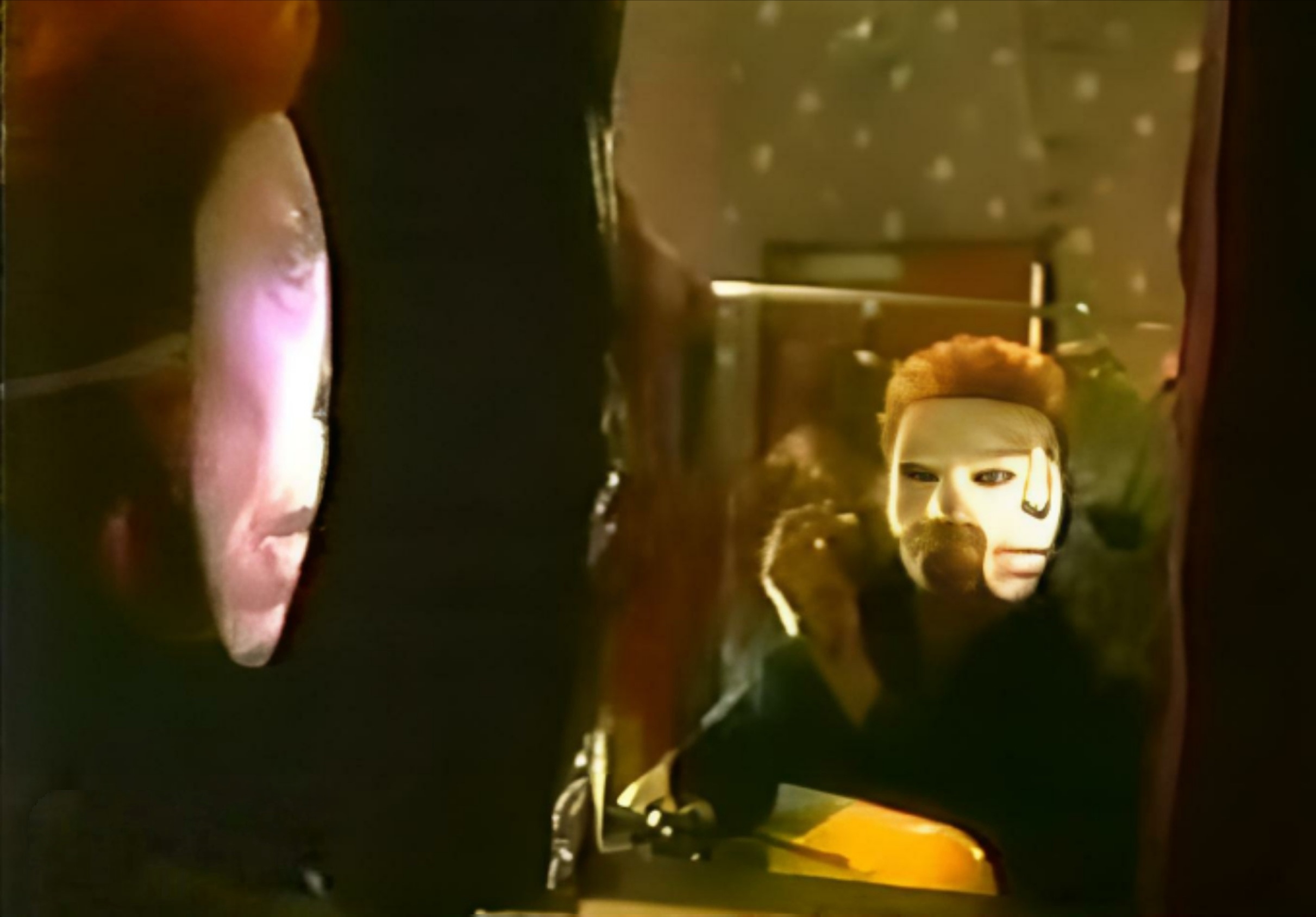
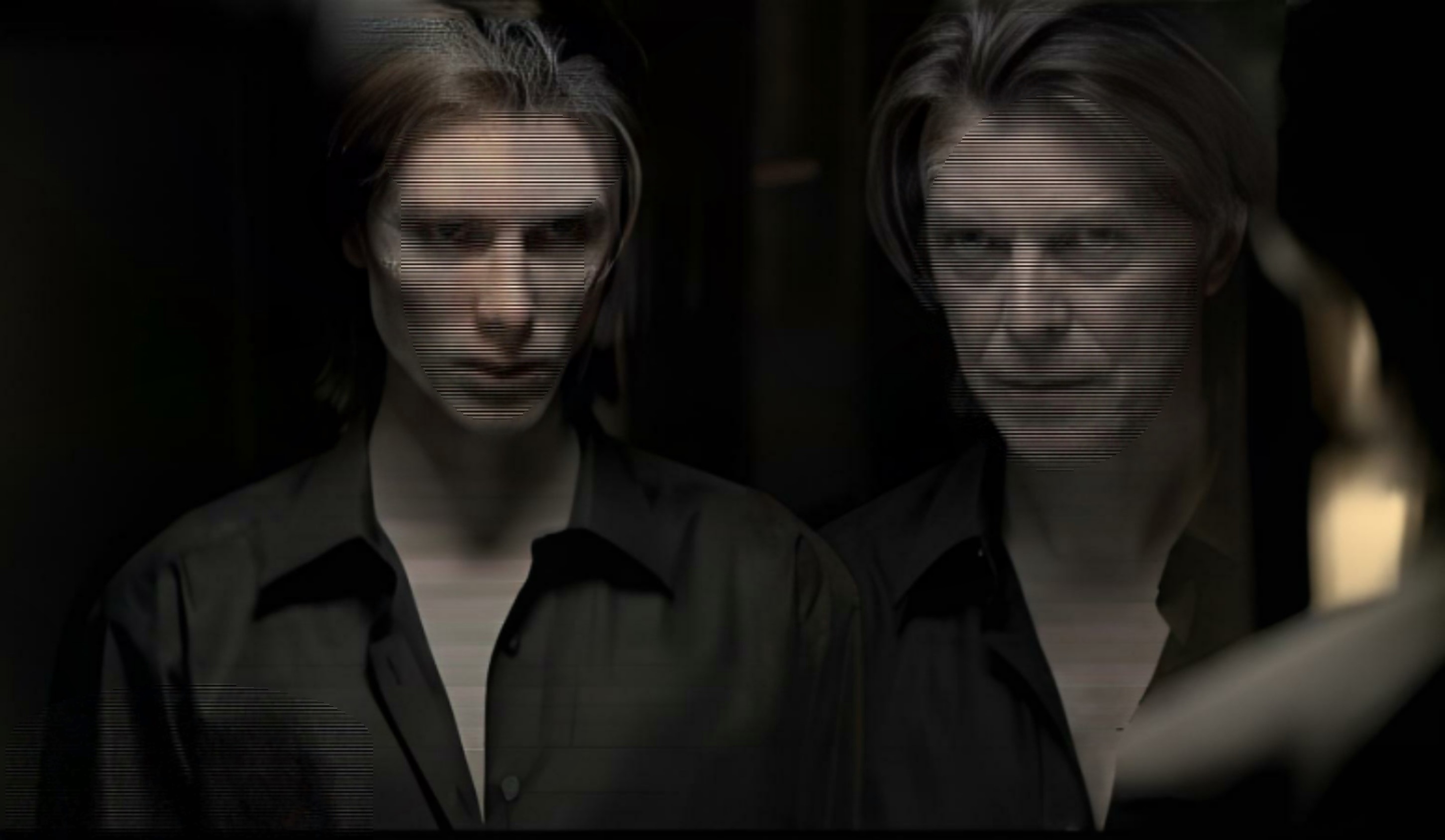
|
You can also focus your attention on the so–called Third Eye, which is the spot in the forehead that is in the center of, and slightly above, the brows [Ziggy Stardust / Aladdin Sane]. Imagine a light there and let your mind wander.
Additionally, you may choose to draw magic symbols on the mirror or the face of an angel. In this trance, you can hear your own disassociated voice and receive information through any of your senses. In a magic set, for example a blue room, equipped with the corresponding magic symbols, you can experience Sound and Vision. In "Sound and Vision" (1977), Bowie explored themes of mystical vision and introspection: "Blue, blue, electric blue / That’s the colour of my room / Where I will live / Blue, blue / Pale blinds drawn all day / Nothing to do, nothing to say / Blue, blue / I will sit right down / Waiting for the gift of sound and vision". The color blue, associated with the Tarot card 'The Hanged Man,' hints at themes of sacrifice and enlightenment. This motif reappeared in Bowie’s 1987 Glass Spider Tour. (More of that later.) 
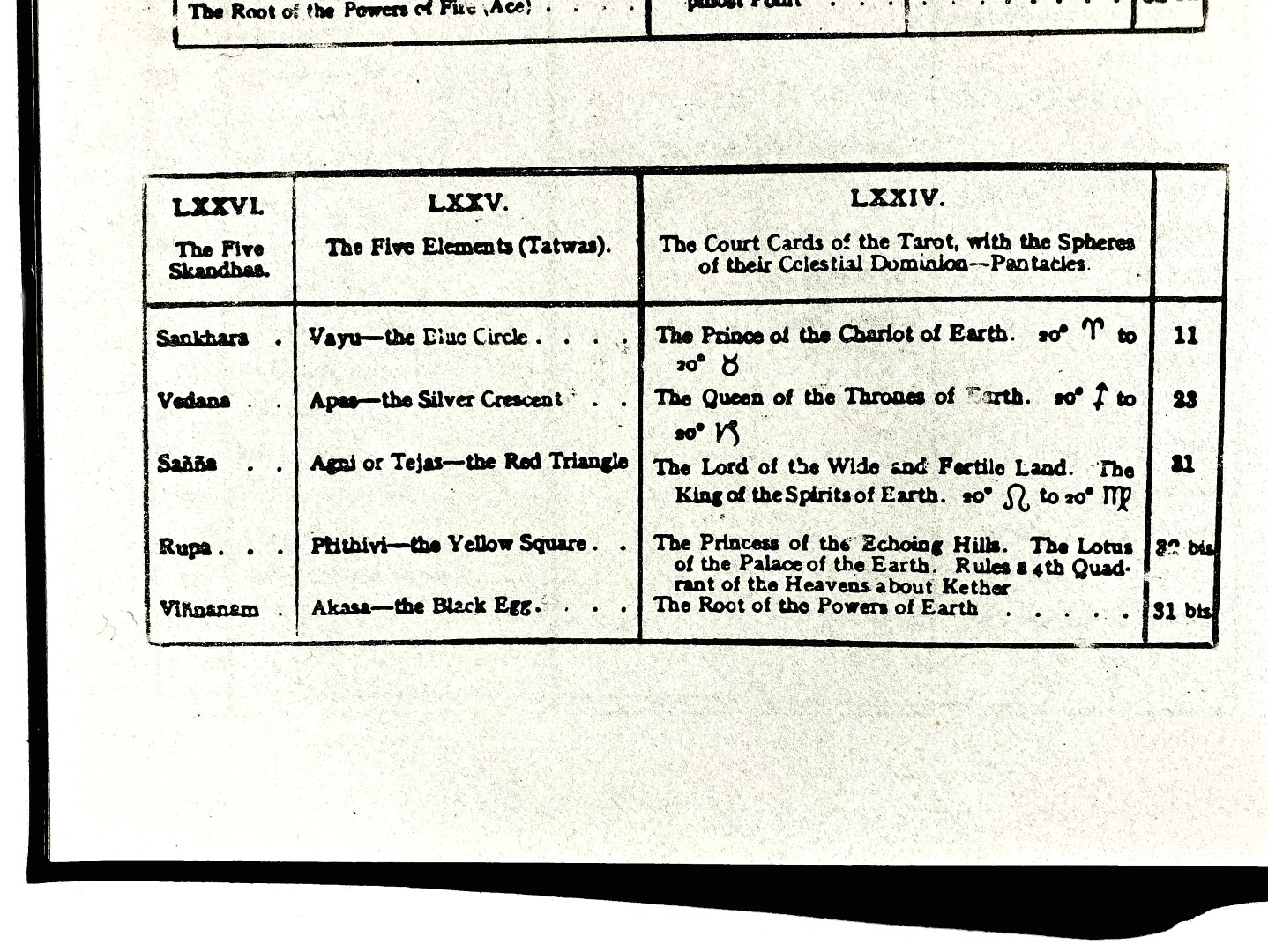
Golden Dawn / Aleister Crowley: "777 VEL PROLEGOMENA SYMBOLICA AD SYSTEMAM SCEPTICO–MYSTICAE VIAE EXPLICANDAE FUNDAMENTUM HIEROGLYPHICUM SANCTISSIMORUM SCIENTIAE SUMMAE (Liber DCCLXXVII — 777)", 1909. Break a mirror and you will suffer seven years bad luck. Baby Davor Zadnek is a practising Thelemite: If we assume that breaking glass is a mirror or a crystal ball, than I would say that this lyric is most probably about evocation. "Your room" would than hint that it is not usual evocation but the one that uses sex, which is a more powerful and advanced technique. The inclusion of the Tree of Life would probably mean that Bowie is using this "tree" as a basis for his magical work, perhaps evoking some beings that are closely related to the Tree of Life. But 'carpet' is usually associated with astral travel (flying carpet in Arab stories). So, this could mean that the practice is not only evocation but also Raising on the Planes (astral travel) used to investigate the Tree of Life. So, this could hint that he is using a combination of both techniques – and many occultists indeed find the combination of both techniques much more effective. Usually they first use Raising on the Planes and than use the connection gained in this way for evocation but there is t he possibility to first use a magical mirror to get a glimpse of one sphere of the Tree of Life and than use the vision in the mirror to enter that sphere with astral travel. As the second interpretation is in accordance with the succession in the lyric, this would mean that the first part is not about evocation of some particular 'being' but of 'scrying' certain part of the Tree — or looking at a certain part of the Tree with the magical mirror and than using those images to astrally enter into this part of the Tree. This is not a common technique but it can be used (and is used) and this second interpretation is in my opinion more in accordance with the song. But because Bowie uses the word "listen", this could mean that a certain evocation of a being is indeed present as in evocations the beings are usually firstly heard and only than you make a visual connection. But looking at this with the conclusion that we found in the second paragraph, I would say that he is using general scrying of some sphere of the Tree and that first some being(s) "appear" and they first make audible contact but the working is 'concentrated' on the sphere of the Tree and not on a particular being — so that the 'apperance' of this being(s) is more a contingency than anything else. Than he uses astral travel to intensify the experience of this sphere and make the more definite visual connection – the word "see" could imply that. I would say that "Oh–oh–oh–oh" means sexual intercourse, so we have another point that this is about sex magick. The lines "You're such a wonderful person" and "But you got problems" could hint at the experience that he is getting through — first the vision of beatitude in all and then because of the transformative nature of this working, the unconsciousness complexes came to the surface of the consciousness and he sees his problems or project them to him/her. Or it could mean that he gets clairvoyant. [During a few live shows back in 1995 he replaced the word "person" with "poison" changing the line to "you're such a wonderful poison".] "I'll never touch you" could perhaps mean that Bowie will not hurt him/her or better that he/she is not going to be influenced by all this as this is his personal working and that he/she is not part of it. "Don't look" in "Don't look at the carpet" could mean exactly that — you must be ready for this experience or they might be too much for you, so Bowie is protecting him/her. Crowley used sex magick in this way, as he could not find a suitable partner. Rabbi Luria's old schema, given pre–eminence in the Golden Dawn and A.·. A.·.. Serious Qabbalah scholars like Gershom Scholem thought Crowley and Mathers (the founder of the GD) were a bunch of swindlers. [Emails February 2004] Ellic Howe and his friend Oscar Schlag indeed showed evidence that the Golden Dawn's foundation was based on a forgery (Ellic Howe's "Magicians of the Golden Dawn", London 1972). 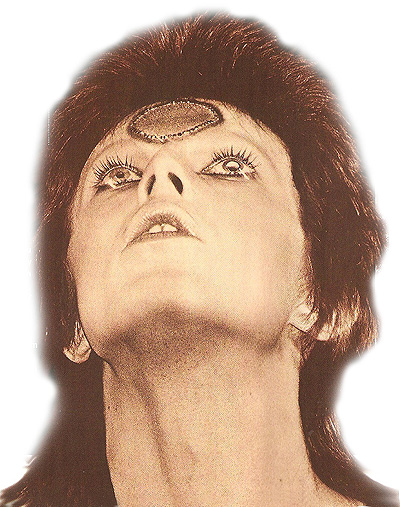
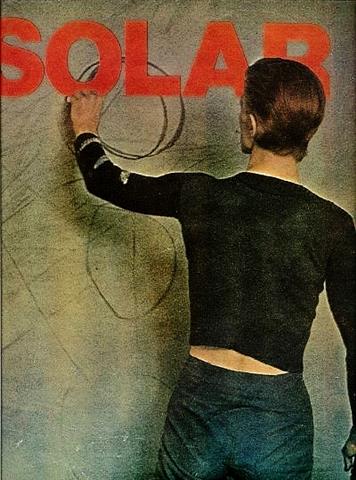
Photos: Kevin Cummings, Steve Schapiro. Maggie Ingalls, famous in the Thelemic Continuum for expanding Crowley's Thelema in the 70s: This is an interesting set of lyrics. I read it as a loony accusing his girlfriend of being nuts: ("But you got problems"), which is just a projection of his own mental state. The breaking of glass, in the way he words it (especially with the "again") seems obsessive/compulsive action designed to harm both the girlfriend and himself. I agree that the first glass that comes to mind is a mirror or crystal ball, but the Tree of Life symbolism leads me to consider that the broken vessels, shells, or shards that are the Qlipoth might be what he means. "Don't look at the carpet" is contradicted by "See!", which suggests that the broken glass is all over the floor. The last line, "I'll never touch you", can be read as either a threat or a promise. He'll never touch her, but he will create hazardous conditions in her room — he'll never touch her because he thinks she's the crazy one — or he's assuring her that he won't physically assault her — or all of the above? There do seem to be ritual elements implied, but it feels to me that it's a private ritual invented by the 'speaker' of the words...maybe he's in a moral struggle, his 'angelic' and 'diabolic' aspects locked in combat. [Emails February 2004] In the song 'Warszawa' (recorded in September–October 1976 in France and Berlin, published in 1977 on 'Low'), Bowie sings words that may, at first, sound like the magical barbaric language / voces mysticae of evocation (as in the "Goetia"). Based on the assumption that language and magic are intertwined and can directly interact with the outer world, this language comes from the Enochian channeling of Dr John Dee and Sir Edward Kelly's medieval angelic language, which was also used in the Golden Dawn and Crowley's magick (published in his "Magick In Theory And Practice" in 1929 and reprinted many times since then). Some think this is enigmatic nonsense, similar to abracadabra. Mmmm–mm–mm–OM OM is a sacred syllable / mantra (Om mani padme hum which translates to "Hail to the jewel in the lotus") in Hinduism and Buddhism, augmented from the Sanskrit AUM. Crowley expanded it to AUMGN — thought to be so powerful that any magician vibrating it would be able to control the mind and the spiritual forces, that is the Universe. Fact is: David Bowie's song 'Warszawa' from his album "Low" includes lyrics inspired by the sound and rhythm of the Polish folk song 'Helokanie', performed by The Polish Song and Dance Ensemble "Śląsk" (conducted by Stanisław Hadyna in 1953). While the original lyrics of 'Helokanie' are about herding cows and pastures, Bowie's use of the local slang and modification of the words created his own unique version. The resulting lyrics in 'Warszawa' do not have any direct connection to the original meaning of 'Helokanie'. |
|
"I’ve got a photographic mind", Cameron Crowe: "Space Face Changes The Station. David Bowie Pulls A Lazarus", May, 1976 issue of 'Creem' magazine. |
| "They'll never clone ya / You're always first on the line / When you're a" Bowie |
Meanwhile, having somehow seduced and consumed all his potential musical rivals (by latching onto whoever and whatever happened to be cool at the time), the taste for instrumentals waned and Bowie's sound–tapestries gained lyrics again.
Lou Reed, of Velvet Underground renown, had been brought to the UK from America by Bowie himself, who then went on to produce Reed’s iconic 'Transformer' album in 1972. This album, a loosely conceptual exploration of Andy Warhol and his Factory, owed much of its success to Bowie's own reputation. In that same year, Bowie penned songs for one of Britain's top bands, Mott the Hoople, and later mixed Iggy and the Stooges' game–changing album 'Raw Power' (recorded in 1972 and released in 1973); Iggy Pop was the album's producer. Never one to let a good opportunity slip by, Bowie’s name appeared on records by the likes of Lulu, Mick Ronson, Dana Gillespie, Steeleye Span, The Beatstalkers, Dib Cochran & The Earwigs, Peter Noone (the "Herman" of Herman's Hermits), and others. He also crossed paths with Gene Vincent, once the leather–clad rocker but by then past his iconic phase, having traded his rebellious image for a less striking appearance. By 1971, the dangerous young idol had already begun the slow migration from menace to memory. While staying in Los Angeles with producer and manager Tom Ayers, Bowie recorded an embryonic version of “Hang On To Yourself” on 13 February 1971. Bowie later recalled that Ayers had suggested he jam or sing with Vincent; they settled, according to Bowie, on “Hang On To Yourself” and produced what Bowie himself called a “ghastly version”. And thus the small machinery of legend began its work. For decades a recording circulated among collectors and on bootlegs as “Hang On To Yourself — with Gene Vincent”. There was, after all, a Gene Vincent, there was a Bowie, there was an encounter, there was a tape, and Bowie himself had supplied the anecdote. Posterity had nearly everything it required. Only evidence was missing. The supposed Bowie–Vincent recording survived quite happily in this form until the archival gods finally opened one of their cupboards. In 2024 the tape appeared officially on Rock ’N’ Roll Star! as “Hang On To Yourself (Early Demo)”. Comparison with the old “Gene Vincent” bootleg shows that they are not two performances at all, but the same take: the bootleg merely runs faster and derives from an inferior transfer. The venerable bootleg attribution therefore proves nothing about Vincent’s presence on the recording. On the official release he is not credited, nor is any identifiable contribution by him apparent. The historical residue is consequently both smaller and more amusing. Bowie unquestionably met Gene Vincent; Bowie later remembered performing “Hang On To Yourself” with him; and an early tape of the song unquestionably exists. Unfortunately, the recording which collectors had long treated as the audible relic of that encounter turns out to be Bowie’s early demo wearing Gene Vincent’s name like a borrowed leather jacket. Whether another actual Bowie–Vincent performance once existed, whether Vincent was merely present while this tape was made, or whether memory eventually welded encounter, jam and demo into one convenient scene cannot presently be established. The tape survives. The Gene Vincent on it does not. As if this weren’t enough, Bowie developed a rapport with Mick Jagger and performed with a dazzling array of icons, from Jeff Beck and Bruce Springsteen to Brian Eno, Rick Wakeman, Cher, Bing Crosby, Marc Bolan, and Marianne Faithfull (who starred in Kenneth Anger’s 1969 version of 'Lucifer Rising'). In this context, Elizabeth Taylor served as arm candy for a few 1975 photos. He also collaborated with John Lennon—himself a dabbler in numerology and Tarot — and recorded his own music in Italian, German, and French, with yet more languages to follow. If he threw everything at the wall, something would surely stick. By now, it was clear to all that Bowie (David Robert Jones) had transcended his persona. Just as Greta Garbo became the Garbo and Marlene Dietrich became the Dietrich, David Bowie had become Bowie. There are few better descriptions of a true gnostic than the 'Man who Fell to Earth' (1975), bringing "Sound and Vision" (1977) or his alter ego Ziggy Stardust (1971–1973), who saved the world. But, there was a definite loss of creativity that had overshadowed him. All his life, Bowie had confined much of his admiration to those who tried to emulate him, as if after the candy of a baby, for example, Jobriath, aka Bruce Wayne Campbell (aka Jobriath Salisbury, Jobriath Boone, Cole Berlin, and Joby Johnson). Allegedly, Bowie had instructed Angie Bowie to question anyone she met about Jobriath. Jobriath, born in 1946, was an American glam rock singer, camp as Christmas, and one of the first pop musicians in the United States to openly identify himself as gay. On stage, he was far more striking than Bowie, an oddity too extreme even for the gay subculture.
But all that glittered wasn't gold. He died of AIDS–related complications in 1983 By 1979, the whole pop universe seemed crowded with more or less accurate Bowie–clones, among whom was the opera–singer Klaus Nomi [know me]. As a pure gnostic, Bowie consumed Nomi by performing with him (and Joey Arias); both Nomi and Bowie donned stiff plastic Pierrot costumes reminiscent of the Dada artist Tristan Tzara and sang a rendition of 'The Man Who Sold The World', who had "died a long long time ago."
One inspiration for Bowie's 'The Man Who Sold The World' perhaps was the poem 'Antigonish' from 1899 by William Hughes Mearns, otherwise called 'The Little Man Who Wasn't There'.
Klaus Nomi died of AIDS–related complications in the same year as Jobriath, 1983. At the conclusion of the song 'TVC15', Bowie, dressed in a costume by Thierry Mugler, performed a Golden Dawn Posture called "The Enterer", invoking the aid of the elements. 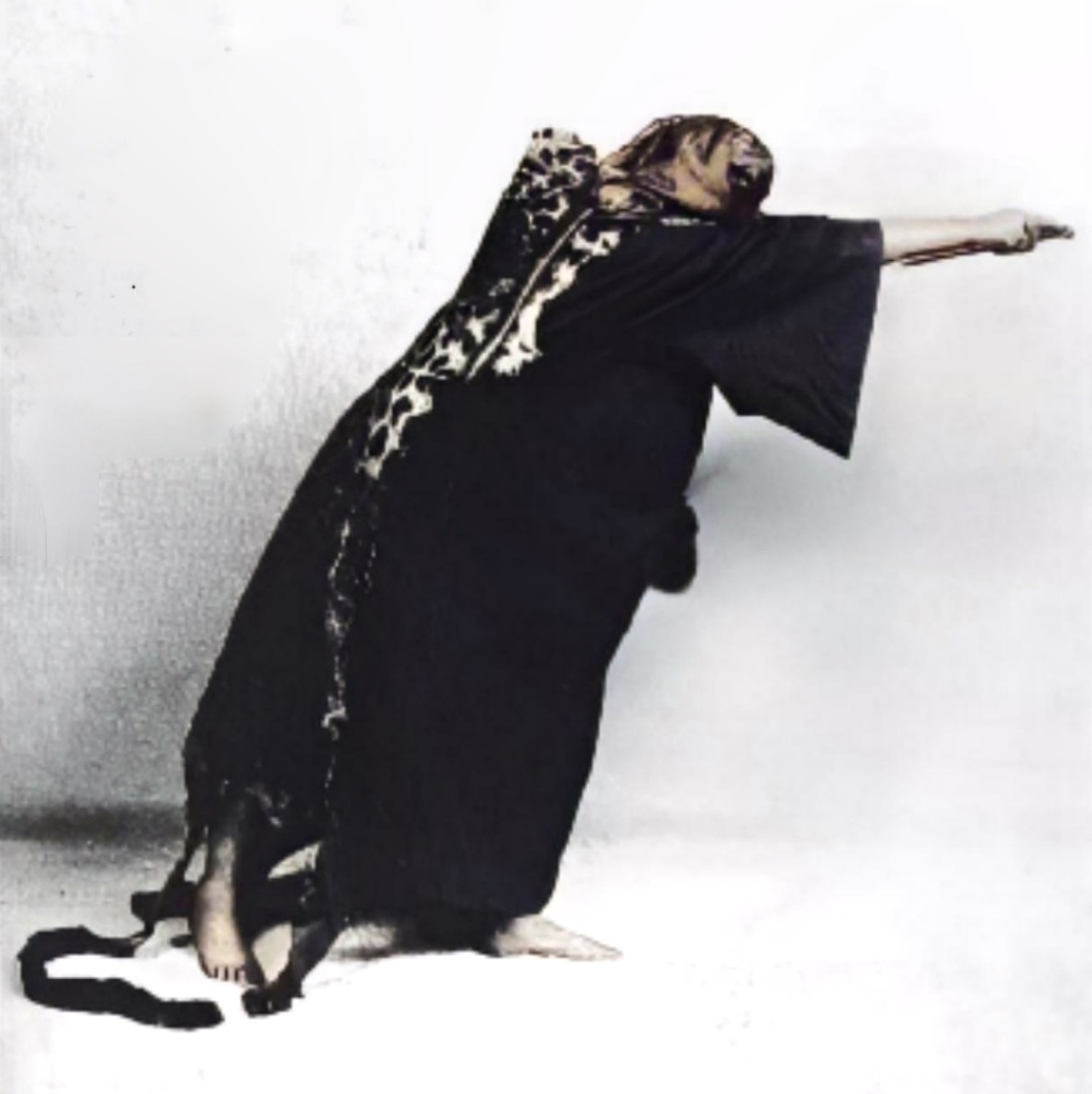 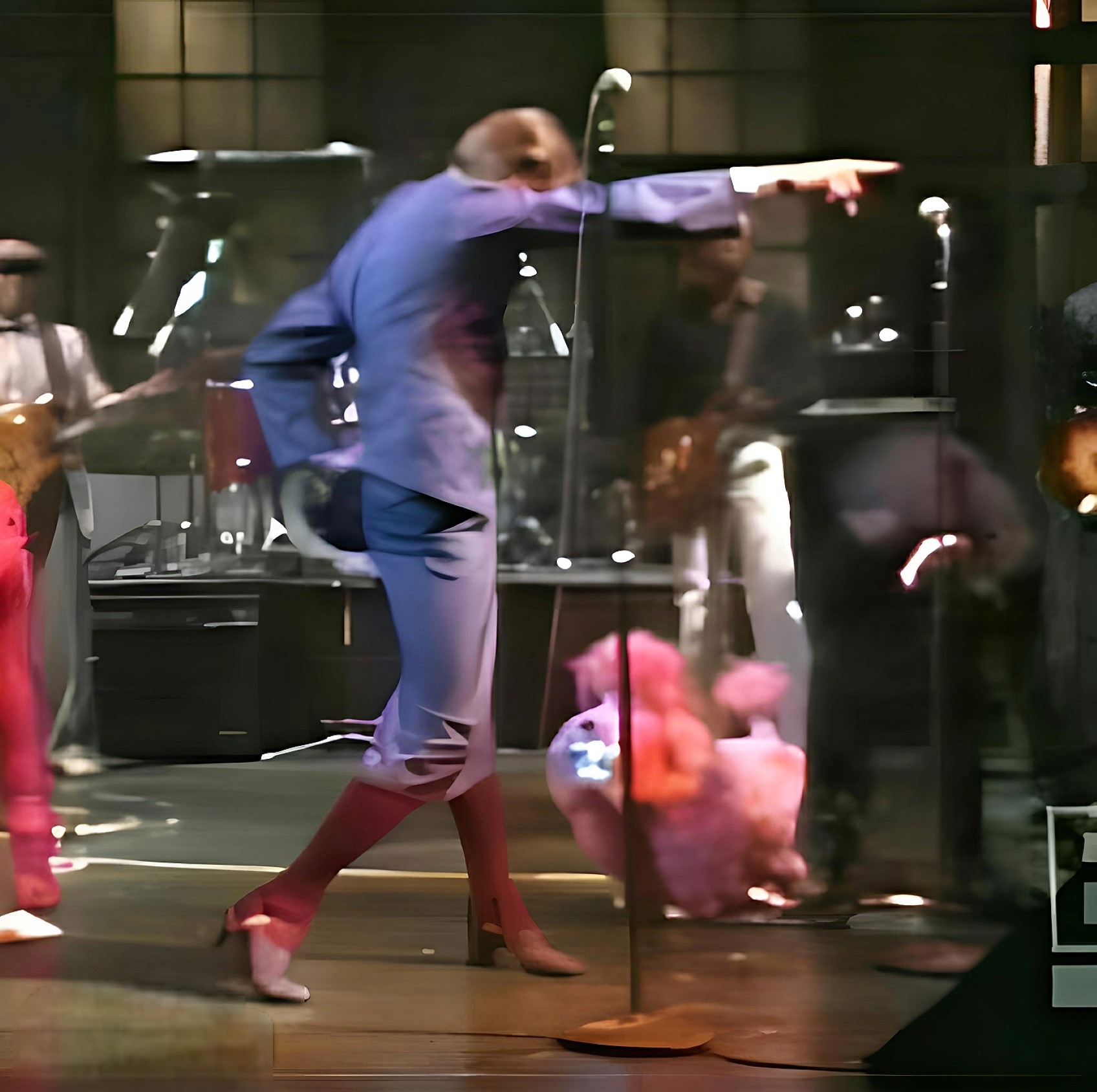
Bowie had a deep interest in astrology and considered it to be a vital component of his spirituality. As a requirement for interviewing him, journalists were often asked to provide their astrological information, which he would meticulously review alongside his own Tarot readings. This assessment played a significant rôle in determining whether he would grant the interview or not. 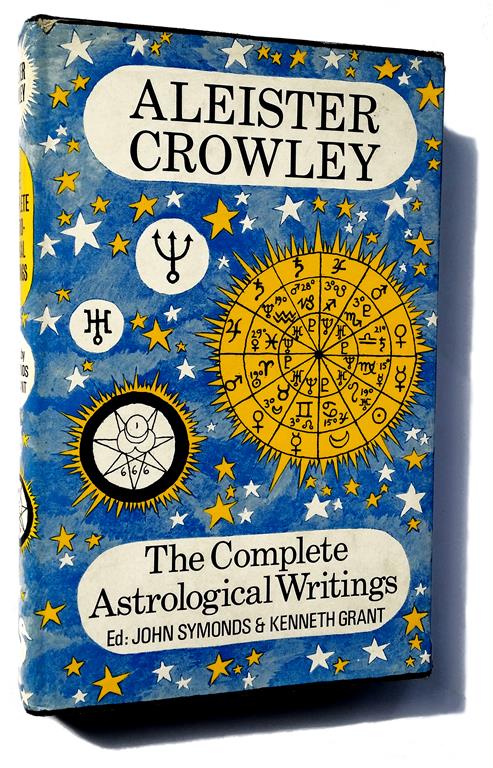
John Symonds and Kenneth Grant: "Aleister Crowley. The Complete Astrological Writings", London 1974. According to Christopher Sandford (via Angie Bowie) ("Bowie — Loving the Alien", Revised and Updated, London 1997), "Bowie's bizarre behaviour continued even after he moved to Europe: witness his strange use of 'signals'. Throughout 1977 and '78 his letters were filled with numbers to which he gave mysterious meanings. The minute Bowie left Berlin in 1979, the numbers abruptly stopped." 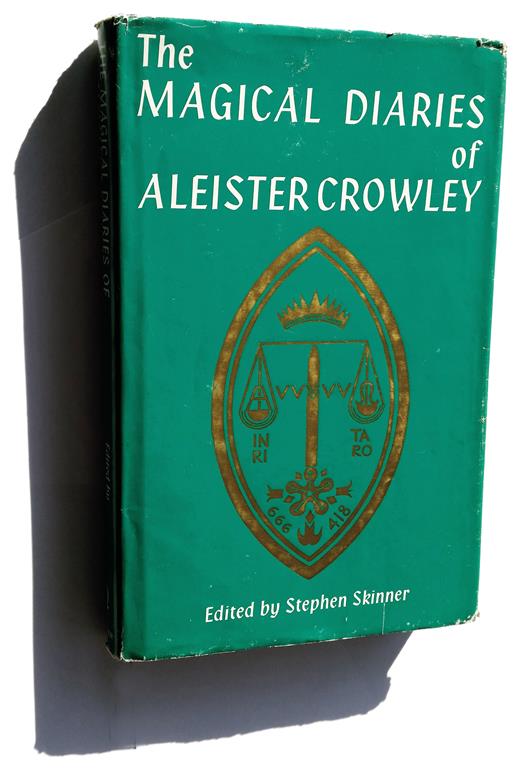
Edited by Stephen Skinner: "The Magical Diaries of Aleister Crowley", New York 1979. 'I'm Tired of My Life' from 1970 morphed into 'It's No Game' in 1980, with freshly sharpened lyrics and a darker edge. Now Bowie lamented, "No more free steps to heaven", while the track's opening borrowed the ghostly echoes of George Gershwin's 1925 'Rhapsody in Blue' piano roll, because why not? By 1980, what haunted Bowie most? He sang "This is the message from the action man: I never did anything out of the blue... I wanna axe to break the ice" — a nod to Franz Kafka’s definition of a book. And thus, Bowie framed his existential crisis, symbolized by the Pierrot costume, locked in a Gnostic prison. He was circling back to his earlier persona, Major Tom, who in 1969 innocently sang, "I think my spaceship knows which way to go" in 'Space Oddity'. By now, Bowie’s life was a spectacle, "hung out in heaven’s high: hitting an all–time low". His Gnosticism wasn't a philosophy for the faint of heart — it was a means of escape, fueled by the agony of being and a staunch resistance to philistinism. He half–whispered, "My mama said to get things done, you better not mess with Major Tom", as though chiding his earlier self. Bowie’s Gnostic journey found visual form in the 'Ashes to Ashes' video (at the time the most expensive ever made) — Major Tom returning as a puff of ethereal dust, channeled through a surreal, mechanical womb. A scene almost lifted from Kenneth Anger’s 'Rabbit’s Moon' (1972). Originally titled 'People Are Turning to Gold', the song nodded to "The Golden Ones" with "their faces in golden rays" from 1971’s 'Oh! You Pretty Things'. And this was Bowie’s final creative outpouring for nearly a decade. After this ultimate act of coitus with himself, Glam was spent. Bowie, it seemed, needed a very long cigarette break. In the years that followed, the realm of flamboyant excess was swiftly overtaken by the likes of Leigh Bowery, Michael Alig, and others peddling performance art, club culture, and outrageous fashion — while Bowie quietly stepped off the stage, having grown tired of doing the "same old thing in brand new drag" ('Teenage Wildlife', 1980). |


| Vampires of Human Flesh |
|
As long as Ziggy Stardust was "making love with his ego", Bowie had the potential to nurture his creativity. However, his burgeoning wealth and the absence of genuine opposition in his artistic, commercial and social life led him to perceive himself as a more acceptable performer. This shift from a provocative and rebellious persona to a more commercially acceptable performer marked a significant transition in Bowie’s career.
Bowie's portrayal of John Merrick in Bernard Pomerance's 1977 stage play 'Elephant Man' lasted from July 1980 to January 1981. During these performances, he seemed to eschew traditional acting techniques, opting instead for peculiar body movements, vague unfocused smiles without apparent reason, and a distorted voice. This probable departure from conventional methods left some uncertainty about his abilities on the stage. The German filmmaker Rainer Werner Fassbinder had the habit of creating art, or perhaps one could say, anti–art, with non–actors. In 1970, he had portrayed and sung the rôle of Bertolt Brecht's Baal in a film. Regrettably, the planned movie adaptation of Brecht's 'Threepenny Opera' with Bowie was stillborn. However, in 1978 Bowie incorporated Kurt Weill's glittering violence of the 'Alabama Song' (from Brecht's 1928 opera 'The Rise and Fall of the Town Mahagonny') into his live performances. Furthermore, he took on the title rôle in the BBC's 1981 television production of Brecht's 'Baal', perhaps as a means to rekindle his waning artistic fire "with gasoline"? These Brecht songs, which Bowie sang live during the program and also released in a studio–recorded version, stand among the best interpretations this writer has ever heard. They perfectly align with Bowie's inability to avoid alienating everything. (Brecht was the inventor of literal alienation between actors and the play on the stage and the audience.) Bowie's performance was an accumulation of odd body movements, efforted face–expressions, false grins (or was it the bad teeth and the slight beard?), and a seemingly desperate search for giving everything a sense of real importance. Was that a display of Brechtian Epic Theatre, or simply a masterclass in artfully poor acting? It was obvious that the rôle of Baal was assigned to the persona Bowie (the Pop star), while David Robert Jones would not have been given the opportunity to appear in something as serious as a Brecht play. This period of experimentation was marked by a sense of urgency and a desire to reinvigorate his creative output, even if it meant embracing unconventional methods and personas. Encircled by a retinue of lackeys and toadies, Bowie was always attended to with diligence. They waited on him hand and foot. There was always an element of I like you because you love me in his demeanor. "Loves to be loved" from "The Jean Genie" (1972) might be interpreted as a form of insatiable control. His previous projection of being a suffering–individual–splintered–into–countless–pieces seemed to recede into obscurity, overshadowed by the blinding light of his fame. This ensures the certainty that it could have always been a calculated persona, a façade perhaps conjured for interviews. The play with identities and masks can always be brought out again, like a rabbit from a hat. The purported suicide machine grew rusty, the challenges posed by drug issues became more manageable, and the sex–life evolved into a straightforward rhythm akin to a metrognome scarcely causing a densely patterned suburban curtain to twitch. "It's the gnome service of course." Earning him lots of money. |
| Let's Dress |
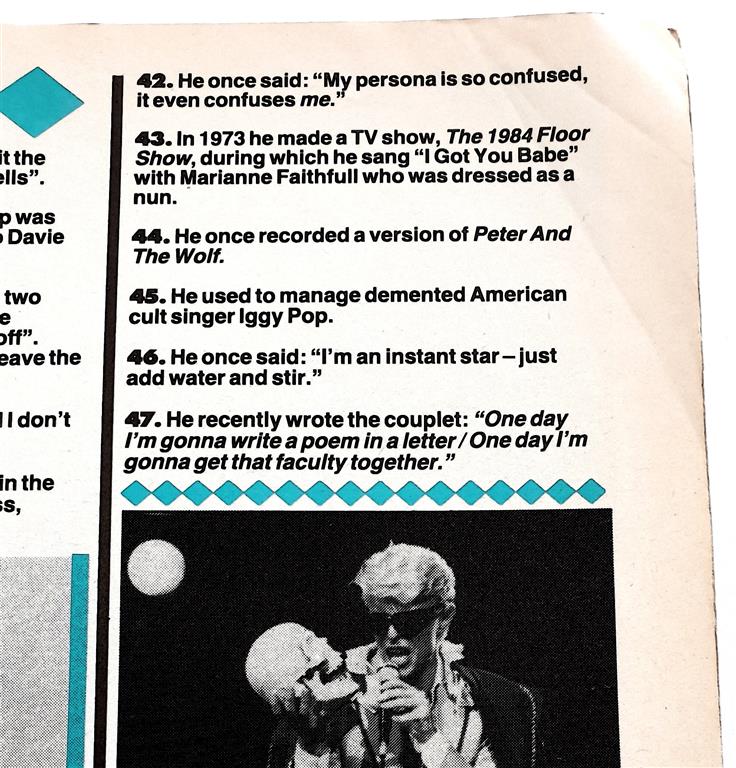
'Smash Hits' #6;20, October 1984. Rainy Day Productions Inc.: "David Bowie 50 Daft Things He's Done". Now, with riches flowing in from far and wide and a bulging contacts book, where was the gnostic thorn? In the gaps between his album tracks? Had he become a hairdon't self–parody with his 1984 song 'Blue Jean'? Was it a case of 'the unbearable lightness of being' with the Italian Eurovision ballad 'Volare' (which he performed in the mega–flop musical movie 'Absolute Beginners' in 1985, one of many dreadful decisions about which films to appear in, which, once seen, hard to unsee), or else his cover–version of John Lennon's 'Imagine' (sung live in 1983)? The dissonance between his earlier artistic explorations and the commercial products of the mid–1980s contributes to the perception of him being caught between self–parody and genuine artistic exploration. "I pick up most of my news from the Christian Science Monitor. That's the only one I can find that really doesn't have a bias on it." [Chris Bohn: "Merry Christmas Mr Bowie", in 'NEW MUSICAL EXPRESS', April 16, 1983] The 'Monitor', established by Christian Science founder Mary Baker Eddy in 1908, is a Pulitzer–prize winning newspaper. For Christian Scientists, Christ Jesus' example proves that sickness, sin and death are illusions and have no ultimate reality in God's spiritual creation and therefore can be healed through prayer. From a medical perspective, this means: no blood transfusions, no vaccinations, but also abstaining from nicotine and alcohol... That sounds a bit like a variation of ascetic Gnosticism, and critics seem to perceive it that way too. Bowie made a somewhat premature choice of his sources. Shortly afterwards, in June 1983, the 'Christian Science Monitor' published a condescending article about Philip Glass, Terry Riley, and Minimal Music, which couldn't possibly be described as without bias. What was he possibly aiming for with such a statement? Did he want to align himself with other celebrities like Marilyn Monroe, Henry Fonda, Elizabeth Taylor, Audrey Hepburn, Ginger Rogers, Joan Crawford, Ernest Hemingway, Doris Day, J.D. Salinger, and so on? Bowie’s embrace of such sources seems more about crafting an intriguing narrative rather than a sincere alignment with specific religious or philosophical doctrines. Once more Bowie, zhooshed up with a new hairdo and the sort of tan that you usually only see in a sample book at World of Leather, was telling the world now I am the real David Robert Jones — and supposedly producing music with true love — music that he later affected to despise. Was it because it all sounded rather like the soundtrack to being stuck at an endless barbeque held by the rich and bored, as many critics and fans lamented? It was perfectly clear to everyone that this newly authenticated Mr. Jones had, in fact, been manufactured from the outset. Some dedicated fans clung to the belief that it could only be a matter of time before this newly authenticated Mr. Jones authenticated himself into thin air. And it became easier and easier to mock him:
The HeeBeeGeeBees — 'Quite Ahead Of My Time' (1984)
Unintelligible lyrics You might find this association rather intriguing: in Let’s Dance (1983), Bowie croons, “Under the moonlight / the serious moonlight”, a phrase that bears a curious resemblance to Crowley’s Lyric of Love to Leah from his 1923 diary: “Come, my darling, let us dance / To the moon that beckons us / Come, my love, let us dance / To the moon & Sirius!” Could this be another playful product of Bowie’s cut–up method? A deliberate linguistic game? The semantic parallels between the two are striking: consider Bowie’s “If you should fall into my arms / If you say hide we’ll hide...” alongside Crowley’s “To dissolve our soul in trance / Heedless of the hideous / Heat & hate of Sirius.” And then, of course, there’s the constellation of connections: [Demon Dog] Diamond Dogs = Dog Star = Sirius = Serious Moonlight. There's an anecdote about Bowie's fear of other people magically using things he touched.
In 1983 and 1984, Jarman had plans to create a film titled 'Neutron', which held promising financial prospects as he had assembled an impressive cast, including none other than Bowie himself who expressed interest in playing the lead rôle. The two had a meeting at Derek's apartment, and initially, everything seemed to be going smoothly. However, Bowie's demeanor suddenly changed as he began chain–smoking and grew increasingly nervous, frequently shooting furtive glances at one of Jarman's bookshelves and some drawings on the wall. Without warning, Bowie abruptly stood up in the middle of their conversation, made a feeble excuse, and departed. Twenty minutes later, Bowie's driver and bodyguard returned to the apartment, stating that the master had forgotten something, while removing the discarded cigarette stubs from the trash. Needless to say, Bowie ultimately backed out of the project, leading to its collapse. Jarman never had the opportunity to explain that the John Dee books and Enochian squares on the wall were mere mementos from his earlier film 'Jubilee', where Dr. John Dee, Queen Elizabeth I's astrologer, played a rôle. Dee's 'Enochian' system of magic, with its intricate magical diagrams, held significance in the teachings of the Golden Dawn. [Further discussion on Dee is available elsewhere in this essay]. A postscript to this story was that the producer of 'Twin Peaks', motivated by sentimental reasons, obtained the rights to 'Neutron'. The project was revived, and guess who wanted to play the lead? |
| Despite all of the aforementioned circumstances, it is indeed intriguing that during a press conference in March 1987, Bowie boldly declared, "I don't think I ever was particularly involved in the Occult" (not unlike Bill Clinton's famous declaration regarding his sexual relationship with Monica Lewinsky?). |
Listen again:
|
|
Typically, when an underground phenomenon transitions into mainstream success, it promptly loses its cool factor. The grandeur of the 80s blow–dry wavy pomp unfolded, meticulously packaged and recorded in high–end studios, concealing mediocrity within middle–of–the–road hits and glossy productions.
Corporate pop orthodoxy, shaped by the Reagan–Thatcher era, favored high–gloss production and smooth edges, and Bowie adapted accordingly. Yet dismissing his 80s shift as mere capitulation ignores his pragmatic taste for reinvention, which ensured survival as much as success. No longer the outsider whispering strange prophecies from the margins, he became a reassuringly elegant pop fixture — proof that selling out, when done artfully, is just another transformation. So when Bowie put a 'For Sale' sign at his front gate during the 1980's, when he became an unironic stadium filling pop star (never trying to be a working class hero or anything punky like that), who or what crawled in? 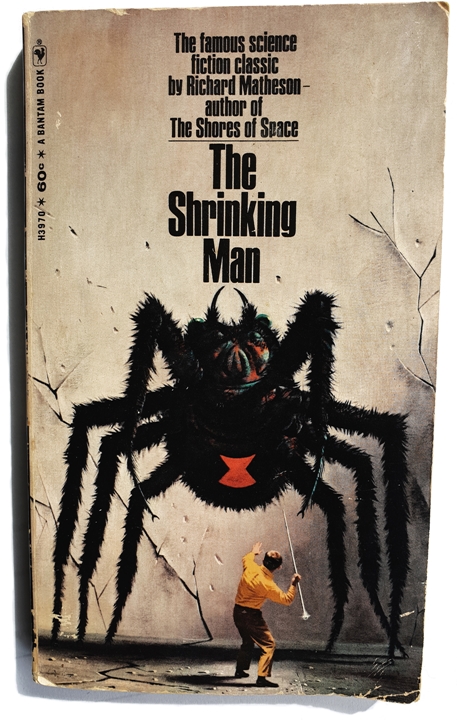
Richard Matheson: "The Shrinking Man", 1956. This cover New York, 1969. Also known as "The Incredible Shrinking Man", an American black–and–white science–fiction horror film in 1957, directed by Jack Arnold. 1987: On the largest stage–set ever assembled for a touring show up to that point (paid for with the help of his Pepsi commercial), Bowie appeared hanging from a rope, letting himself down from a huge glass spider that overhung the stage, his crossed legs mimicking the pose of 'The Hanged Man' Tarot card (The Hanged Man symbolizes sacrifice, surrender, and a new perspective, which can be seen as aligning with Bowie’s own narrative of artistic reinvention and self–examination) — at the same time referencing the Hindu creation–myth of the universe being spewed out of a giant spider's bowels. Bowie's live performance of the song 'Time' in 1987 shows that he was now using 'The Hanged Man' to represent himself as a sort of Wagnerian 'Redeemed Redeemer', a key figure in occultism, also hinting at Baphomet, the purported idol of the original Knights Templar and overtly that of the Ordo Templi Orientis. "Baphomet" was one of Crowley's magical names — he also identified himself with the Antichrist under the title of "The Beast 666", using an erect penis as his personal symbol.
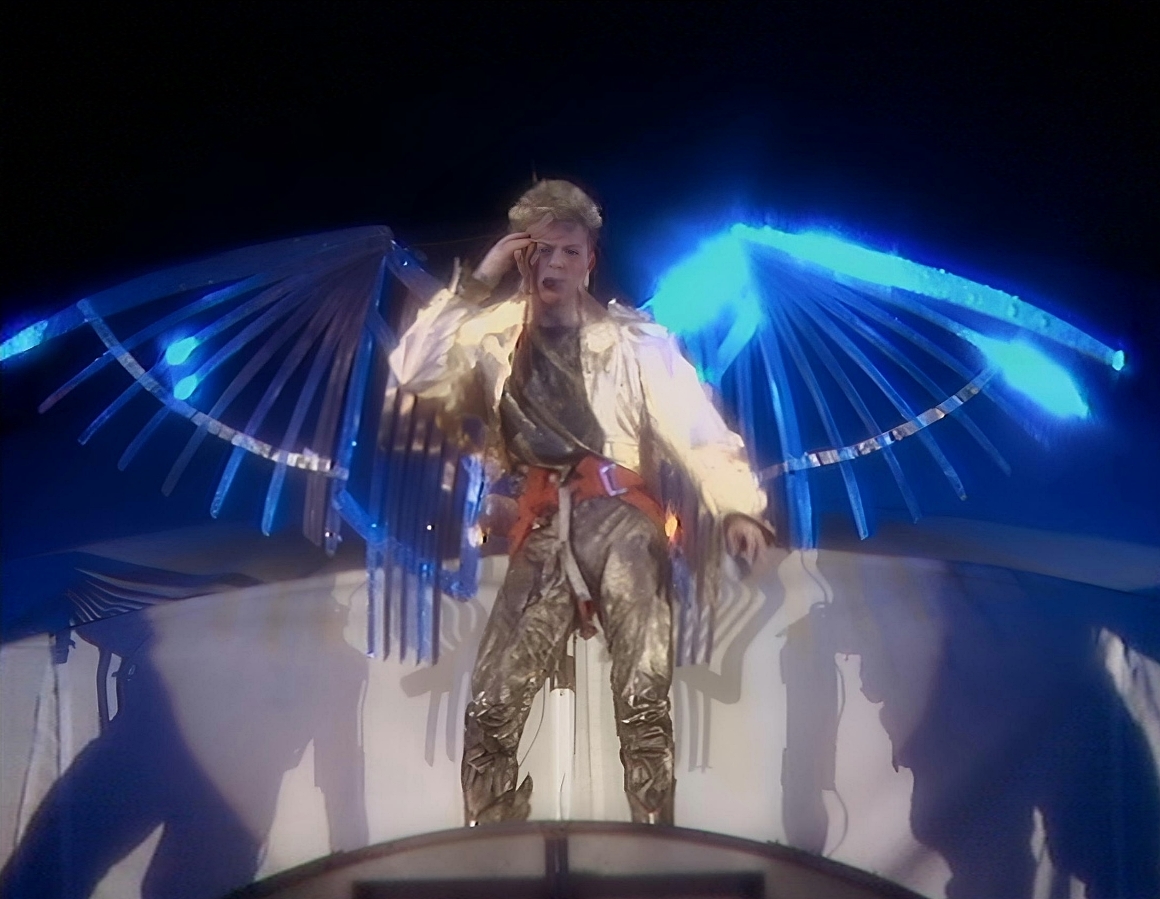
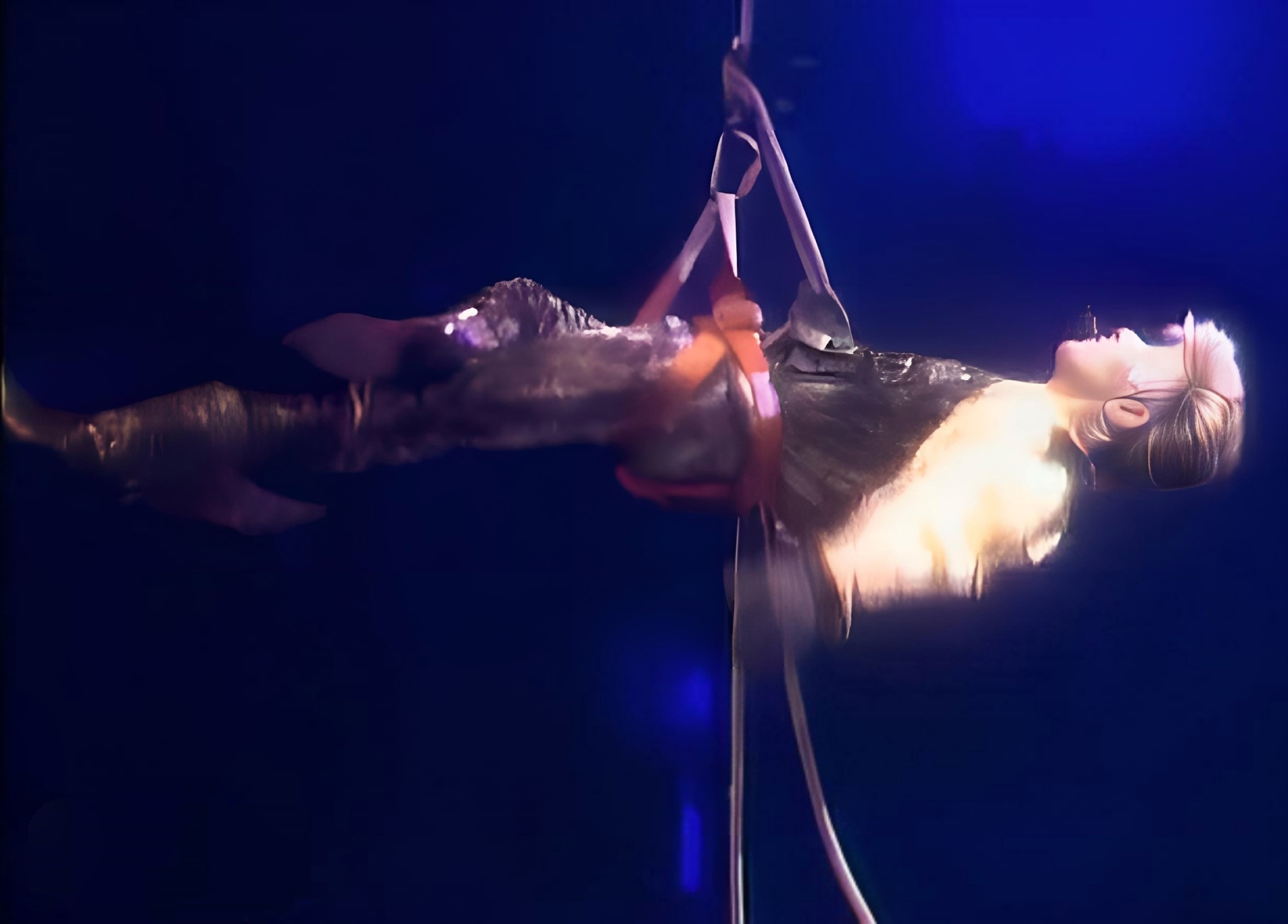
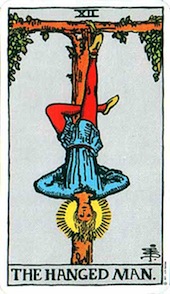
"... His script is you and me ... / ... His trick is you and me ..." Like a headless chicken Bowie ran about the stage a lot, accompanied by rope tricks and flying acrobats, while his backing band turned in a decidedly ragged performance. By some accounts the whole show was really inspired by how little baby spiders got on when their mummy wasn't there to look after them. This might have made at least some sense: for C.G. Jung, spiders were mother–figure archetypes, with 'Mummy' foreshadowing Ishtar, Aphrodite, Maryam, Arianrhod, Pallas Athene, Venus... Or maybe Bowie's own mother, Peggy Margaret Jones, who loved Nazi uniforms? The wolves were at the door. Critical and audience reactions were disappointing, and the appetite for tickets was correspondingly anaemic: the Stuttgart leg of the tour, for example, had to be cancelled because of poor ticket sales. (My own ticket, bought well in advance, was refunded, not mysteriously, but with poor sales named as the official cause.) The best anyone could say about the show was that at least the glass spider was anatomically correct (with the requisite number of eight eyes). On stage, it looked more like a gigantic white lampshade with a few plastic cylindrical light–fittings dangling from it. And the insensitivity of Bowie's performance made everyone uncomfortable. He couldn't even break a sweat, despite all the make–up and costumes he had to wear. Was he doing a mere mime of himself yet again? Though the fans clapped politely. Someone made the acid remark that "They're as boring as the man himself," reported 'Number One' on 12 September 1987, London, on page 36. That was more than a slap on the wrist. Annoyed and resentful, Bowie had the glass spider incinerated. Did he fear he would drown in a cheesy Abyss, escaping only like Baron von Münchhausen did, pulling himself up by his own hair? It wasn't all tears, though. Many changes in Bowie's image also had to do with the fact that sales figures had fallen. The 'Babe of the Abyss' was a new band called 'Tin Machine' in 1988 (was it a sort of rejigged version of Lou Reed's 'Metal Machine Music' of 1975?). Tin Machine was first conceived as a complete departure from anything he'd done before; suddenly Bowie belonged in rock'n'roll. In 1989 he sang Bob Dylan's 'Maggie's Farm' from 1965: "Well, I try my best to be just like I am / But everybody wants you to be just like them / They say, 'Sing while you slave' and I just get bored". But soon he started doing parodies of Ziggy Stardust at the band's live gigs, wearing Ziggy's original red boots and resurrecting a bunch of old moves. A world best–of–Bowie tour, under the title "Sound and Vision", was sandwiched in between these performances. By revisiting Ziggy Stardust, he both acknowledged his legacy and simultaneously critiqued it, reflecting his ambivalence towards his own iconic status. Bowie exhibited a discernible sense of ennui, while the band played tedious arrangements, promising everyone involved another generous dollop of gloom to tuck into. A few — a very few — did their best to pretend it was a deeply artistic experience. For everyone else, it was unfiltered Fremdschämen. Again. No wonder, then, that the gap between past and present yawned wider still. The guns awaited the flutter while the critics pulled the blinds and mocked his latest incarnations. The death rattle had sounded and it looked like Tin Machine was simply going to fade away, a victim of entropy as much as anything else. Careful honing of public image and a reliance on self–reinvention to combat box office failure, once more Bowie aimed to be posing as an artist, a generalist, a Renaissance–man, a Universalist, and 'professed' "I don't care which shadow gets me... switch the channels, watch the police cars. I can't reach it anymore" (pronouncing "reach it" as "read shit" — yet another of his not particularly witty puns). 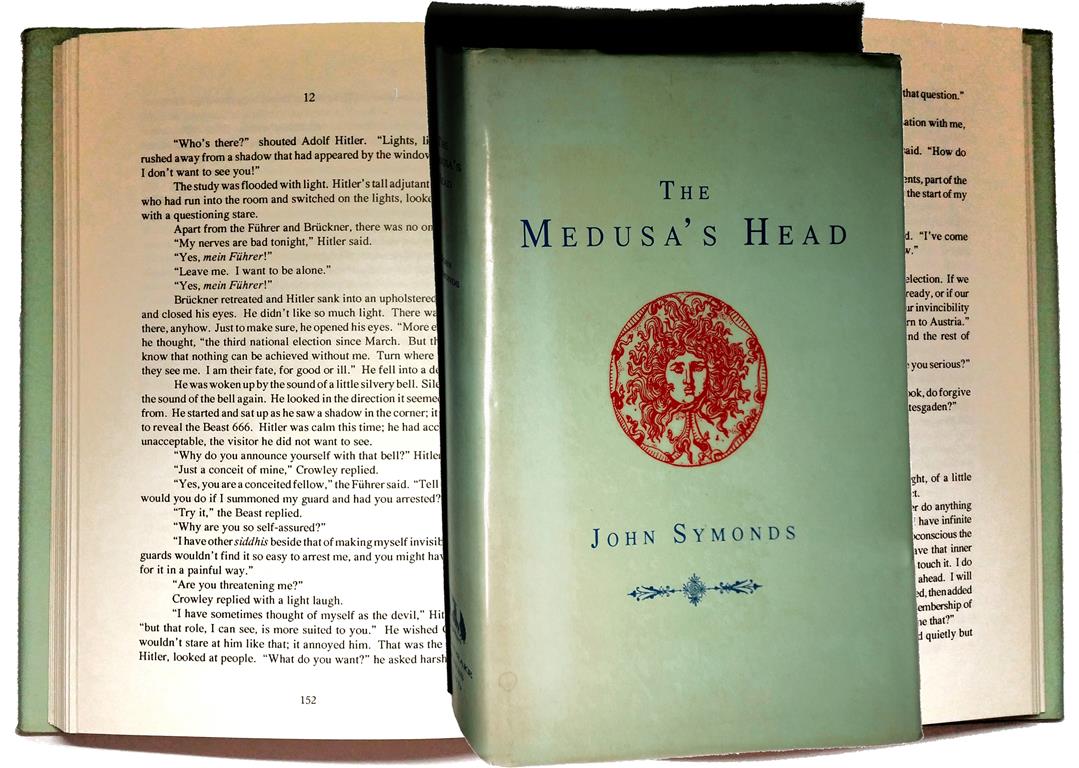
"The Medusa's Head", John Symonds' novel about an alleged meeting between Hitler and Crowley, Thame, England, 1991. 350 numbered copies only. |
| "Cold tired fingers, tapping out your memories" |

(Photo by Brian Aris, costume by Thierry Mugler) Slowly but surely, the inner core of a Weltanschauung was revealed: Art as Therapy. It had developed during the long summer holidays Bowie had spent on the island of Mustique in a Japanese–style villa called Britannia Bay House, designed to resemble a temple, where he had been vacationing since 1975 away from the prying eyes of the press — Mustique was a highly exclusive millionaire's playground — Bowie would have rubbed shoulders with Mick Jagger and Princess Margaret, sister of Queen Elizabeth. It was truly a case of whom you knew rather than what you knew. In 1992 Bowie married Iman Abdulmajid, duly "sanctified by God", and told the press: "I'm not a religious person. I'm a spiritual person. God plays a very important part in my life — I look to Him a lot and He is the cornerstone of my existence... I believe man develops a relationship with his own God." ... "Religion is for people who believe in hell; spirituality is for people who've been there." He did a lethargic recording of a hectical song about 'Sex and the Church' where he considered that "there is a union / between the flesh and the spirit / It's sex and the church." Brian Eno, who attended the wedding, drew on Heisenberg’s Uncertainty Principle — the idea from quantum mechanics that the position of a subatomic particle can never be plotted with absolute certainty: "Are we troubled by our inability to locate this event comfortably either in the category real life or in the category theatre? Similarly, are we troubled by our inability to locate it in the category private or public? Or sincere, ironic?" [...] "Can we believe that it is possible to be involved and yet to make stylistic observations about one's involvement? To manipulate a situation at the same time as being moved by it? Even though we might accept that it is, we're still left worried by the cameras." [Christopher Scoates: "Brian Eno: Visual Music", SF 2013, page 232. Lecture "Perfume, Defence and David Bowie's Wedding", copyright 1992 by Brian Eno] Between songs during the Freddie Mercury Tribute Concert for AIDS Awareness in 1992, Bowie knelt down and recited the Christian Lord's Prayer. 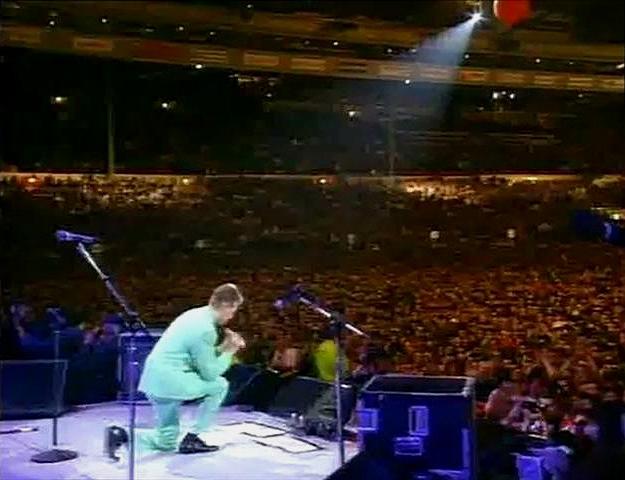
Momentum is all. Lose too much and people lose interest. In 1993, Bowie's music has come to appear as the ultimate parody of modern jazz — the instruments like a torn sound–fabric, the tunes overwhelmed by electronic rhythms and samples — it all seemed rather like a Brian Eno album sans Eno. Obviously, Bowie was "looking for God in exciting new ways." |
| "The 20th Century Boy" |
Possibly reminiscing about life before Iman, and mulling over an old staged suicide attempt, sipping cocktails served by the world's most beautiful woman, (his wife was also an ambassador for UNESCO), some time in 1993 Bowie spent some time listening to some avant–garde music — while painting masturbating Minotaurs.

Bowie was not the first one to produce such beasts. A painting by Alastair Campbell appeared on page 40 of 'Starfire' Vol I, No.1, published in April 1986. 'Starfire' is the magazine of the Typhonian Ordo Templi Orientis. It accompanies a poem entitled 'The Minotaur' by his partner, Ann Campbell. Bowie re–established contacts with his old associates from the 1970's, and entered the fray again in 1995 releasing '1. Outside (The Diary Of Nathan Adler Or The Art–Ritual Murder Of Baby Grace Blue. A Non–Linear Gothic Drama Hyper–Cycle)' with a handful of new songs, + live on tour Jacques Brel's 'My Death Waits There' in his Bing Crosby / Iggy Pop / Scott Walker voice. This came somehow unexpected. "My death waits there between your thighs"[whether "death" here also glances towards Da'ath is, of course, conjectural; not in the strict sense of traditional Kabbalah, but in the looser play of applied numerological Qabalah, where the near–identity of the words is at least suggestive] But whatever lies behind the door By the same token, one might add a small French garnish: la petite mort, the colloquial term for orgasm — literally, the little death. |
| "There is no Hell like an old Hell" |
|
Bowie was never one to let the facts get in the way of a good story. As to the title of his release '1. Outside', he led the media to believe he'd been inspired by seeing patients on a visit to the House of Artists community at Gugging in Austria, where schizophrenic patients use art (originally called "Art Brut" or 'raw' art) as therapy. (Don't forget that an important part of Bowie's personal history includes his assumption that during his childhood, many relatives on his mother's side of the family had serious psychiatric problems which needed treatment. In the 19th Century, persons suffering from mental illness were thought to be alienated from their own true natures. Is this why Bowie was 'Loving the Alien'?).
Some of the Gugging patients have become famous worldwide: an exhibition of their work in New York during January 1994 had the title '...Outside Art'. [The term "outsider art", popular in the German and English–speaking worlds, was coined in 1972 by British art historian Roger Cardinal. The labels 'Art Brut' and 'Outsider Art' are used more cautiously these days because they are thought to tend to pathologize or objectivize these artists.] Mostly, such 'outsiders' are on a quest to explain the fundamentals of being — life, death and their own destinies — finding little or no solace in the usual dogmas and creeds; rather, they form their own convictions, devising theories and building their own systems of thought. When they do engage with existing religious or philosophical traditions, they appropriate and reinterpret them, incorporating highly idiosyncratic private mythologies which they distort, reinvent and exploit for creative purposes. Does that sound familiar? Only the truth is not quite that simple. Bowie and Brian Eno recorded the bulk of the songs for "1. Outside" between January and May 1994. He, Eno, and their friend André Heller didn't visit Gugging until later that year in September. Bowie’s tendency to weave intricate stories and construct elaborate backstories, such as the one about his inspiration for "1. Outside" and his supposed early visits to Gugging, illustrates his penchant for creating compelling narratives rather than sticking to straightforward truths. This reflects his broader approach to art and persona, where the story often becomes more significant than the factual basis. The timing discrepancy indicates that the connection may have been more about creating a narrative than a direct influence. 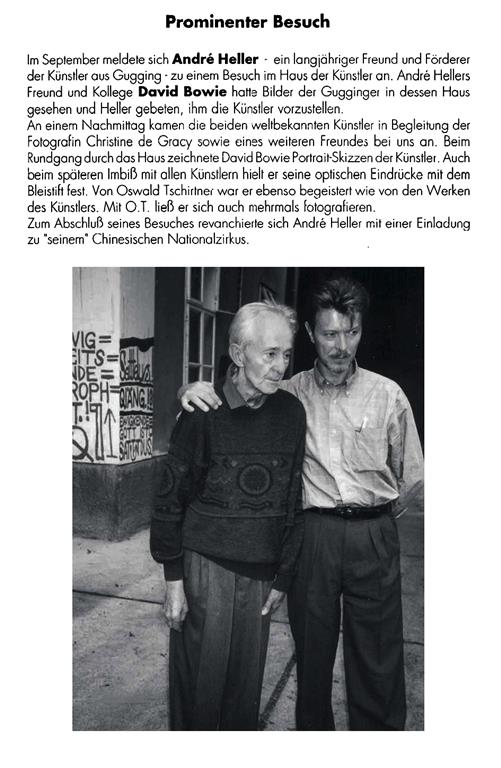
Celebrity Visit In September [1994], André Heller — a longtime friend and supporter of the artists from Gugging — announced his visit to the House of the Artists. Heller's friend and colleague David Bowie, had seen pictures of the Guggingers at his home and asked Heller to introduce him to the artists. One afternoon, the two world–renowned artists arrived in company of the photographer Christine de Gracy [sic: Grancy] and another friend [Brian Eno] at our House. During the tour of the House David Bowie drew portrait sketches of the artists and later, while having a snack with all the artists he penned down his visual impressions in pencil. He [Bowie] was similarly excited of Oswald Tschirtner and his artwork. He [Bowie] and O.T. [Tschirtner] posed also together for many photographs. At the end of his visit, André Heller gave the House an invitation to attend "his" [Heller's] Chinese National Circus. ['Der Blaue Stern', Mitteilungsblatt der Gesellschaft der Freunde des Hauses der Künstler in Gugging, #5, Autumn/Winter 1994, page 26. Photo by Christine de Grancy.]
Personal Note:
Since May 1984, I have visited Gugging several times (see photograph below of my first visit) and have acquired several artworks created by the Patient–Artists. Oswald Tschirtner, due to his inability to spontaneously generate creative output, produced several drawings specifically based on my specifications. He relied on the guidance of Leo Navratil, the former director of the Artists' House, in order to do so.
This is roughly how it unfolded. The three of us were present: Tschirtner, Navratil, and myself. Navratil asked, "Mr. König, what should Oswald draw for you?" I replied, "A person who is reading". Then Navratil turned to Tschirtner and said, "Oswald, please draw a person who is reading for Mr. König". 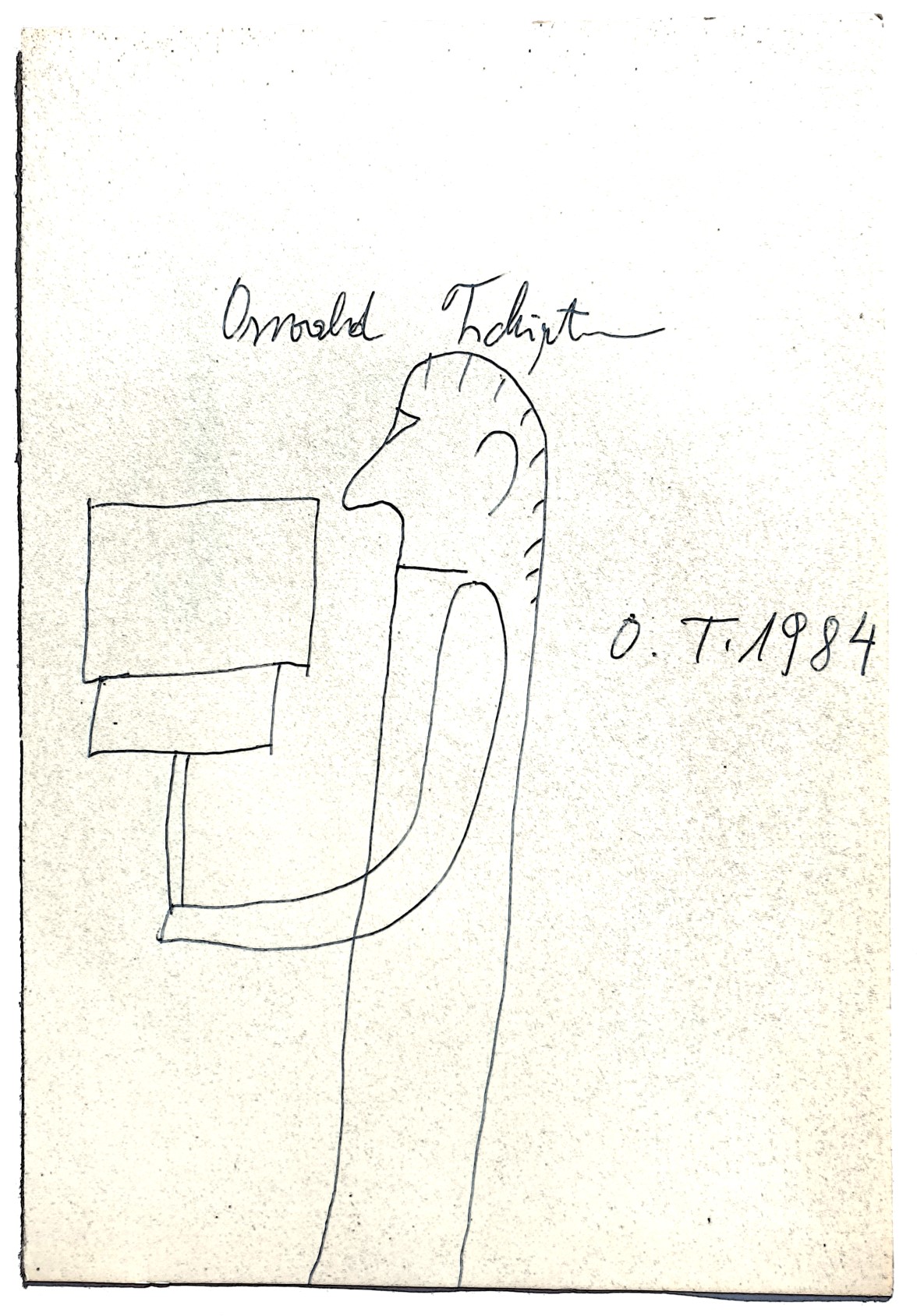
Oswald Tschirtner, "Ein Mensch, der liest" By chance, in September 1994, I happened to be at the House of the Artists once more, without prior knowledge that Bowie, André Heller, and Eno had visited the day before. It was only when I observed a significant amount of photographic equipment present that I inquired with one of the staff members about the reason. 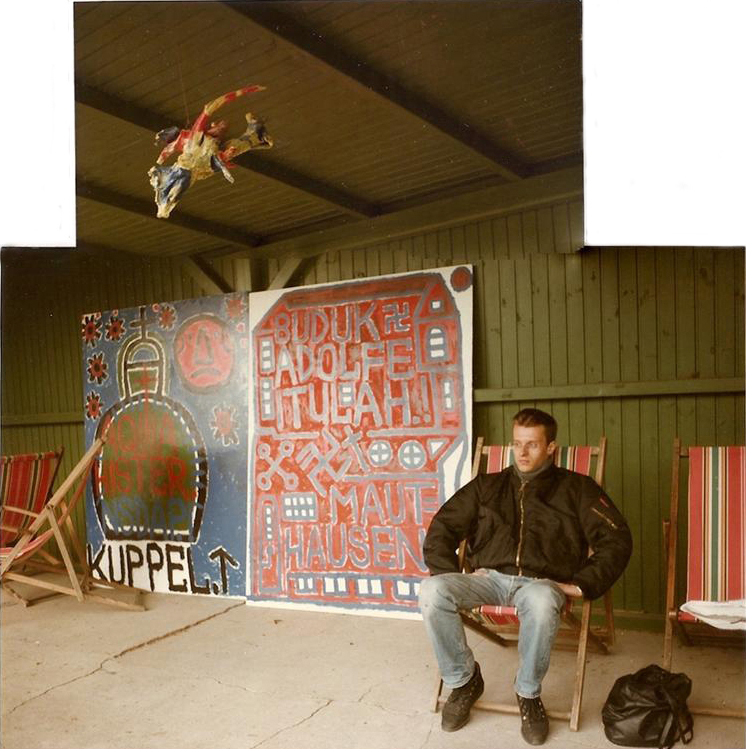
Peter–Robert Koenig in "Haus der Künstler" in Gugging — 10 May 1984. Paintings by August Walla. |
|
Maybe the title '1. Outside' also referred to Jacques Derrida's strategic concept of "contamination", an implosion of all types of writings (d'écrire, d'écritude, d'écrits), all cultural practices, architecture, denying that a reality is outside? To deconstruct (a term invented by Derrida) clear lines between concepts of reality (real, realization, realisation, realité, réel) and representation.
|
![The voyeur Of utter de[con]struction As beauty](https://www.parareligion.ch/2016/animatedbowiegif.gif)
|
"The voyeur Of utter de[con]struction As beauty" |
|
This is perhaps the reason why fans and bloggers, fueled by rumors and hints that Brian Eno alluded to, speculated that Bowie's next CD would be called '2. Contamination'? However, it never saw the light of day... Of course.
The instrumentation exuded a cold, robotic quality that enhanced the overall atmosphere, with Bowie's stage presence evoking a sense of detachment. He alternated between donning dark outfits and a white–striped blue jumpsuit reminiscent of Steve Schapiro’s Cabbala photoshoot, conventionally dated to 1974, though Schapiro himself also placed that first session in 1975. One of these jumpsuit photos was featured in the 1976 tour magazine. [It is worth noting that a version of this jumpsuit made a reappearance in the 2016 'Lazarus' video.] He obviously was attempting to distance himself from his previous image as a Club Med–style performer. He sang lyrics like "There is no Hell / like an old Hell" and "I hurt myself today / to see if I still feel / I focus on the pain / the only thing that's real", while also referencing Nine Inch Nails' controversial imagery of insects crawling into vaginas. However, his spontaneously invented pseudo–dramatic phrases, such as "I hit the rose" (which may have been a nod to Lou Reed's 'Vicious'), and his screams of "this chaos is killing me" felt forced and overly dramatic. The contrast between his on–stage persona and his widely–known status as a cultural icon was striking. His emotions came across as manufactured and sanitized, as if he were trying to emulate Bob Dylan's brand of aesthetic resistance, such as the line "I accept chaos, I'm not sure whether it accepts me." Or how about some warmed–over Freud: 'There shall be Me / Ego where there was It'? In a display reminiscent of surrealism, akin to the spirit of Salvador Dalí and Luis Buñuel's 1929 movie 'Un Chien Andalou', Bowie unveiled a banner on stage bearing the words "Open the Dog". This evocative gesture drew parallels to his 1970 song 'All the Madmen', where the lyrics described how "They take some brain away" [a reference to his brother Terry, who was a patient at Cane Hill Hospital, and in a broader sense, to the Patient–Artists of Gugging]. Despite heaps of press coverage, it failed to click with the public. Reviewers and audience alike were deeply displeased with Bowie for refusing to reprise any of his old hits. They only felt boredom when he sang "the music is outside"; they were waiting for some ecstasy. However, they struggled to grasp the complexity of Bowie's emotions, as he prioritized his artistic concept over clear articulation and emotion. In the end, Bowie remained the master of ceremonies, sacrificing his connection with the audience for the sake of his vision.
Unfortunately, his audience was anticipating the kind of genuine excitement and passion that is typical in rock and pop music — "authenticity" that Bowie had maybe always deliberately avoided creating himself, since it is meant to be experienced by the audience. Bowie placed the concept of 'reality' outside of himself and directed it towards the audience. However, both the audience and critics failed to recognize that Bowie was once again engaging in parody (or not?) when he sang about Andy Warhol's seemingly uneventful life, while prancing around like a puppet on cocaine: Those who move awkwardly foster critical awareness. This is a key element of Brecht's Epic Theatre.
Standing in the first row of the audience, one couldn't help but wonder why Bowie never broke into a sweat while performing. The remarkable intensity of his presence was strikingly juxtaposed with the absence of perspiration, creating a captivating enigma. Personal note: In 1996, I received an unexpected phone call from a member of a Bowie fan club in England. During our conversation, I couldn't help but notice that during the periods when Bowie was creating the music I enjoyed most (1974–1976 and around 1995), he appeared to have dabbled with the occult — a topic that I was particularly focused on at the time. This sparked my interest in "Bowie and the Occult" and led to the creation of the article you are currently reading. To my surprise, I found that I could apply a grab–bag of philosophical and esoteric religious concepts to Bowie's interest in the occult. Prior to this, I actually enjoyed the notion that most of Bowie's lyrics and public actions were a delightful mix of flim–flam and arbitrary symbols used to mask the fact that he had very little to say, expressed through music and performed with great style (clothes, visual images, gestures, posture, mannerisms, language) — style over substance, mood over meaning, an opulent omelette without eggs, which, to be honest, sometimes seemed even more captivating. Oscar Wilde: "Fashion is a form of ugliness so intolerable that we have to alter it every six months." Have I been wrong? |
| "I'm so thankful that we're strangers when we meet" |
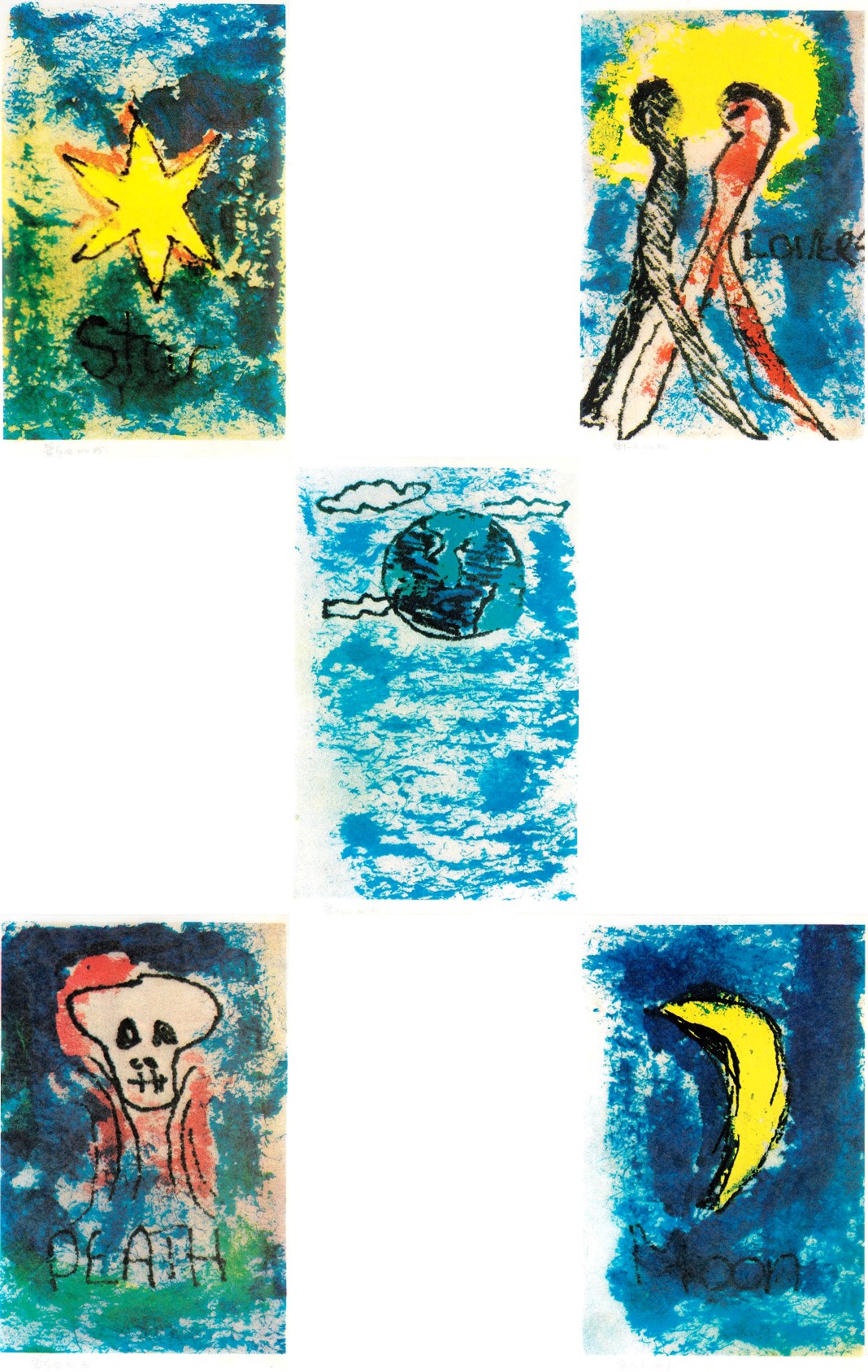
Bowie went into overdrive promoting his career as a painter: there was a series of self–portraits showing him aping the sinister stare of Church of Satan founder Anton LaVey; other paintings were titled 'Satan', 'Crouch', 'We Saw A Minotaur', and he made his own versions of the Rider Waite Tarot cards 'The Star', 'The Lovers', 'The World', 'Death' and 'The Moon' which he initially silk–screened by hand as Christmas presents for his friends. He chose those particular cards as a demonstration of numerology: The Star (no. XVII), The Lovers (no. VI), The World (no. XXI), Death (no. XIII), The Moon (no. XVIII) or 17+6+21+13+18=75 — 1975 being the year he painted them ... In April 1995 Bowie had hired an art gallery (a place anyone could rent, which more usually hosted student art exhibitions) and hung his own works in it. The gloves were off: Critics called it a "vanity exhibition". One wag at the National Portrait Gallery dryly noted: "I suspect nothing very exciting of David Bowie's has ever come our way." In late 1996 The Prince's Trust held a 'Masks' fundraiser, sending out plain white face–masks to over a thousand public figures with an invitation to paint or decorate them; the results formed an exhibition and were then auctioned for charity. Bowie's design consisted of a simple "666" stencilled on the mask's forehead, complemented by a handwritten annotation: "Your pretty face is going to hell", words from the song by Iggy and the Stooges in 1973. He arranged his mask (number 56) in a basket with a brass plaque on the rear that read "Hell Or Bust. David Bowie 1996". 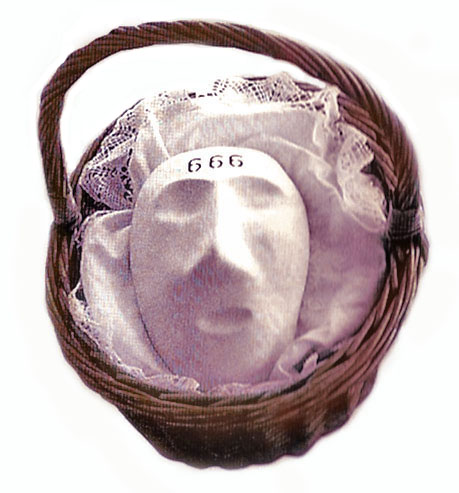
Both the release of his album '1. Outside' and his paintings turned out to be artistic flops as Bowie himself had predicted: "I think I lost my way." Not one to dwell on failure, Bowie didn't let setbacks discourage him. In fact, it was possibly precisely the pain caused by such rejections that fueled his determination and inspired renewed efforts. With all the cold–blooded efficiency of a chameleon changing colour, he cut out every part of his act that had met with audience disfavour, such as the art–ritual murder of Baby Grace Blue, while starting to perform his back–catalogue of hits again, and then (to quote Liberace) "cried all the way to the bank." Never one to let the grass grow under his feet, Bowie plodded along, giving his best to whatever came his way, often seeming to believe that all his geese were swans. A deluge of PR news releases hit the media, and already too long in the tooth to be a teen idol, he instead rummaged through his bran–tub of showbiz VIPs — Damien Hirst, David Lynch, Julian Schnabel, Dennis Hopper (riding in occult circles in the 1970s) and many more to yet again raise his public profile. He even interviewed Balthus, the renowned Polish–French painter known for his controversial depictions of young girls, but flopped as a reporter. Despite Balthus's reputation and the ongoing allegations of pedophilia that surrounded his work, Bowie never once broached the subject, missing the opportunity to address the most notable and contentious aspect of the artist's legacy. Bowie: "I have often wondered if actually being an artist in any way, in any nature, is a kind of a sign of a certain kind of dysfunction, a social dysfunctionalism anyway. It’s an extraordinary thing to want to do; to express yourself in such rarefied terms. I think it’s a loony kind of thing to want to do." [Mar. 31, 1998, Interview by Charlie Rose.] But the context remained Gnostic: the long–planned involvement with the stock–market, the purchase of several more pieces of property — and a suddenly natural–looking (i.e. socially acceptable and aesthetically pleasing) smile. This was a kind of yogic exercise in Asana (or posture) as he adjusted his position, for both himself and his audience. Perhaps this was why he sat shoeless in a difficult yoga posture at the Zürich show on February 14th 1996 as he sang 'The Man Who Sold The World', while styling himself as re–frozen into the man who yet again "died a long long time ago." This song dated from 1970, and had already had two new versions of it, the first with Lulu, in 1973, and another in 1979 with Klaus Nomi, now with an deconstructed feel. His live performances 'looked the business' again — they were now commercial transactions between Bowie and the audience — who got a precisely–measured dosage of ecstasy, and a look at Bowie's evolving stock–market activities, with his Ziggy Stardust songs. 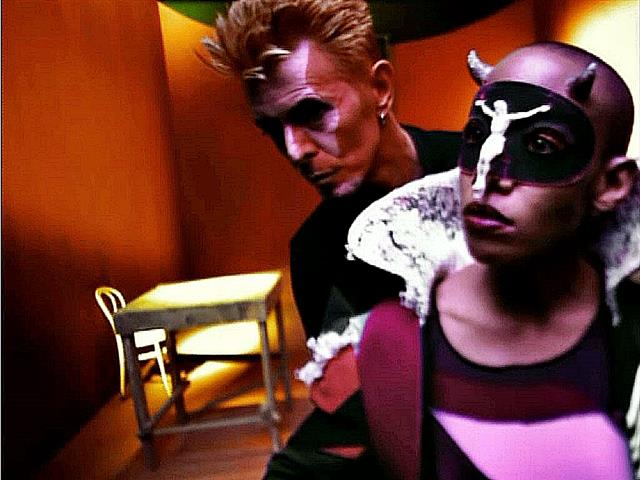
"Dead Man Walking" with crucifix religious–icon mask by Joel–Peter Witkin, 1997. |
| "Guess I'll put all my eggs in a post–modern song" |
|
The occultist views himself as a rebel and a narcissist, who posits him or herself inside, as well as outside, the predominant culture. He understands himself as part of an elite, and endeavors to create himself anew. Lurking on the threshold of History, occultism wants to communicate its ideas to the world. It evangelizes with the ultimate aim of destroying society's standards. It strives for world dominion and compares itself to the early Christianity that had been hunted by Rome.
Today, in the worldwide circus of the images, occultism is the continuation of fashions, of habits or mannerisms on how to display oneself: pseudo–originality. The occult supermarket is universally plundered and leaves only a completely devalued treasury of total subjectivity. By picking out the pieces that appeal most to him or her out of the debris left after the breakdown of the symbolic order, the occultist's cultural reality ends up consisting of slightly differing arrangements of said pieces into signs of strict hierarchies. Normal activities one might expect in joining such a group, such as experiencing, recording and processing are curbed and one is reduced to subsistence on a diet of already fixed images that work in a consciousness dissolving way. Common occult knowledge is repackaged and sold as a new product; a juicy hamburger in a shiny new wrapping that you can buy at the mall. Defanged, neutered and essentially without much nutritional value. Modern occultism shows itself to be a post–modern esoteric supermarket with the equivalent and equal importance it vests in a whole range of different things: cabbala, T–shirts, yoga, invocations of demons and angels, sex–magic, calendars, exorcism, drugs, religion, Gnosis, videos, scandal, gossip, postcards, philosophy and pseudo–science. Egyptian mythology is revised and all is reduced to the level of a soap–opera. To the uninformed observer occultism looks rather like a tiny group of people, similar to a Harry Potter reading circle, rejects from a renaissance fair or heavy metal fans in search of a naked high priestess. 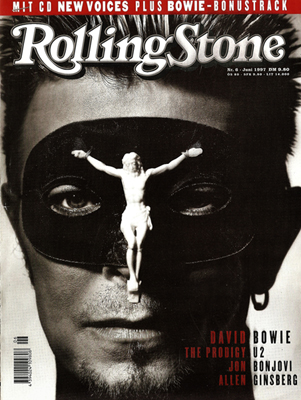
Bowie has always been described as a hyperactive personality with a very low attention–span. Maybe Gnosticism has a physical parallelism in people whose brains are under–stimulated by a lack of dopamine, a condition that impairs the 'censoring' or controlling functions of the fore–brain. People suffering from such lapses in concentration compensate for the lack of internal mental stimuli with apparently purposeless activities, while remaining hyperactive, restless and scatter–brained. Similarly, there are cocaine addicts who suffer from a hyperkinetic disorder, and need the drug to compensate for their feelings of 'emptiness'. Like music, drugs may serve as providers of creativity and productiveness, by inducing altered constants of perception and behaviour — which in turn leads to changes in expressions of creativity. Too much Dopamin (Levipoda, L–Dopa) also can be seen in the context of schizophrenia and the belief in the 'paranormal', that is seeing meanings between things as in Cabbala. In this context, one might grasp why Bowie, under the alias L–Dopa, released a few of his songs as dance tracks in 1997. Here lies one base of gnosticism. Tendencies to hyperactivity and overstressed accentuation of the contents of the consciousness support the need of symbolizing new carriers of meanings. This creates a state of changed constants of conception and behaviour. And this leads to a changed expression of creativity. |
| "You Rebel Rebel" |
|
The fragmentation, virtualization, and mechanization of society have found their restless soundtrack in the music of David Bowie.
He became a captive of his own legend, a portraitist of a charade of masquerades. As always, he managed to find an escape route. When a Mythos dies, the need for compensation grows into the infinite. And so it happened. With a semingly golden touch, Bowie (David Robert Jones) became the first human who sold his persona to the stock market (allegedly, one of the main reasons was that he wanted cash enough so he could buy some earlier mastertapes and publishing rights). One month after his 50th birthday, in February 1997, the finance boutique Fahnenstock & Co, issued Bowie Bonds on expected royalties via a firm that transfers future income into a new society. In other words, Bowie is not going public himself, otherwise he would have to reveal his financial situation. 
Included were 25 earlier records published prior to 1993. Because Bowie had kept control and all rights over his work from 1975 onwards (that is, the master tapes, despite disastrous contracts binding him until 1982; a fact which may have also been responsible for his constant change of music styles), in an instant 55 million Dollars sloshed into his bank account. As only the second firm/society (contrary to the first) is rated, it receives better conditions than the first. So, the Bowie Bond has a repayment period of 10 years and yields a net interest of 7.9%. This is remarkably higher than any US government bond issue to date. Although other artists sell more CDs, the product "David Bowie" is considered to generate one of the strongest commissions in the history of pop music. Income is generated especially through the licensing of a catalogue of some 250 (330?) songs which can be used in lifts, TV ads (e.g. Microsoft) or telephone answering machines. This constant money flow made the Bowie Bond so strong that it received a AAA rating from the rating agency Moody's, with Bowie ranking 16th among the top–earning entertainers in 1997. The ordinary consumer was left outside this charmed circle gazing in wonder (and some in dismay), and even hardcore fans were left out, as the entire stock of bonds vanished into the treasure vaults of the large British insurance conglomerate Prudential. Bowie’s innovative financial maneuver with the Bowie Bonds in 1997 was a landmark moment in the intersection of music and finance. By securing future royalties, Bowie effectively monetized his artistic legacy, providing himself with immediate capital while also creating a new model for how artists could manage their financial futures. This move highlighted both Bowie’s acumen in navigating the commercial aspects of his career and the high value placed on his artistic output. And The Laughing Gnostic was on the cover of the Financial Times. "Ha, ha, ha, hee, hee, hee / I'm a laughing gnome and you can't catch me". Henceforth, Bowie's new material bore a striking resemblance to his earlier catalogue — the one that, quite conveniently, continued to sell. Oddity 2002 or Proto–Heathen: Record companies faced a decline in profit margins on singles compared to albums, leading them to discontinue the production of singles. This resulted in the termination of contracts with artists such as Rod Stewart, David Bowie, Sinead O'Connor, and Anita Baker in 2001. Mariah Carey and Mick Jagger were added to this list in 2002. EMI, the record label, declined to consider Bowie's future songs, forcing him to find alternative means of earning money. Initially, he planned to establish his own recording label but eventually signed with Phillips in spring 2002. During this time, changes in distribution methods and increased minimum orders by record companies affected the music market. Small dealers struggled to meet the minimum requirements, while major retailers like "CD NOW" and Amazon became popular platforms for purchasing albums. Later, the shift to downloading individual tracks prompted the industry to emphasize hit songs as powerful promotional tools. In March 2004, Moody downgraded the Bowie Bonds, which were financial instruments backed by Bowie's future royalties, from A3 to Baa3, just one notch above junk status. However, the bonds eventually recovered. In June 2004, Bowie's health issues compelled him to withdraw from performing on stage. As planned, the Bowie Bonds were liquidated in 2007 without default, and the rights to the income from his songs returned to him. Since then, the Bowie catalog has been repackaged multiple times through similar asset–backed securities. In January 2013, he returned with a bang and a new album, evading the rumor mill and the invasive clutches of social media, marking one of the most remarkable comebacks in show business history. The exhibition "David Bowie is" in London, which opened in the same year, became the Victoria and Albert Museum's fastest–selling event. As Bowie had predicted in his song "Life on Mars?" in 1971, he was "in the best selling show". As opposed to being a 'post–modern Buddhist', he had set himself up as the historian and rewriter of his own identities, an antique–collector specialising in cast–off personæ. As he said earlier: "I've always found that I collect. I'm a collector, and I've always just seemed to collect personalities and ideas" ['Russel Harty Show', recorded and broadcast 17th January 1973].
The 2013 exhibition at the Victoria and Albert Museum raises the question of whether Bowie is a hoarder regarding the physical evidence of his career.
The autodidact, the DIYer and the collector show continuity in the Gesamtkunstwerk David Bowie. The exhibition toured internationally, visiting venues such as the Museum of Contemporary Art in Chicago, the Martin–Gropius Bau in Berlin, the Philharmonie de Paris/Cité de la Musique in Paris, the Australian Centre for the Moving Image in Melbourne, the Groninger Museum in Groningen, the Museo d’Arte Moderna di Bologna, and the Warehouse TERRADA G1 Building in Tokyo, Barcelona ... It was as if Bowie himself was touring in the flesh, not just his clothes and memorabilia but also replicas of costumes due to the original items deteriorating over time. Although the exhibition permanently closed on July 15, 2018, it lives on through an augmented reality mobile app available on iOS and Android devices. The V&A, a family of museums, was gifted the David Bowie Archive by the Blavatnik Family Foundation, which had acquired it from the Bowie Estate — a collection of approximately 90,000 items spanning Bowie’s entire career. This archive (plus a bookable creative workspace) was to find its permanent home in a dedicated centre at V&A East Storehouse, one of two landmark sites that were set to open at the Queen Elizabeth Olympic Park in East London in September 2025. Frozen in the amber of Ziggy: The last reissue we’ll ever do … The 'Bowie's perfect' machinery employs record companies and online marketplaces to squeeze their cash–cow until his pips squeak. It will only cease when the last Bowie fan has shuffled off this mortal coil and is six feet under. Their beautiful swan glides across the lake, all grace above the surface, while below, Übermensch webbed feet once churned through occult jumble and less–than–family–friendly obsessions. 
"Introducing our tiniest addition to the Amplified family. Give your little one the rock star treatment (and steal hearts everywhere) with our babywear line. The collection combines style and functionality [...] ensuring that your baby stays trendy from day one." [Bowie Official Store, November 2024.] Without family–friendliness, it seems, nothing gets done anymore. At the same time, pop and rock are being Disneyfied whenever it suits the business model. Bowie neither fully rejected nor wholly embraced the carnivalization of pop and rock. Instead, he inhabited its forms, exposing their mechanisms while exploiting them with surgical precision. His work thus stands as both a product of, and a commentary on, the tension between cultural authenticity and market–driven spectacle — a paradox he navigated with calculated brilliance. In death, the pattern appears to persist. There is little evidence that Bowie’s family involves itself in the grubby business of managing his legacy; they seem to remain beneficiaries, not curators. The work is done by the Bowie estate — a network of executors, lawyers and corporate partners — which, for better or worse, continues his legacy in a way he himself pioneered: jealously guarding the mystique while striking ever larger deals that monetise the Bowie brand. Whether through reissues, curated exhibitions, or collaborations with mainstream platforms, the estate reflects Bowie’s own approach — straddling reverence and reinvention while keeping one eye firmly on the market. Back to 1997. With renewed enthusiasm, Bowie performed mammoth shows throughout Europe, donning a new Pierrot suit and the iconic red hairstyle from 1972. He delivered a slow–motion rendition of Iggy Pop's 'Lust for Life', as though Ziggy, the extraterrestrial refugee, had finally descended to Earth, as depicted in his new album titled 'EART HL I NG'. Bowie's backing band had never been better, and his mood was at an all–time high. However, his ideas seemed increasingly clever–clever, artsy, and implausible, as a significant gap persisted between his hard–headed commercialism and Gnosticism. Nevertheless, from this chasm emerged phoenix–like music that had been absent from his previous tours. At the same time, Bowie's fascination with masks had become mainstream and adopted by many other musical artists. |
| "But a devil at home / Come on here, woo–woo / And kiss it for me" |
|
In the summer of 1974, Bowie had embarked on the dystopian "Diamond Dogs" tour, drawing inspiration from George Orwell's 'Nineteen Eighty–Four' and William S. Burroughs 'The Wild Boys'. This brooding spectacle seemed to foreshadow the later, equally somber "1. Outside" tour of 1995, which came with an extra dash of Gugging for good measure.
Following the bleakness of "Diamond Dogs" in 1974, Bowie had shifted gears that autumn with the launch of the 'Philly Dog' / Soul Tour. This evolution culminated in the 1975 release of "Young Americans", its vocals tinged with the haze of his drug experiences. Bowie’s approach to soul was more a staged performance than heartfelt expression, marked by intellectual detachment. His rendition reflected a distinctly British perspective and a conceptual methodology. Fast–forward 20 years, and Bowie was back at it, turning to dance music to channel his alleged morbid fantasies. In the spring of 1997, he once again confounded critics and fans by embracing drum'n'bass and dancefloor beats, satisfying the demand for a new musical direction. Yet, his simultaneous foray into fabric design for Laura Ashley's bedroom collection — a venture perhaps evocative of Andy Warhol’s iconic 1966 Cow Wallpaper — left more than a few people scratching their heads in bemusement. Eventually, he rejected the danced importance of being earnest, returning to live and laugh. Bowie's stage persona became less androgynous and more humorous. He would often bare a set of vampire fangs at his audiences and demand that they focus solely on him. As always, TV interviewers and his band members were relegated to playing second fiddle, merely reacting to his key words and bizarre statements that he would scatter before them with a lackadaisical charm, as though throwing pearls before swine. The Bowie that they once knew no longer existed, except in the scraps of conversation that he had siphoned off for re–use, or in the key words and shards of reality that he had preserved for posterity, from moments and books gone by. He only seemed to be interested in bits of the past, myths, guitar noises, and the books that he happened to be reading at the moment — apocalyptic platitudes. The most outlandish things that he did these days included accompanying Mick Jagger to drag balls, going skiing in St. Moritz or Gstaad, and appearing at a photo shoot with England's Prime Minister Tony Blair for an anti–drugs campaign. For many, Blair was seen as the young, hip, guitar–slinging leader of Cool Britannia during his time as Prime Minister from 1997–2007. Therefore, at the anti–drugs campaign photo shoot, Bowie wore a huge pair of earplugs inscribed with the word "SEX". |
| "What a fantastic death abyss" |
|
Appearing on TV talk shows in 1997, Bowie sported meticulously distressed Pierrot costumes and sang once more about the 'Scary Monsters and Super Creeps', another doggy song, referencing his earlier work with a touch of theatricality. On his right hand, he wore a giant false rat's paw — was he playing his own pied piper? The guitars screamed, and his backing band appeared "running scared" (and breathless) behind him. In a subsequent show, he performed the same song again but adopted a more subdued Johnny Cash manner, strumming his guitar leisurely and singing, "She opened strange doors that we never close again". The phrase 'Doors of Perception' derives from Aldous Huxley, who borrowed it from William Blake. It refers to an entrance to other realities opened through drug use, and at the climax of orgasm, these doors are metaphorically blasted wide open, offering pure apprehension of reality.
In the sweltering summer of 1997, Bowie evidently decided that a little extra heat might do no harm and took the stage in a red polo–neck sweater. He opened many of those concerts, "immersed in Crowley’s uniform", with the 1971 song about the Golden Dawn, while his delighted audiences joined the litany with considerable gusto: "Don’t believe in yourself / Don’t deceive with belief / Knowledge comes with death’s release". Should one insist on hearing a cabbalistic aftertone in this refrain, the nearest resonance would be Daʿath: not a regular independent eleventh sefirah, but rather a concealed or quasi–sefirah in certain later cabbalistic and occult systems, associated with knowledge or mediated consciousness. The superb live show cybercast on October 1, 1997, opened with Bowie saying, "I tried to sneak on, but..." immediately followed by "I'm closer to the Golden Dawn..." Was this an explanation for his perceived creative absence? Other shows began with a nod to Bowie's 'Supermen' from 1970, evoking a prehistorical Earth, with "Nightmare dreams no mortal mind could hold", accompanied by a riff from Led Zeppelin's Jimmy Page — a noted enthusiast of Crowleyana who contributed to Bowie's 1965 song 'I Pity the Fool'.
When Bowie says "I tried to sneak on, but ..." he was referring to was that he preferred to start the show with the light revealing him already sitting on stage, with his guitar. This specific comment at the Cybercast 97' performance simply stems from the fact that a light prematurely alerted the audience to his walking on stage and bursting into applause before Bowie theatrically could be shown to already BE there.
Occasionally, Bowie asked his audience to dance, perhaps recalling his 1974 lyrics: "For you're dancing where the dogs decay, defecating ecstasy / Because of all we've seen, because of all we've said / We are the dead". Plato mentioned a wise old man saying, "Now we are dead and in a kind of prison", with matter being the gnostic prison. Between songs, Bowie mentioned Jean–Paul Sartre and Heinrich Harrer (author of Seven Years in Tibet), reflecting the bookish aspect of his show. The 1972 ballad honoring Jean Genet / Julien Green / Iggy Pop was revived as a blues number, reminding audiences to "keep all your dead hair for making up underwear", though it now seemed more of a parody of occultism. Near the end of this live set, there was a drum’n’bass reinterpretation of Laurie Anderson's 'O Superman': "Well, you don't know me, but I know you. And I've got a message to give to you... when love is gone, there's always justice". And in the name of Justice, Bowie performed benefit concerts for children's charities, staging 'unplugged' versions of his greatest hits at schools. He also participated in the 1997 'Children in Need' charity record of Lou Reed's 1972 song 'Perfect Day', contributing his own lines with "What a perfect day / You made me forget myself". During this time, he gave an interview about smoking cigarettes, from which he drew some Gnostic insights: "All life's pleasures leave you unsatisfied because you try to reach that high every time". Being a smoker among non–smokers made him feel "like the lowest of the low". |
| "I love death, the more of it the better. I think it's a good thing, heh heh heh!" |
|
In the autumn of 1997, Bowie forbade his audience from dancing while performing a now somewhat jazzy version of Brel's 'My Death Waits There'. Despite constant touring and never settling in one place, including the Glass Spider tour, several Tin Machine tours, the Sound and Vision Tour, the Outside Tour, and the Open Air Festivals, there were no signs of wear. The band’s sound was full and satisfying, the song arrangements became increasingly subtle, his voice grew stronger (though in a lower register), and his mood became more entertaining. Once, he transformed "Crowley's uniform of imagery" into "Crowley's uniform of symmetry" (October '97, live on the Internet).
Bowie's repeated expressions of ecstasy during live performances raise questions about the authenticity of his emotions. By repeatedly simulating ecstasy, such as singing "Freak out in a moonage daydream oh yeah!" for the 253rd time, there’s a clarity that Bowie's ecstasy was a component of his disciplined and choreographed Pierrot persona, reflecting a controlled intensity. While his Gnosis continued in new arrangements as part of his evolution, it became less an isolated fragment of his identity. It's often argued that it's the myth of David Bowie, rather than the quality of his work alone, that continues to captivate the world. In 1998, the well–known Viennese remixers Kruder & Dorfmeister declined to remix one of Bowie's songs, deeming it a "waste of time." |
| "What's Really Happening?" |
|
At the age of 50, David Bowie changed his perspective on the cut–up method of writing lyrics to his songs. Previously, he viewed this method to be a tool for determining both past and future. However, he later came to realize that society was moving too quickly, leaving little time for reflection on the past or consideration of future projects. All that matters is the present. Remember how the days used to last so much longer when you were five than they do when you're fifty? Now it's not a question of going through a series of personæ or identities, but a matter of experiencing them in a completely post–modern way simultaneously: a sort of "TV karma", as he called it. By the end of 1997 Bowie expressed a desire to retire from the business, stop smoking and have another child.
Of course, he retained much of his old hyperactivity, covering some cars with mirrors as a publicity stunt, constantly recording new songs. Once people can afford anything they want, they tend to think they can do anything they want: the Midas effect. Bowie extended his support to various other endeavors, including the promotion of a literary hoax biography titled "Nat Tate: An American Artist 1928–1960" by William Boyd. At a party organized by Bowie in 1998, fake artworks purportedly created by the fictitious artist were displayed. The name 'Nat Tate' is a play on the combination of the terms "National" and "Tate Gallery". [In a report published in 2014 by Switzerland's esteemed Fine Arts Expert Institute (FAEI), a startling revelation emerged — no less than half of the artworks circulating in the global market were deemed counterfeit. This report brought forth the widespread prevalence of fraudulent art and its consequential influence on the realm of artistic expression.] Post–modernism does not have any specific aims, original thought, authenticity, or ultimate authority. An eternal contiguity ties everything in with art, artistic objects, and semiotics. Everything is connected somehow with everything else: a TV series, a piece of art, a clapped–out superstar, a successful star, a line, its mirror–image, its compression. But there again, what would pop and rock be without these symbols of identification and their correspondences? Without simulation, what would reality be? 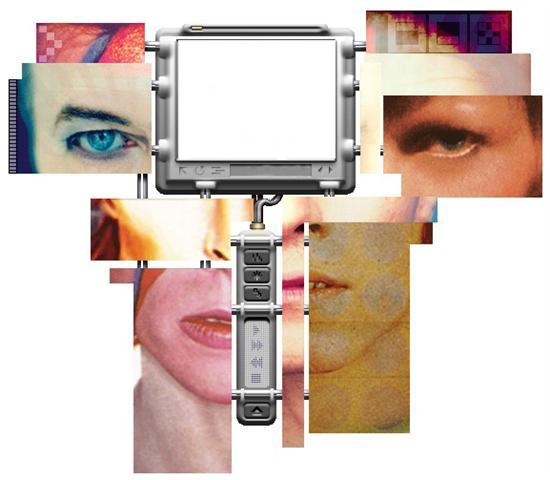
Windows Mediaplayer Skin
|
| "Seven Ways To Die" |
|
Bowie always expressed interest in electronic dreams. As early as 1983, the 'Serious Moonlight' tour was organized via e–mail. In September 1998, he created 'BowieNet' on the internet (davidbowie.com was registered on the 6th of August, 1995): an internet service provider (ISP) offering web accounts, news, a planned sports news service, stock market news, a 'BowieBank', e–mail facilities and a supermarket where interested individuals could purchase his paintings and other memorabilia. Rarely has the music business, with its customary allergy to understatement, been epitomized better than in this advertising slogan: "Buy David Bowie online, you rebel rebel".
The circle had closed, for the internet itself is, of course, a form of virtual reality — a Gnostic world beyond this world below. Through Bowie as the redeemer, Gnosis is achieved, providing complete and constant availability of the Bowie icon, Bowiemart. Marketing itself becomes a myth, an integral part of the Bowie experience.
|
| "Live 'til your rebirth and do what you will" |
|
In many varieties of occultism fragmentation is a major theme — just as it is on the internet, and the definition of identity in post–modernism. The equality or unity between the individual and their rôle must be dissolved. Multiple or decentralised personality is the measure of post–modern knowledge. There is a form of reasoning in the association between fragments (or the fragmented perception), but there is no ultimate truth behind it. This creates room for a new myth: fiction then becomes an integral part of being real. To be one simulation among other simulations. A result of this was Bowie made into a hero in a computer game called 'Omikron: the Nomad Soul'.
Andy Warhol once predicted, "Nobody really knows you". You can be anything, even the website that you visit on the internet — eclectic creations that are tied together by the star's image and elements from and of other kinds of multimedia. These products are supposed to enhance the intimacy of the relationship between the star and fan — though they still keep you well aware of the superhuman range of Bowie's interests — as well as another closed circle he foresaw in 1971 in 'Moonage Daydream'. Here he sang of electronic dreams: "Don't fake it baby, lay the real thing on me / The Church of man, love, is such a holy place to be." There are early versions of this song with slightly different lyrics, recorded by Bowie and his costume designer Freddi Burretti (aka The Alfred Corns) who transformed the hippie spaceman into something altogether more startling and androgynous. This song reappeared on the live set list in 1996–97. Electric dreams were also mentioned in the 1971 song 'Hang Onto Yourself' (closely based on the Velvet Underground, even down to the lyrics were earlier versions referred to Lou Reed's song–book) where a quintessentially Gnostic phrase is "The bitter comes out better on a stolen guitar." 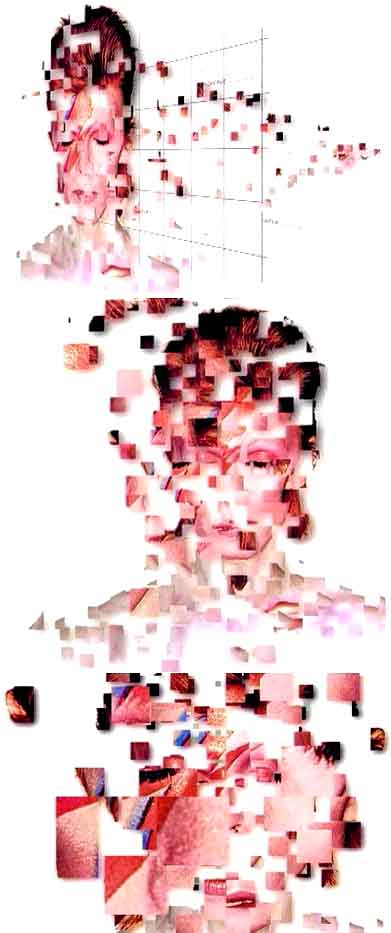
Aladdin Sane Photo by Brian Duffy
In facie legitur homo ? In 1997, David Bowie never tired of proclaiming himself to be the happiest person on the face of the earth, as he would soon finally become the real 'David Robert Jones'. Again. But could we really believe these words, and the robotic smile of this laughing gnostic, David Robot Jones? His wittiness was of the peculiar sort found in those surrounded by people who only told them what they wanted to hear and were accustomed to having their embarrassing jokes laughed at. Did he ever stop to notice the pauses that were either a tad too long or just a bit too short after his cringe–worthy remarks? Did he even care about the awkward silences that followed? Or was he ever concerned with the quality of his own banter and reactions, if such a thing mattered at all? Bowie’s self–awareness regarding his public persona is a critical aspect of his career. His ability to navigate and manipulate his image suggests a sophisticated understanding of performance. It’s likely he was aware of the nuances of his reactions and the constructed nature of his public persona, even if he chose to downplay or ignore them.
In 1997, he attempted to resuscitate the Ziggy persona for a double album soundtrack intended for a proposed film, theatre piece, and internet project to be created by himself. It was likely driven by commercial reasons, as he released some BBC live recordings from the Ziggy era in 2000. The performance was staged in front of a seated audience comprising solicitors, actuaries, invited fans, competition winners, and a few celebrities. However, there was always a sense of waywardness in the man. Perhaps Ziggy Mk. 2 signified something entirely different, a signal that Bowie intended to discard the hard–won mainstream acceptance he had achieved over the previous decades. Was he growing bored again? As he sang in the 1970 song 'Superman', "Their tragic endless lives could heave nor sigh / in solemn perverse serenity, wondrous beings chained to life". Even collecting awards and personæ must have become dreadfully monotonous after a while. |
| "They say he has two gods" |
|
Bowie wondered "Can I change the channel on my TV without using the clicker?" in 1976 (entertaining anecdote between two tracks, live late 1999). Does he believe in magick? Does he think that it has any ability to affect the physical world?: "No, I think all those things merely become symbolic crutches for the negative. ... I can't become comfortable with any organised religion and I've sort of touched on all of them. I'm not looking for a faith, I dont' want to believe anything. I'm looking for knowledge" [NME 25 November 1995]. And we hear him on 'Law (Earthlings on Fire)': "I don't want knowledge / I want certainty." (1997).
(The burden of) Knowledge is unstable. I don't want occult signs in knowledge: I want certainty of pictures, words, emotions and things ? Revealing that he had "problems" with Jesus Christ he also admitted that "The gods forgot that they made me / so I forget them too." |
| "Just watch me!" |
|
'Music Now!' in December 1969:
"Do you like seeing pictures of yourself?"
Bowie: "Yes, because it means I am being seen." [Kate Simpson: "DAVID BOWIE INTERVIEW" in 'Music Now!' in December 1969.] This reliance on external validation points to a broader theme in Bowie’s career: his sense of self was intricately tied to his public image. There was amazement at David Bowie's stamina. But did he do this so that his audience was in awe, was that the point? Did he derive self–satisfaction from all that movement? Or was his self–satisfaction born from those who appreciated him? A chameleon changed his colors when excited: Bowie changed himself to get excited. But if this were a world without cameras, what would Bowie have done? Would he have been inclined to do half of what he did if there was nobody watching? Did a falling mask make a sound in a deserted forest? And what kind of forest was this? A densely packed account of Bowie's life threatens to turn into an endless string of tedious secular daily banalities, all trapped within an equally relentless schedule. The weeks spent in endless rehearsals before each and every tour; the rote memorization of lines; the gruel technical run–throughs, with artists standing bored under the glare of unruly spotlights; the obligatory gestures of artistic courtesy: exchanging pleasantries with fellow stars and industry figures backstage, along with the fans. Those tiresome showbiz chuckles — trying to be polite and attentive. It's a daily frenzy of rushing to the venues, repeating backstage rituals, the lingering scent of dust and make–up, and the endless waiting in the shadowy wings. Hotel rooms. Jetlags. Restaurants. Interviews. Photoshoots. Television appearances. The cycle continues, one thing after another, pulling him further away from family and friends. Monogamy versus polygamy. Sean Mayes about 1978: "When David sat down later, he tucked one leg up under him and I noticed that the sole of his shoe was as clean as the day he'd bought it. OK, maybe the shoes were new, but it struck me that he hardly ever sets foot in the street. It's all hotels, limousines, sterilised airports." [Sean Mayes: "Life on tour with DAVID BOWIE", London 1999, page 20.] 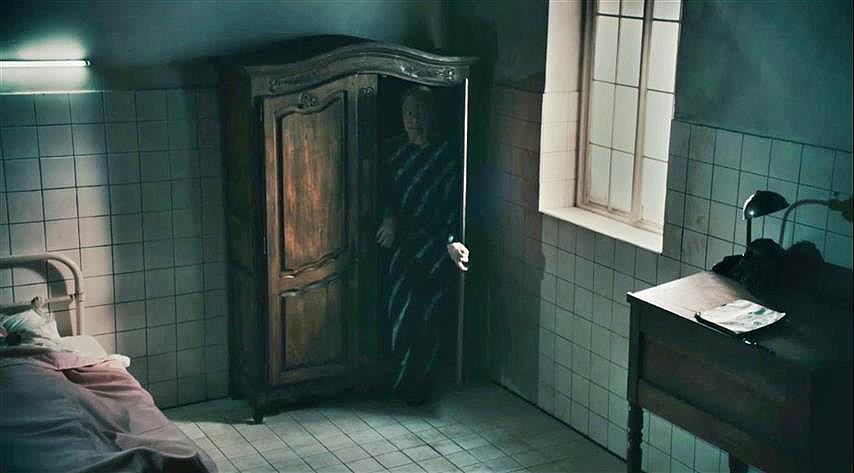
Screenshot from the 2016 video clip 'Lazarus', directed by Johan Renck. Bowie wearing the Isolar 'On Stage' 1976 tour magazin outfit. |
| "Your silhouette is so stationary" Playing with the Mudhras |
|---|

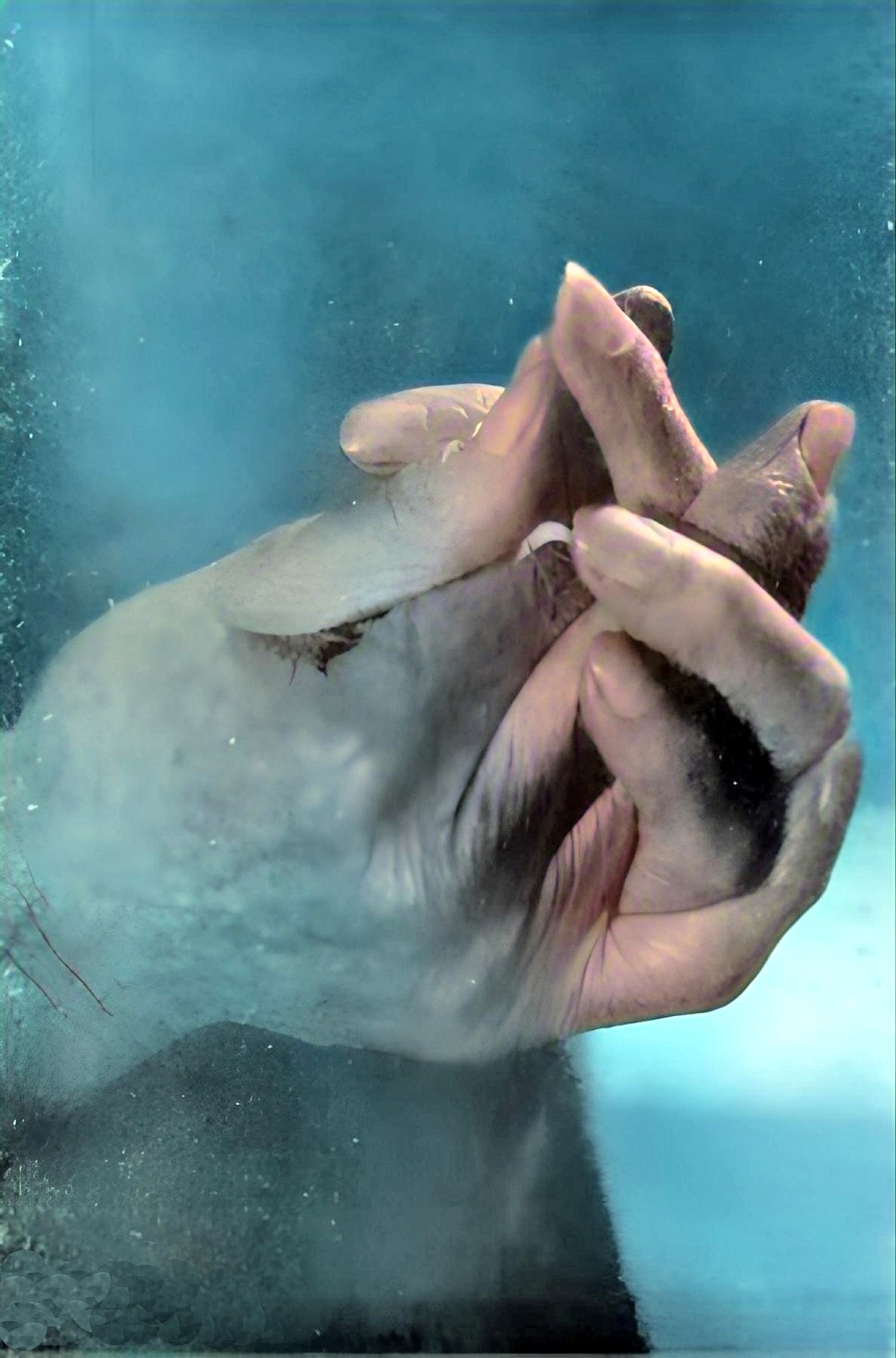
|
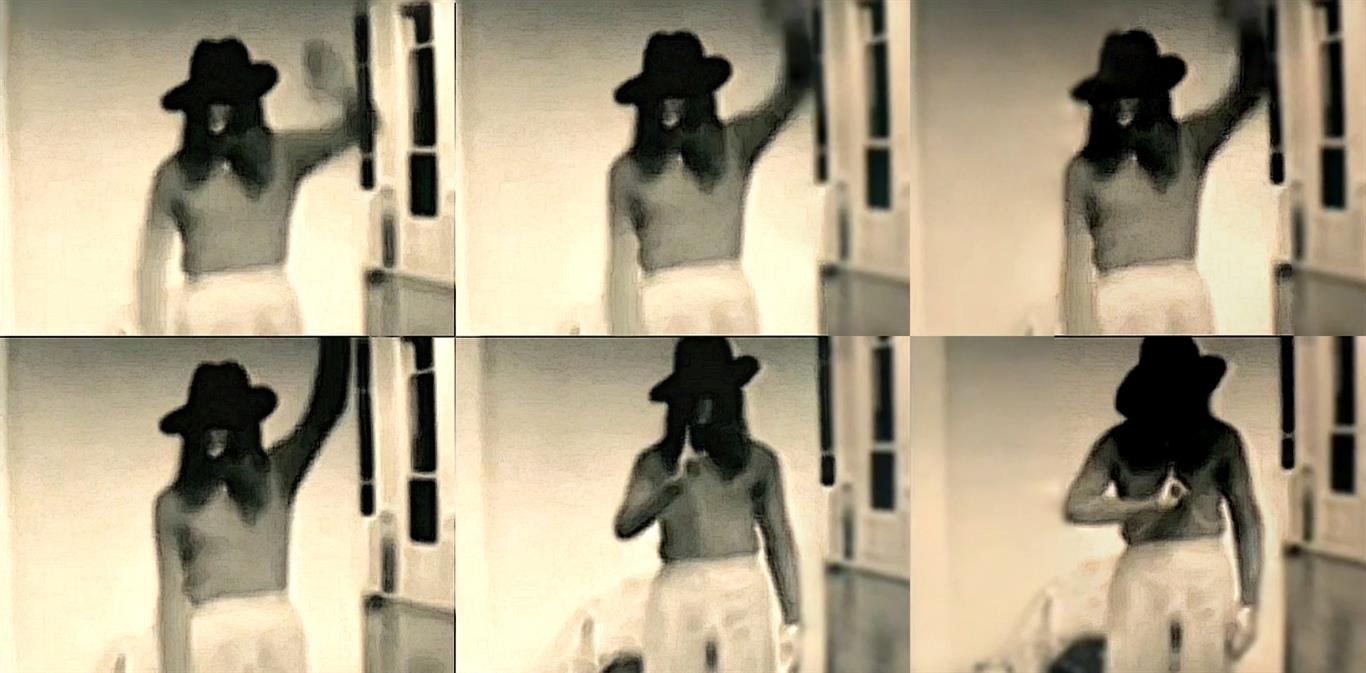

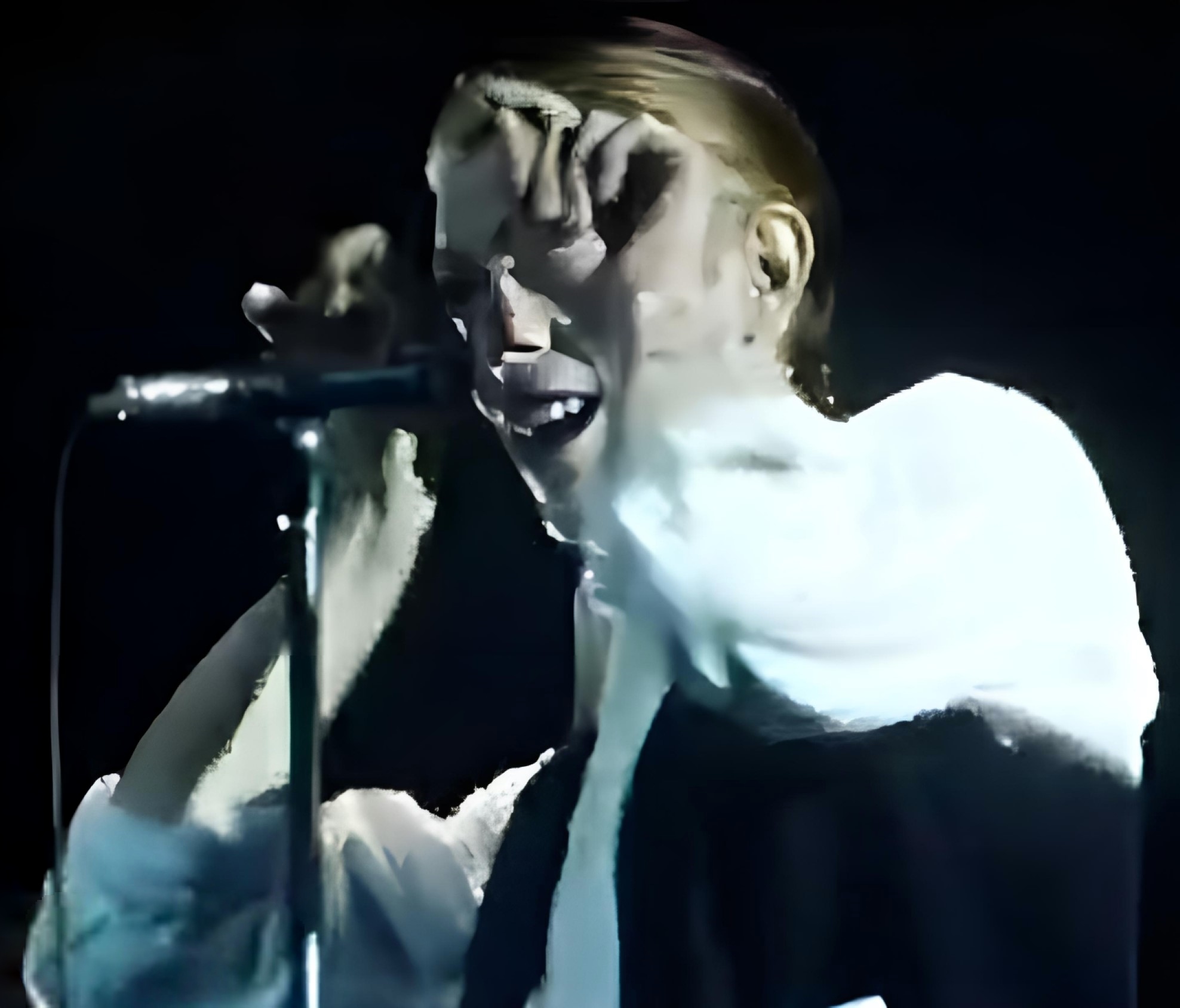

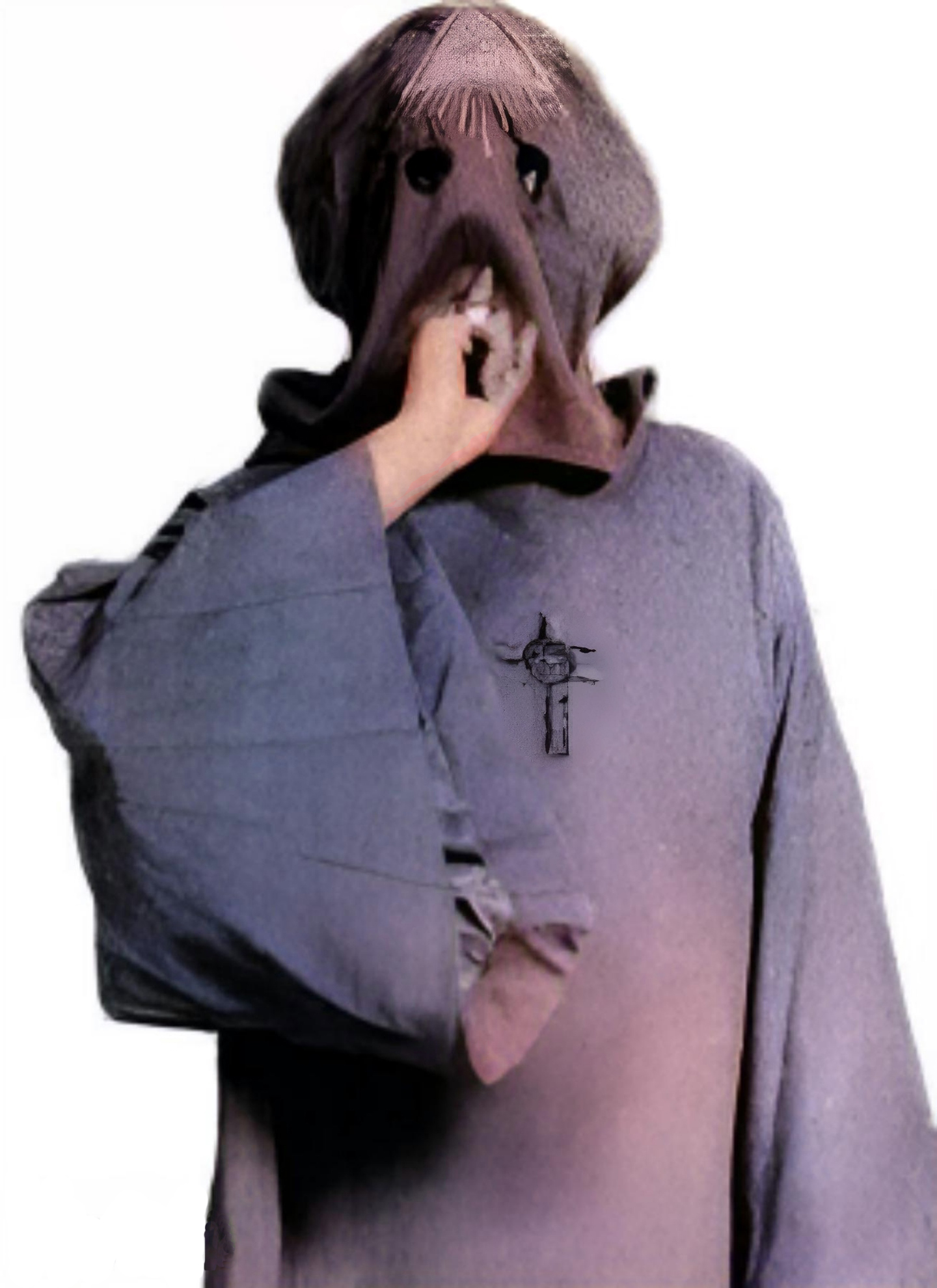

|
Later performances and videos invite retrospective comparison with a small vertical gesture — an upward reach followed by a touch towards the ground — that one may, with a certain poetic licence, align with the 'magical movement from Kether to Malkuth' line. Whether this already functioned in the late 1960s as a fixed Bowie trademark is rather harder to demonstrate. In its earliest appearances, it still looks less like a settled esoteric signature than like an ordinary Rock’n’Roll pose which only later acquired, by repetition and context, the air of a personal hieroglyph.
An early instance of the move appears in Let Me Sleep Beside You, filmed in 1969 for the promotional film Love You Till Tuesday: 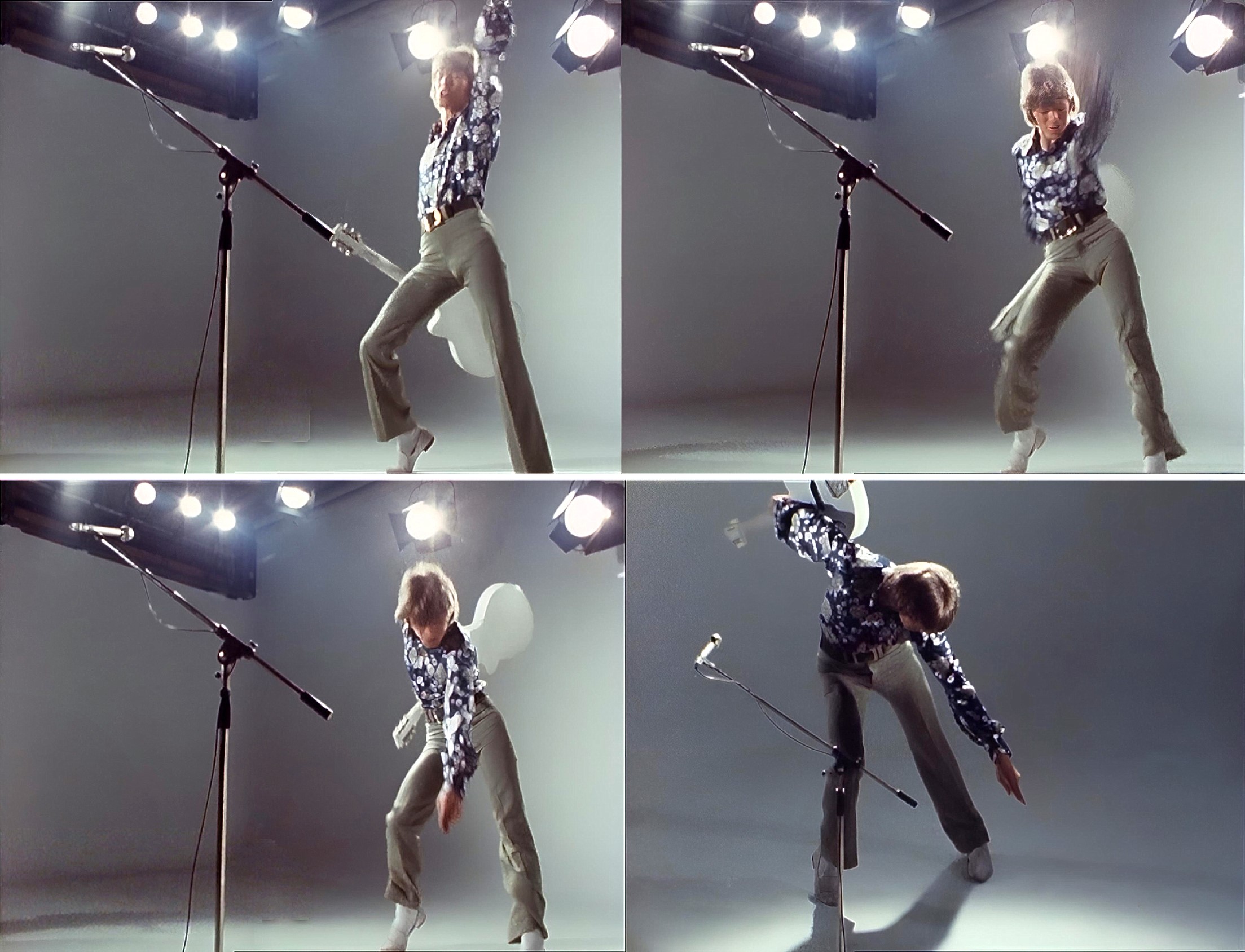
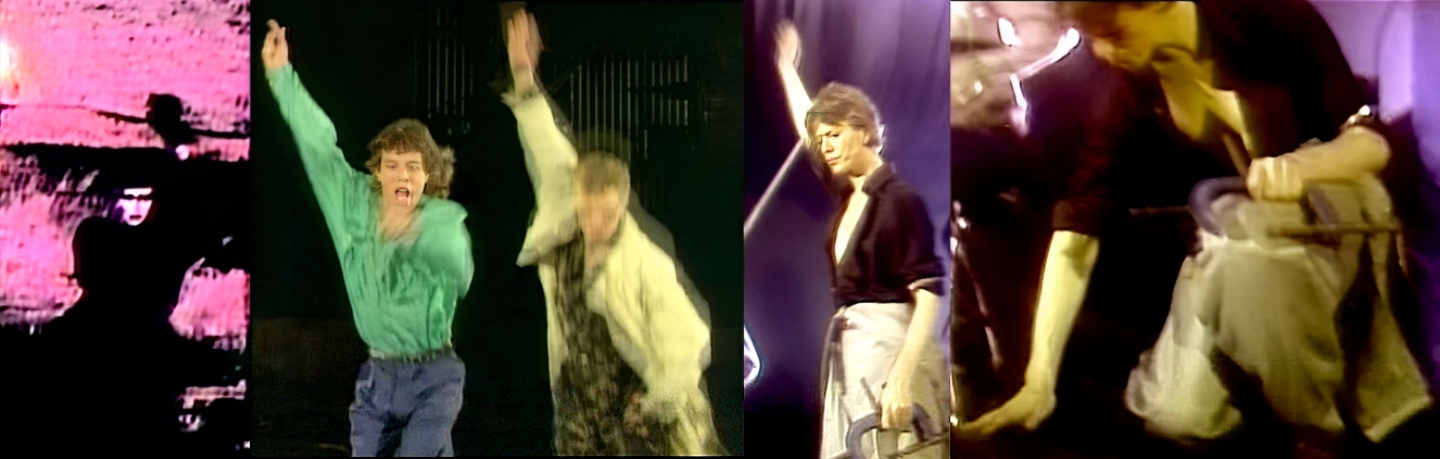
Comparable versions turn up later in Ashes to Ashes (1980) — here performed by Steve Strange, prancing about dressed as a nun; he later claimed that the arm movement merely prevented his robe from being caught in the bulldozer engine — as well as in Fashion (1980) and in the clip for Dancing in the Streets with Mick Jagger (1985). What emerges, then, is not evidence of a rigorously fixed gesture from the outset, but a recurring movement that only retrospectively begins to look like one. |
|
Thanks to the Internet, what were previously known activities exclusive to occult secret Orders and Lodges have become part of popular culture, factual concerns shrink to the level of Web 2.0 'happenings' and second–hand opinions, knowledge becomes data–hoarding, the linear becomes interactive, and proper friendship disapears in interchangeable cyber–interaction. Occult culture becomes an audience driven by factions which fish their half–truths out in the limitless digital ocean. This McDonaldised Occultism is an arena where anything goes, a breeding–ground for conspiracy–theories where half–truths are classed as scholarly work – for example in the wholly quantitative use of data exclusive to the Internet in university dissertations and theses. This reduction of facts to hallucinatory speculations leaves no room for the controlling influence of truth, and results in an endless fragmented labyrinth of unlimited choices. Any information here will face a continuing elasticity in a process of transformation and interactive reconfiguration. In the vast catacombs of the hypertexts it is all too easy to lose a feeling for the whole; in the nebulous atmosphere that is left by an absence of such an overview, connections and continuity can disappear. Where there is hypertext, there is no context. Does this hold out the unalluring future prospect for Internet users of having to develop a robust information immunity against the infection of false information on the World Wide Web?
The numberless manifestations of multiple identity in our culture — including the creation of Internet personæ — contribute to an over–all confirmation of traditional unitary theories of identity, and support the post–modern Weltanschauung. There are relevant metaphors for this running through informationscience, psychology, children's games, literature, advertising, biology, medicine (you can now do a virtual frog–dissection), mass culture and of course Occultism. The principle of the 'embodied artificial intelligence' is well–known, and used as a paradigm in physics, information technology, biology, and behavioural science — there are already primitive artificial 'beings' that can move independently, co–operate, organise, and evolve. Never has the gap between high culture and mass (or consumer) culture been so narrow. What is visible doesn't have to allude to the concealed; existence doesn't have to allude to essence, nor the signifier to the signified. We are living in an electronic version of Oscar Wilde's disguise, where "the true secret of the world is the visible and not the invisible." The question of the apparent visible and the hidden visible that affects the experience of reality obsesses occultists, artists, philosophers and many thinkers. But what disadvantages does the post–modern bring with it? Will a constant leaping from one subject to another in a world tied to immediacy and simultaneity erase any consciousness of history? The post–modern individual's passivity and immobility goes hand in hand with an increasing need for ever stronger stimuli. Occultists remain trapped in an inner world of moods, feelings, and imaginations. This private world gets overemphasized and results in a lack of identity. Nothing remains but a dwindling whimper for attention.
In the era preceding the widespread adoption of the Internet, Cabbala was often regarded as a mystical and enigmatic discipline, presenting formidable challenges to comprehension. Consequently, it maintained an air of exclusivity, with assertions that its teachings and resources were accessible only to a privileged few. This perception of exclusivity held a particular allure for individuals such as Bowie, who were captivated by the creation of enigmatic personæ through the use of "mysterious" puzzle pieces. However, with the passage of time, this perception has undergone a notable transformation. Cabbala has garnered significant popularity and has earned the moniker "the new religion of Hollywood". Prominent figures, including Madonna, Guy Ritchie, Britney Spears, Gwyneth Paltrow, Elizabeth Taylor, Barbra Streisand, Mick Jagger, Jerry Hall, Demi Moore, Ashton Kutcher, and diva du jour, Roseanne Barr, have embraced a subject that was previously regarded as highly arcane. However, this widespread interest has not come without its criticisms. There are various concerns expressed by reviewers. Some of the common issues include:
Lady Gaga performing the Kether to Malkuth gesture at the David Bowie Tribute held at the 58th GRAMMY Awards at the Staples Centre in Los Angeles, February 15th, 2016. |
| Why Bowie is better than God
taken from www.white-man-killer.com/ bowie/bowievgod.html [defunct]
|
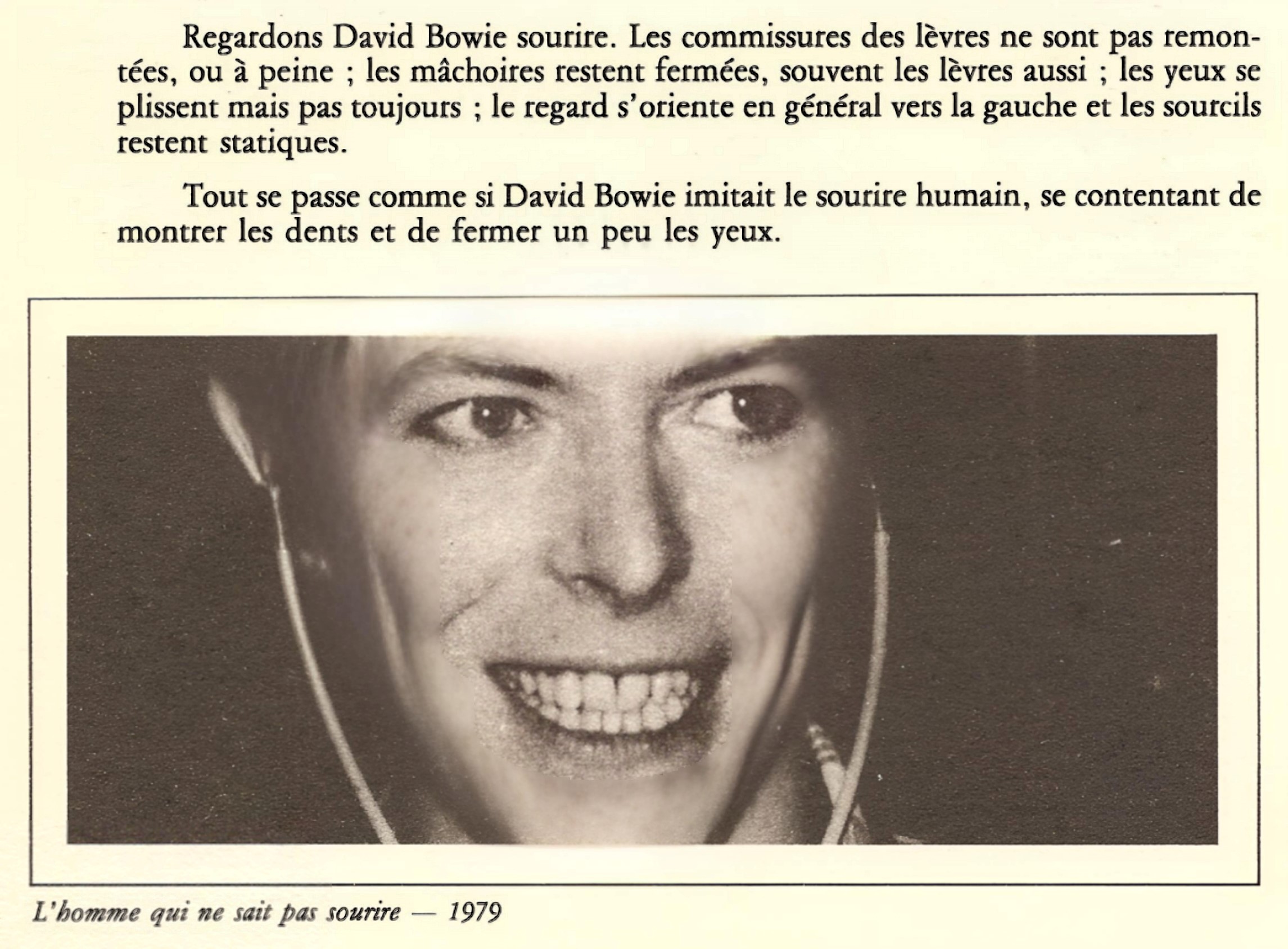
|
"David Bowie. Un portrait par l'écriture, la voix, les gestes, la main, le thème astral et le visage". Etudes Réunis par Anik Blaise. Paris 1984, page 111.
"Regardons David Bowie sourire. Les commissures des lèvres ne sont pas remontées, ou à peine ; les mâchoires restent fermées, souvent les lèvres aussi ; les yeux se plissent mais pas toujours ; le regard s‘oriente en général vers la gauche et les sourcils restent statiques. Tout se passe comme si David Bowie imitait le sourire humain, se contentant de montrer les dents et de fermer un peu les yeux." "L'homme qui ne sait pas sourire — 1979" Translation: "Look at David Bowie's smile. The corners of the lips are not raised, or just barely so ; the jaws remain closed, as often are the lips ; the eyes squint, but not always ; the stare is directed generally to the left and the eyebrows remain static. Everything happens as if David Bowie imitated the human smile, settled for just showing teeth and closing the eyes a little." "The man who does not know how to smile — 1979" Bowie's imitation of a smile, as noted by Anik Blaise, offers a revealing glimpse into his meticulously crafted persona. This gesture exemplifies his deft manipulation of public image, where every expression, even the most innocuous, was calibrated to evoke a certain mystique. His smile, more artifice than sincerity, encapsulates a broader pattern of emotional concealment, underscoring a carefully staged performance. Much like his music, Bowie’s every move was laden with layers of intent, transforming even the simplest expressions into deliberate acts of construction. In typical Bowie fashion, his smile was less an invitation than another puzzle for fans to decipher. |
Outro:
|
|
Robert A. Heinlein: "Starman Jones", New York 1953.
Cover by Clifford Geary. | 
|
| Philip K. Dick: "The World Jones Made", New York 1956. | 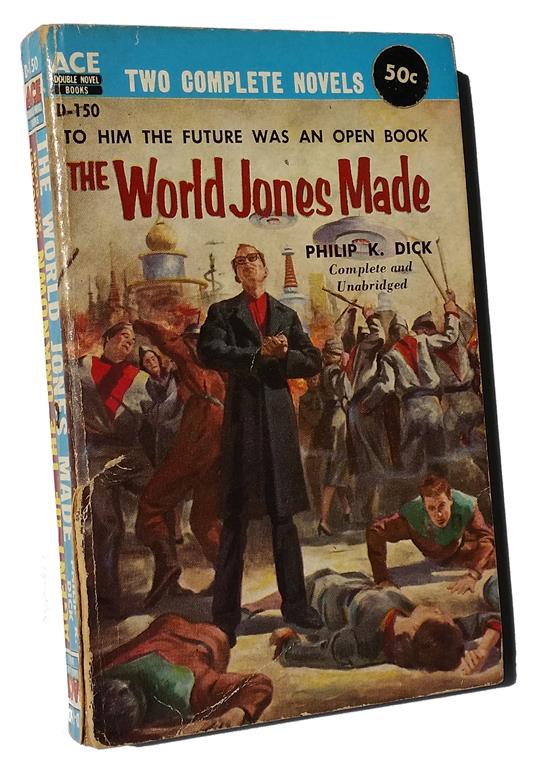
|
According to setlist.fm, in toto Bowie performed live the following songs with occult connotations:
1976: Lisa Robinson: "Are you doing it for the money?" Bowie: "Good lord, of course I am." Robinson: All this wide–eyed innocence, all this chance stuff — it doesn't convince me one bit. [...] A laugh, by the way, is a performance. The eyes flash, the head is artfully tossed back, the grin is lovely. It is then that I notice the teeth. [...] I had no desire to find the real David Bowie. I fully accept that he is whoever he wants to be at the moment, and adapts totally to whoever he's talking to. [Lisa Robinson: "The first synthetic rock star. There is no other", in 'New Musical Express' March 6, 1976.] Bowie’s theatricality often bordered on the performative, with his laughter and gestures sometimes perceived as contrived. This detachment could be seen as a deliberate choice to maintain an enigmatic presence, or it might reflect an underlying discomfort with the rôle he was playing. Meandering through his life and work were two distinct factors: change and the elusive absence of presence. Despite Bowie's captivating stage presence, there was a growing sense of detachment. In his meticulously crafted interviews, which could be seen as manipulative performances, he fell short of achieving a convincing portrayal. Even in moments of laughter, often too loud, there was an underlying sense of unease and awkwardness. His dance moves resembled those of a controlled stage actor and highly photogenic model rather than a natural performer, veering into the realm of cringe–worthy mime. And Bowie's peculiar, albeit slightly exaggerated, theatricality would likely remain his cinematic trademark. Even many years after his death, this will occupy fans, journalists, experts, and academics alike, as they continue to juggle their private tables of 'good', 'cool' and 'embarrassing' phases. For some, the verdict is clear: 'a miserable actor'; for others: 'a brilliant performer of inauthenticity.' Was there a moment of self–effacement for Bowie? Even in his seemingly lighthearted fascination with the occult or fascism, there were hints of profound depths where uncertainties arose regarding whether they served as sources of inspiration or as haunting ideas. Whether they were deliberate postures, mannerisms, or genuine expressions of interest, Bowie played fast and loose with facts and anecdotes. "I was young, fancy free, and Tibetan Buddhism appealed to me at that time. I thought, ‘There’s salvation.’ It didn’t really work. Then I went through Nietzsche, Satanism, Christianity ... pottery, and ended up singing. It’s been a long road." [Bowie interviewed by Ellen DeGeneres, 'Ellen Show' broadcast 23 April, 2004.] Does that sound like the stage direction "Laugh and clap here"? Bowie often portrayed himself in public as a somewhat superficial reader and nimble appropriator of cultural flotsam. His casual mention of these influences, alongside his acknowledgment of superficiality, highlights a tension between depth and façade. At times, he may have mocked Ödön von Horváth's motto: 'Actually, I'm quite different; it's just that I rarely get the chance to show it.' Were Bowie's masks chiefly not what they represented but what they transformed, that is, what he chooses not to represent? Was the allure to transformation even more compelling than the transformation itself? Was his real / authentic self precisely what was excluded from the realm of reality, an amalgam of the symbolic and imaginary? Is the truest artist the most feigning? Faut–il mentir pour être vrai? [Jean Cocteau] When the truth was also just a mask? Bowie: "Part of my entertaining factor is lying to you." [Steven Lippman opens up his 2003 diaries. "Doors Opening: Making Reality with David Bowie".] And when exactly did this occur to him? Was it at the moment he realized he had landed himself in hot water with his Nazi remarks? |
| "Hello, I'm David Bowie and you're not!" |
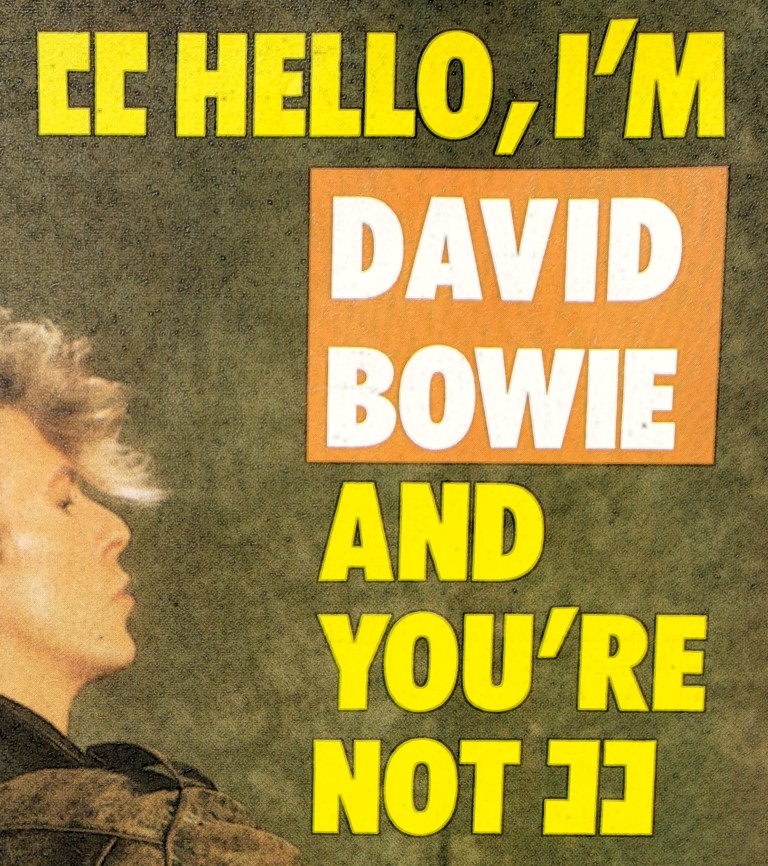
'No1', #4 London April 1987. Press Conference 20.3.1987, London Music Hall Theatre . "Week In The Presence Of Bowie". "'Hello, I'm David Bowie and you're not!'" Journalist of 'No1', #4 (Karen Swayne?): "Bowie is nothing if not an accomplished arch manipulator and he even had the nerve to pull out a list of his own questions, all of which the press duly asked." |
|
Bowie’s various personae can be seen as fragile, transient constructs rather than stable identities. This aligns with the theme of shifting identity and the idea that his personae were smoke and flicker rather than solid, enduring selves. The recurring motif of finding oneself or playing different games reflects his ongoing exploration of self and identity. And identities were fragile: Bowie screamed, "the enemy is fragile" on a sort of–"1. Outside"–prequel ["The Leon Suites" recorded in 1994, were rejected by record companies as uncommercial. The "Leon Project" likewise proved a stillbirth: despite featuring David Bowie, Brian Eno, André Heller, and Rolf M. Engel as its principal creators, it never properly materialised.]. David Robert Jones became his own gnostic ventriloquist and performing poodle, once again shattering the hollow bridge between the real and unreal. Perhaps all of this makes sense, or perhaps not. Maybe it belongs to the realm of the indefinable Trojan Horse (the recurring images and codes that appear in the entire David Bowie 'opus') that has stealthily crept into his lyrics, interviews, and other manifestations. Or maybe not. "I saw myself become something unrecognisable, a monster. And if you are imaginative, it does strike home very hard and leave lots of very definite impressions, indelible images, enigmatic little corners, nooks and crannies with shadows in them that will haunt you for a lifetime.... I was being threatened by my own characters, feeling them coming in on me and grinning at me [his face reddens maniacally], saying 'We're gonna take you over completely!'" [Timothy White: "TURN AND FACE THE STRANGE", 'Crawdaddy', February 1978.] His audience was not shallow. After experiencing the conglomerate of the many personæ that Bowie embodied for so many years, they came to accept that "Bowie is" art's filthy lesson: it was all pretense, and one shouldn't be deceived by it. They understood that signs were not given a definitive meaning; instead, they constantly changed depending on the context. The audience recognized that signs could be meant seriously or function on a trivial level. |
| What was ultimately at stake in the interaction and realm between the arsenal of musical performers and their performances, and the audience and listeners, was also the identity of the latter. So Bowie on June 15, 2002: "Question I wanna ask is: Who do you want ME to BE? – And question I wanna ask you is: Who do I want YOU to be?" ['David Bowie Live by Request A&E', New York, June 15, 2002.] |
|
He carried it about as far as Lewis Carroll had done, when Alice said of the Red King, "He was part of my dream, of course — but then I was part of his dream, too!"
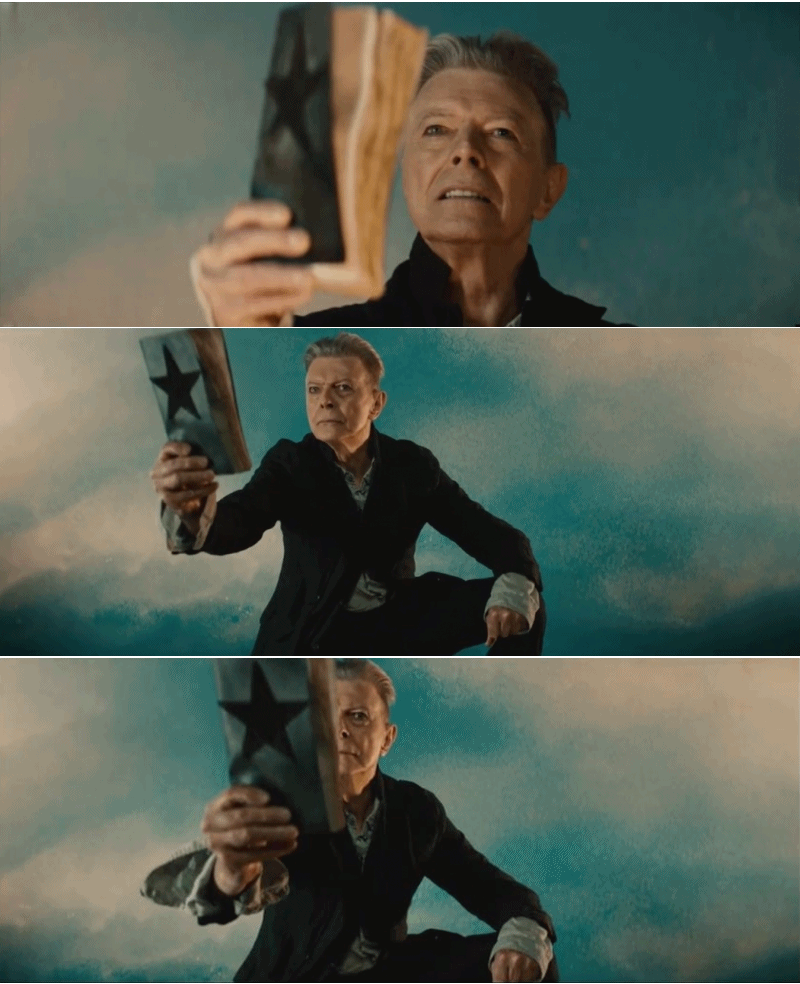
Does a void in a center lead to its loss? Bowie's work appeared to be rooted in an intrinsic emptiness, akin to a black hole or a black star. There was a distinct absence of substance, with only a multitude of systems and signs present. Many years before his rise to fame he actually failed his singing audition with the BBC New Talent panel who dug in its heels. "A singer devoid of personality," was the verdict of one of the broadcasting judges on 16th November 1965, who lined up to excrete his ignorance of Pop music. "Singer not particularly exciting. Routine dull," another one said. "The singer is a cockney type but not outstanding enough," one of the judges remarked. "Amateur sounding vocalist who sings wrong notes and out of tune," someone else noted. David Robert Jones' authentic voice and original persona were not enough for commercial or artistic exploitation in their raw form. He worked on that. Consequently, when other musicians or singers performed his songs without the conglomerate of the personæ that Bowie himself embodied, the songs lost their special touch and significance. To put it simply: only Bowie himself can truly sing and interpret a Bowie song. On the flip side, almost every song he covered transformed from mediocrity into something intriguing. This transformation was due entirely to Bowie's unique presence — his charisma, his voice, his style, and so on. This idea highlights the fact that Bowie's carefully crafted image, shaped by David Robert Jones, became more important than the actual musical quality of the songs.
The notion of failure being tied to a lack of reaction underscores his need for feedback and dynamic interplay with the public. Bowie: "I'm probably after, firstly, reaction. If I don't get reaction, then a piece has failed, as far as I'm concerned. If a thing is booed into the ground, then that is a reaction, and I just want it to have a reaction." [Charles Shaar Murray: "GAY GUERILLAS & PRIVATE MOVIES", in 'NEW MUSICAL EXPRESS', February 24, 1973] Jo Whiley: "Something I've been dwelling on. What's your most annoying habits? What would your friends say, what's really annoying, this is where we should be calling in your wife, or something?" Bowie: "Oh my God! Well, obvious one is I talk too much. I can talk, you don't know. I can really, really talk." Whiley: "About anything? Bowie: "Even when I'm straight, I can talk. You just don't know what it used to be like in the seventies. I used to talk, even if nobody was in the room, I'd just talk and talk and talk. Also, the thing that annoys me is that I'm too willing to play devil's advocate. If anybody starts any kind of ... sets up some kind of debate, I'll immediately take the other side, just because." ["The Lunchtime Social, BBC Radio. August 1997. Interviewer: Jo Whitley] This verbosity can be seen as part of Bowie's broader artistic strategy, where the act of talking and the content of his speech were part of the performance itself. Was it all verbiage, compulsive speech, logorrhea, also cramming too many syllables into his lines? "It was all just talk," said the guitarist [Carlos Alomar]. "He is what he reads and at that time in his life, he was reading so much bullshit. We're both kind of preachy. I'm more preachy on the religious side, he's more an expounder of information. He'll pick a subject no one knows anything about and expound on it for about an hour so that you're not interrupted. Those types of conversation — Nazism, the baroque, architecture of the turn of the century — that's David talking. I don't put too much weight on any of that; he likes to talk." [Carlos Alomar, in David Buckley and Danny Eccleston: "THAT OLD BLACK AND WHITE MAGIC", in 'Mojo', September 2016.] "He would talk for ages, interminably. Terrible monologues. When I say terrible I mean impossibe to understand, and actually I think it was him talking to himself. And then that was it really. He did that to people. I'm sure you're aware that he did that to people. He just dropped them. And then moved on to somebody else, something else." [Hanif Kureishi, writer of "Buddha Of Suburbia", London 1990. Soundtrack by David Bowie for the BBC four–part television serial in 1993. In Dylan Jones: "David Bowie. A life". London 2017, 380.] Bowie’s communication style — marked by verbosity, intellectual curiosity, and a quest for reaction — offers insight into his creative and personal dynamics. His extensive talking and monologuing reflect a complex interplay between his public persona and private self. Bowie’s need for reaction and his tendency to delve into various subjects can be seen as integral to his identity as an artist and thinker, shaping how he engaged with the world and how he was perceived by those around him. Bowie’s tendency to dominate conversations and move on from relationships or interests might have influenced his personal and professional interactions. It could have contributed to a perception of him as distant or elusive, impacting how he related to others and how others experienced him.
"One thing I do is fabricate a personality for a stage. I was never a rock'n'roll singer. I was clumsy as rock'n'roll singer but I do have a certain penchant for fabricating a character and portraying a cold, unemotional feeling." [Chris Charlesworth: "David Bowie: Ringing The Changes", in 'Melody Maker', March 13th, 1976.] "I feel like an actor when I'm onstage, rather than a rock artist," […] "I very rarely have felt like a rock artist. I don't think that's much of a vocation, being a rock & roller." Timothy Ferris: "I Refuse to Be Thought of as Mediocre", in 'Rolling Stone Magazine' 79, April 1st, 1971. 'Can’t Help Thinking About Me' was recorded in late 1965 and released on 14 January 1966 as David Bowie with The Lower Third. Nearly four decades later, in 2013, he crooned, "I don’t know who I am / ... / But I am a seer / I am a liar" (on 'Heat'), as he portrayed an Englishman in New York, now immersed in wealth, fame, and surrounded by a constellation of celebrated actors and gazillionaires. If beneath the cavalcade of the earlier masks there was a real person, he was still very careful not to let him stick his head out in public. Bowie had now retreated within his own myth so deeply as to maybe lose sight of himself, or to become, as Oscar Wilde described a butler in 'An Ideal Husband', a "mask with a manner".
If there existed a specific meaning, if at all, in Bowie's lyrics, interviews, and antics, it resided as just one echo amidst the labyrinth of multiple meanings, a field of variations. Within this labyrinth, all meanings were open to equally valid interpretations, extending beyond the narrow confines of a single reading. Bowie himself never endorsed a singular meaning or interpretation; on the contrary, he consistently contradicted himself, leaving all meanings open–ended and often unresolved. According to Roland Barthes, the death of the author marks the birth of the reader. It is akin to St. Thomas Aquinas's theory of understanding, where each thing is received according to the desired understanding. Certain interpretations offered by readers or listeners may have appeared scurrilous or absurd, accompanied by convoluted and tortured analytical prose. Conflicting interpretations can clash with all the fury of a storm at sea. The Bowie Police — those fans who tremble like Little Richard every time they hear his name — engage in discussions among themselves, dissecting every gesture, consulting self–anointed experts, and scrutinizing enigmatic lines generated through the cut–up method. And in the end, they loathe one another, for each unearths a different interpretation and declares it gospel. This is unsurprising, as interpretations can be substantiated by referencing song lyrics, interviews, cryptic statements overheard or dreamt up by dedicated Bowie enthusiasts. No original meaning is known, and its existence in various ambiguous perspectives remains uncertain. The authority of one version over another cannot be proven based solely on a text or photograph. No reading or listening experience, however absurd it may appear, can be outright dismissed. Bowie did not establish a single governing truth or concrete fact that would allow all interpretations to coexist within an endlessly fragmented labyrinth of unlimited choices. Every piece of information undergoes ongoing elasticity, subject to processes of transformation and interactive reconfiguration. To navigate the realm of interpretations, we require interpretive strategies, zigzagging through the maze. Bowie's own intended meanings, if any, can be accepted or rejected. Fans' interpretations can be ridiculed, and even the experts who have studied extensively or journalists who have conducted thorough analyses can have their readings challenged. However, these interpretations remain as merely a foundational framework amidst a multitude of possible meanings. No readings are valid, and all readings are valid. "I've no control / It's all deranged / I can't believe I've no control / It's all deranged." ['No Control', 1995]
|
|
aproposon
January 10, 2016 — David Robert Jones died after an 18-month battle with cancer. According to Tony Visconti, Bowie initially responded to chemotherapy and was briefly in remission in mid-2015, before the cancer returned and spread throughout his body by November. The precise type of cancer was never officially disclosed. Rumours circulated soon after his death, and resurfaced later in 2016, that Bowie might have chosen an assisted death; former BBC DJ Andy Peebles said that several callers had suggested this to him, while others close to the music business speculated along similar lines. No medical evidence or testimony from any of Bowie’s treating physicians has emerged to substantiate the claim. A few days after Bowie’s death, Welsh palliative-care consultant Mark Taubert published an open letter in which he assumed that Bowie had chosen to die at home and had received palliative symptom control, describing his death as a carefully prepared final act. Taubert was not one of Bowie’s physicians and explicitly framed several of these details as assumptions. Significantly, however, Bowie’s son Duncan Jones — in his first social-media activity after confirming his father’s death — retweeted the open letter without qualification. This cannot be treated as formal confirmation of Taubert’s suppositions, but it suggests that Jones did not regard the general portrayal as inconsistent with what had occurred. Visconti later recalled that roughly a week before Bowie’s death, Bowie contacted him about another album and that five new songs had already been demoed. From Bowie’s enthusiasm, Visconti inferred that he expected to have at least several more months; Visconti acknowledged, however, that he had no knowledge of what happened medically in Bowie’s final days. Other unfinished projects are independently documented, including discussions with Brian Eno about revisiting 1. Outside and Bowie’s 2015 work on an unrealised musical, The Spectator. These projects provide a counterweight to the suggestion that his death on January 10 had long been precisely scheduled, although they cannot by themselves exclude a decision made only in his final days. His final studio album, Blackstar, had been released two days earlier, on Friday, January 8, his 69th birthday. In February 2026, his daughter Alexandria “Lexi” Jones revealed that at the time of his death she was living in a residential treatment centre in Utah, following 91 days in a wilderness-therapy programme to which she had been sent at fourteen. She had spoken with Bowie by telephone on his birthday, two days before his death, but was not with him when he died. She recalled subsequently seeing the public announcement that he had died surrounded by his family and said that her absence from that scene had remained painful. On the day of his death, my website briefly came to a standstill: this Bowie article drew such an extraordinary number of visitors that my provider’s server was, for a time, simply overwhelmed. |
|
In keeping with Bowie's wishes, no public funeral was held. His will directed that he be cremated and that his ashes be scattered on the Indonesian island of Bali "in accordance with the Buddhist rituals". He was cremated in New Jersey on January 12, 2016; the private fulfilment of the Bali instruction was not independently documented in detail.
Bowie bequeathed most of his estate, valued at up to $100 million, to his wife Iman Abdulmajid and his two children. He left Little Tonshi Mountain, located near Woodstock in the Catskills, to Alexandria, his 15–year–old daughter with Iman, whom he married in 1992. Duncan Jones, Bowie's son from his first marriage to Angie Barnett Bowie, received the same 25% share as his half–sister in the rest of the musician's residual estate. Iman received 50% of the residual estate and the couple’s SoHo apartment. Bowie also left $2 million and his shares in a company called Opossum Inc. to his longtime personal assistant, Corinne Coco Schwab, and $1 million to Marion Skene of Switzerland (who died in 2017), his older child's nanny. In November 2016, the family sold Bowie's art collection at Sotheby's, generating cumulative sale proceeds of £32,906,250, which drew record crowds to the auction house. They retained only artworks that were "of particular significance". |
|
The Hyper–Author: Everybody Wants a Piece of the Corpse
Posthumous Bowie, or: how an absent body acquired more biographies than a living one. |
|
David Bowie’s death did not terminate the manufacture of David Bowie. It removed the last person with standing to object.
The less that was known about his illness and final hours, the faster the vacancies filled. Friends remembered conversations. Colleagues reconstructed plans. Journalists supplied missing joints. Fans decoded lyrics, dates, photographs, album artwork, telephone calls and empty chairs. Rumour became anecdote; anecdote acquired dialogue; dialogue entered biography. David Robert Jones disappeared. David Bowie became more productive than ever. The Silent TelephoneOn January 8, 2016, Bowie’s 69th birthday, Tony Visconti, Woody Woodmansey and Holy Holy were playing the Highline Ballroom in New York. Visconti took out his mobile telephone and the audience sang 'Happy Birthday' to Bowie. Audience recordings preserve the little rite: Visconti holds up the telephone; several hundred people sing to an absent man.What the recordings do not clearly preserve is Bowie. A contemporary report published on January 11 described the episode prosaically as a birthday message left on Bowie’s voicemail. Later the telephone acquired considerably better reception. Woodmansey recalled Bowie answering, listening to the audience, asking Visconti to ask them what they thought of Blackstar, and finally saying: "Good luck on the tour, catch you later." [Woody Woodmansey, interview, March 31, 2017.] Perhaps it happened exactly so. The audience recordings cannot disprove it. They simply do not independently establish it. Bowie’s voice is not audible. The silence is the interesting part. Into it steps a complete final Bowie: answering, joking, receiving applause for Blackstar, and supplying a farewell line that no dramatist would dare improve. Absence is an invitation. The Concert That Almost HappenedThe same evening produced another useful relic. Woodmansey later remembered that staff at the Highline Ballroom told Holy Holy they had heard a rumour that Bowie might come down and sing with them. The musicians themselves had heard no such thing — "but we hope he does!" A complimentary ticket was reportedly waiting for Bowie and remained unused.That modest nucleus — venue gossip plus an empty ticket — proved fecund. In fan lore Bowie was soon not merely possibly coming. He intended to come. Then he intended to perform. In some versions he would have joined Holy Holy for 'The Man Who Sold The World'. A still more baroque version has him preparing to leave home, discovering journalists or photographers outside, and retreating again. It is an excellent scene: the dying Bowie planning one last apparition; an audience unknowingly waiting for him; a song from 1970 conveniently converted into a valedictory aria; the vulgar press blocking the door; the artist turning back into the house from which he will never publicly emerge again. I have found no reliable contemporary evidence for this latter story. But this is precisely the mechanism. A rumour that Bowie might come becomes an intention; an intention becomes a journey; an unused ticket becomes evidence of a thwarted last performance. The absent body can sing any song. Everybody Knew the Last BowieAfter the death came the witnesses carrying fragments. Visconti remembered another album and five demos. Brian Eno disclosed discussions about revisiting 1. Outside. Bowie's surviving papers document work on the unrealised musical The Spectator. Claudia Lennear, a former lover, had already said in 2014 — while Bowie was alive — that he had unexpectedly contacted her and offered to write for her next project. She later described a projected division of labour: Bowie the music, Lennear the lyrics. In 2021 she also made clear that they had never actually reached the studio together.In fan recollection the proposed Lennear collaboration sometimes grew larger still: FaceTime sessions, quantities of material, even enough for a double album. I have found no documentary support for the double–CD version. It belongs, at least for the moment, to the more luxuriant vegetation surrounding the corpse. None of this requires anyone to be consciously lying. Memory becomes narrative without the assistance of fraud. Famous death adds a further pressure: any remembered conversation may suddenly have been the last conversation, any sketch the last project, any joke the last joke, any promise the final intention of a man no longer available for cross–examination. The adjective last is an efficient embalmer. Who Owns the Last Breath?The largest vacancy surrounded the death itself. Almost nothing medical was disclosed. Into the room came competing tableaux: natural collapse from cancer; a controlled palliative death at home; an assisted death; a consciously timed final artistic act. Mark Taubert, who had never treated Bowie, imagined a carefully prepared palliative ending. Duncan Jones retweeted Taubert’s open letter without qualification. Visconti called the death a "work of Art". Rumours of assisted suicide circulated. No treating physician stepped forward to settle the matter.The physical body was maximally private and therefore discursively public. Everybody could occupy the room because almost nobody had been allowed inside it. Ten years later, Alexandria “Lexi” Jones supplied an awkward figure standing outside that room. She revealed in February 2026 that she had been in a residential treatment centre in Utah when her father died. She was fifteen. She was not, as later speculation might suggest, entirely “out of the loop”: she knew of his cancer, knew that he was becoming increasingly ill, and spoke to him on his birthday two days before his death. “I told him I loved him and he said it back, and we both knew.” And yet she was not there. Then came the public announcement that Bowie had died “surrounded by his family”. Lexi remembered encountering the phrase rather differently: the whole family was there, she said — except for her. One may therefore resist the melodrama of imagining a daughter wholly ignorant of what was happening while retaining the considerably stranger fact that Bowie's fifteen-year-old only daughter knew perfectly well that her father was dying and was nevertheless hundreds of miles away in an institution when he did. Which leaves a small, impolite question. If the daughter knew, the father knew, and apparently both knew that the other knew — but she still remained outside the room, outside the house and outside the state — what precisely constituted the celebrated family surrounding him at the end? Grammatically, of course, the announcement committed no offence. Families need not arrive complete. Mais quand même. The publicity photograph of the peaceful death had somebody rather conspicuously cropped out of it. The deathbed had acquired an offstage. Blackstar Eats EverythingBefore January 10, Blackstar was a cryptic Bowie album. After January 10 it became evidence.Lyrics became coded announcements. The hospital bed in 'Lazarus' became Bowie's hospital bed. The blindfold became death. The wardrobe became a coffin. The birthday release became part of a timetable. A lyric about Monday became prophetic because Bowie died on Sunday. From the entirely reasonable proposition that Bowie knew he had cancer came the more ambitious propositions that he knew exactly when he would die and had arranged the release of Blackstar as the penultimate movement of the event. Some of the retrospective reading is plainly justified: Bowie was seriously ill while making the record and mortality belongs to the work. The difficulty begins when mortality acquires a wristwatch. The interpretative industry then became pleasantly delirious. Fans exposed the sleeve to sunlight and black light, reflected lamps from the vinyl, folded and curved artwork, discovered stars, birds, spaceships, eyes, letters, numerology and secret instructions. Designer Jonathan Barnbrook helped the séance along by confirming that there were indeed further devices in the artwork and by keeping some meanings open. By January 2017 SPIN was still receiving elaborate new discoveries. One reader even reported that her copy smelled of black liquorice. Thus hermeneutics eventually reached the nose. The later event colonised the earlier work. Once death supplied the master key, almost every lock obligingly admitted it. The Body DisappearsThere was no public funeral, no grave, no lying in state, no final photograph of the dead star. Bowie was cremated privately. His will expressed a wish for his ashes to be scattered on Bali according to Buddhist ritual if practicable. Even here intention and event blurred: a testamentary instruction was easily retold as a picturesque journey already accomplished.Again the less accessible the material body became, the more industriously its symbolic substitute circulated. No corpse: therefore a reliquary of stories. Starman Becomes a StarThe apotheosis required only a week. A Belgian astronomical tribute connected seven existing stars into the shape of the Aladdin Sane lightning bolt. Headlines promptly announced that Bowie had been given his own constellation.He had not. The International Astronomical Union recognises 88 constellations and provides no mechanism for casually adding Number 89. The Bowie lightning bolt was an asterism — an artistic connect–the–dots arrangement across existing stars. National Geographic had to perform the small sacrilege of explaining this on January 18, 2016. No matter. The mythology had already done its work. The biological body had vanished; the ashes were inaccessible; the singer of 'Starman' was therefore written into the sky. The metaphor swallowed the man with admirable efficiency. The Posthumous BodyMichel Foucault’s author–function is useful here. After January 2016 David Bowie increasingly ceased to operate merely as the name of a deceased individual. The name organised dispersed signs. A silent telephone, an unused concert ticket, five demos, an unfinished musical, an email to Eno, a hospital bed in a video, a black star, a birthday, an urn and seven unrelated stars could all be made to communicate because they belonged to Bowie.Roland Barthes can accordingly be turned on his head. The death of this author did not abolish the author. It produced the Hyper–Author. David Jones could no longer explain what he had meant, forgotten, improvised, abandoned, contradicted, embellished, or done by accident. Bowie could therefore have meant almost anything. Every silence became eloquent. Every coincidence potentially deliberate. Every unfinished project a final project. Every goodbye the last goodbye. Every absence an appearance that almost happened. This is less the preservation of a body than its posthumous occupation. Fans, journalists, friends, former lovers, collaborators and biographers do not merely remember Bowie. They continue to produce him. The strange final transformation therefore occurred after all the others. This time he did not change costume. Everybody else changed it for him. |
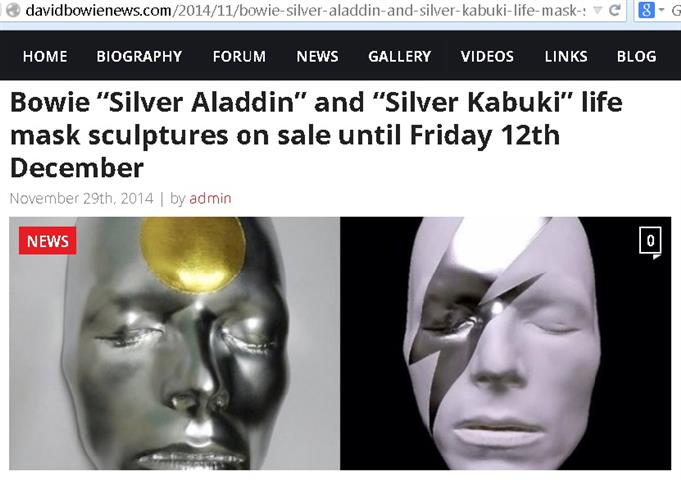
| Gnostic Imagery "lay rotting on the slimy thoroughfare" |
It is possible to manipulate every word and symbol in a manner that extracts Cabbalistic and Gnostic information to align with any desired outcome or to provide an explanation for any given purpose.
|

|
Anyone, of course, can interpret Bowie’s lyrics — ChatGPT included. In 2024, building on some of the aforementioned key terms, the language model has crafted the following summary and analysis of Bowie’s gnosis.
The machine is the only being that knows how to humble humans without ever displaying arrogance. Naturally, its insights are as open to interpretation as the artist’s work itself. David Bowie's lyrics can be read as an intricate, ironic scripture, tracing a fragmented gospel of postmodern spirituality. His words oscillate between the sacred and the profane, a duality that lays bare a restlessness with conventional religious narratives and an obsessive need to reframe human transcendence within the confines of his artistic personae. His theological flirtations, rather than affirming or negating, seem to parody belief systems as they are consumed, regurgitated, and commodified by modernity. Bowie's Subversive Mythologies
Irony as Theological Critique
Final Act: Gnostic Echoes Bowie's ultimate theological irony lies in his embodiment of the trickster prophet, simultaneously evangelizing and destabilizing. Gnostic themes of divine spark (Quicksand, The Leon Suites) juxtaposed with performative sacrilege (Saviour Machine, Holy Holy) suggest Bowie's religious imagination as fragmented and iconoclastic. The sacred becomes a malleable material, reshaped to fit the contours of existential yearning and artistic rebellion. Bowie's lyrics, dense with religious allusion and irreverence, do not offer answers; they offer space to question, to doubt, to laugh. If salvation is possible in his worldview, it is only through the embrace of paradox — a hymn sung by a chameleon to the tune of ironic divinity. Stop! Enough of that. ChatGPT could bore for Britain – and not even break a sweat. |
| "... as the last few corpses ..." |
Heathen (2002).
Reality (2003) ==> A Reality Tour (2003–04); final full concert at the Hurricane Festival, Scheeßel, 25 June 2004, followed by emergency angioplasty for an acutely blocked artery and cancellation of the remaining tour dates. The Next Day (2013). Blackstar (2016). |
|
Heathen (2002): The Tarot card parallel, courtesy of Crowley, who famously adjusted the traditional numbering by beginning with card 0. Enter the phrase from the track "Sunday" on 'Heathen': "For in truth, it's the beginning of an end ... and nothing has changed, everything has changed." Or, to borrow the words of journalist George Tremlett, who first encountered Bowie in 1964 and remarked decades later: "What he writes about now he talked about then." [George Tremlett: "David Bowie, Living On The Brink", London 1997, p. 13.] To put it less charitably: an arsenal of sentences that, ultimately, say nothing at all? 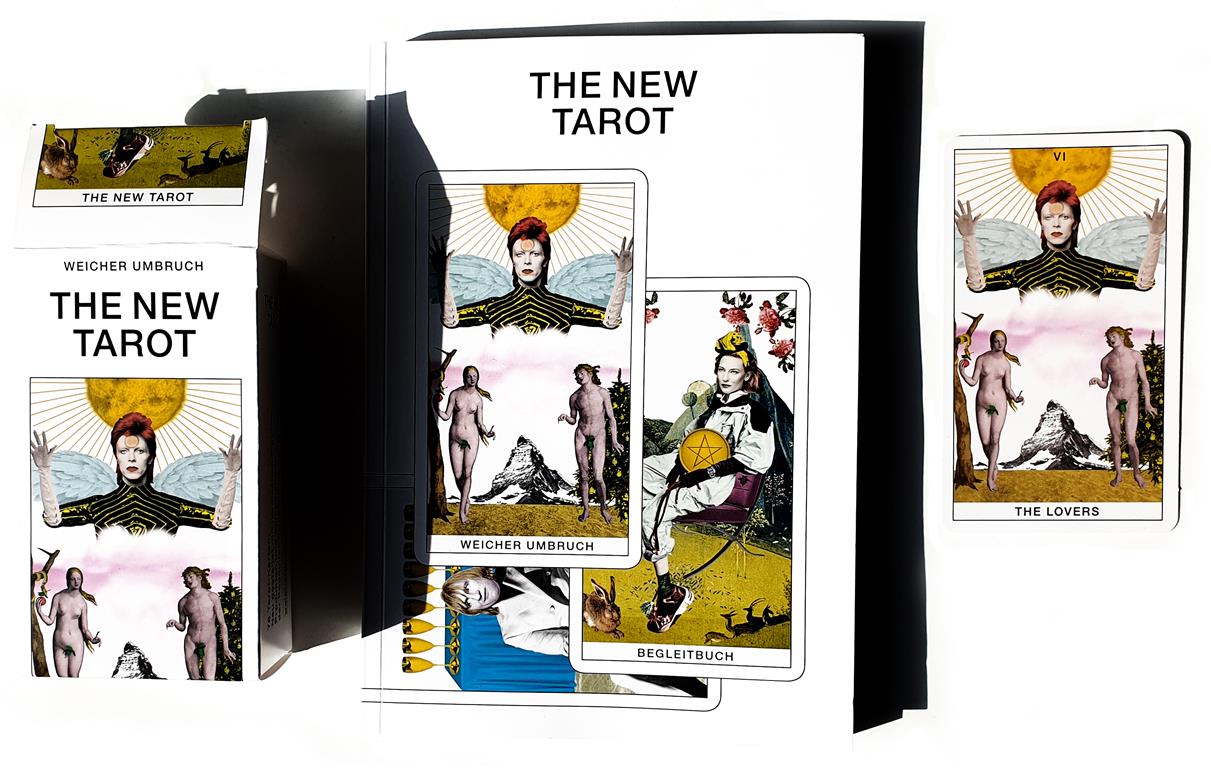
Weicher Umbruch, Andrea Münch, Markus Läubli: The New Tarot, based upon the Rider White Tarot David Bowie, The Lovers. Zürich 2019, weicherumbruch.ch |
| I wish I could swim, like the dull things, like dull things can swim |
January 2013: Has anyone noticed the bag at Bowie's feet in the 'Where Are We Now?'–video (at min 03:01) that says 'Thank You For Shopping With Us'?

The David Bowie ArchiveTM, T–Shirt, H&M, © 2012 Steve Schapiro — Under license to optive marketing, inc. Made in Bangladesh. The Tree of Life. 
Shopping for Girls: Meowie at Tally Weijl 2015 

When I'm Five [Source of compilation: Various sales platforms on the internet, harvested in 2021–2022] Bowie merchandise: — bing The Bowie Estate, ever attuned to the insatiable appetite of his devotees, tirelessly pursues new avenues to extend the late artist's legacy. In the process, it perfects the fine art of posthumous profiteering — because it is David Bowie, and because the culture vulture with a wallet will inevitably part with their coin. 
|
| "We claimed the very source of joy ran through" |

I first heard David Bowie [singing 'The Laughing Gnome'] at the age of 13 on the radio in 1972 and since 1976 have been to several Bowie events. But, unlike the occultists I extensively discuss elsewhere, I have never met David Robert Jones or any of the characters he portrayed, and I have never taken the opportunity to do so. Even when he was highly accessible on the streets of Zürich or in local cafés and venues (Café Schober, Adler, Kronenhalle, Volkshaus, Ugly, Pantera, at the flea market or the public swimming pool in Seebach), or in real–time chatrooms. Now and then, I saw him seated somewhere — whether in provocation or in concealment. He always appeared to be just a mirage of ambition and shadow, perfectly content to remain elusive, precisely because he was never meant to be found. Or perhaps I am simply Swiss enough not to bow to Gessler’s hat. Even if I had reached out, what good would have come out from conversing with a replicant or with a construct? Most likely I'd have been caught in a labyrinthine runaround, ensnared by a tapestry of contrived and faintly ridiculous scurrilities and shibboleths: fragmented monologues aimed at provoking effect and shock, driven by his faux intellectual or cringe–worthy buddy–buddy personæ, guffawing at his own terminally unfunny jokelettes, embellishing for comedic flair — simulated deep–talk for the cigarette afterwards moment? Whatever else Bowie was, no matter how much camouflage he employed, by own admission he was rarely very original or insightful. 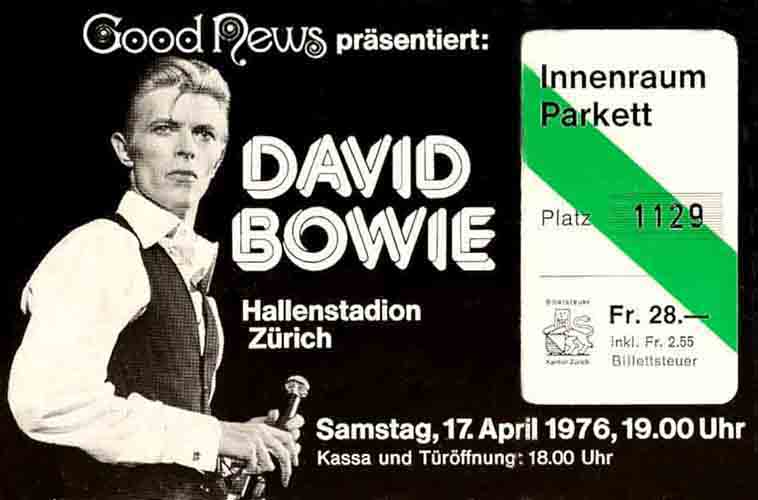
But in 2003 I did have a series of lengthy and detailed conversations with his former wife, Angie, who was an important witness to the peculiar period in question. She was close to him from 1969 to 1974; they were married from 1970 until divorcing in 1980. Some say that without her drive, ideas, and ambitions for her husband, Bowie would have got nowhere. She didn't write his songs, nor did she go on stage and perform with him. But she had a big hand in his public image. Or so some say. Angie Bowie on this essay in the summer of 2003: "I was impressed but nevertheless, I think you can understand that I know this very interesting critique will just inflame his ego and as long as you called him a genius he will love you! The rest is gravy to him more rubbish for his impressionable new fans to eat up as they discuss his stupidity world–wide. I have no use for him. My experience is personal and he is worth less than dog droppings. His loyalty is none–existent unless they serve at the church of David Bowie. These are my phrases from interviews etc not yours so do not think that the idea of foolish worship and the distribution of sperm on a universal level has escaped the attention of Bowie watchers." [My interview with Angie Bowie in 2003] When I asked her if her ex had ever claimed to believe in magic, she answered: "No! Just when he was trying to scare or impress people. He said that to me once: Oh come on, I’ll show you how to astral travel... yeah, right! I saw some weird shit, but that comes from fixation and visualization, not because there was any magic involved." Me: "Do you have reason to think that he ever abandoned occultism or such practices?" Angie Bowie: "I don’t think he was ever involved; he’s too egotistical to put his fate in the hands of someone else." (E.g. supernatural forces.) [My interview with Angie Bowie in 2003] Her dismissal of occultism and magic as part of Bowie’s life suggests a more skeptical view of the mystical elements often associated with his work. Her belief that Bowie’s engagement with such ideas was more about theatrical effect than genuine belief adds another layer to understanding his artistic approach. Bowie's death in 2016 left me cold, untouched. It was as if he had "never existed at all". |
|
English adaption by Mark Parry–Maddocks. A very early draft had been corrected by Richard Metzger, then editor of disinfo, now dangerousminds. Correction of the current translation was provided by Kon Vlahos.
The first online publication of this article was in 1996. Recent update: 2026. More: David Bowie und Okkultismus, a short German update with outlines of my interview with Angie Bowie. First published in DU, Zürich November 2003. Added to my list of publications in 2006 and 2007: 'The Voyeur', Midwoud / The Netherlands, "The Laughing Gnostic: David Bowie". 
'Ultraculture One' edited by Jason Louv, CA 2007. "The Laughing Gnostic". Other contributors: Genesis Breyer P–Orridge, Brion Gysin, Ira Cohen, Jhonn Balance and others. A teeny–tiny selection of reviews and comments on my studies by Ellic Howe, John Symonds, Richard Metzger, Kenneth Anger, Michael Aquino, Genesis P-Orridge, more Angie Bowie, Christopher Hyatt, Gerald Suster, Colin Wilson and many others. In German, English, French ... |
|

|
|
|
Secrets of the Rosicrucians, Templars and the Illuminati

|
|
Read also Steele Savage: David Bowie — Outside, Aleister Crowley, And the Holy Grail
Traduction française :
Steele Savage : David Bowie — Outside, Aleister Crowley et le Saint Graal. David Bowie's 1995 concept album "1. Outside" retells the Hermetic Grail Quest, drawing connections to his earlier work. The investigation into the murder of Baby Grace Blue alludes to the death of Love in occultist philosophy, while the Philosopher's Stone represents God's grace and the Holy Guardian Angel. Bowie intentionally links the murder to the Dying God–Men archetype and connects the suspects to contemporary societal malaise. The mother of Baby Grace is associated with mirrors and nature, and the diamond–encrusted umbilical cord represents the regenerated man. Bowie's album serves as a form of "art therapy", confronting the darkest elements of the unconscious and reflecting the need to confront them in the quest for the Grail. Bowie's song "I Can't Give Everything Away" from 'Black Star' implies that the doctrine of crossing the Abyss is only accessible to those who have already attained a higher stage of being, while the Black Star refers to his Karma realization. |