|
O.T.O. Phenomenon / ritual theatre / stigma mechanics Fetish, Self-Induction, Stigma and RôleplayRitual as a Fetish Machine This is a shortened and translated outline of a sub-chapter of Der O.T.O. Phänomen RELOAD. [1] 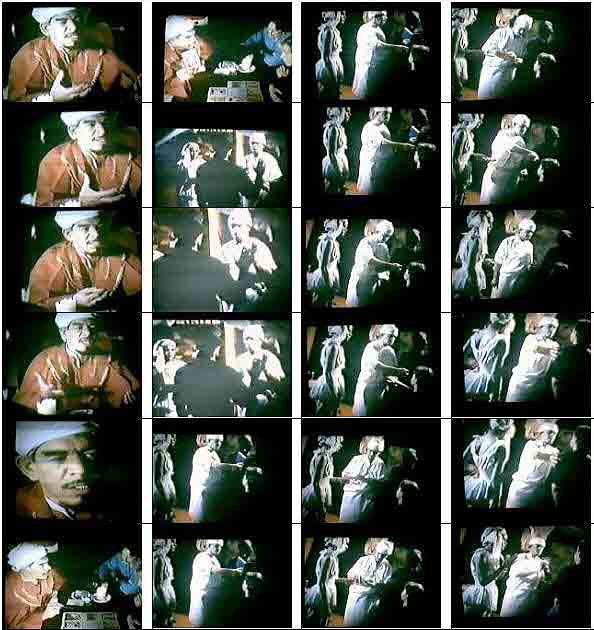
Robert Deumié owned the Café Thélème in Montréal and was appointed president of the firm O.T.O., Inc., and the "Caliph's personal representative" in Canada after William Breeze was elected Caliph. Deumié was expelled from the Caliphate for supposedly revealing some of their secret signs and rituals in a French–language film which was shown on television in Québec in 1990. The FetishI use “fetish” here in an intentionally broad, non-diagnostic sense: not merely as a sexual object, but as a person, persona, object, image, ritual or arrangement invested with an excess of value and repeatedly recharged through use. In occult organisations the fetish may migrate from the single object to the apparatus as a whole: robe, insignia, circle, mirror, secrecy, rank, gesture and audience. Repetition keeps the apparatus alive. A fetish may serve as an avenue to the sublime or as a way of experiencing glamour within one’s own sense of self. Its force does not reside in fixed qualities of the thing itself, but in the recurring acts of visiting, using, performing and confirming it. Sexuality may be one source of this charge, but it is not the only one. What matters here is not whether the fetish is sexual. Sexual fetishism is merely its most conspicuous form. The decisive characteristic of the fetish is not what it is, but what it does. Its function, not its content, is decisive. A fetish may be an object, an image, a rôle, a ritual, a situation, a hierarchy, an idea, or an entire arrangement of life. What distinguishes it from an ordinary preference is necessity. It is not merely enjoyed; it is required. It fills, however provisionally, a gap in the psychic economy of the fetishist and thereby permits an otherwise endangered equilibrium to be maintained. This is why the fetish is larger than the individual. Its function does not depend upon the unique qualities of another person. The person may merely carry, enact, or embody it. In the most banal sexual example, the fetishist has sex with the mask rather than with the individual wearing it. The wearer may change; the mask remains. What has to remain constant is the form capable of performing the required psychic function. For the same reason the fetish has to be visited, used, enacted, or frequented repeatedly. Without repetition it loses its charge. The repetition is therefore not merely habit and not necessarily the pursuit of increasing pleasure. It is maintenance. This also separates such fetishism from recreational or weekend fetishism, whose costumes and props can be bought in a sex shop and discarded again on Monday morning. The fetish meant here is structural. It participates in maintaining the individual's psychic continuity, self-regulation and, in extreme cases, his or her capacity to function in everyday life. Even a symptom may consequently acquire a fetish-function. A neurotic arrangement, a fixed rôle, or an illness identity may be preserved precisely because its disappearance would threaten an equilibrium that has come to depend upon it. What appears from outside as something from which a person ought to wish to be liberated may from within have become the very structure by which that person remains recognisable to him- or herself. The fetish, then, is not primarily a strange object of desire. It is a psychic apparatus. And once it becomes an apparatus, ritual can become its machine. The ritual does not merely express belief. It helps to produce the experience that is subsequently taken as confirmation of that belief. 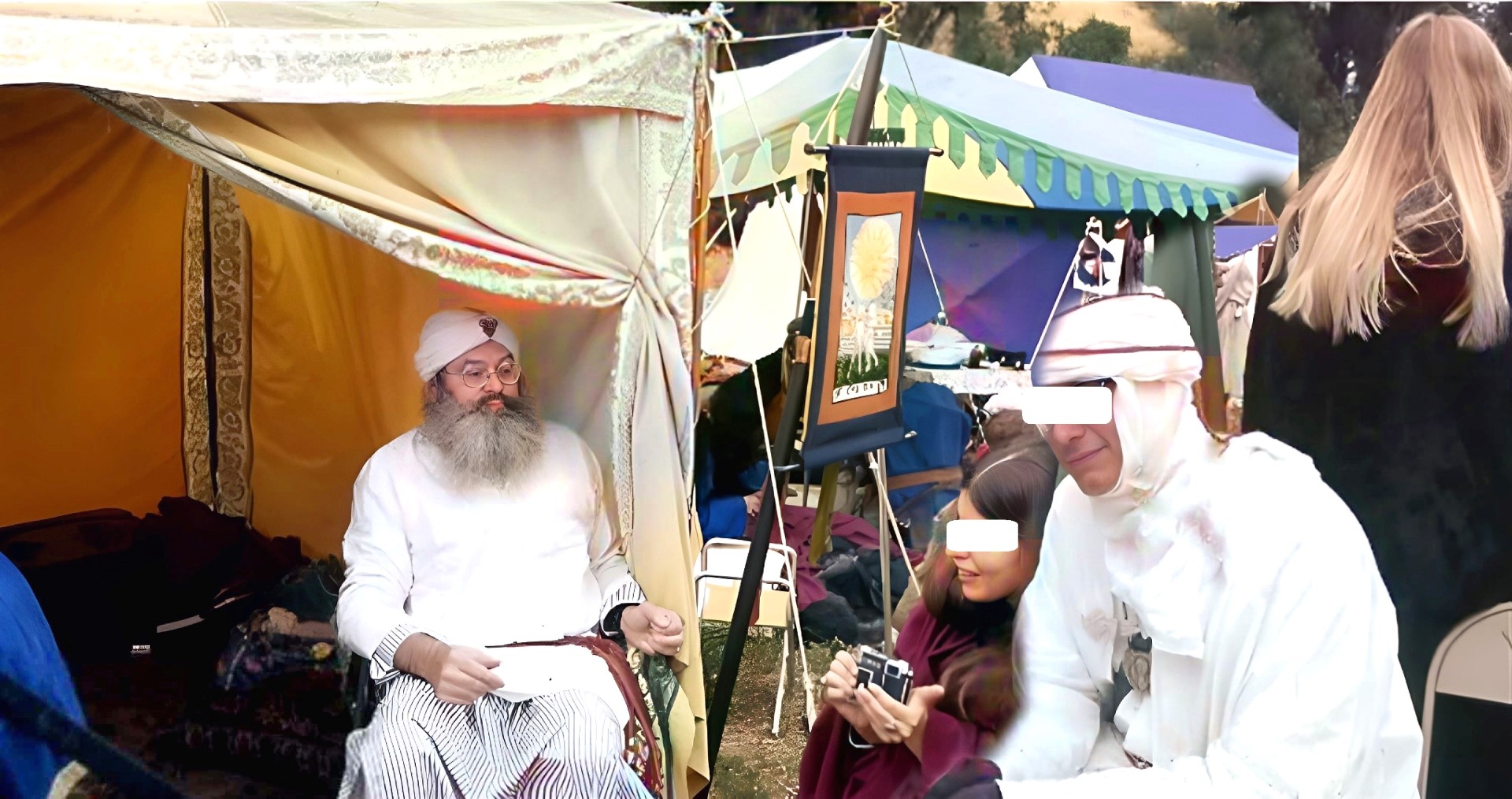
Grady Louis McMurtry, Caliph of the Caliphate American Ordo Templi Orientis Aleister Crowley, founder of his own religion and of his mutated O.T.O., was — and remains — a fetish for many. Crowley's devotee Grady Louis McMurtry adapted himself visually to the "Orientis" aspect of his Ordo Templi Orientis. He became a member of a Sikh group, founded by Siri Singh Sahib Harb Hajan Khalsa a.k.a. Yogi Bhajan. Sikhism is a monotheistic religion retaining some Hindu ingredients such as reincarnation and karma. The caste system is rejected, as is the worship of idols. Sikhs can be recognised by their turbans and their hair, including facial hair that is never cut. The reputation of the Sikhs as especially courageous warriors dates back to the 17th century. The British Army favoured the Sikhs for these reasons and recruited them as soldiers into the British regiments. During India's fight for independence, the Sikhs were found on both sides of the conflict. To this day Sikhs are regarded as one of the backbones of the Indian Army. In 1984 Indira Gandhi was murdered by her Sikh bodyguards in revenge for the assault on the Golden Temple in Amritsar which had been occupied by Sikh fundamentalists demanding a separate Sikh nation–state. McMurtry's martial personality shines through: he had volunteered for the army and served in both the Second World War and the Korean War. Moreover, in a later allusion to a letter Crowley had sent to him in Belgium, where he was stationed in 1944 McMurtry claims: "I am Caliph because I am a soldier." [2] Crowley, for his part, revelled in Arabic and Muslim themes; the rituals written for his O.T.O. seem to be peopled by figures straight out of the Arabian Nights. The O.T.O. appropriates selected signs of an imagined Orient and redeploys them as initiatory décor: turbans, tents, titles and exoticised personae become technologies of rôleplay. Grand ceremonial events are staged, suffused by a secretive atmosphere generated by a jumble of ingredients, all the trappings and symbols that Freemasonry has used since time immemorial are also employed to appeal to the senses. Strange insignia, long ribbons and black frocks flutter in solemn acts of initiation, weird knocking sounds are heard, assignments and missions are pronounced whose purpose remains hidden. Sometimes initiates into the O.T.O.–groups are blindfolded. Diffuse acts of consecration, sickly sweet vapours, partial nudity, and pathetic music create a sultriness calling the thought that the O.T.O. might be about sexual magic to the participant's mind. Turbans, tents, pillars are part of the repertoire; there is an orientalisation of the west, though reducing the orient to a backward cultural identity. [3] During other rituals whips and weapons are brandished, leather, sexwear and uniforms are worn. In a video I own of a Crowley ritual, celebrated by the Caliphate in New York, one notices additional accessories. A woman in a bikini dances on a coffin. It opens and none other than a fully made–up Jesus Christ emerges. However most of the O.T.O. rituals of initiation do not go much further than this type of rôle play for adults. The same also applies to the Fraternitas Saturni rituals. In order to maintain de–sexualised emotions, the libido is focused on the set, on the rituals. Hence the particular attention given to the rituals of initiation. In psychoanalytic terms, one might read this through a classical family stereotype: the O.T.O. as mother and Crowley as father. On this reading, members may love the set — the rituals — as an idealised mother–child relation, while insult or criticism is experienced as aggression from the father figure (Crowley or critics, depending on perspective). The threat of castration then belongs to the interpretive vocabulary, not to an established psychological diagnosis. |
The Set as Fetish Machine
The fetish does not necessarily reside in a single object. It can migrate into the entire apparatus: robe, insignia, magical circle, mirror, gestures, rank and scenery. The set itself becomes the fetish. Its effectiveness depends upon repetition — it must be visited, used and performed again and again.
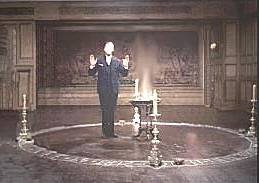
The image below is not a reconstruction of a historical event, but a visual model of this mechanism. The Grand Master does not merely look into a mirror in order to see something. Costume, rank, gesture and setting first construct him as the person entitled to see. The mirror then returns the image of the rôle that created it. Authority, costume, ritual and reflection form a closed circuit in which the performance repeatedly supplies its own evidence.
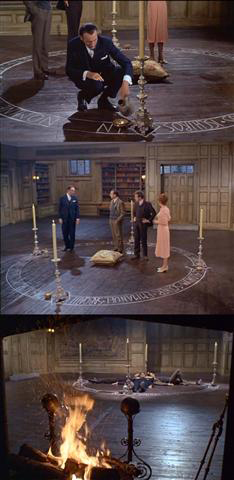
The worn path around the circle adds the material dimension: repetition has become architecture. The floor itself has become an archive of belief.
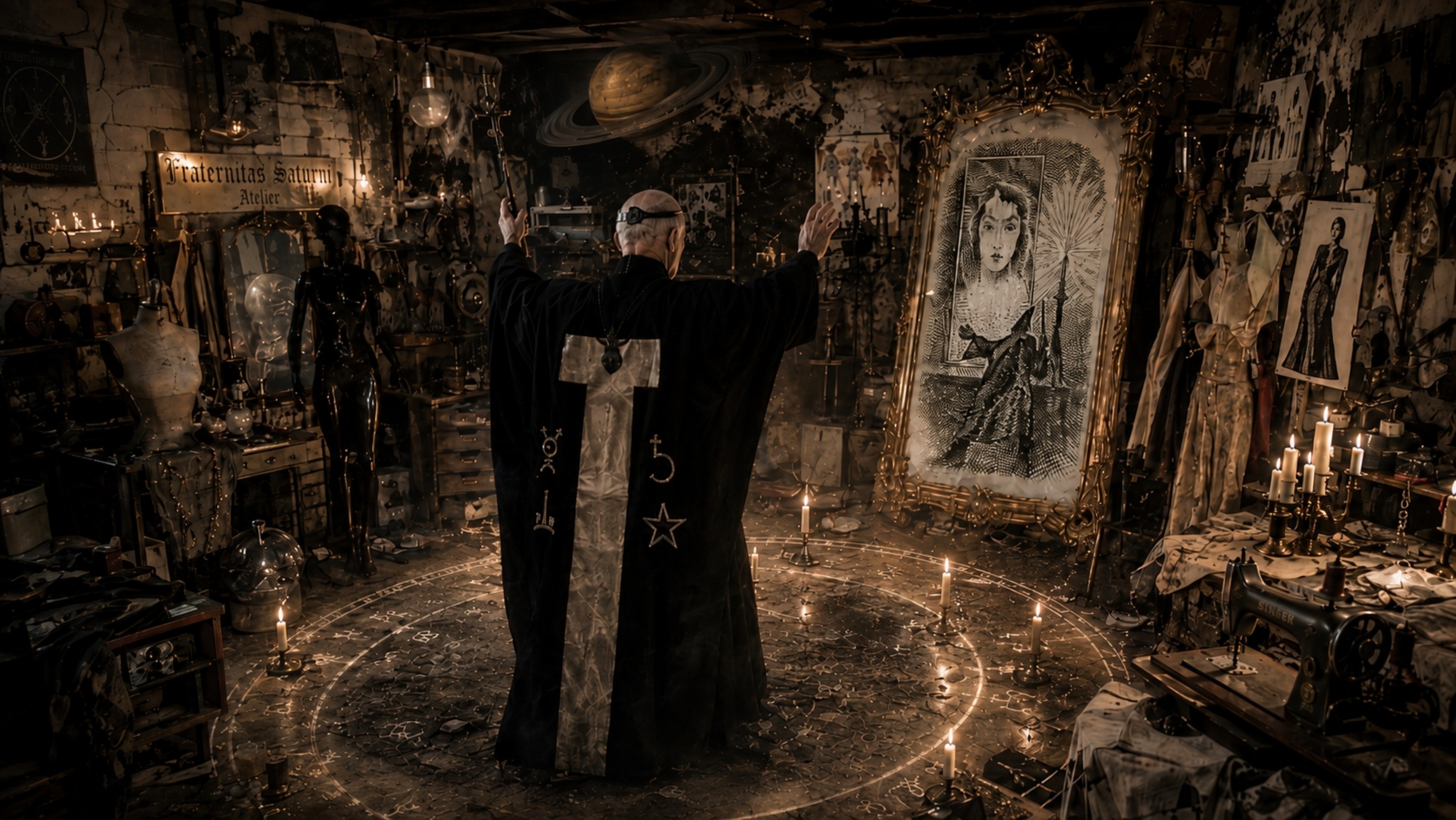
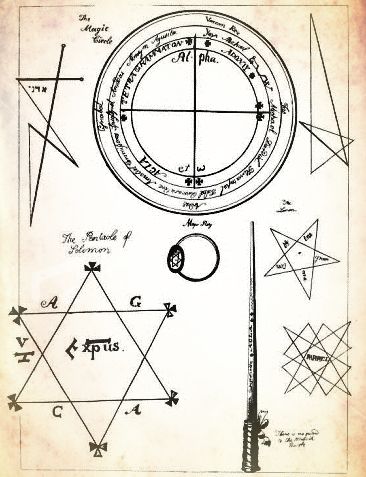
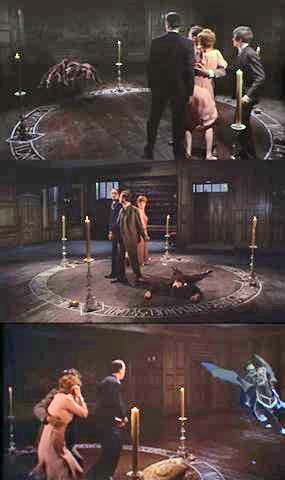
Magical circles make this logic architectural. They assign bodies and apparitions to separate zones, turn the room into a stage, and give an invisible event a visible geometry. The magician stands in one circle; the angel, demon or projected image is expected to appear in another. Whether anything appears or not, the arrangement already gives the expectation a material form.
The Rituals
The importance of the initiation rituals should not be underestimated. They (often) represent motherly love (the order is the mother, the leader is the father) and in the course of their defence, the big guns are brought in. For example: it is forbidden for anyone to offer one of the books containing these rituals for sale on Amazon or Ebay as second-hand books. Threats of legal action follow immediately. "Fahrenheit 418." [4] This enhances the fetish aspect — and consequently raises the price of those books.The following passages are part of the declaration of consent the Caliphate demands for admission to the rituals. Whatever its legal purpose, the waiver has an additional theatrical effect. Before anything has happened, bureaucracy announces danger, secrecy and consequence. The legal document therefore becomes part of the ritual apparatus: it helps enlarge the event it is meant merely to regulate.
"I understand that every attempt is made to minimize the existing risks that are inherent in the nature of some of the activities involved through the use of proper equipment, safe facilities and sound safety practices. However, I also understand that these risks cannot be eliminated completely.
I realize that as a participant in the initiation ceremonies and other activities of Ordo Templi Orientis I could possibly incur bodily injuries. Due to the nature of these activities, injuries may be minor to fatal in nature. Some specific bodily injuries that are not uncommon to similar types of activities are listed below:
Stoppage of breathing; heart failure; stroke; spine and neck injuries (either of which could result in paralysis); broken bones; cuts and lacerations; bleeding; eye injuries (which could result in blindness); convulsion; unconsciousness; abrasions; fainting; sudden illness; cramps; loss of wind; drowning; and contracting of communicable diseases. In addition, there is a potential for accidents or illness while traveling to and from events.
I also realize that as a participant in the activities of Ordo Templi Orientis I could possibly incur non–bodily injuries, including, but not limited to: emotional, psychological, and social injuries; and damage to, or loss of, personal property.
I understand that the lists above are not intended to be inclusive of all injuries that may occur, but rather to inform me of the type of risks inherent in my participation in the activities of Ordo Templi Orientis, so that I can make a voluntary choice to participate or not participate.
I hereby affirm that I am voluntarily participating in any or all of the activities of Ordo Templi Orientis with full knowledge of the potential risks which they present, including risks of bodily, emotional, psychological, and social injury, property damage, and death, and I hereby agree to accept any and all risks of such bodily, emotional, psychological, and social injury, property damage, and death.
I agree to release and hold harmless Ordo Templi Orientis, Ordo Templi Orientis U.S.A. and their agents, volunteers, officers, employees, and directors, from liability for bodily, emotional, psychological, and social injury, property damage or death arising from my participation in the activities of Ordo Templi Orientis. I also agree to maintain confidentiality regarding the proceedings of the private religious initiation ceremonies of Ordo Templi Orientis and the documents related to those ceremonies. I give this release and indemnification in exchange for the opportunity for me to participate in the activities of Ordo Templi Orientis.
I certify that I have read this agreement, that it has been explained to me, and that I may be giving up legal rights which I may otherwise have. I acknowledge that I am at least eighteen (18) years of age."[5]
Potential VI° candidates are asked, "you must notify us immediately if any of the following are true:
- You have _any_ sexually transmissible, orally transmissible, or blood-borne disease; or you contract any such disease between now and the time of your initiation.
- You are a hemophiliac or have any form of anemia or hypoglycemia.
- You are unable, for whatever reason, to consume alcohol.
- You will be taking any prescription or non–prescription drug at the time of your initiation; especially any drug with a blood-thinning effect, or that may produce undesirable side-effects when taken with alcohol."
The question as to the danger posed by the O.T.O. rituals which are harmless in themselves, and which include minor incisions which remind one of boy-scoutish blood-brother rituals bring themselves rather forcibly to mind.
In 2005 I discussed this with Bill Heidrick. Should a psychological emergency occur during an initiation, he said, it must be cancelled immediately and professional help has to be sought. I mentioned memories of torture and abuse (flashbacks) which an initiation might trigger in members from war zones. Moreover I pointed to phobias, i.e. unsubstantiated constant fears of particular situations and things, people suffering from post-traumatic stress disorder, who chronically relive the stressful moment caused by an actual experience typically inducing mortal fear.
He was evasive when I asked whether the initiators are sufficiently trained to notice an impending psychological threat to those about to be initiated or whether they are properly equipped to deal with an emergency during the ritual. He only said that emergencies are "obvious", and insisted on dropping the subject.
A few years ago, in Germany an Iranian woman was initiated into the Caliphate–O.T.O. During the ritual she remembered having been tortured in her home country. [6] Possibly the ritual was the I°, during which one has to sit in darkness in water in order to be born anew. The ritual was immediately broken off. Similar stories are told by members who served in the wars in Iraq or in the regions of former Yugoslavia. Here we speak of post-traumatic stress syndrome. There are two opinions in the Caliphate: Heidrick generally allocates therapeutic character to the initiatory rituals, reasoning that those rituals have been designed by freemasons during "very troubled historic times." Other higher-degree members admit that the rituals have never achieved any therapeutic effects. On the contrary: "I can tell dozens of horror stories which left initiates with lasting appalling memories which may well need therapy to rectify." [7]
In 2008 the Caliphate accepted to at least introduce acting priests and priestesses of the Crowleyan Gnostic Mass to the principles of "Psychiatric diagnostic categories, and basic approaches to assessment of mental illness and chemical dependency issues". They contemplate "tools for working with crisis intervention, grief counselling, conflict resolution, and sexuality issues." To reach this aim the Psychology Guild creates so-called Pastoral Counselling Workshops. [8] Of course in emergencies the police shall be called immediately.
In Crowley's O.T.O. initiatory rituals there is a similar instance of drinking blood, as purportedly practiced in a certain Masonic high grade ritual at least until 1932. If one credits the Freemason Karl R.H. Frick, the person to be initiated into the XI°, [9] the Highly Enlightened Chosen Fellow of the System of the Great National Lodge of the Freemasons of Germany, actually drank the blood from his brothers' incised thumbs from a crystal flask. [10]
In the III° ritual of the Crowley–O.T.O. the initiate drinks a little bit of blood and laudanum from a chalice. In the K.E.W. ritual (Knights of the East and West – a kind of intermediary grade between the IV° and the V°) the candidate dribbles some drops of blood on a piece of cloth. In the VI° a St. Andrew's Cross is cut into the candidate's arm, the blood is caught in a chalice. In the V° the candidate must have a rose tattooed on his chest.
There are blood rites for Thelemites, even outside the context of the O.T.O. initiations, Crowley designed the Mass of the Phoenix. In spite of the Thelemites' distaste for Christendom and fight against the term "Black Mass", which supposedly is a mere parody and belittling of the Catholic Mass, in my eyes the Mass of the Phoenix misses parody only by a hair's breadth.
Holy Thy name and undefiled!
Thy reign is come; Thy will is done.
Here is the Bread; here is the Blood.
Bring me through midnight to the Sun!
Save me from Evil and from Good!
That Thy one crown of all the Ten
Even now and here be mine. AMEN."
Afterwards one cuts a magical sign into one's chest with a ritual knife, presses the cake of light (i.e. a wafer made according to the sex magic recipe) on it to absorb the blood and eats it.
As I enflame myself with prayer:
There is no grace: there is no guilt:
This is the Law: DO WHAT THOU WILT!" [11]
|
More blood and sperm flow in further Crowley rituals which also have hardly anything to do with his O.T.O., Liber LXVI Stella Rubeae [12] for example.
In addition to this, fetishes visually associated with sexuality attract attention. Doesn't sperm look a little like ectoplasm – something inexplicable oozing from body orifices as visible on very old photographs? Contact or body relics figure prominently, too. Body relics are particles of a saint's body, contact relics are objects having been in contact with a saint. So once even the idea came up to plunder the grave of O.T.O. founder Theodor Reuss in order to take possession of his skull as a powerful magical relic. [13] In Switzerland, Hermann Joseph Metzger's teddy bear, shoes he wore, plates he used as a child, his fez and the magic wand from his long past days on stage can be admired behind glass in the museum of the Swiss O.T.O. 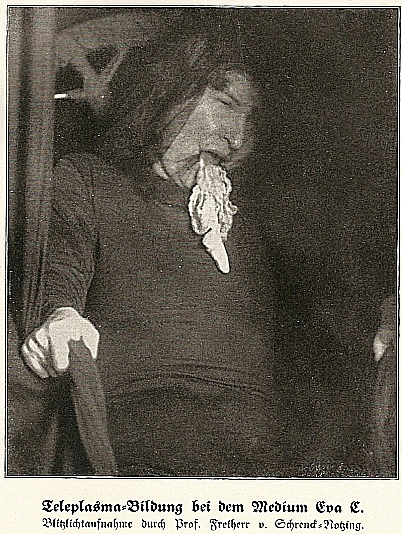
Friedrich Mellinger: "Zeichen und Wunder", Berlin 1933, photo–page 46. A different kind of fetish takes place where so-called Satanism and Crowley are projected onto a mélange of cemetery desecration of cemeteries, ritualistic crime, Heavy Metal and Black Metal. In the mainstream this kind of fetishism is particularly cherished. Self–styled experts, journalists and their largely uninformed audience revel in such fetishes. Toying with fantasies generally full of violence and especially blood and death rituals is very popular. Of course the prospect of an ensuing media scandal turns into a fetish in itself for all those involved. This is the third topic: the building of an identity by stigma. For now though, very briefly another idea: Self-Induction: Producing Altered RealityIn the 2011 version of this essay I used the deliberately provocative expression “self-induced schizophrenia”. I would no longer use it as a clinical term. The phrase also had older polemical echoes: in 1933 Mathilde Ludendorff claimed to detect “induced madness by occult teachings” in the O.T.O.[14] What interests me here is something more specific: the deliberate cultivation of anomalous experience — visions, voices, correspondences, altered perception and intensified significance — through ritual, expectation, drugs, meditation or other techniques. Many occultists, in particular Crowleyans, attempt either to create or to enter alternate realities. The techniques may be deliberate and disciplined: repeated ritual, sensory staging, meditation, yoga, psychoactive substances, magical diaries, symbolic correspondences and the expectation that an event will become meaningful because it occurs “under the will”.[15] The sought result is not schizophrenia as a medical condition, but an experience interpreted as intensified perception, contact or superior access. Correspondential or apophenic thinking is especially important here. Signs are systematically read so that more and more connections become available: names, numbers, events, dreams and coincidences can be folded into the same interpretive network. In a cabbalistic framework, even an alien life form and a tomato may be connected if the system yields the same numerical value. The point is not that such a relation is clinically delusional by definition, but that the apparatus is designed to make relations proliferate. This can create difficulties of communication with people who do not participate in the same patterns of significance. Yet the desire to remain connected to the wider world — and to be noticed by it — remains. What follows is re-socialisation by choosing, negotiating or converting an identity based on stigma. 
Re–Socialisation. Identity through StigmaHere I am talking of the rôle society appoints to occultists: they turn into Satanists, outsiders, outlaws, lunatics, guinea pigs for academics, dangerous characters for experts and journalists, and into general and obscure threats to the populace. Every occultist is more or less aware of those assignations and therefore more or less consciously either identifies with them or flirts with rebellion against these rôle assignments. Yet he remains as unable to detach himself as Crowley and Thelema do not manage to shake off the hated Christendom.As soon as rôles have to be accepted and institutionalisation and formalisation begin to co–determine experience, the trend to isolation within the occultists' lives intensifies. The rituals consolidate the feeling of alienation and it starts to set. This process of freezing keeps pace with the adaptation demanded by society or even turns into a substitute for adaption. Consequently, an echo effect comes to bear upon occultists and society and they, together with their critics, start digging their heels in. External stigma can become internal distinction. The more the group is treated as deviant, the more deviance can be converted into prestige within the group. The resulting self-presentation then provokes further stigma. Outsider identity thus becomes a form of social capital. The more occultists are imagined to be out there, the more experts and journalists regard their own identity as valid and vice versa. Within the pool of beliefs dealing in hallucinated conspiracies, fact shrinks and dissolves in a whirlpool of manipulated information written in water, which all those involved mistake for solid ground.Because of the progressive rigidity in attitude and the loss of playfulness the opposing parties appear frozen solid. O.T.O. rituals seem ridiculous and void, experts and journalists fanatical and obstinate (unless they are occultists in the closet grooming their religion or order for the mainstream or academia). In 1994 Claudia Kowalchyk embarked on a year–long research into the New York Caliphate–O.T.O. lodge and subsequently wrote "A study of two 'deviant' religious groups: The Assemblies of God and the Ordo Templi Orientis". Her sample should not be treated as a demographic portrait of O.T.O. membership in general; its value here is as a detailed snapshot of one lodge, in one city, at one historical moment. Within that sample, participants were mostly white and well educated, many had been raised Roman Catholic, the average age was about 36, average duration of membership was roughly six and a half years, and men significantly outnumbered women. Some participants reported difficult childhoods, sexual abuse, drug problems or therapeutic benefits from membership; some described the group as a place in which such experiences could be recognised. These are heavily abbreviated outcomes of Kowalchyk's study, which also reports an optimistic outlook among participants and relief from existential fears. [16] In place of feelings of isolation from society, membership in the O.T.O. could offer a kind of protection within stigma. Non–conformism could work as a shield against stigma. Within the micro society the O.T.O., one remains part of society and those who do the stigmatising are regarded as inferior and of less value, whether authorities, media or colleagues at work. [17] Within Kowalchyk’s limited New York sample, some participants reported problematic parental homes, difficult relationships or drug histories, while also presenting themselves as self-styled outlaws who nevertheless functioned within ordinary legal and social limits. Joining the O.T.O.–groups could satisfy the desire to either fulfil the rôle of the outlaw or confirm this self–styled identity. [18] Public interest in the activities of the O.T.O. manifests itself in numerous publications pointing out anti–democratic and anti–Semitic statements e.g. in Crowley's work as well as passages possibly disturbing "the religious peace." Some rôle plays – such as the crucifixion of a frog as prescribed for the initiation into the Crowleyan–VI° — might infringe upon the animal protection act. With the propagation of peculiar and exotic drugs Crowley's "bible" at least challenges criminal law in most countries, the use of the Cakes of Light contain fresh blood brushes up against strictures meant to curb contagious diseases. Worse still, some texts advocating total sexual liberty including the respective sexual education for children open the floodgates for fantasies of sexual acts which are outlawed by the majority of judicial systems. [19] Ms. Kowalchyk also argues that Thelema works partly as a successful therapy for a number of problems. Members from a fraught parental homes are offered immediate increase in power as well as an identity within a community of like–minded chosen ones. They receive affirmation of what they have somehow been aware of since early childhood, i.e. that they belong to something better, special, superior and singular. They are proud to be members of the order. The self chosen stigma of the O.T.O. community is cultivated, the rôle of the misunderstood and excluded is enjoyed, the image of the bad boy nursed. At work, in the office one merely bites one's tongue whenever one is scolded by the boss. At home in the temple one gets rid of unpleasant everyday problems by conjuring them away in magical rituals or discusses them with a supernatural being who in exchange offers mysterious statements. [20] 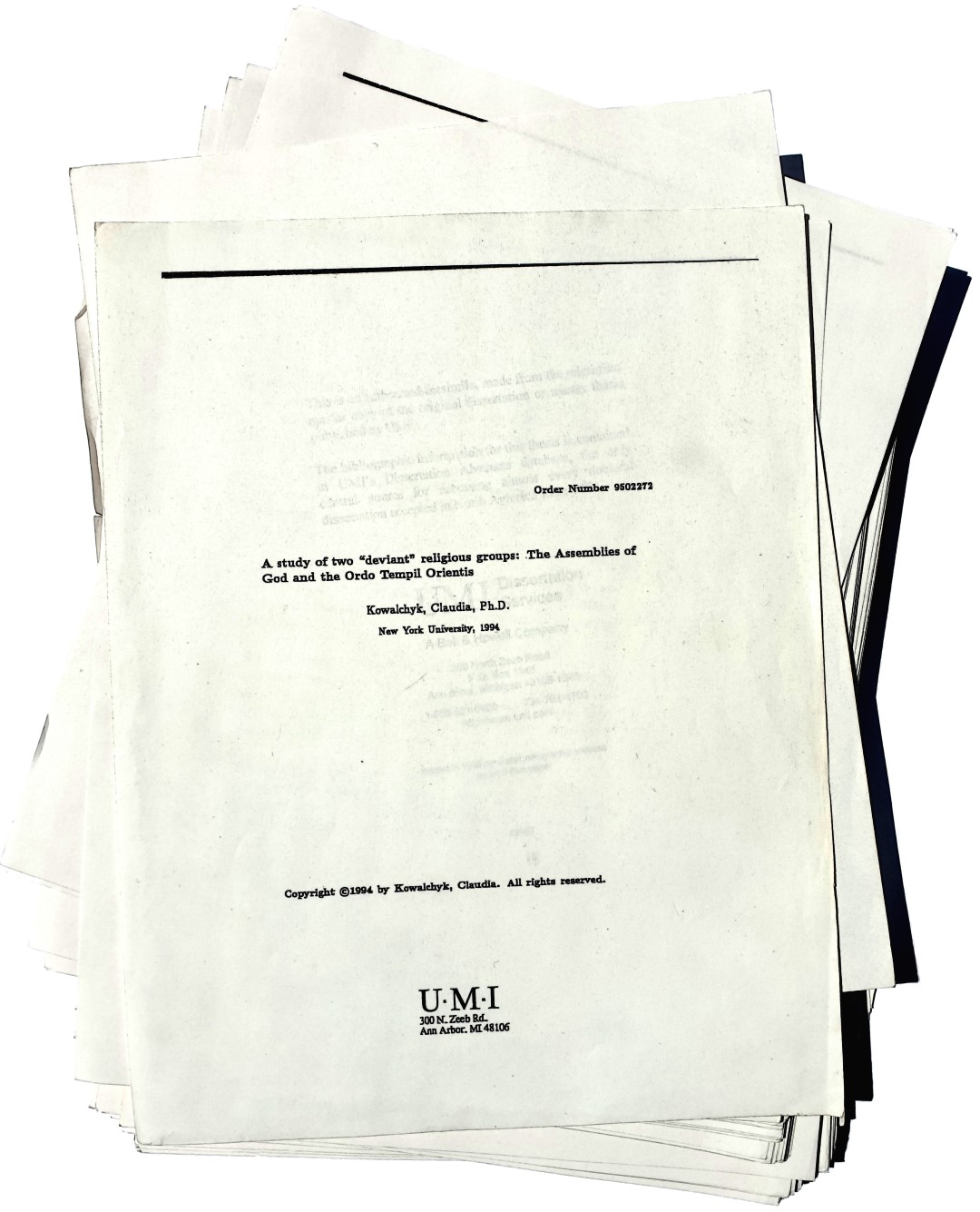
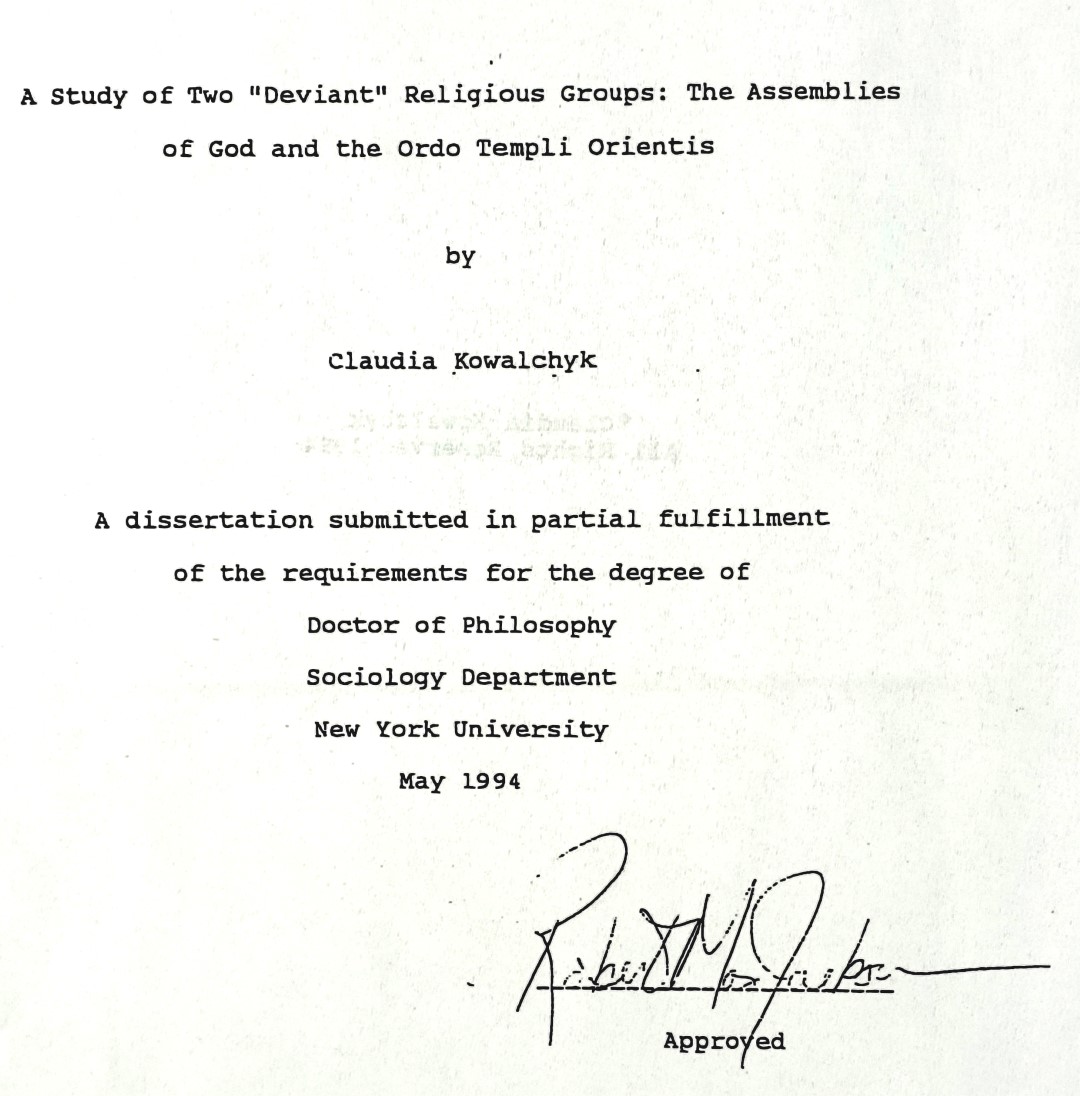
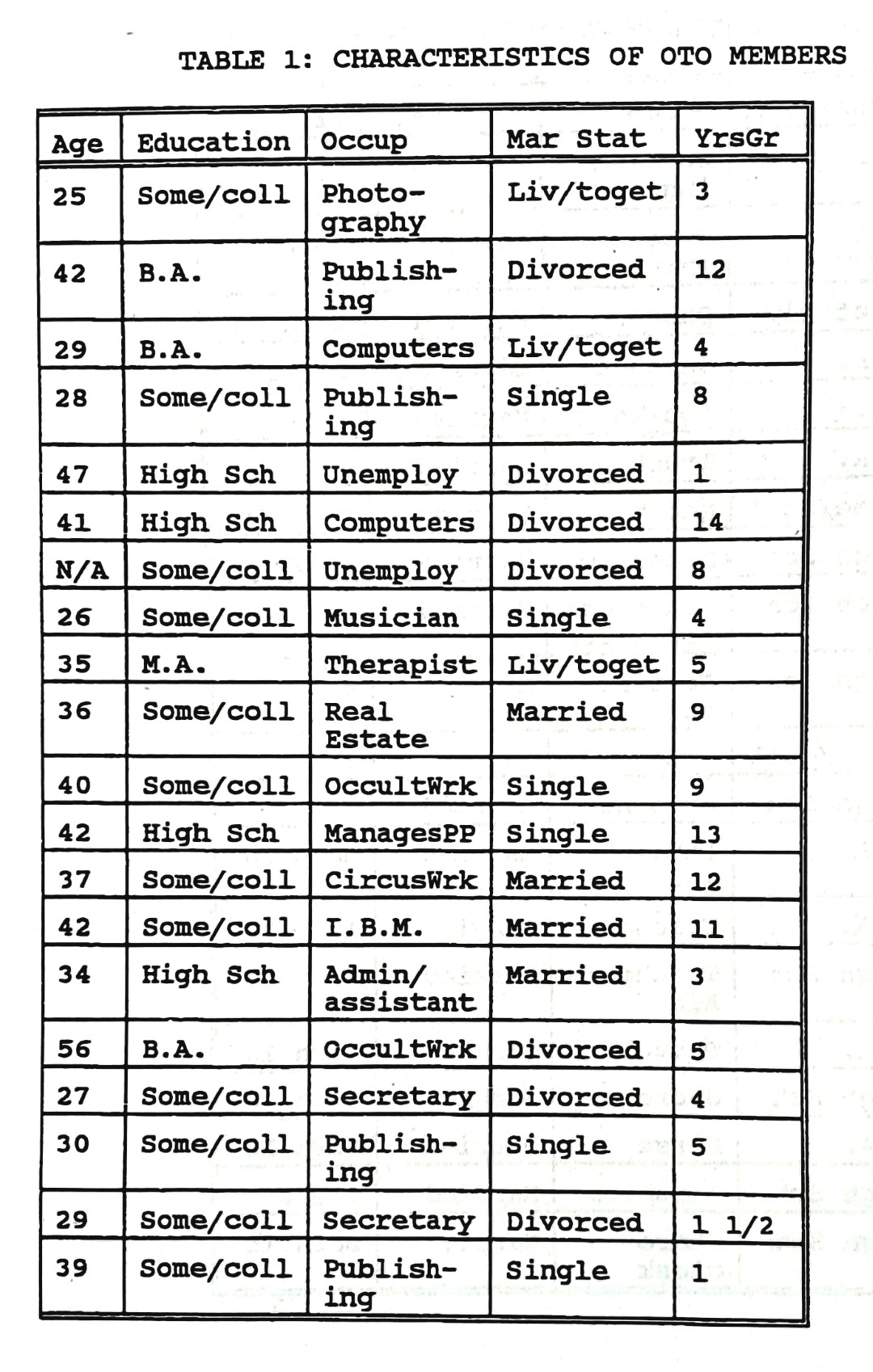

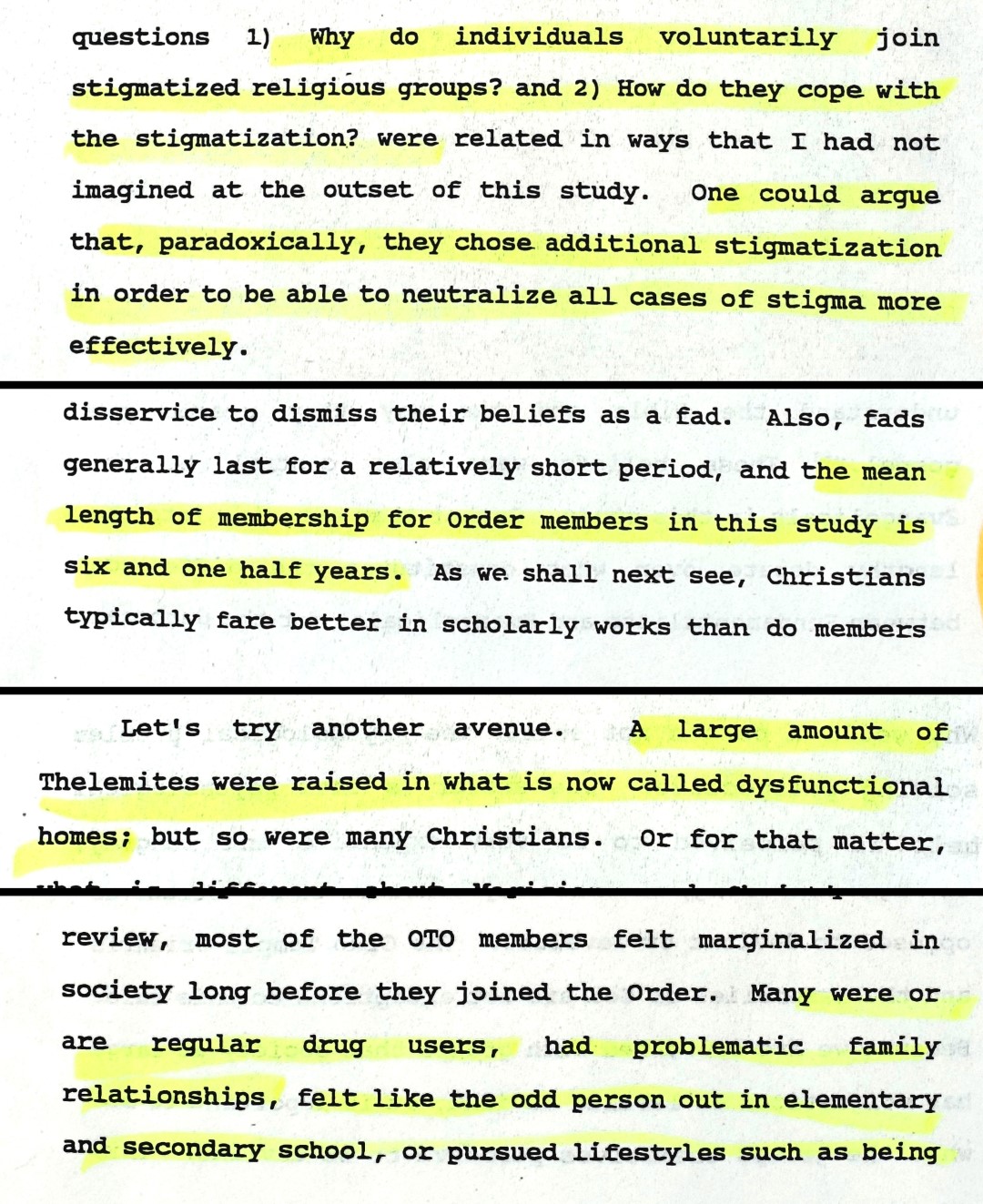
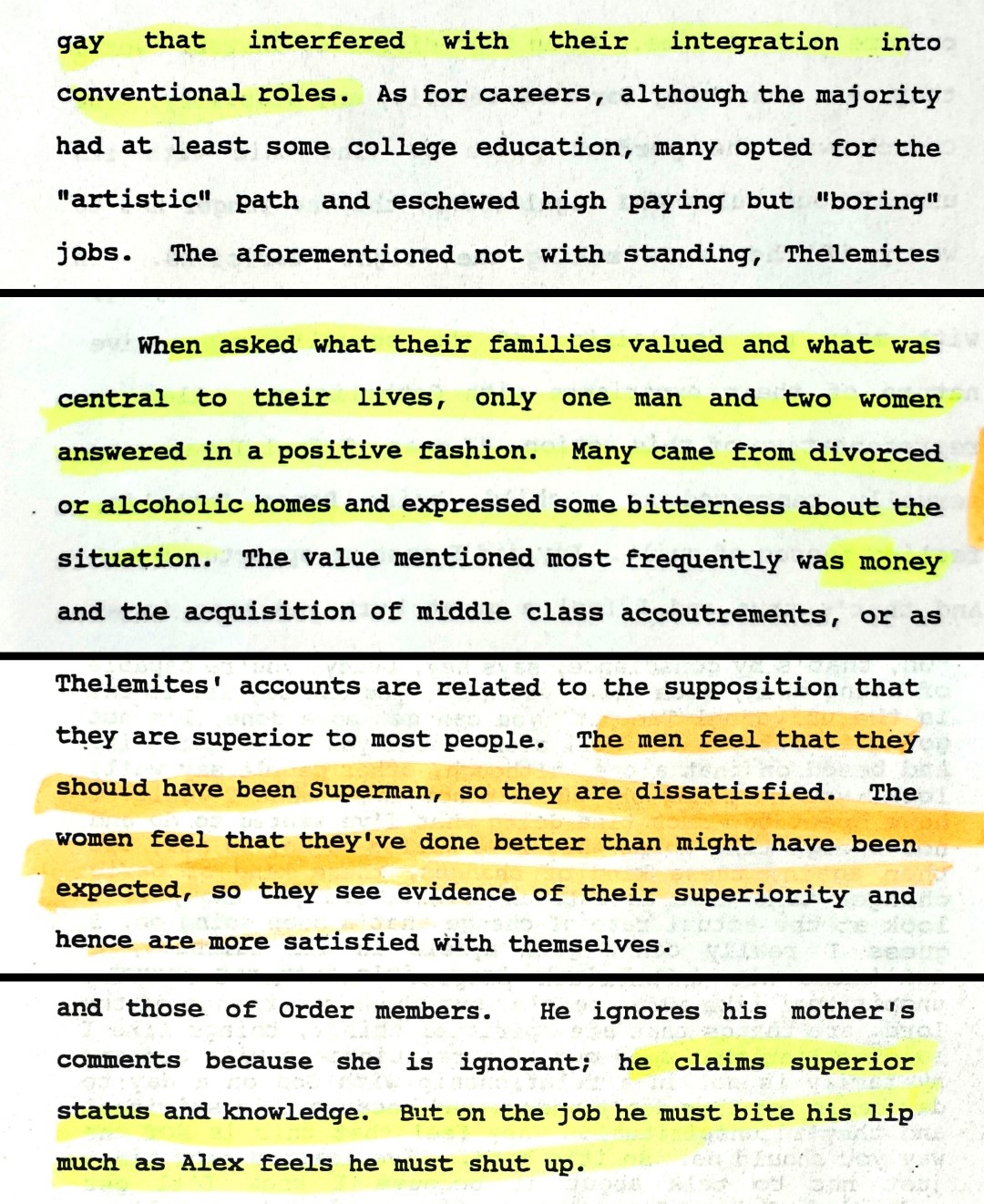
Claudia Kowalchyk, A study of two 'deviant' religious groups. The Assemblies of God and the Ordo Templi Orientis, NY 1994. Quotations: Pages 444 (table 1), 27, 55, 93, 103, 208, 209, 283, 302, 393. The rhetoric of Thelema can offer a compensatory identity of exception: mastery, election, superior knowledge and distance from an allegedly ordinary majority, often combined with an ideal of disciplined or martial self-perfection. [21] 
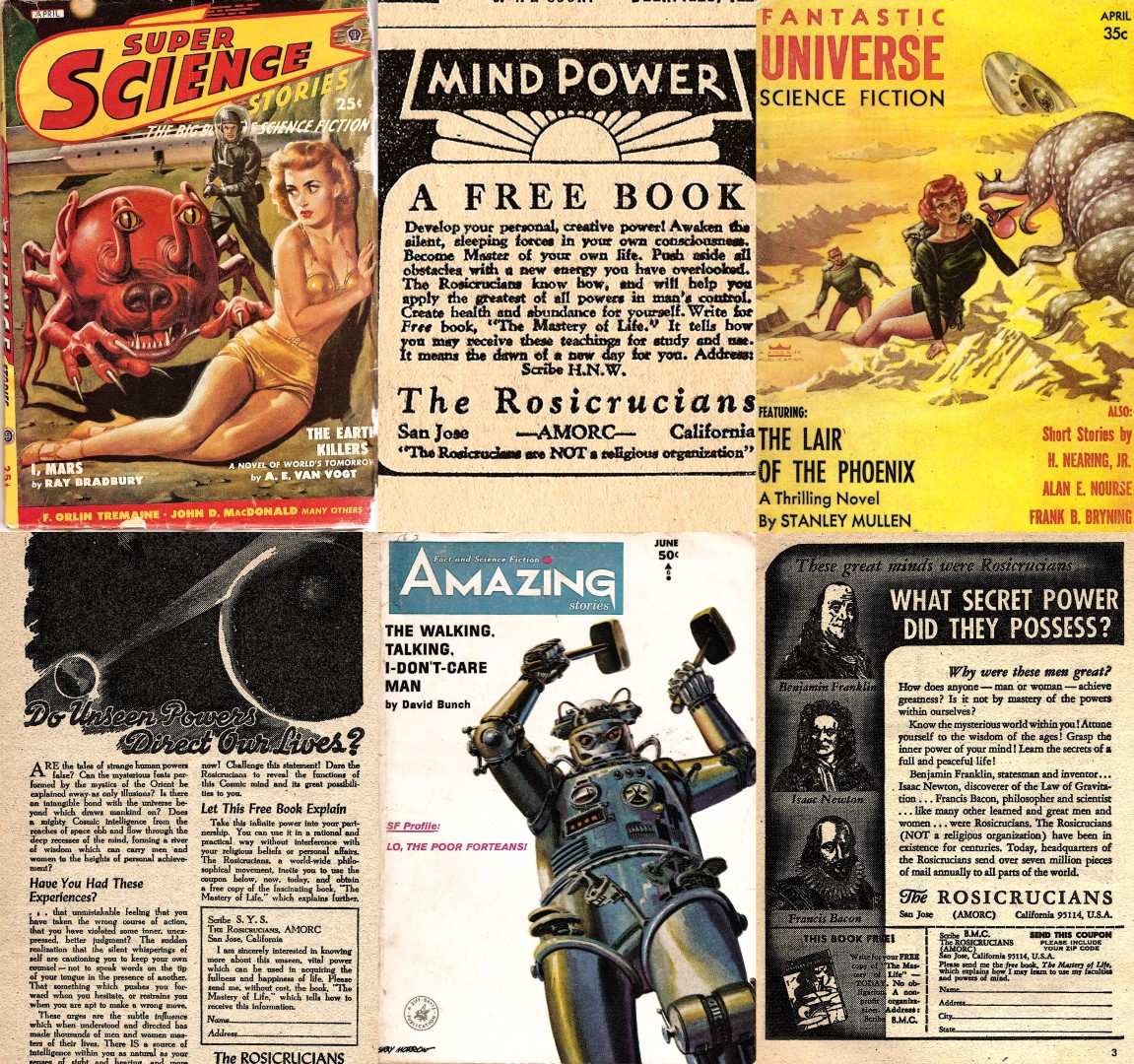
[From 'Noch Mehr Materialien Zum O.T.O.'] Within a subculture organised around Crowley, identification with the founder can provide a ready-made rôle of exception: outsider, magician, sexual rebel, prophet or superior knower. This does not establish a personality type among Thelemites; it describes the symbolic repertoire made available by the movement. Crowley’s own texts — with their advocacy of “wine and strange drugs”, sexual magic and deliberate nonconformity — supply especially vivid material for such identification. The Thelemic vocabulary can therefore function as a language in which conflicts about ego, sex, drugs, discipline and social conformity are staged and reinterpreted. The slogan remains: "The method of science, the aim of religion." 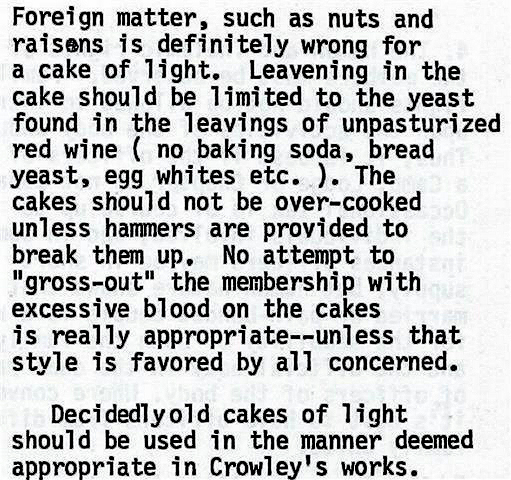
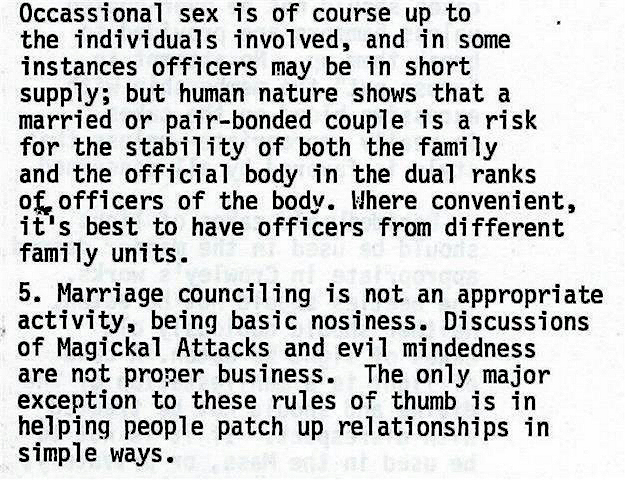 The idea of therapy within the context of the O.T.O., if it applies at all, could be applied as a form of adaptation to the social norm. O.T.O. Thelemites speak of family, [22] duty, privileges and the urge to make the world a better place (by as much sex as possible as I was personally told by an IX°). Why then are Thelemites so wildly concerned with conjuring demons, Egyptian and therefore quite dead gods, why are they performing rituals reminiscent of the Addams Family kids' performance in bad school productions? All this appears to be about gridlocked stereotypes. [23] Similar to what Nietzsche, admired by Thelemites, had found fault with in Western culture: the void in one's own culture is filled with exotic habits, the arts, philosophies, religions and sciences. Occultists are wandering encyclopaedias within their own universe. Wherever money and possessions no longer count as capital, knowledge of occult techniques does. Thelema as a complex and elitist system that flatters the Thelemites' intelligence and elevates their status and self–esteem, not necessarily in the eyes of a largely disinterested mainstream but amongst each other and within the wider occult community which of course does not consist only of Thelemites. Modern occultism is a product of mass media which includes the internet, and each and every statement on occultism is watched closely by the occultists themselves and their observers. Thus all activities contain the constant flirting with the idea of publication, an audience and self–portrayal. Science fetishists often block out sexual or drug–related matters when dealing with lifestyle and motivation of the occultists. So in fact observers of sects and scientists assist sexual magicians and Spermo Gnostics in forcing sexuality back into the unconscious mind. This way irrationality is mystified and exempt from reflection as irrational concepts evade the dry recipes of academia. [24] So–called Sect Watchers, often self–styled scientists, can choose from a wider set of rôles offered by Society. Still they, too, have to relegate the threat of sexuality to the unconscious. It seems to me it is then substituted by the so-called satanic. The delegation to the unconscious, i.e. the nurturing of megalomaniacal ideas and delusions of grandeur not only gives birth to manipulation of perception but can go as far as to the delegation of writing studies on the topic to insiders. To hold the hot potato is to have one's own fingers burnt. This is what happened with the publisher of an encyclopaedia on Gnostic Bishops. His answers to my questions concerning content grew from evasive to downright bizarre until he finally owned up and admitted that his students had concocted it all. Someone else's answer to my question as to whether he had read my main work: [25] "No, I am sorry to say that I have not read your book, but bought it at least which is important (for the publisher)." This came after the same person had published a lengthy review on exactly that book. So it seems perfectly normal that reviews or prologues are written as favours whereas in private the reviewer admits that he either was not interested in the topic or is in denial. I am aware of a rather famous professor who has rented out his name in return for a large sum in order to have a contemporary standard work use his name in order to add to its prestige. RôleplayNow I would like to illustrate the rôles of those involved. Let us proceed from Leo Navratil's early work on Schizophrenia and Art (Alfred Bader and Leo Navratil: "Zwischen Wahn und Wirklichkeit", Verlag Bucher, Luzern and Frankfurt 1976). He describes his patients living within an altered system of religious perception and self–reference. This has little to do with the anamnesis or the assessment of the case. The religious aspect is merely a possible expression of the disorder, but not the disorder itself.Dealing with victims of ritual abuse one must beware of the mistake to declare the expression of the disorder (in fact the counterbalance intended to reinstate the best possible order) to be the disorder itself. Just as the drawing of a schizophrenic is not the illness. Let us construct an example: In a fit a schizophrenic person draws a picture in which he copies Brigitte Bardot from an image in a magazine. It is of no importance whatsoever what the onlooker thinks of Bardot: she is neither the cause of the schizophrenia nor the trigger of the fit nor is she the schizophrenic disorder itself. Representation is not causation. An occult image may provide the vocabulary in which distress is expressed; it is not by itself evidence that occultism caused the distress, nor that the represented event ever occurred. But it is exactly this kind of confusion above that some experts and journalists seem to succumb to. They do not recognise that a psychological disorder seeks different ways of expression. Rather they convert the expression at face value into the cause of the disorder which could be the consequence of a trauma. The expression is no proof of any kind that the trauma existed at all. It does not prove either that the trauma has been caused by Satanists.It is the task of the experts to offer facts about Brigitte Bardot or the O.T.O. and it is the task of the journalists to report on it free from prejudice. It is the responsibility of the police and the judiciary to investigate crimes. If there are indications of such crimes. The Closed CircuitTaken together, fetish, self-induction, stigma and rôleplay form a feedback system. The fetish invests the apparatus with excess value; repetition and self-induction produce the expected experience; rôleplay gives that experience a visible social form; stigma stabilises the resulting identity. The circle is therefore not only drawn on the floor. It is psychological and social as well: an apparatus that continually produces the evidence for its own necessity. The magician creates the ritual. The ritual creates the magician. |
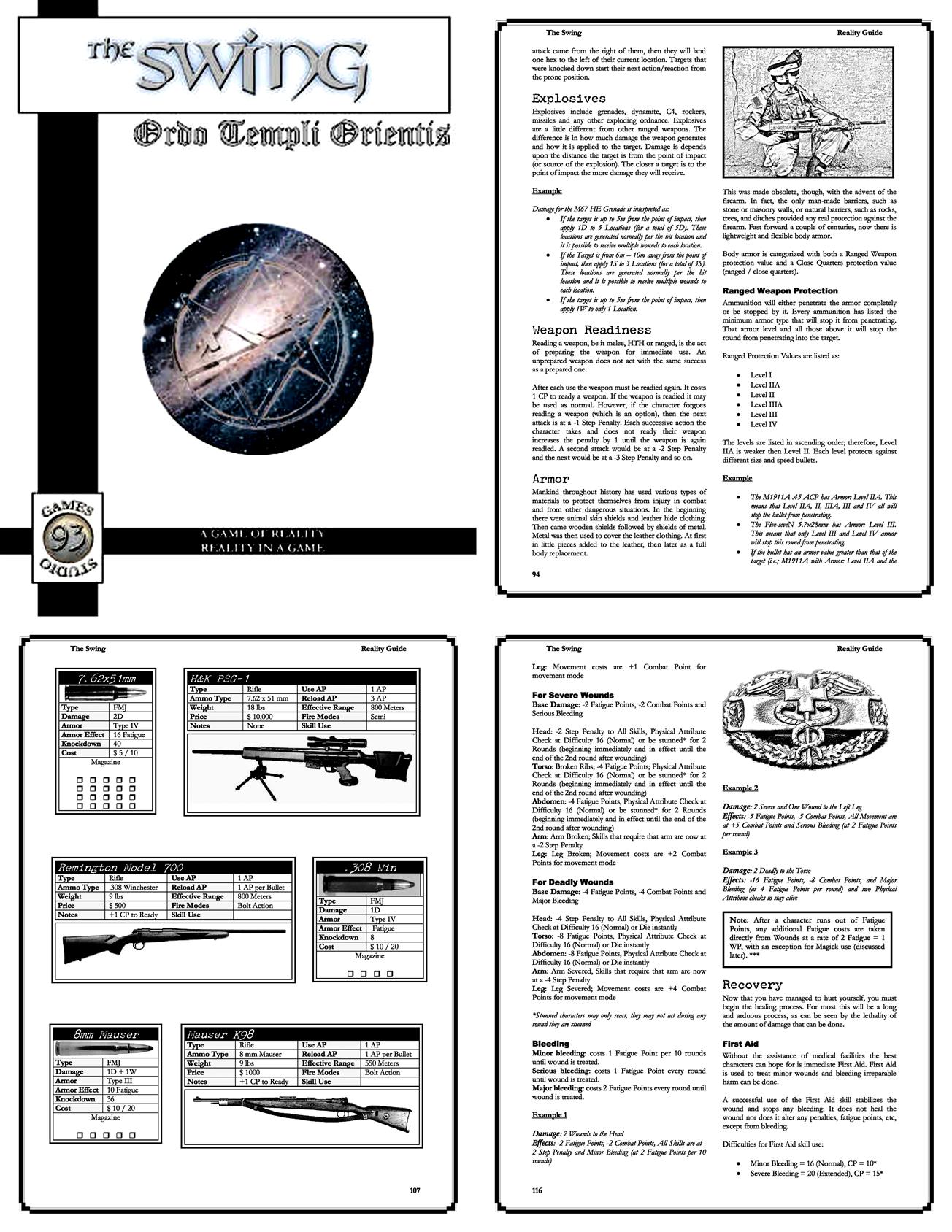
Source: Keith Taylor, http://www.93gamesstudio.com
Endnotes[1] Based on Andreas Huettl, Peter–R. König: "SATAN – Jünger, Jäger und Justiz", Grosspösna 2006. See page 195, 330, inter alia. https://www.parareligion.ch/ hispeed/english.html. [2] https://www.parareligion.ch/ white.htm#_edn33. [3] See also https://www.parareligion.ch/ mcdonald.htm. [4] https://www.parareligion.ch/ dplanet/or/ or9b.htm. [5] "Informed Consent, Release and Indemnity", (version of 13. 4. 2011) Small children do not become members of the Caliphate–O.T.O. Children are not initiated because they lack the full experience of a completed childhood. To them the rituals would be no more than a kind of excursion with their parents and thus without the true character of an initiation. [6] As a lot of Masonic and pseudo–Masonic rituals, thus also those of Crowley’s O.T.O., contain death oaths and sections apt to be described as psychodrama or scary, the officiants are encouraged to react to such passages with an "infectious giggle." [sic]Undated email by William Heidrick, who also likes to point to astral and karmic consequences after breach of an oath – meaning Karl Germer’s painful death, https://www.parareligion.ch/ sunrise/book.htm. [7] Jerry Cornelius, email, 15.10.2005. [8] "Neshamah" I;2, Sacramento March 2008 and its mention in "An Introduction to Pastoral Counseling in E.G.C./O.T.O. Settings" by David G. Shoemaker on http://lib. oto-usa.org/, Agapé, Volume 10;1. [9] Not identical with the IX° of the O.T.O. [10] Karl R.H. Frick: "Das Reich Satans. Satan und die Satanisten 1", Graz 1982, page 224 and following pages. [11] http://www.ashami.com/ eidolons/A_ Guide_to_ the_Office_ of_Deacon, http://www.bibliotecapleyades .net/ crowley/lies /47.htm. [12] The following guideline to a rite, developed in 1913, contains a finishing line which seems to fall right out of context: "There shall be no sound heard but this thy lion–roar of rapture; yea, this thy lion–roar of rapture". http://sacred-texts.com /oto/lib66.htm The line either refers to the position of the lion of Hatha–Yoga (Simhasana) or might be an ironical allusion to the epistle of 1 Peter 5;8: "Be alert and of sober mind. Your enemy the devil prowls around like a roaring lion looking for someone to devour." [13] "Keep trying to find out where T.Reuss is buried." "if we can find his grave, dig it up, and retrieve the skull & some bones, and return them to the G.L. [Grand Loge], a lot of power will manifest throughout the order." Christopher Dietler/Zardoz to Walter Jantschik, letters dated 2.6.1983 and 18.3.1983. [14] First edition 1933, reprint, Pähl, 1970. Criticising the list of saints quoted in Crowley’s Gnostic Mass, Ms. Ludendorff also touches upon the context of fetishism: "Here we only need to mention – as everywhere in occult teachings so here, too – that those still surprised by the distasteful and shameless as well as the nonsense are 'humbled' by a list of names of great men of the past, supposedly having been members of the order. Exactly as in the Christian Church and as in Freemasonry in this case the following is pointed out to them: 'Do you wish to be greater than them, wiser than those great men who believed in this', so the priests say, and this is what the list is supposed to assert. Humbly the victim begins to prefer doubting his own values rather than those of the teachings which so many greats, so many noble spirits believed in. So just as in the freemasons‘ lodges a long line of such men is proudly listed within the O.T.O, of men who perhaps never were part of it or yet had been taken by surprise and, bound by oaths were unable to 'take their names off the book' as almost always decreed by these secret orders. Before the blasphemous communion starts, the dean names the great sages of all centuries who purportedly belonged to the order. 'Wolfgang von Goethe, Ludwig, King of Bavaria, Richard Wagner, Ludwig von Fischer, Friedrich Nietzsche' are listed amongst the Germans. Obviously the community cannot verify where fibbing might be involved and admires itself for being in such illustrious company. This again is of the highest importance in consolidating the stultification of the artificially sickened disciples, for now within their souls they upend the terms for wisdom and nonsense. What they thought nonsense before, now they take to be wise, what seemed prudent, clear and wise, they now take for worthless and false doctrine. But that exactly is the point of those who consciously stultify people! And to that end it truly pays to have lured the wise of the past into the order by having told them tall stories about entirely different teachings and aims, just as they did with the likes of Frederick the Great, Fichte, Lessing, Mozart amongst others, luring these men into the lodges only to later retain careful silence about their deep disappointment!" reprint of 1970, p. 90 . [15] Triggering of strong emotions, hyperintense activities, situational stimuli (religious or sexual paraphernalia) increased present time and lowered past and/or future time orientation. [16] A similar study in the German speaking area: Gerhard Mayer: "Arkane Welten. Biografien, Erfahrungen und Praktiken zeitgenössischer Magier", Würzburg 2008. Volume 6 of "Beiträge zur wissenschaftlichen Erforschung aussergewöhnlicher Erfahrungen und Phänomene", commissioned by the "Institute for Frontier Areas of Psychology and Mental Health", a registered society. The term "Frontier Regions of Psychology" ["Grenzgebiete der Psychologie"] has been coined by Oscar Schlag, https://www.parareligion.ch/ schlag.html and https://www.parareligion.ch/ sunrise/schlag1.htm. [17] Niches in society such as alternative (emerging) religions, where they are able to define their economical, cultural and social status, are occupied by modern bohemians, self–styled elites and self–styled outlaws. [18] "The occultist strives after world dominion and ambivalently glides between destruction of the culture (through resistance to the ruling morality), and the preservation of the High– and Mass–cultures (as he requires their magical traditions). There exists no alternative to this totalitarian claim on the same level, or with the same claim to significance. This is why the occultist swings between transcendentally seeking cultural anticipation, and its counterpart, a hope for destruction of the existing culture." https://www.parareligion.ch/ ecstasy.htm. [19] "Moreover, the Beast 666 [Crowley] adviseth that all children shall be accustomed from infancy to witness every type of sexual act." Israel Regardie: "The Law is for All", Arizona 1975, 114, http://hermetic.com/ legis/new-comment/. Crowley: "Let children educate themselves to be themselves. Those who train them to standards cripple and deform them." "On the Education of Children", in: "The Revival of Magick", Tempe 1998, sekhetmaat.com/ wiki/ Documents/On_the_Education _of_Children. Crowley about a boy: "While the other in his orgasm receives the waters." "Let it be no sin to us to have buggered the virle bum." "While theriest thrusts his thyrsus between boyish buttocks, All is accomplished; come Holy Dove!" http://bluepyramid.tripod. com/index/id4.html. "The Equinox" IV;2, Maine 1998, 405. [20] See Huettl/König, SATAN, p. 267: Ms. Kowalchyk is not a member. Before she was able to begin with her study, all members of the Caliphate–O.T.O. had to get their boss‘ – William Breeze that is – permission, allowing them to speak to her at all. Ms. Kowalchyk proceeded in the traditional way. She visited the meetings of the lodge, regularly interviewed members and compared her findings with those from another "deviant religious group," a Christian fundamentalist grouping. Of course it can be assumed that Ms. Kowalchyk’s presence greatly influenced the O.T.O. members‘ behaviour. The setting alone influenced those members. Here we have a marginalised special religious group officially researched by a scientist, the members of which are under such pressure that they have to search the approval of their Patriarch and "Holy Majesty". Surely nothing detrimental to the image will happen nor be mentioned which the scientist could notice. The problem with most scientists writing about Crowley or the O.T.O. is that they have no internal matters at their disposal but rather conduct superficial conversations with members about publications available in bookshops, the bulletins also non–members receive. So, evidently, all hints as to sex and drugs simply go by the board. – So what was startling during the reading of this study was the omission of drug consumption and the missing discussion of sexual matters. Kowalchyk’s study portrays those Thelemites as rather inhibited squares who even use rooms separated according to the sexes when changing for the rituals. Another point where I disagree with Ms. Kowalchyk: She particularly mentions the Thelemites’ optimistic attitude to life. I look at this in a completely different way. According to me Thelema is deeply pessimistic, somatophobic with its rigid laws, fatalist in its belief in the unknown and unfathomable acts of the gods and only offers a short-term and very limited simulation of being in high spirits. What is one supposed to think of free sex as long as every orgasm has to take place "under the will" and is or has to be experienced as a religious act? And just how joyful is it, to experience one’s body while aiming one’s thoughts towards a magical goal during orgasm? [21] For example: "The weak, the timid, the imperfect, the cowardly, the poor, the tearful – these are mine enemies, and I am come to destroy them," Liber Tzaddi, 25, http://www.sacred-texts. com/oto/lib90.htm. [22] In the Swiss O.T.O. family ties are regarded as obstacles. Within the Caliphate the traditional family is discussed with regard to the sexrituals: "Occasional [sic] sex is of course up to the individuals involved, and in some instances officers may be in short supply; but human nature shows that a married or pair–bonded couple is a risk for the stability of both the family and the official body in the dual ranks of officers of the body. Where convenient, it's best to have officers from different family units [...] Marriage counselling [sic] is not an appropriate activity, being basic nosiness." "Magickal Link" III;3, Berkeley March 1983. [23] Here I deliberately exclude the Typhonian O.T.O. In the T.O.T.O. there are no titles, no hierarchies, no institutionalised rituals, there is no personality cult. [24] During the same period when occulture began to spread within academia or vice versa: when academia began to appropriate occulture, the internet became part of the mainstream. While occult academia remains beholden to elements of a reactionary mechanism such as prestige and money, the internet breaks open the monopolisation of knowledge and allows a sort of junk postmodernity to freely stream into the living rooms. However, the value of knowledge as well as the value of art which since AND according to Marcel Duchamps and Joseph Beuys is to be found everyhwere, were also subject to transformation. In the area of the arts, installations, performances and the location of their stageing (galleries, museums) have replaced the old tradition of the original, while on the other hand the internet turns anyone into an expert and renders knowledge replicable ad infinitum. A new cultural technological gap opens, seemingly allowing a distinction between the serious and the dubious. Anything printed on paper is regarded as serious, while anything appearing on a screen is deemed spurious. Academia finds itself under pressure and the encyclopedias originating within the incestuous ccircles of occult academics proliferate faster and faster. This way intellectual standstill, radical conservatism, anti–curiosity are generated. Openness and questions are replaced by templates: Occultist navel–gazing.See also my "The Play Game Version of an O.T.O.–Fatamorgana" at https://www.parareligion.ch/2011/ playgame.htm. [25] The O.T.O. Phenomenon REMIX: the earlier version of the three actual volumes of The O.T.O. Phenomenon RELOAD. © Peter–Robert Koenig, July 2011. This is a shortened and translated outline of a sub–chapter of Der O.T.O. Phänomen RELOAD. This translation was provided by Kon Vlahos. English version: Fetish, Self-Induction, Stigma and Rôleplay Traduction française: Fétiche, auto-induction, stigmatisation et jeu de rôle. Traduzione italiana: Il feticcio, l’auto-induzione, lo stigma e il gioco di ruolo. Tradução portuguesa: Fetiche, auto-indução, estigma e jogo de papéis. Tlumaczenie polskie: Fetysz, autoindukcja, stygmat i odgrywanie ról По русски: Фетиш, самоиндукция, стигма и ролевая игра. See also the photograph of Aleister Crowley in a Gnostic Mass.
|